By Veronika Lipkova | Project Manager
At Plamienok Counselling Centre we welcome children, adolescents and families who have lost a loved one. Also thanks to your support in 2015, through individual, group meetings and organized events, we helped 109 children and adolescents, 102 adults and 76 families in coming to terms with their loss.
In the meetings with young people who have lost a loved one, many different and intense moods, feelings, emotions and frames of mind are present. But how to talk about them? How to help a young person, confused from all the burden they have inside, to get it off their chest? Music can be very much helpful in that. It can express a large scale of emotions and is able to influence our mood.
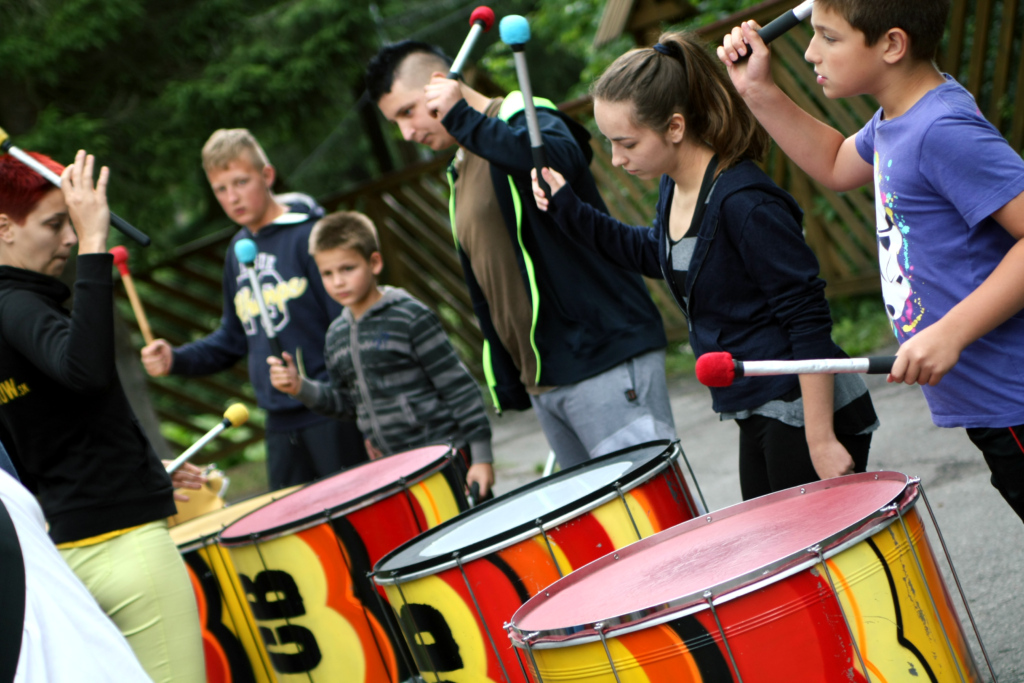
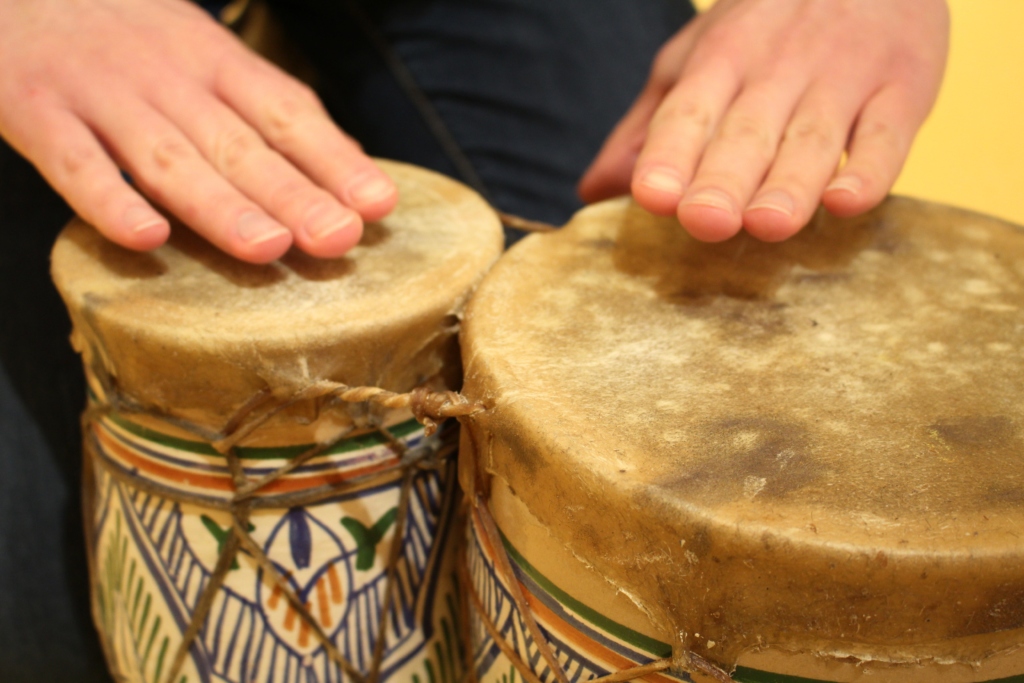
At the beginning of the meeting I bring drums. We talk about them for a while, we try them out, we talk about music in general and what it represents for Andrew. In fact, music is another language – a universal one, understandable for everyone. When you play a sad melody, you don´t have to add any comment. Everybody understands the sadness. Well then, let´s try to “talk”. I will tell you or rather I will drum to you who I am. You can join me so I will know that you understand me. The melody comes out spontaneously. At first, Andrew listens for a while and then he starts playing my melody with me. It looks like we understand each other. Now, it is your turn, Andrew. I will join his melody after a while. It looks as if we spoke the same language. Step by step, Andrew is discovering the secret of the drums, the initial blush on his cheeks is replaced by a spontaneous laugh, his posture is much more relaxed. So we got introduced. We didn´t have to talk about my or his favourite colour or movie, we directly talked about the feelings of my and his life. What my or his life sounds like…
After a while he puts three words on the paper. Joy, sadness, anger… that is what he feels inside. And we continue our “talk”. How does your joy sound? A rhythmic, spontaneous and dynamic melody comes out. Yes, I can here it there. And what about my sound of the joy? Listen… After a while we find ourselves beating the drums with all the power, feeling the vibrations in all the body, the movements are sharp and vigorous. Anger. Fortunately, the drums stayed in one piece and when we finish playing, we laugh. We feel relief, satisfaction and we are relaxed because we got it off our chest. And how does your sadness sound? Weak, cautious, uncertain beating, here and there it sounds like rain, here and there it sounds as if we were getting lost. I will play my sadness, too, it may sound a bit different but it can still be easily identified, like an irregular ticking of an old clock or a sound of church bells gradually disappearing in the distance.
The number of possibilities as well as the number of melodies is infinite. At the end, we play a “battle” between sadness and joy. Let´s see who is stronger…This time it was Andrew playing the joy even though my sadness really did its best. And then we switch to the “normal” talk and we talk about what has just happened, what we have heard and felt. After a long period of time Andrew is contented, smiling, relaxed and talkative. It is the first time in our meetings that he expressed the feelings of anger and sadness and he had a good laugh at the same time.
Without your support, this wouldn´t be possible. Thank you for becoming one of our regular donors.
Links:
Project reports on GlobalGiving are posted directly to globalgiving.org by Project Leaders as they are completed, generally every 3-4 months. To protect the integrity of these documents, GlobalGiving does not alter them; therefore you may find some language or formatting issues.
If you donate to this project or have donated to this project, you can receive an email when this project posts a report. You can also subscribe for reports without donating.