By Debora Prieto and Mick Quinn | Co-Founders
With warmest greetings from Guatemala,
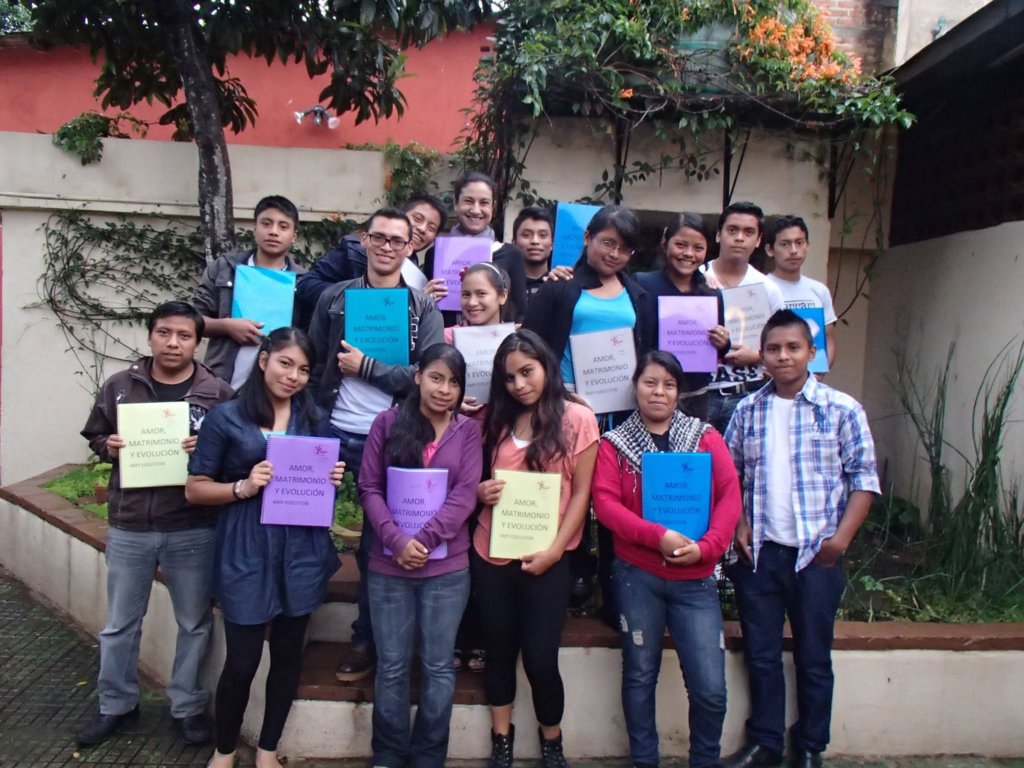
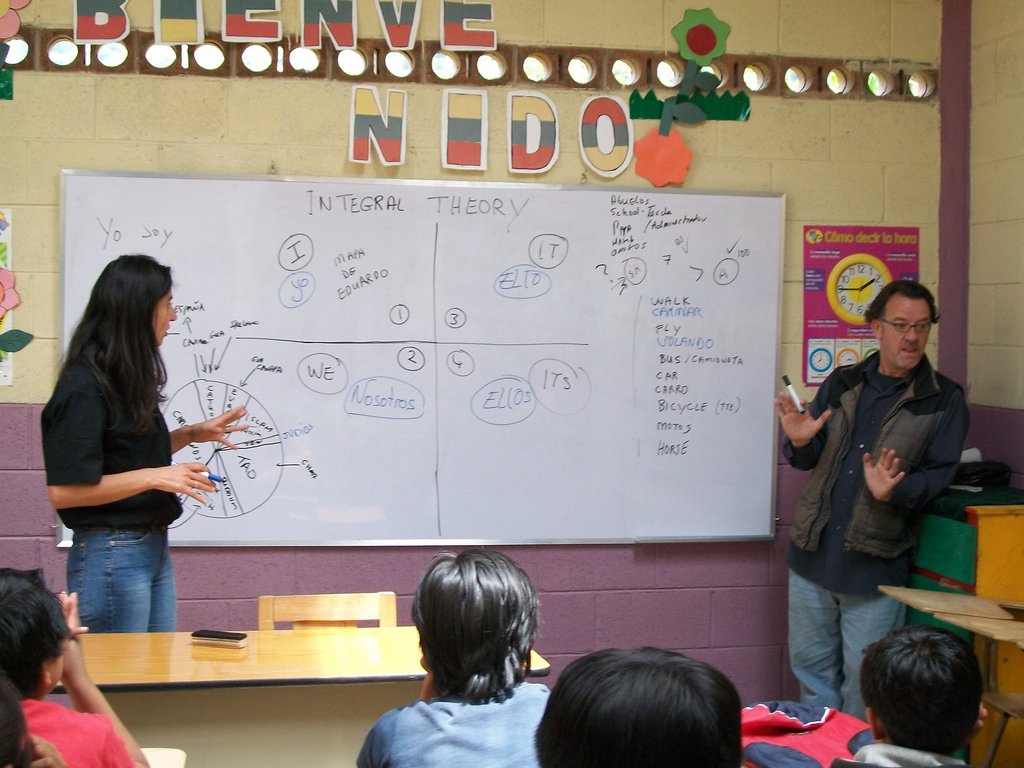
We have a great report for you on the progress of the work in our Critical-Thinking program. Both of us were so surprised by the responses we got from our students on their recent book report assignment that we have decided to go into some detail for you.
The book, “Philosophy Is Not A Luxury” by Jeff Carreira is based on the philosophy of American Pragmatism.
But, before we get started, Debora and I, as the directors and teachers of this program, would like to appreciate you, our donors who are making possible the exposure of these brilliant minds to the best of the best available in the field of consciousness today. Without you this would never be possible. Thank you.
The book report we asked for was for each student to write a one-page summary on each of the 12 short chapaters in Jeff’s book (in total 52 pages so not too long). Here are the highlights of the questions, insights and conclusions that our students came back with:
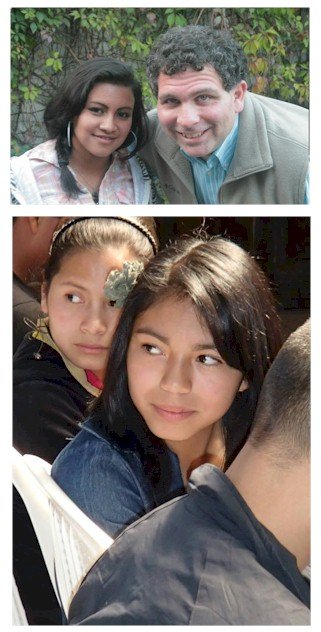
Isai: In the picture with Jeff Carreira, the author of the book, during our First Annual Meditate-To-Educate event in December of 2012.
Isai was a little uncomfortable with the realization that we sometimes act as automatically. In chapter six the author of the book shows how John Dewey explains human action as an unfolding of habits. In this way it is only when disharmony arises that we have a necessary conscious relationship with the environment. Isai thought that there was a lot of truth in this statement, but he didn’t like it. Because of this he began being more aware and conscious about his daily life and in his own words said: “I don’t like to be a machine” questioning at all times, “why am I here?” and “why am I doing this?”
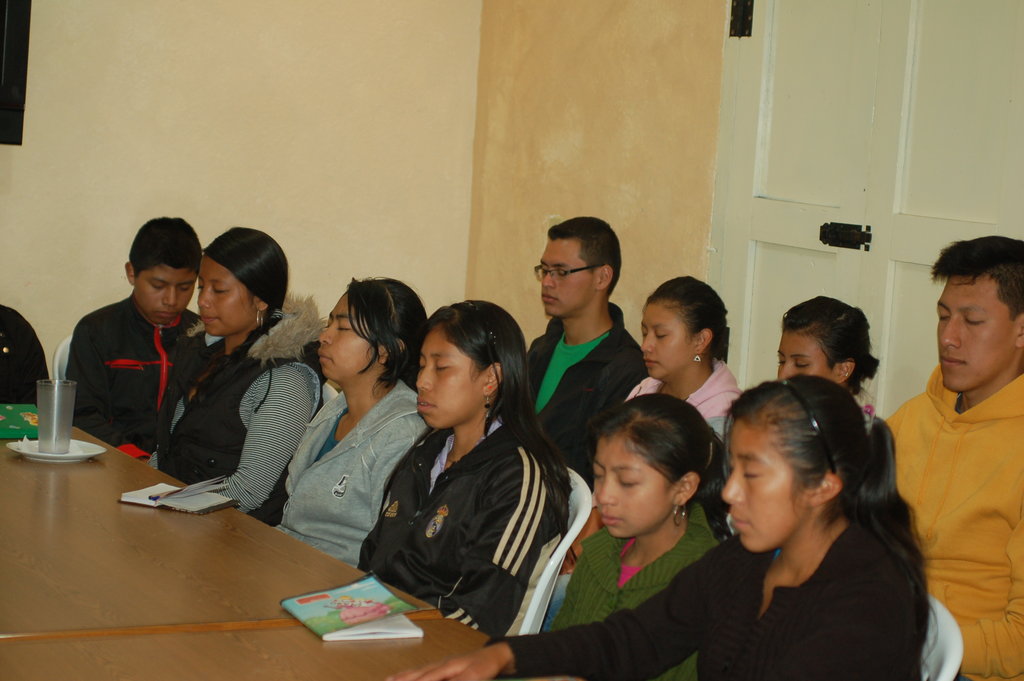
Conal: In the picture with Amy Edelstein (r) and our friend and board member Laurel Jacobson after a meditation session during Second Annual Meditate-To-Educate fundraising event in 2013.
Conal was curious about the statement of William James in chapter five that our choices and therefore actions have repercussions on the person we are going to become. The fact that a choice of a man is not that much about the action he is going to take but the person he is going to become. This had a great impact on Conal and he told us that since pondering this he has a completely different take on his choices and in the fact that he looks at the future man he wants to be.
Shirley: In the picture with Jeff Carreira during First Annual Meditate-To-Educate event in December of 2012.
Shirley had an insight that reality might not be what she thought it was. In chapter number two we can see how Kant distinguishes between Noumenon (what is known without the use of the senses) and Phenomenon (anything that appears or is an object in the senses) and the fact that reality included both. To this the Pragmatists also included human activity in the creation of reality. For Shirley reality was simply out there, and whatever she thought was real was truly real, she never thought that she might have been creating her own view or reality through her own personal lenses, as she said, “I never thought that my reality might look different from that of someone else”.
From a more evolutionary perspective, and looking towards our future as a human species, Shirley also realized our role in the future of humanity. In chapter eleven the author explains how many of us unknowingly allow the sentences in our heads to dictate our being and actions. He suggests at the end of Chapter 10 that if instead of responding automatically to certain thoughts we instead act in a new and fresh way with a conscious sentence that could say ‘we could find freedom’. These were Shirley’s thoughts, going back and forth and trying to glue it all together, in order for her to be a better person.
Jessica: In the picture during Amy Edelstein’s talk on Morals, Ethics and Compassion in December of 2013
Jessica’s insight was to realize that “I think of me as my body, life and history but I am not that”. This is a deep thought that appears in chapter 11 of the book “Committing to a New Reality”, in which the author explains in detail how we create our self-image. Jessy realized that what we usually think defines us is not who we are, it is just something we have.
Jessica was very surprised with this realization and she even began doing meditations on her own in order to figure out who she was when the body, mind, thoughts, and her personal story… were out of the picture. She is still doing so and sometimes she comes to the class with brilliant realizations, and other times with a lot of confusion! This is really great!!
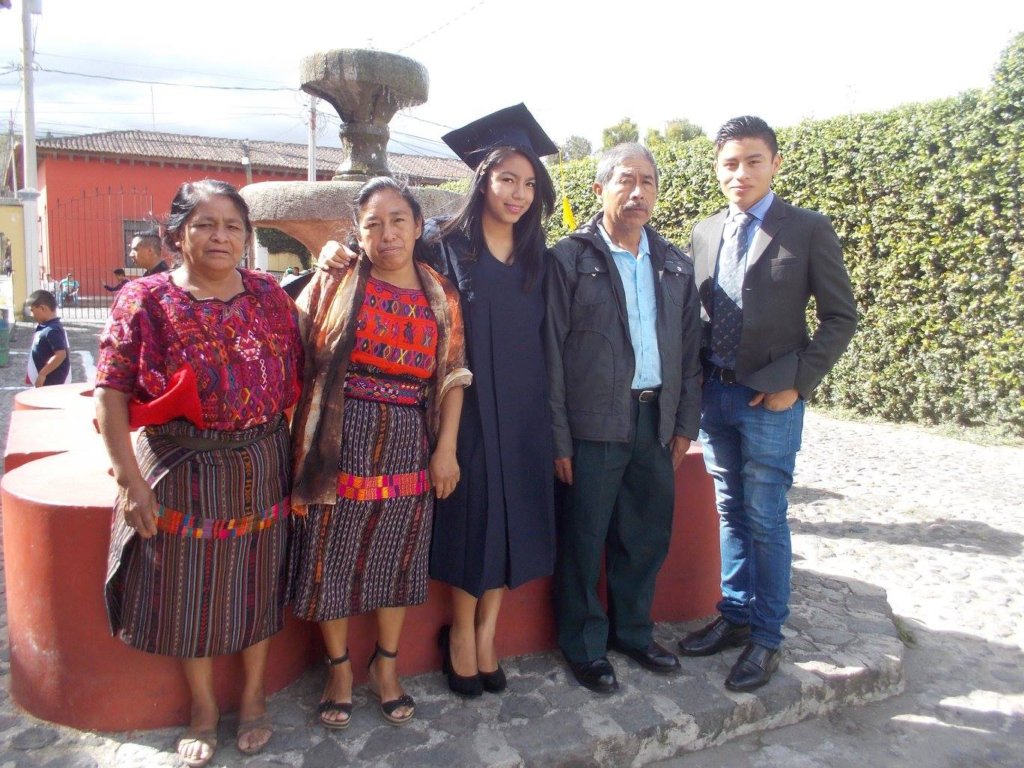
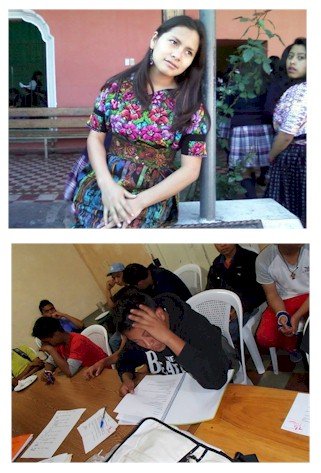
Dinora: In the picture wearing the traditional Guatemalan clothes embracing the traditions of her country and at the same time deepening in the mind of the universe further and further.
Dinora’s big thought about this book was about the “unknown unknowns”. She never thought before about all the things we don’t know that we don’t know and how that also limits our imagination. She was fine with knowing that there are many things that she knows that she doesn’t know. But, when realizing that there are many things that she doesn’t know that she doesn’t know, she said, “I struggle a lot with this”.
She also was surprised with her understanding of the idea exposed in chapter number six “A Habit of Identification”. Here John Dewey describes our lives as an unfolding of habits in which we basically remain unconscious all the time until, for some reason, there is disharmony between our environment and our daily habits. So, Dinora wrote: “Do we act unconsciously in a conscious way, do we choose to be unconscious or are we unconscious of being unconscious and therefore we live completely unaware lives driven by only a chain of learned habits?” She finished her question saying that it feels like we all are born with a stone in our heads that prevents us from moving forward or being curious and in many cases that stone only falls out of our heads when we die.
Eduardo: In the image reading Jeff’s book on the day we first gave them to the students for their assignment.
In Chapter 2, ‘The Creation of Reality’ the author quotes Kant: “reality as we perceive it is not purely pre-existent and objective; it is also, at least partly, constructed and subjective.” Eduardo was really struck by this throughout his entire reading of the book. He came to the conclusion that reality is not something static and already given but something that we actually can create with the ways in which we live our lives.
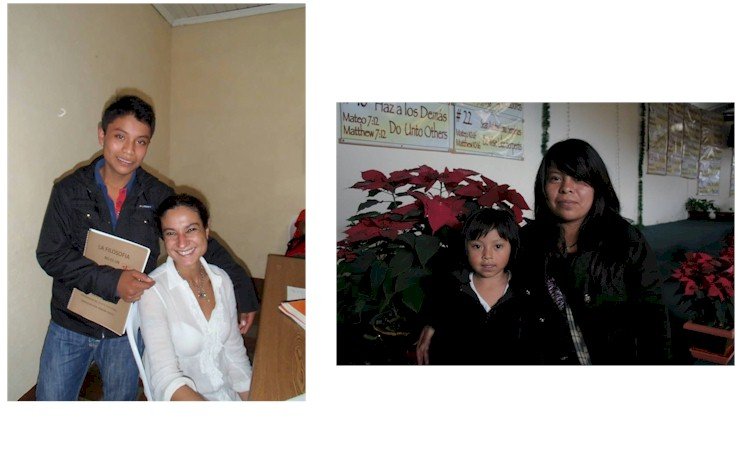
Mario: (The brother of Eduardo) In this picture getting his copy of “Philosophy Is Not a Luxury”.
His insight came basically from the beginning of the book and accompanied him during the whole reading. This, he said, helped him to read the rest from a wider perspective. In Chapter 1 of the book ‘A Mountain of Assumptions’ the author quotes Wilfrid Sellars as follows: “The world doesn’t just exist; it appears to us—and the way it appears is not necessarily the way it is.” Therefore the world by Mario’s understanding is different to each one of us.
He realized that different people can look at the same event, and even if from an objective point of view there is one thing happening, they can interpret completely different things, experience different feeling and come to different conclusions. It depends on the lenses of the person who is looking at it. Mario was kind of sad with this realization as he got to the conclusion that reality is just the opposite of what we have been told. The reality we believe to be real is just the perspective of the person or persons who have been telling us what it is. Not bad for a 15 year old who lives with 6 brothers in 2 rooms, one of which only has dirt as a floor.
Fabi: In this picture with her little sister during our Christmas party celebrated every year.
Fabi’s strongest insight came while reading Chapter 7 of the book ‘Fallibilism’ in which the author explains how the mind cannot simply be a representation-creating device otherwise we would all see and interpret the same thing when facing the exact same event. Like a mirror only reflects exactly what it is in front of it, without changing anything, we could never make a mistake or error of judgment.
But in the chapter we see how Charles Sanders Peirce explained that our minds work more like paintings that become models for other paintings and these other paintings are the models of the next ones and so on. In the same way our thoughts are like these paintings and not as mirrors. To Fabi realizing that our thoughts are nothing but the result of secondhand ideas planted in our heads since we were born by others whose ideas and thoughts have been planted there by previous generations. This realization was kind of difficult because she came to the conclusion; ‘What I think, believe and take as real might not be that real and maybe the people who I thought knew reality might not be as wise as I thought’.
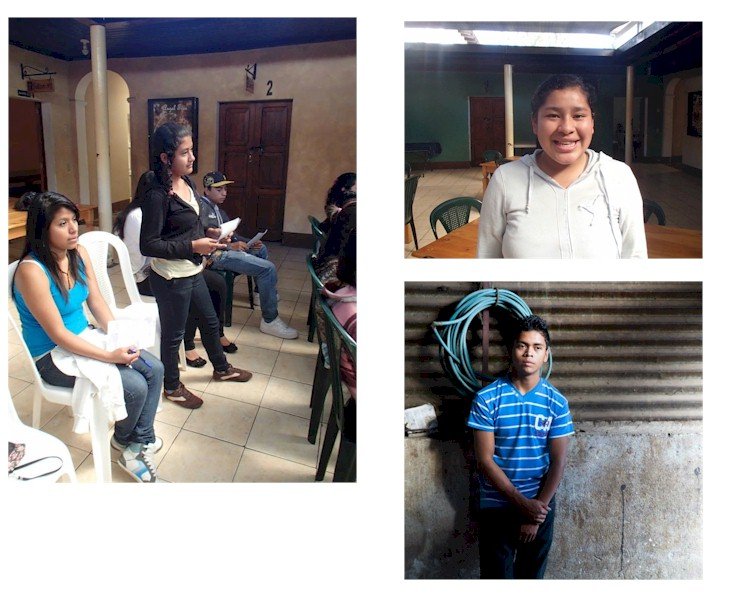
Jenny: In the picture during Amy Edelstein’s workshop in Antigua with the students of the Integral Heart Foundation while asking a question.
Jenny had many different insights and many, many questions. She began with the thought that we are not our history. From a quote in Chapter 11, ‘You might look at your history and say, this history is me—I am the life that I have lived. If you look closely you find that indeed it is your life and your history, but that life and that history is not you. You are the one that has that life and that history.’ In her mind if this is true then, who am I?
Also, as is mentioned in Chapter 10; ‘sentences describe us but we are not the sentences’. To her the more she was eliminating ‘ingredients’ of who she thinks she is, or what she is, the more abstract her self-image was getting. She said that she could see her body, that she wasn’t something abstract, and that it was obvious because anybody could see her. But, at the same time, it was true that if she had a body and she wasn’t the body, who then is the ‘she’ that has a body?
Jenny was also feeling a little insecure about the fact that things she believed she knew might not be as true as she thought they were. Back to Chapter 8 of the book ‘The Reality of the Unknown’ the author mentions how William James used the term ‘Vicious Intellectualism’ to describe how our concepts become obstacles to overcome in our ongoing inquiries. He says “When we recognize something to be real or true, we label it with a word or an idea. Once a concept is created we tend to believe in the truth of that concept and simultaneously see things that contradict it as false.”
Jenny said, “I feel like I am walking on egg shells”, that not only she didn’t know who she was anymore but also she didn’t know who to believe anymore in searching for her identity. Her logic was that the people she could go to for advice probably had already created concepts that they believed to be truth, although they probably really weren’t. She also mentioned the fact that most of people responded to questions automatically ‘knowing for sure that their answer was the truth’ without even thinking about the fact that they could be wrong and the other person right, and without giving any room to ask or see the truth in the other person’s statement.
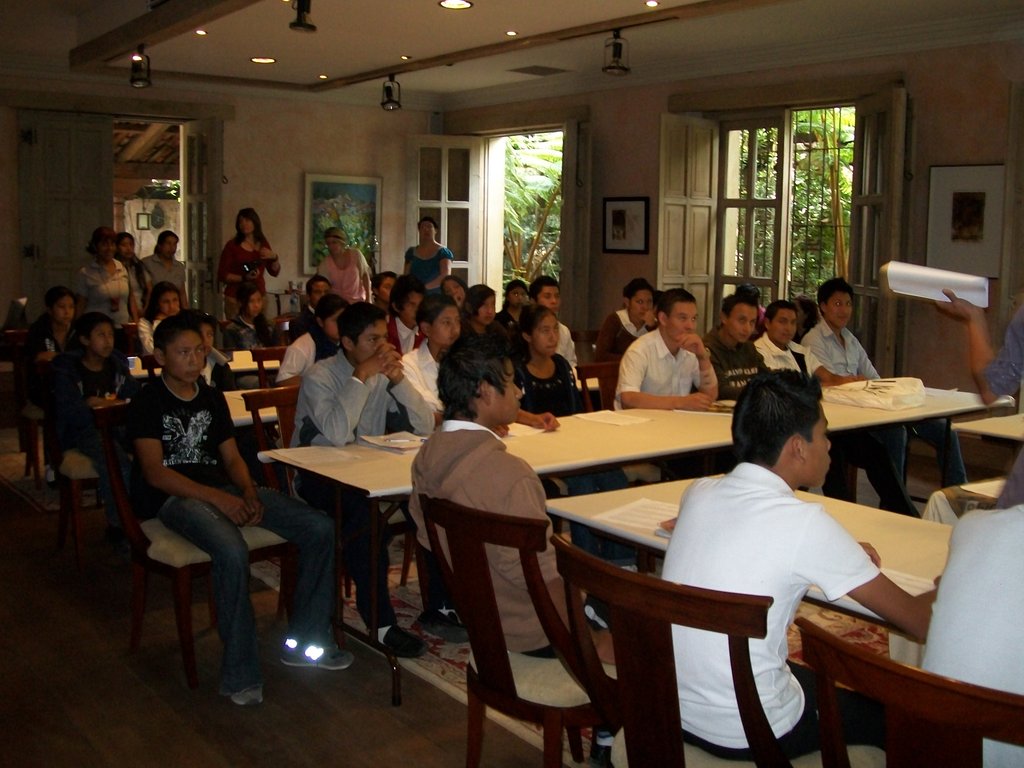
Emily: In the picture just before one of our philosophy classes this year.
Emily showed the biggest change ever. When she came back to the class after the homework assignment was completed and she said that she was a totally different person. “I am hardly the same Emily we knew before.” She began by telling us how the book had shifted the perspective she had on who she was, and that it opened the doors to the possibility of change. She said that reading the book was to her equal to talking face to face to the author, “As if I was sitting with him and the book was only for me.”
Her realization came while reading Chapters 10 and 11, where the author explains how if we use sentences not as something given and fixed that already define us, but as a commitment to a new reality, we can then change. Quoting the book, in Chapter 10, ‘There is a transformative power that is released when we start to see the sentences in our heads, and those that we speak, as commitments to reality rather than descriptions of it. If our sentences are descriptions of a reality that already exists, then there is nothing we can do to change it. But if the sentences that I use are commitments to a reality, then we see that many of those commitments can be reconsidered and changed.’
Emily wants to commit to a new Emily, she wants to be who she wants and not who everybody tells her she is, that now she actually believes. She is happy to know there is a way of changing things including ourselves.
Jimmy: In the picture at his home, in one of the visits we did with potential donors in an (on-going attempt) to find a sponsor for his education.
It is interesting to know that Jimmy’s dream is to become an Evangelic Pastor. So it surprising but, in a very good way, to hear his insights from the book. The most important part for Jimmy was the fact that we should always leave open the door to further inquiry and don’t take things for granted and getting stuck in what we believe the reality, or as he said “what the truth is”.
He said that we shouldn’t be happy arriving to a conclusion but that we have to go beyond that conclusion and keep digging. Quoting the book he pointed at Chapter 8 where the author states: “The goal of inquiry is not to come to the end of inquiry, but to continually open up new avenues for further investigation, because no matter what answers we find they will never be the final truth.” And also at Chapter 12 when the author finishes the book by saying: “In times of crisis, more than ever we must examine what we believe to be true and why we believe it, so we can discover higher, deeper, and more encompassing truths that will lead to actions that will change the world for the better.”
Jimmy said that if he ever becomes a pastor, this is the way he would like to do his job.
We would like to thank you again for your on-going support of this program, and for the joy of hearing these insights emerging from our team of perceptual adventurers!
Project reports on GlobalGiving are posted directly to globalgiving.org by Project Leaders as they are completed, generally every 3-4 months. To protect the integrity of these documents, GlobalGiving does not alter them; therefore you may find some language or formatting issues.
If you donate to this project or have donated to this project, you can receive an email when this project posts a report. You can also subscribe for reports without donating.