By V.Prameela | CEO, Sampark
A brief insight into the lives of migrant women and their children
With over 35-40 million people engaged in the construction sector, women occupy nearly 20-30 percent of this workforce. A majority of these women work as construction labourers primarily because the male members of their family are already employed in the construction sector. The status of migrant women workers can vary depending on factors such as geographic location, regulatory frameworks, and specific working conditions.
Here are some common aspects related to their status:
a. Limited Access to Formal Employment: Migrant women workers in the construction industry lack literacy skills and hence often end up working in informal or precarious jobs, lacking social protections and benefits.
b. Low Wages and Exploitative Conditions: They may face long working hours, lack of proper safety measures, and inadequate access to healthcare and other essential services.
c. Lack of Social Support Networks: Migrant women workers face isolation and a lack of social support networks. This can exacerbate their vulnerability to exploitation and limit their access to information and resources.
d. Language and Cultural Barriers: Language and cultural barriers can pose challenges for migrant women workers in the construction industry. Difficulties in communication and understanding workplace norms can contribute to their marginalization and limit their opportunities for growth.
Role in Supporting Working Migrant Women In India - An insight into our efforts in the year 2022-23
The primary responsibility for childcare prevents women from working or earning incomes, exposing women and children to multitude of problems.
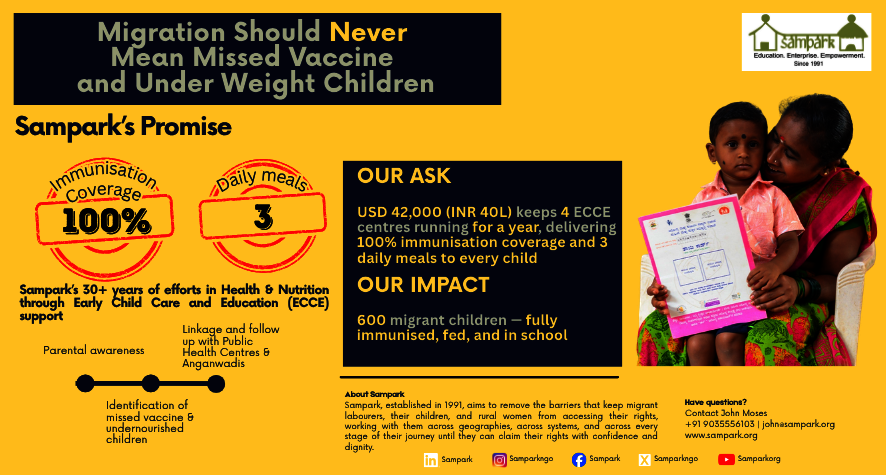
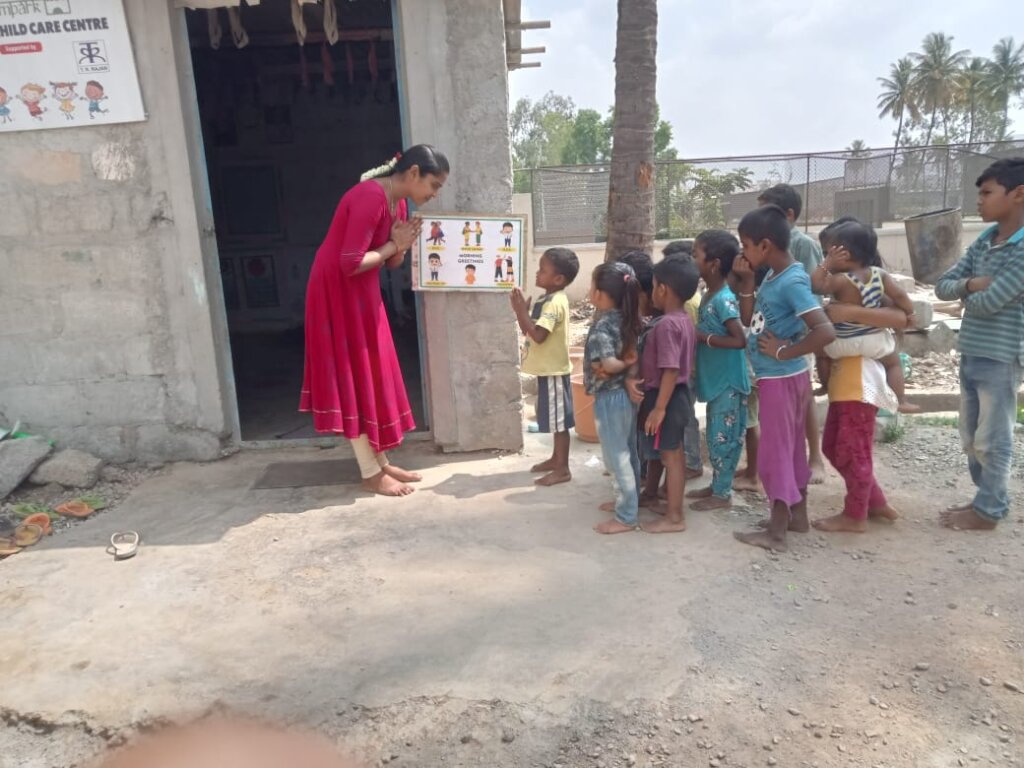
The 28 Early Childhood Care and Development centers that are spread across 75 labour colonies, where 1995 children - 1,046 boys and 949 girls run by Sampark provide a range of services and programs that cater to the care, development, and education of young children, typically from birth to around 14 years of age. The children are classified into three sections:
Crèches - 6 months to 3 years; Balwadi - between 3 to 6 years and non-formal education for children above 6 years.
Support provided by Sampark through its Child Care Centres
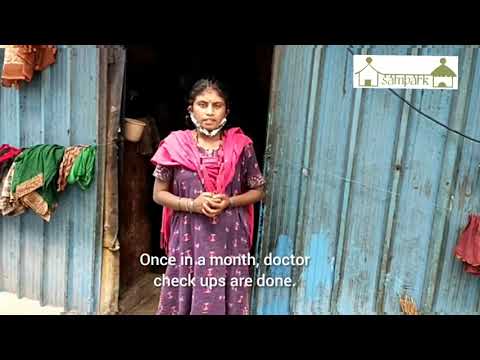
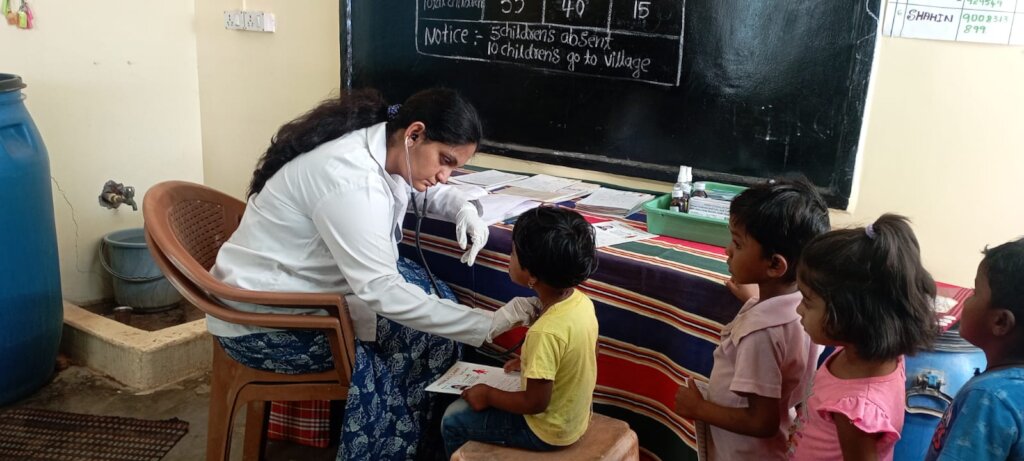
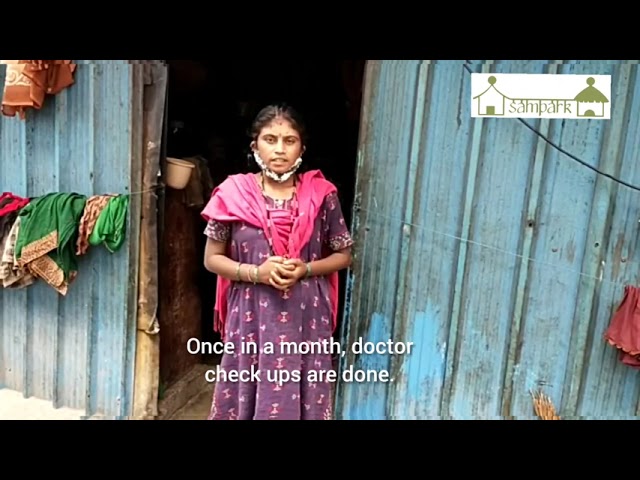
Healthcare: Monthly health camps are conducted at creches. The creche teacher links the children to the local Primary Health Centre to ensure age- appropriate immunization.
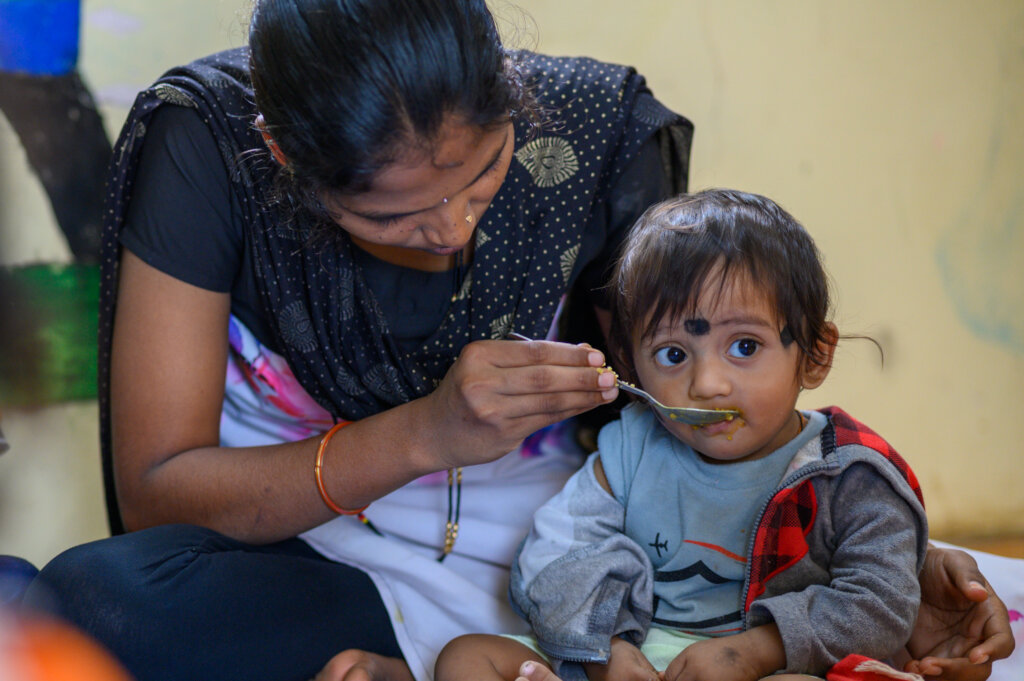
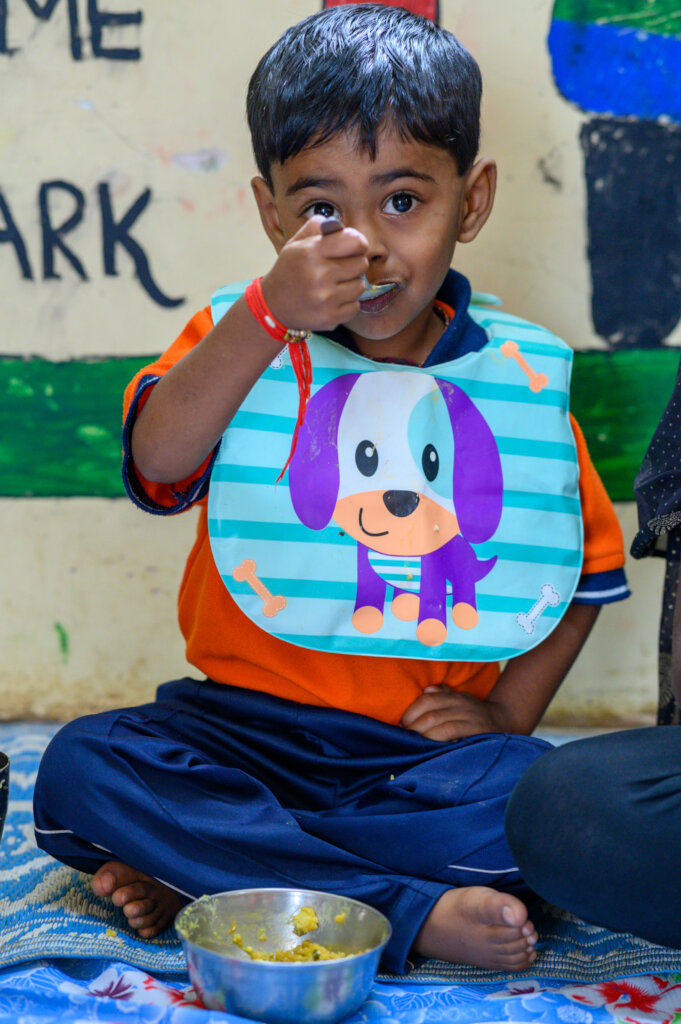
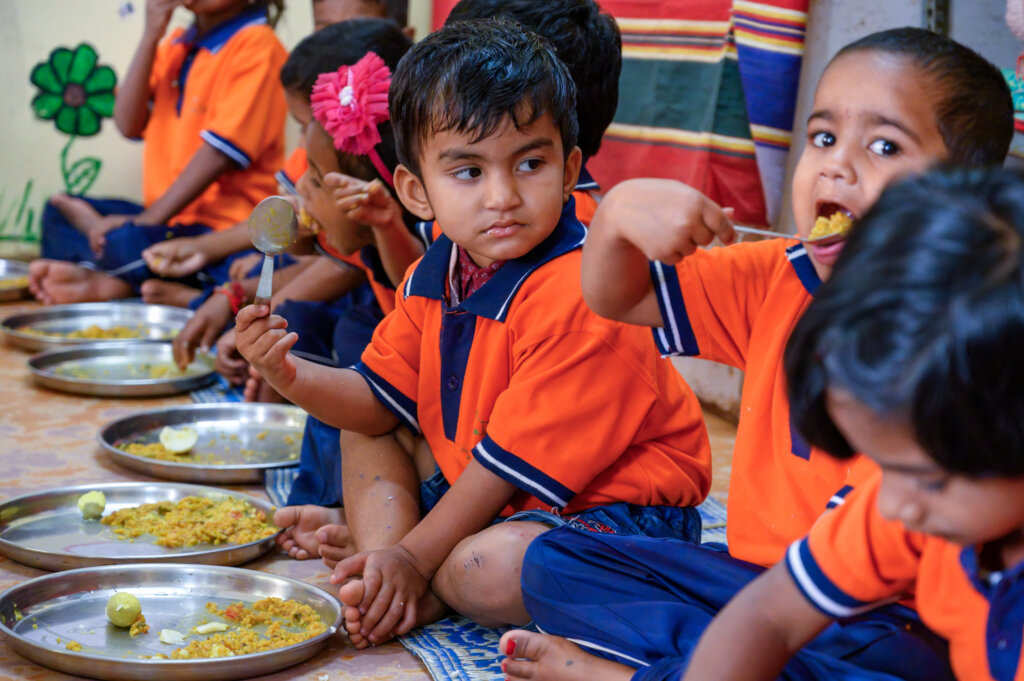
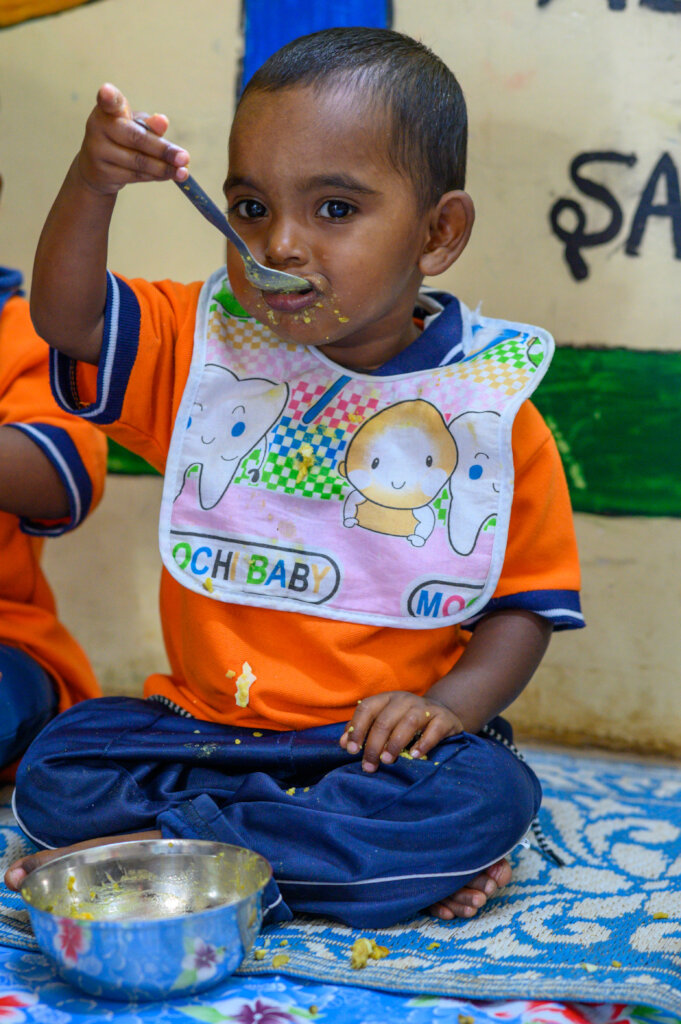
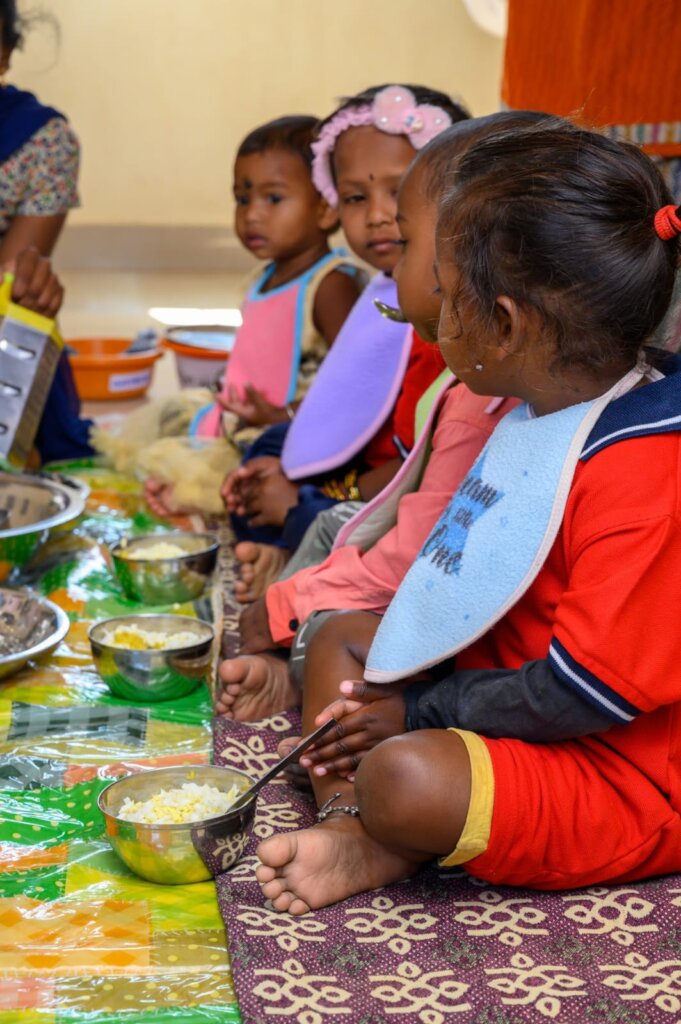
Nutrition: In the centers, all children are provided 3 meals a day. Children’s growth is monitored monthly and children are categorized as normal or undernourished based on nutrition standards prescribed by the World Health Organization (WHO). Undernourished children are put on a special diet.
As a standard practice, teachers prepare and distribute protein powder to the undernourished children. Under the ICDS scheme ( Integrated Child Development services Programme) through the anganwadis, 229 children were also enabled to access anganwadi ( Government day care centres) nutrition.
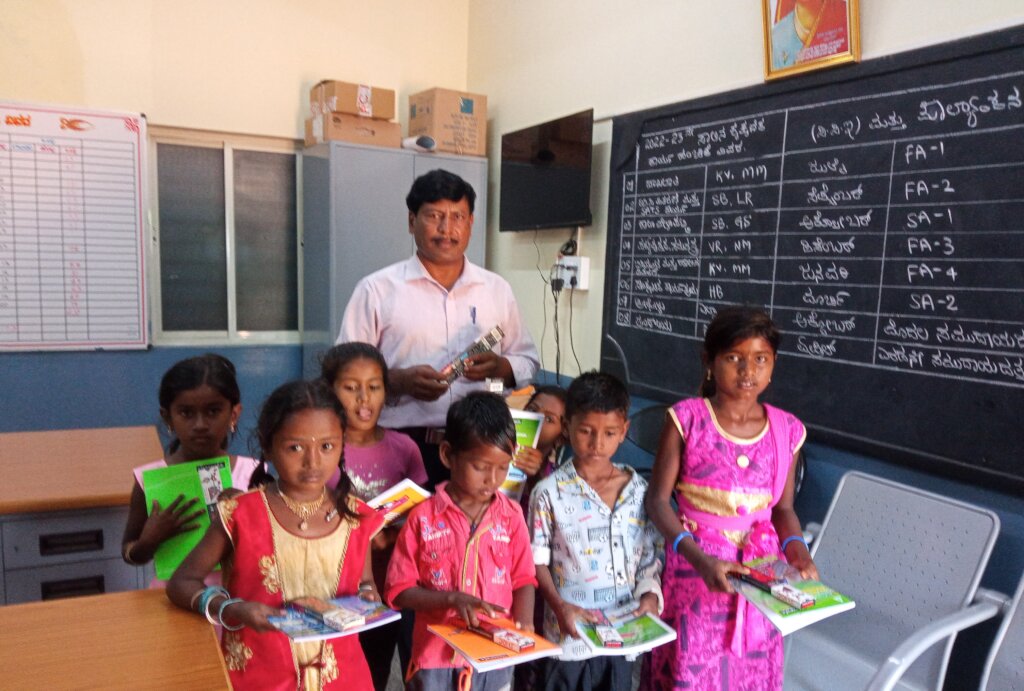
Education: Sampark uses child-friendly materials and techniques to make learning exciting and truly engaging, aiding its absorption. Monthly topics and activities are planned and regular parent meetings are held to discuss attendance and learning. The importance of continuing education is emphasized. Today, children who were once destined to proceed in their lives with zero education can easily read out the alphabet, memorize songs and dances, demonstrate spatial skills by sorting objects, and engage in pre-writing exercises. Sampark is able to transform children into school-ready batches of potential students, on their way to enter mainstream education.
Community engagement: Facilitate community dialogues and workshops to encourage social integration, promote understanding between migrant and host communities, and foster mutual support networks. Ex. Aadhar cards, Pan, Bank account, Health Card. Monthly one parent teacher’s meeting to ensure government school linkages happen on time. 2,731 parents attended the Parents teachers meetings this year
Capacity building of the care providers: The care providers are trained on issues related to education, health, nutrition and inclusive child care practices, equipping them with the necessary skills to support migrant families effectively. 504 child care workers trained.
Mainstreaming the Sampark model in Government Programs
Three of our in-house resource persons have become master trainers and these trainers train the childcare workers of daycare centers which are in the Zilla Panchayat ( block level office), Taluk Panchayat (district government office), NREGA (National Rural Employment Guarantee Act), Zilla Hospital, and Police quarters. These centers are run for the employees of the particular department. In each department, 3 teachers are trained to take care of the employee’s children. The training is for 10 days, 7 days the trainer provides training to all the trainees with regard to activities, Nutrition, Crèche Set up, Immunization, etc, and for the next 3 days, practical training is provided to set up the crèche. The trainer visits these creches and gives practical training and helps in setting up of creches.
Stories of TRansformation
Renamma: A life changing intervention
Hanumantha and Sharanamma, a couple from Raichur district migrated to Bangalore 10 years back in search of jobs. The couple has 4 children, 2 girls and 2 boys. Both parents work as masons. Among 4 children, Renamma is the eldest one, who is 11 years old and studying in 5th standard in the government school. 2 other children are also enrolled in the Government School with the help of the teacher, and the last child is in the crèche now.
During the summer vacation, Renamma’s parents took her to the village and there they tried to look for an alliance to get her married. An alert creche teacher came to know about this through a neighbor. The teacher called the parents over phone and got confirmation that they were indeed trying to get her married.
The teacher and supervisor then told the parents that this is against the law and if they continue with this marriage they will complain to the police under the Prohibition of Child Marriage Act. With several follow ups with parents, the teacher convinced the parents about the importance of education for the child. Parents realized their mistake and agreed to send the child to the school. And also the parents agreed and signed in a document that they won’t stop the child’s education. Now, Renamma is continuing her education.
Sampark’s timely intervention helped in ensuring Renamma has a good future.
Project reports on GlobalGiving are posted directly to globalgiving.org by Project Leaders as they are completed, generally every 3-4 months. To protect the integrity of these documents, GlobalGiving does not alter them; therefore you may find some language or formatting issues.
If you donate to this project or have donated to this project, you can receive an email when this project posts a report. You can also subscribe for reports without donating.



Support this important cause by creating a personalized fundraising page.
Start a Fundraiser