By Bernadette Martin | Engagement Manager
As a multi-mandated, child-focused organisation, World Vision has serious concerns about the immediate and long-term impact COVID-19 and ongoing response measures may have on the health and well-being of children, especially those most vulnerable, in both stable and fragile or conflict-affected contexts.
We urge the world to unite to focus on the most vulnerable children, especially refugees and displaced children. World Vision calls on governments, the UN and the international community to scale-up the global COVID-19 prevention and response measures for children and their families by strengthening health systems, maintaining essential health service delivery, equipping front-line health workers, engaging and communicating effectively with communities including children, and providing critical child protection interventions and psychosocial support.
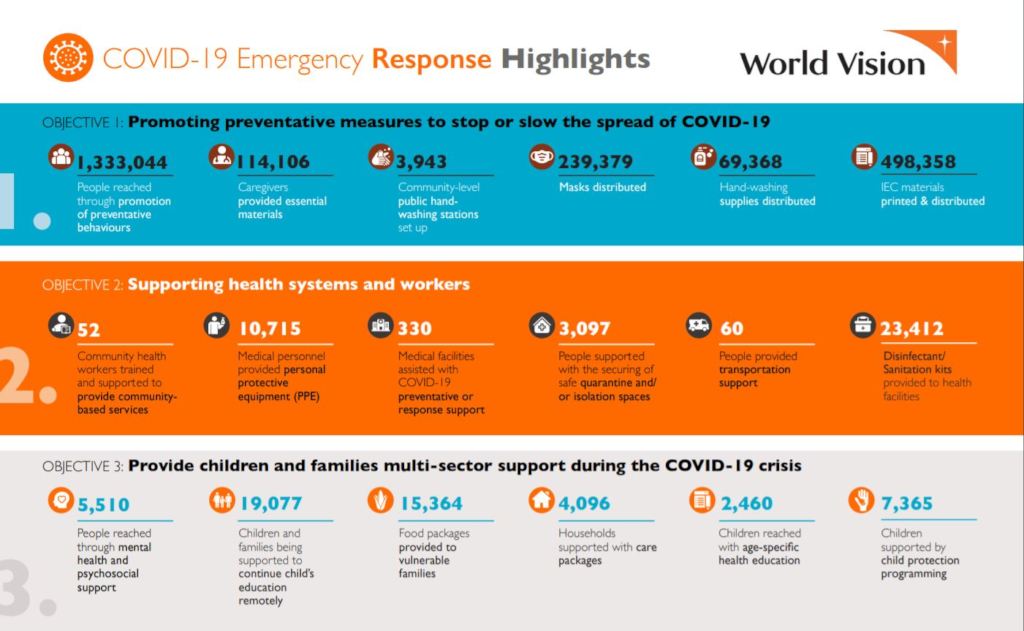
In the Asia Pacific Region, World Vision has reached 1,144,486 children with preventative messaging and psychosocial support and assisted 330 medical facilities.
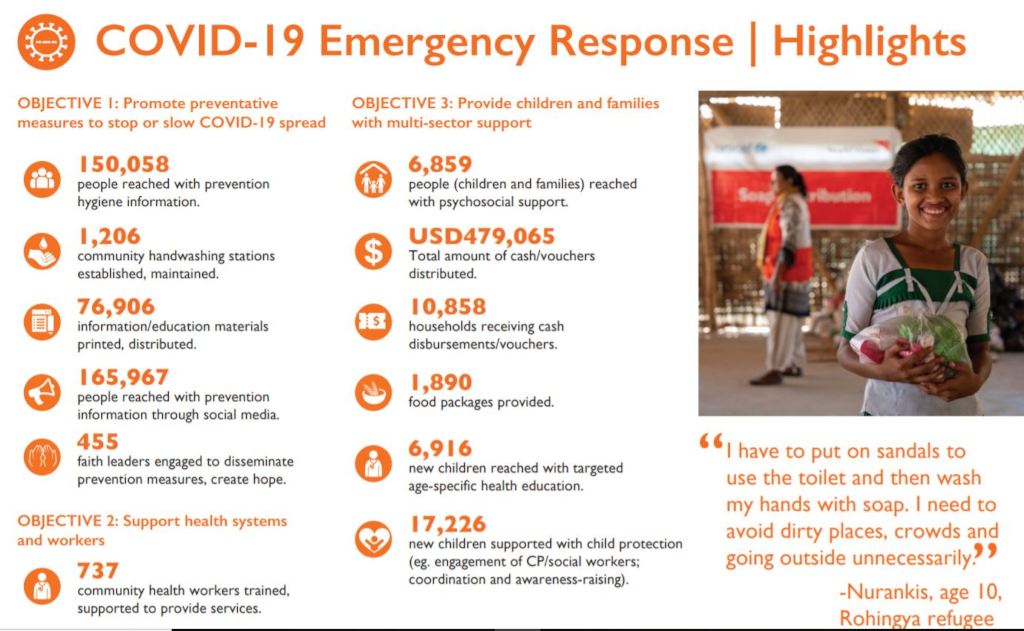
This week's country update shows highlights of our work in Bangladesh- see attached
Country Overview
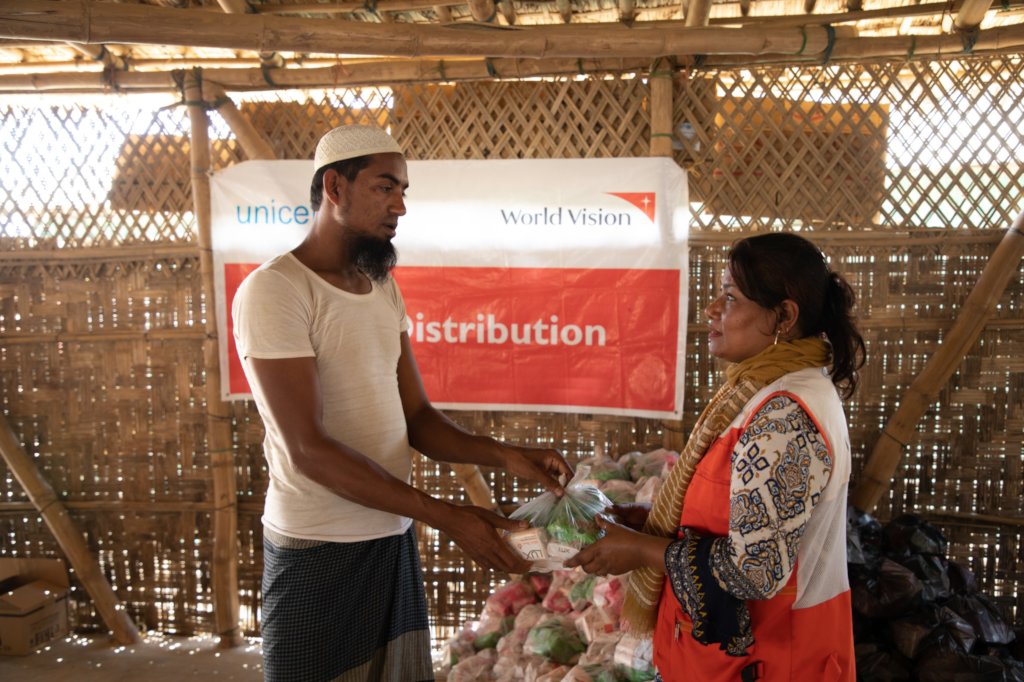
World Vision acted quickly to disseminate prevention messaging to community leaders (including faith leaders) across its 56 Area Programmes with 152,614 sponsored children. In the refugee camps, our USAID-funded programme provides fresh food to more than 49,000 refugee households each month.Vendors are pre-packing food so refugees spend less time queuing in the shops, and are delivering food to quarantined households in the camps.
Lessons Learned, Best Practices and Innovations
Transitioning all staff quickly to productive work-at-home schedules was challenging, but teams are adapting. Many completed WHO on-line training on COVID-19. Overcrowded conditions in the Rohingya camps (40,000 people per km2) makes people particularly susceptible to the virus. The 335,000 people in need in the surrounding district—the poorest in Bangladesh—are also extremely vulnerable. Providing essential services is difficult as humanitarian access to the camps shrinks and the army begins to control NGO movements more.
Gaps and Challenges
We are calling on government, the UN and the international community to scale up prevention and response measures for children and their families. This includes strengthening health systems, equipping frontline health workers, and engaging and communicating with communities effectively regarding COVID-19 prevention and health services. We also urge that full humanitarian access be assured to NGOs working in the Rohingya refugee camps that are providing life-saving services to these especially vulnerable children and families.
Advocacy
Adequate testing continues to be a problem. The government is taking strong prevention measures and a national lock-down is in place until 25 April. All transportation is halted. All operations of World Vision development programs are on hold, while our COVID-19 emergency response has started in Cox's Bazar and is being rolled out elsewhere across the country this month. In Cox’s Bazar, World Vision is providing essential services in the world’s largest refugee camp that is home to 1 million Rohingya. Activities are restricted to food assistance, WASH, nutrition and protection case management. Some 200 staff continue to work in the camps following training on COVID-19 prevention.
I have to put on sandals to use the toilet and then wash my hands with soap. I need to avoid dirty places, crowds and going outside unnecessarily. -Nurankis, age 10, Rohingya refugee
Links:
Project reports on GlobalGiving are posted directly to globalgiving.org by Project Leaders as they are completed, generally every 3-4 months. To protect the integrity of these documents, GlobalGiving does not alter them; therefore you may find some language or formatting issues.
If you donate to this project or have donated to this project, you can receive an email when this project posts a report. You can also subscribe for reports without donating.