By Elinasi Monga | FJT Project Manager
Project Summary
Forest Justice in Tanzania (FJT) is an advocacy initiative between the Tanzania Forest Conservation Group (TFCG) and the Community Forest Conservation Network of Tanzania (MJUMITA) that has been financed by the Accountability in Tanzania program between January 2011 and December 2015. FJT aims to conserve forest ecosystem services for the benefit of the nation and local communities by amplifying the volume of citizens’ demand for forest justice and by supporting the government to supply more equitable and sustainable forest governance. This report covers the progress of the project between September - December 2015.
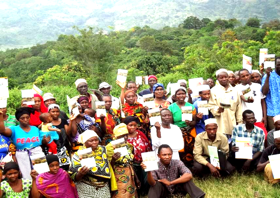
Through MJUMITA’s 10,345 members, the project succeeded in reaching over 1 million people living in the 452 villages represented in the network. The strong partnership that exists between TFCG and MJUMITA meant that the project was able to get going rapidly and to implement almost all of the planned activities despite some delays in getting funds. The investments made in building TFCG’s and MJUMITA’s institutional capacity also meant that the project was well planned, implemented, monitored, and administered.
National elections in Tanzania in October 2015 provided an opportunity for communities and the FJT partners to frame the dialogue on forest governance in the context of the democratic process.
In addition, good working relationships with district authorities, journalists, and the Ministry of Natural Resources and Tourism allowed for:
Opportunities - Accountability amongst elected representatives
FJT’s work to develop and promote the MJUMITA forest manifesto has significantly raised the profile of forestry issues amongst elected representatives at local and national levels. The next step is to trace the implementation of the recommendations outlined in the manifesto and to monitor implementation of the electoral promises of those candidates who promised to improve governance in the forestry sector. FJT’s work around the manifesto has enabled MJUMITA to identify a cadre of allies with political influence at local and national level with whom we can work to implement the manifesto recommendations. Commitment to address forest governance issues is particularly strong amongst many ward councillors including those MJUMITA members who were elected as Ward Councillors. The new Minister for Environment also appears to be particularly committed to forest conservation as reflected in the concern that he expressed about high deforestation rates in Tanzania, in his first press conference after coming into office,
Opportunities - Awareness
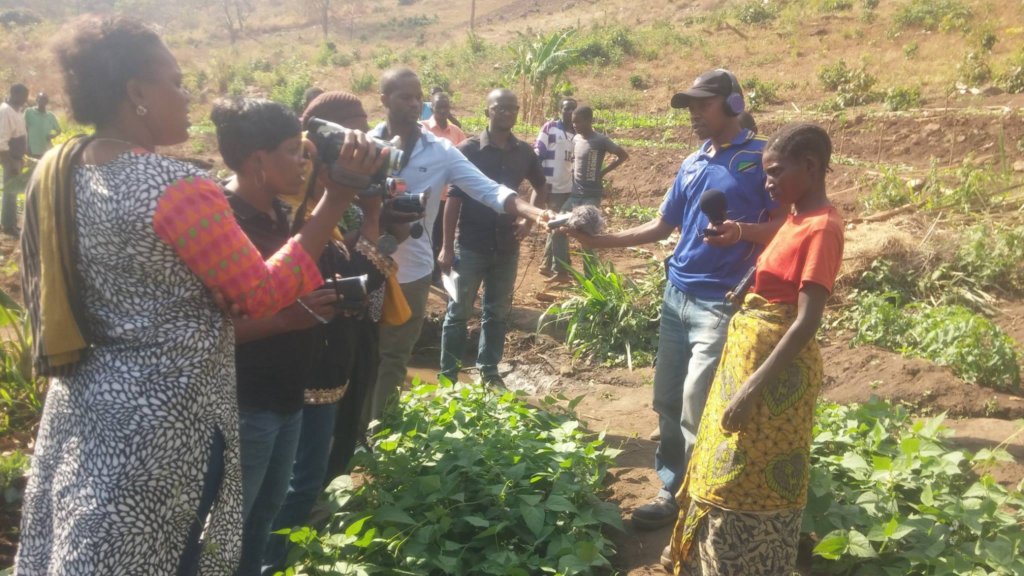
The widespread media coverage achieved through the FJT project has increased awareness and support for forest conservation within Tanzania; and has increased understanding amongst many stakeholders on the linkages between natural resources management and broader governance issues. Materials developed by the FJT project, such as the documentary on forest crimes can be used in awareness raising events.
Opportunities - International recognition for MJUMITA’s work
In December 2015, MJUMITA was awarded with the prestigious UNDP Equator Prize 2015 in the category of Forests. MJUMITA was granted the award for its work on community based forest management. The Equator Prize is awarded each year by UNDP to 20 outstanding local and indigenous community initiatives that are advancing innovative solutions for people, nature and resilient communities. MJUMITA’s nomination was selected from amongst 1,461 nominations from 126 countries.
Way Forward - Lessons learned
The project’s theory of change rests on the premise that by amplifying the volume of citizens’ demand for forest justice and by supporting government to supply more equitable and sustainable forest governance, forest ecosystem services can be conserved for the benefit of the nation and local communities. Overall the project has demonstrated that this theory of change remains valid. Reductions in deforestation rates in the forests that were monitored by the project coupled with evidence of increasing law enforcement and positive shifts in the attitudes and behavior of all of the project’s boundary partners points to the effectiveness of the project’s strategies, particularly the grass-roots advocacy work with community-based organizations and other civil society organizations.
Forest governance remains intertwined with issues related to land tenure. Deforestation occurs frequently where there are disputes over village boundaries and where village land is considered as ‘general land’ by local and national government associated with the absence of village land use plans and village land certificates.
The research on forestry sector financing pointed to the need to make fundamental changes to the ways in which forestry sector budgets are developed and revenue targets are set. The current system of setting revenue targets without considering basic principles of sustainable harvesting is contributing to the current high rates of deforestation in many parts of the country. Similarly the absence of any formal mechanism to hold Tanzania Forest Service Agency (TFS) accountable for the effectiveness of its management of natural forests together with the embedded disincentives to empower communities to manage their natural forests remain fundamental policy issues to be addressed.
Links:
By Namasha Schelling | Executive Director
By Namasha Schelling | Executive Director
Project reports on GlobalGiving are posted directly to globalgiving.org by Project Leaders as they are completed, generally every 3-4 months. To protect the integrity of these documents, GlobalGiving does not alter them; therefore you may find some language or formatting issues.
If you donate to this project or have donated to this project, you can receive an email when this project posts a report. You can also subscribe for reports without donating.