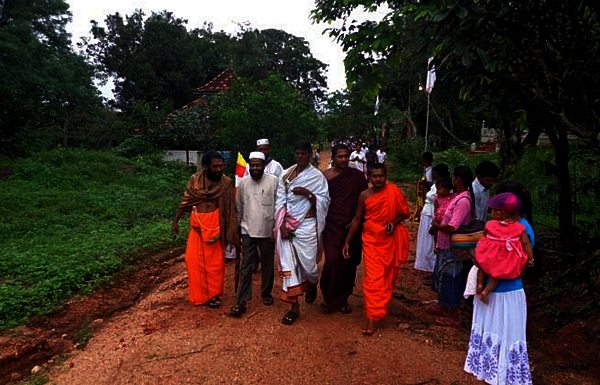
This project supports local peacebuilding in Eastern Sri Lanka, led by interfaith councils of community-based religious leaders. Their work builds social cohesion across ethnic and religious divides, and helps community members resist extremist trends.
Ten years after the end of the brutal civil war, the ethnically and religiously diverse people of Sri Lanka continue to cope with old wounds and new tensions. The 2019 Easter bombings have further deepened social divides-feeding into the anti-Muslim rhetoric of hardline Buddhist leaders, and pitting faith groups against each other. To prevent further violence and support healing, it is critical to counteract false rumors and hate speech, and foster cooperation across divides within communities.
This project builds resiliency and trust among diverse Sri Lankans using a successful model of interfaith cooperation. We work with Sarvodaya (a Sri Lankan NGO) to support interfaith councils of religious leaders that formed during a reconciliation program we led together in 2011-2013. These faith leaders now lead publicly visible activities together-cultural exchanges, youth activities, repairs of places of worship, interfaith dialogues for young religious leaders-and help de-escalate tensions.
Grassroots interfaith activities build trust among diverse Sri Lankans who have been pitted against one another for decades. The faith leaders in this project help communities reach across divides, to work together to prevent further violence. In 2018, informal community relationships prevented anti-Muslim mob violence from escalating into widespread bloodshed-sometimes, through acts as simple as texting a neighbor to avoid a certain area. This project explicitly strengthens those connections.