By Kaganga John | Director
31st March 2021
KIKANDWA ENVIRONMENTAL ASSOCIATIO (KEA)
P.O. Box 27551,
The role of KIKANDWA ENVIROETAL ASSOCIATION DURING COVID -19 CRISIS
greening community to forest villages
Covid-19 continues to cost lives of rural poor communities of Kikandwa, and how we are working tirelessly to help tackle the pandemic and support the most vulnerable families. This is to thank you for being a friend of KEA. 2020 /2021, we couldn’t have achieved anything without you as a partner and friend. We didn’t achieve everything we set out to do but we did succeed a lot- despite the COVID19 pandemic. 2021 looks promising due to exciting new ambitious goals and projects which we will continuously update you.
I have the pleasure to inform you that since 2020, March the country went on total lockdown with burn of travels, a two months internet shout down early this year 2012 , the member persisted to keep living in adoption to SOPS, up to now, we are also happy to inform you that during that period a lot of projects and activities have been implemented within community and beyond with our own resources and less external support. Members of the community in general have been longing to meet in person to update to share knowledge and progress of the organization this has not been possible always.
With meager resources, KEA extends its sincere appreciation to GlobalGiving, donors, advisors as joined global efforts to raise $1000 and more to coordinate on ground activities ranging from combat the three interconnected environmental crises the world faces today, namely, climate change, nature and biodiversity loss, and pollution and waste levels, these crises are manifested in air and water pollution, pestilent and erosive land-use practices, desertification and extreme weather events. According to a recent study. Feed the hungry marginalized families, many could not access nutritious food from market as transport was burned, sensitization of door to door on effects of covid -19, this called for emergency support to families that could not access liquid or bar soap, sanitizer, jerricans, posters hand written and printed out in local language, local radio programs lined with ministry of health with aim of sensitizing community as many could not access newspapers, radio, or television.
Supporting women and young people
The flexibility of GlobalGiving and donors allowed us to use existing funding, responding to the pandemic. For example, supporting women, elderly, disability and young people was key priority through, targeting most impacted by the Crisis. The women we work with are now well placed to share accurate and rapid information about Covid-19 throughout their communities. For example, in the managed funding ensured that Covid-19 response activities were able to take place, including soap and mask distribution to communities and the provision of tap buckets and hand washing stations. Remote communities are being reached through existing relationships with local authorities and local women leaders are responsible for
community awareness raising, by sharing key messages via megaphone alongside the utilization of radio broadcast, mobile hotspots and social networks engagement on personal health and hygiene measures through training volunteers and frontline women staff from KEA which also provide psychosocial support and support to pregnant mothers.
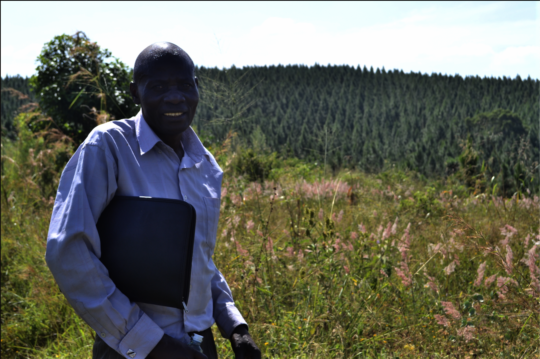
The global restoration of ecosystems to their former glory is continuous ongoing key activity to addressing those crises and to keep check of our consumption and production patterns. Restoration of eco-systems is also our single largest nature-based opportunity for climate change mitigation. The plantation of over 10,000 trees in 15 months coordinately match this year’s World Environment Day which is 5th June every year, The United Nations will formally launch the UN Decade on Ecosystem Restoration. Therefore together we would like to join the UN to make a global call for the protection and revival of ecosystems around the world, in recognition of the mutual benefit for nature and people which KEA had started on more than 15 years ago. The greening of more than six villages in Bbambula parish and beyond making it a green belt which has been named a Forest Village.
This has been possible through: Planting fruit and indigenous trees whereby we have planted more than 100,000 trees, Practicing Analog Forestry, Saving and conserving Natural Forest Patches also known as Half+Half 1000 Acre Community Forest, the same initiative also included Live fencing, Tree garden saving, Agro forestry Practices, Farm tree managed regeneration and woodlots making it more of the FOREST VILLAGE which is most likely to be the first Forest Village in Mityana district and in Uganda in general made by the local community at the grass root with minimal external support. Other activities being implemented by KEA are Bee-Keeping, Community Rain Water Harvesting and Agroecology farming. KEA’s inception attracted the community to minimize charcoal burning, fire wood selling and local brew distillation which was the major economic activity in the area leading to wetland and land degradation and poverty. Uganda and beyond.KEA also want to Plant fruit and indigenous trees covering the entire district; Establish Eco-Agro-tourism Centre and a relaxation community garden which will be contributing to community based tourism attracting tourists hence contributing to the development of Agi-tourism industry in Uganda which is still less developed. Other activities will include soil management and conservation and bio-fertilizer &Natural pesticide production; Climate Change Adaptation & Mitigation and & Food processing through Agro-ecological and Regenerative Agricultural Techniques and Nature conservation.
“We’re also committed to continuing our fight against environmental degradation leading to hunger, so we're keeping our programmes running through this new crisis. Even with travel restrictions and lockdowns, we’re in some of the hardest to reach places ensuring children and their families receive the vital care they need.
“According to the United Nations, the number of people globally suffering from acute food shortages could nearly double in the next year due to Covid-19 and its economic impact. In Uganda , food insecurity could double in just the next three months.”
Getting money to families for basic necessities
We are receiving very desperate calls from the women artisans from marginalised communities in rural areas. Due to the Covid-19 pandemic they have been hard hit economically - many of them being the sole bread earners for their families as the most vulnerable women reside in hilly stone land scape , farming and sending food to them, especially in wake of the coronavirus pandemic, is a huge challenge in itself it is our top priority to keep a flow of money to them so that they can buy basic commodities for themselves as no family should be left behind. We aim to sustainably send more support till life gets normal for everyone , Motivation’s teams Since then we’ve focused on virtual outreach, completely adapting the way we work with disabled people. We’re reducing their sense of isolation and sharing disability-specific guidance on Covid-19, including how to maintain hygiene. We are connecting with partners to provide health supplies, like continence pads. We’re also advising others on how to ensure their humanitarian responses are inclusive for disabled people and their families."
Violence and Abuse among children
Since COVID-19 was declared a global pandemic in March of 2020. The virus has had both short-term and far-reaching implications for our families, friends and colleagues. It also has an impact on our work, and has continued affect the achievement of our shared vision of a world without violence against children. As the virus continues to spread across the world, we are all facing multiple new stresses, including physical and psychological health risks, school and business closures, family confinement, isolation and economic vulnerability, school dropout, early child pregnancy at year 12, child labor in stone quarrel, markets , Through all of that, children are particularly vulnerable. As we continue to navigate this rapidly evolving situation, it is essential to stay informed on the latest news, updates and resources about the virus and its effect on children. As a global partnership, we need to share the latest evidence, data and information to protect children from COVID-19 and the related risk of violence.
There is need to build consensus and advocacy capacity on solutions to environmental challenges, violence based actions, hunger, school drop, sharing methodology and strengthening alliances with women, women groups and policy makers and briefly to share Kikandwa Local Government plan in the Gender sector specifically on women and women groups with KEA so that together we can forge a way forward how KEA can work together with GlobalGiving and its donors thanks to our partners.
Yours in solidality
C0-Founder and Director
Project reports on GlobalGiving are posted directly to globalgiving.org by Project Leaders as they are completed, generally every 3-4 months. To protect the integrity of these documents, GlobalGiving does not alter them; therefore you may find some language or formatting issues.
If you donate to this project or have donated to this project, you can receive an email when this project posts a report. You can also subscribe for reports without donating.