By Maria Christine Saplala | Project Leader
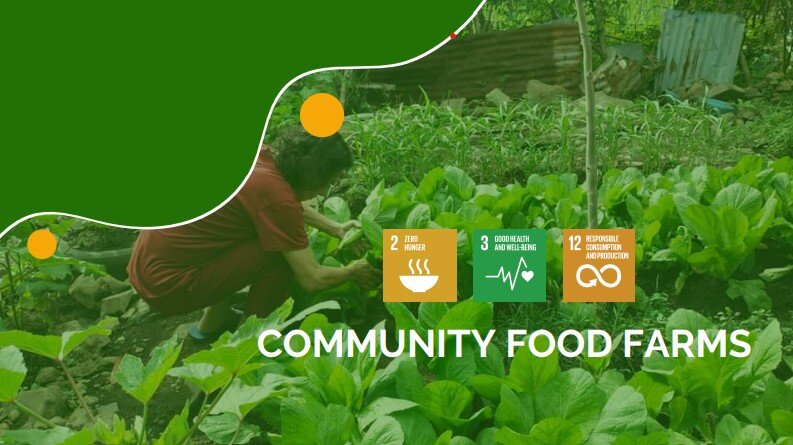
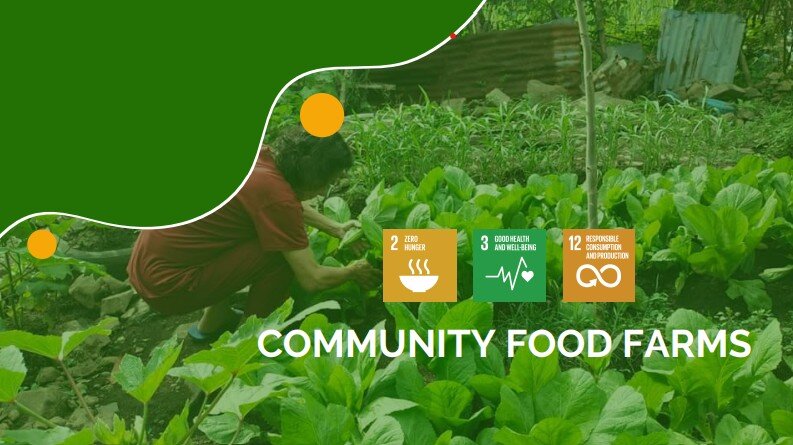
Across different communities in the Philippines, the Community Food Farm (CFF) continues to serve as a simple but powerful response to hunger, livelihood challenges, and the need for stronger community ties. More than just a place to grow vegetables, these farms are spaces where parents, volunteers, and neighbors work together to provide food for their families while rebuilding confidence and hope.
During this reporting period, two Community Food Farm sites—in South Cotabato and Quezon City—showed how even small plots of land can make a meaningful difference when communities come together with a shared purpose.
What We’ve Achieved
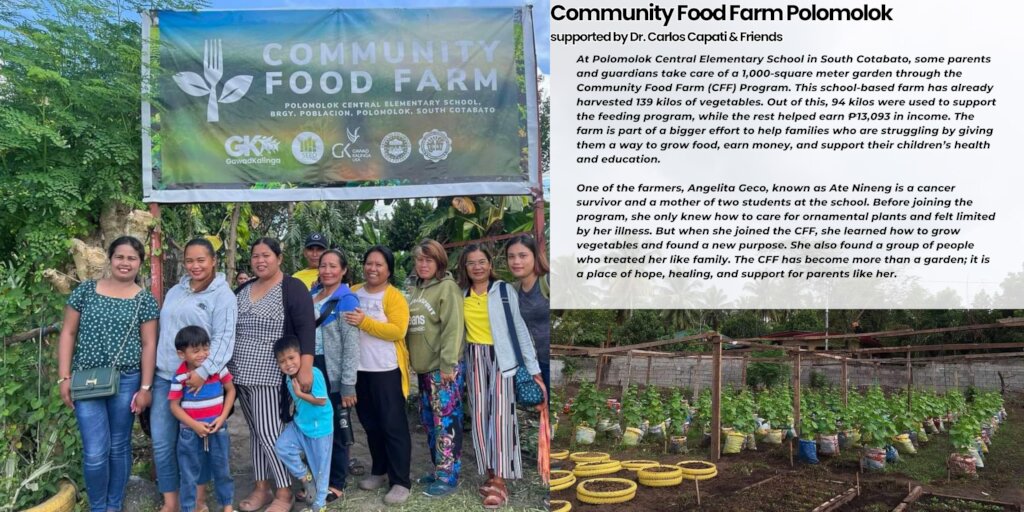
At Polomolok Central Elementary School in South Cotabato, parents and guardians manage a 1,000-square meter school-based farm as part of the CFF program. Together they cultivated vegetables that both supported student nutrition and provided modest income for participating families.
The farm has already harvested 139 kilograms of vegetables. Of this harvest:
94 kilograms were used to support the school’s feeding program, helping provide nutritious meals for students.
The remaining produce generated 13,093 in income, supporting participating parents and sustaining the farm’s activities.
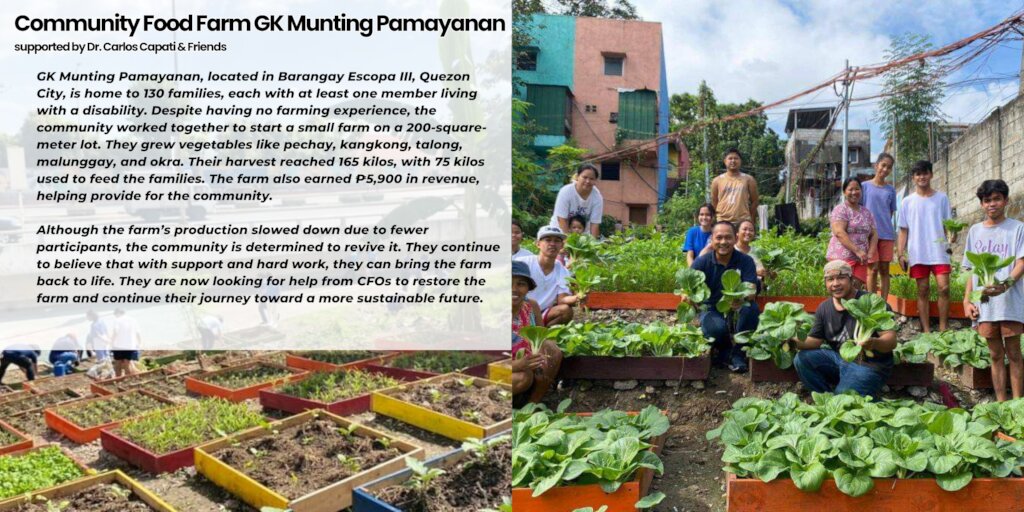
Meanwhile, in GK Munting Pamayanan in Barangay Escopa III, Quezon City, a community of **130 families—each with at least one member living with a disability—**launched their own small food farm on a 200-square meter plot. Despite having little to no farming experience, residents worked together to grow vegetables such as pechay, kangkong, talong, malunggay, and okra.
Their collective effort produced 165 kilograms of vegetables, with 75 kilograms used to feed families within the community. The remaining harvest generated 5,900 in revenue, helping support basic needs and encouraging the community to continue the initiative.
Both farms were made possible with the support of Dr. Carlos Capati & Friends, whose generosity helped communities begin and sustain these efforts.
How Donations Were Used
Contributions from supporters and partners helped strengthen these community farms and ensure that families had the tools and resources needed to grow food successfully. Donations were used to:
Purchase seeds, seedlings, and basic farming tools
Provide soil inputs and organic fertilizers to improve vegetable production
Support simple irrigation and garden maintenance
Assist community volunteers and parents who manage the farms and feeding activities
Through these shared resources, small farms were able to produce food that nourishes children while also providing opportunities for livelihood.
Challenges and How Communities Responded
Like many community-driven initiatives, participation levels sometimes fluctuate as families balance work, caregiving, and other responsibilities. In GK Munting Pamayanan, farm production slowed down as fewer participants were available to maintain the garden regularly.
Despite this, the community remains determined to revive and strengthen the farm. Residents continue to believe that with renewed support and consistent participation, the garden can once again thrive and serve the families who depend on it.
A Story from the Farm
For Angelita Geco, known in the community as Ate Nineng, the Community Food Farm became something deeply personal. A cancer survivor and mother of two students at Polomolok Central Elementary School, she initially felt limited by her illness and her lack of farming knowledge.
“Before joining the farm, I only knew how to take care of ornamental plants,” she shared. “Now I’ve learned how to grow vegetables, and I feel like I have a purpose again.”
Through the CFF program, Ate Nineng discovered not only new skills but also a community that supported her like family. For many parents like her, the farm has become a place of healing, friendship, and renewed confidence.
Looking Ahead
The Community Food Farm program continues to explore ways to expand school-based and community gardens so that more families can grow their own food and strengthen local food security. Future efforts include revitalizing farms with declining participation, encouraging new volunteers, and introducing additional training on sustainable urban and community farming.
With continued support, these small farms can grow into lasting sources of nourishment, livelihood, and community resilience.
Thank You
We extend our heartfelt gratitude to our GlobalGiving donors and partners—especially Dr. Carlos Capati & Friends—for helping communities cultivate food, dignity, and hope. Your generosity allows families to grow more than vegetables; it helps them grow confidence, cooperation, and a brighter future together.
By Maria Christine Aquino Saplala | Project Leader
Project reports on GlobalGiving are posted directly to globalgiving.org by Project Leaders as they are completed, generally every 3-4 months. To protect the integrity of these documents, GlobalGiving does not alter them; therefore you may find some language or formatting issues.
If you donate to this project or have donated to this project, you can receive an email when this project posts a report. You can also subscribe for reports without donating.



Support this important cause by creating a personalized fundraising page.
Start a Fundraiser