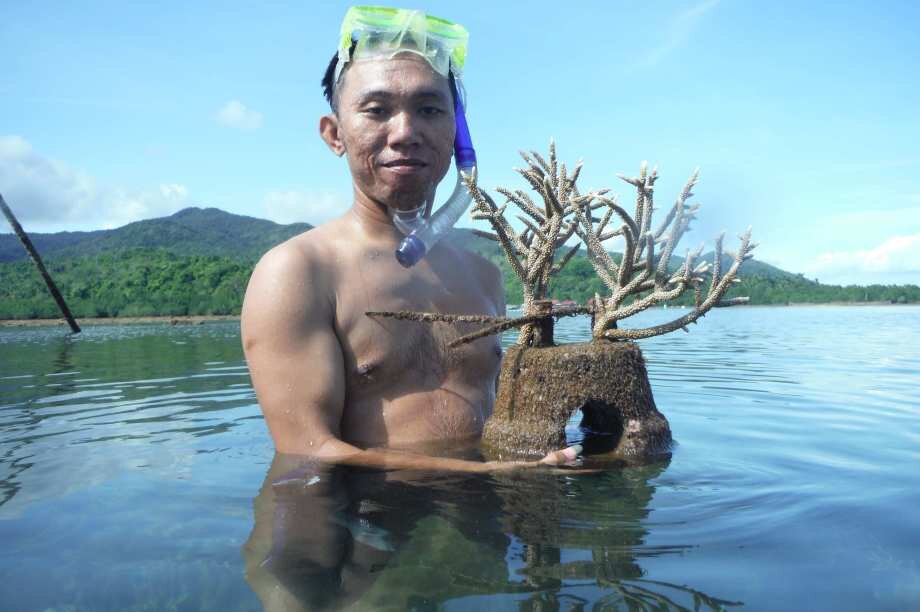
The project will rehabilitate 10 hectares of damaged coral areas in Southeast Sulawesi (Indonesia) which will become new source of life for local communities in the future both as source of income for 1,000 fishermen and as source of nutrition for 5,000 residents of villages around coral area. Alternative livelihoods such as seaweed culture will be introduced in the rehabilitated area. So that local communities play a role in monitoring coral areas while carrying out alternative livelihood.
40% of the total 396,915 hectares of coral reefs in Southeast Sulawesi (eastern part of Indonesia) are damaged, with the biggest cause being fishing using explosives and potassium cyanide poison. As a result, the coral fish population has decreased drastically, which has become a real threat to fishermen's lives, both as a source of income and as a source of nutrition. This project will rehabilitate 10 hectares of damaged coral with local communities as the main actors.
IDRAP carries out public awareness campaigns to avoid fishing that damages coral. Local communities are trained to make artificial corals (made from cement) placed in damaged coral locations which also became a medium for planting corals. Local communities are trained to transplant corals and place them on artificial coral media. Alternative livelihoods such as seaweed culture are introduced. Local community carries out routine patrols to prevent illegal and to replace dead transplanted coral.
The project will rehabilitate 10 hectares of damaged coral areas which will become a new source of life for local communities in the future both as a source of income for 1,000 fishermen and as a source of nutrition for 5,000 residents of villages around coral areas.



Support this important cause by creating a personalized fundraising page.
Start a Fundraiser