By Leah Findlay | Fundraising Manager
Habitats
Peatland restoration at Bwlch Corog continues to progress well. Planted sphagnum moss is now spreading successfully across target areas, creating patches of healthy bog vegetation and supporting upland biodiversity. Water vole signs were recorded at several of the restored pools, alongside tadpoles and dragonflies.
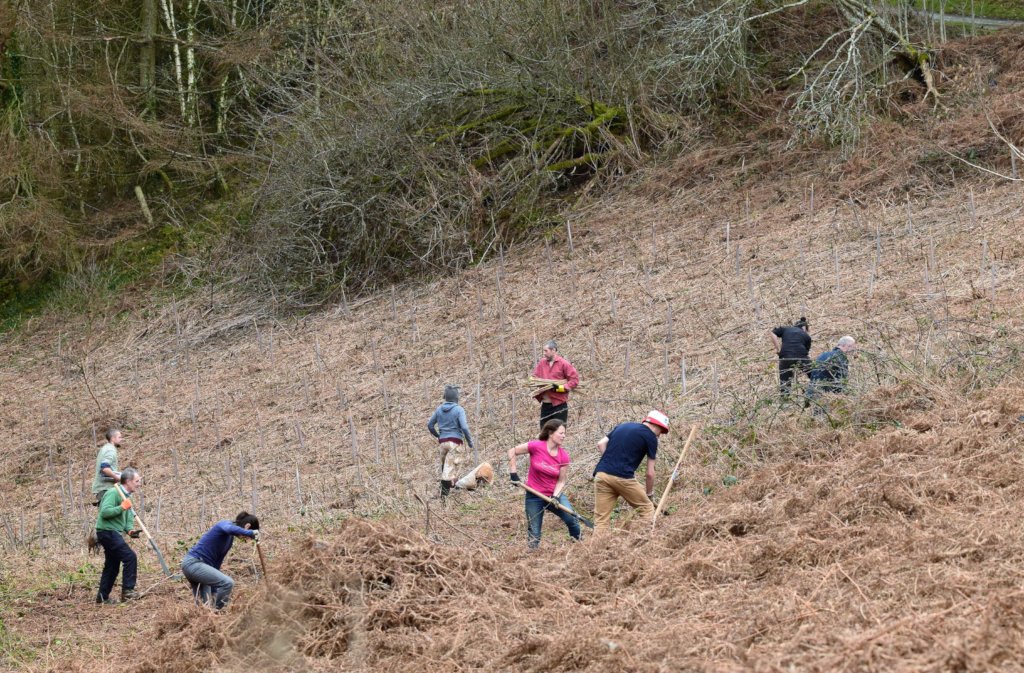
Over the winter, approximately 300 native tree saplings were planted in targeted locations as part of our ongoing work to increase woodland and wood pasture. One hundred were protected using reusable cattle-proof guards, while others were planted in areas where grazing animals are excluded. Tree stock and guards were funded by the Nature Networks Fund and The Woodland Investment Grant, both supported by Welsh Government.
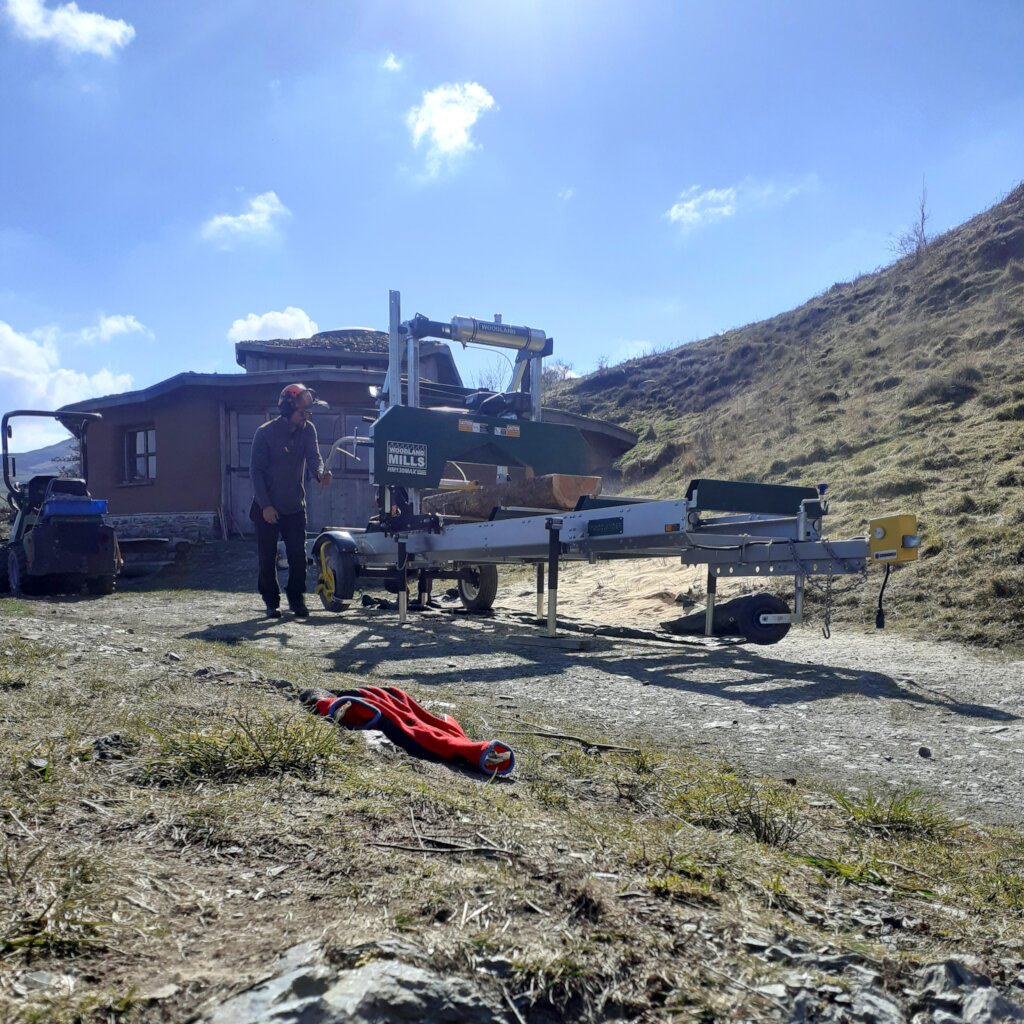
Selective thinning of the larch plantation resumed in March with local contractors, including former trustee Kara and Walkabout Ed, extracting timber for on-site use. Some timber was milled into planks using a mobile sawmill, with the remainder set aside as seasoned firewood or for building materials. Trees located further from the track were extracted by Carnog Working Horses. This work is supported by the National Forest for Wales Landscape Pilot, administered by WCVA through the Ceredigion Local Nature Partnership.
A new mower has been trialled with promising results, successfully cutting through dense Molinia tussocks. Used in combination with grazing, this approach is expected to reduce Molinia dominance and encourage a wider range of upland species.
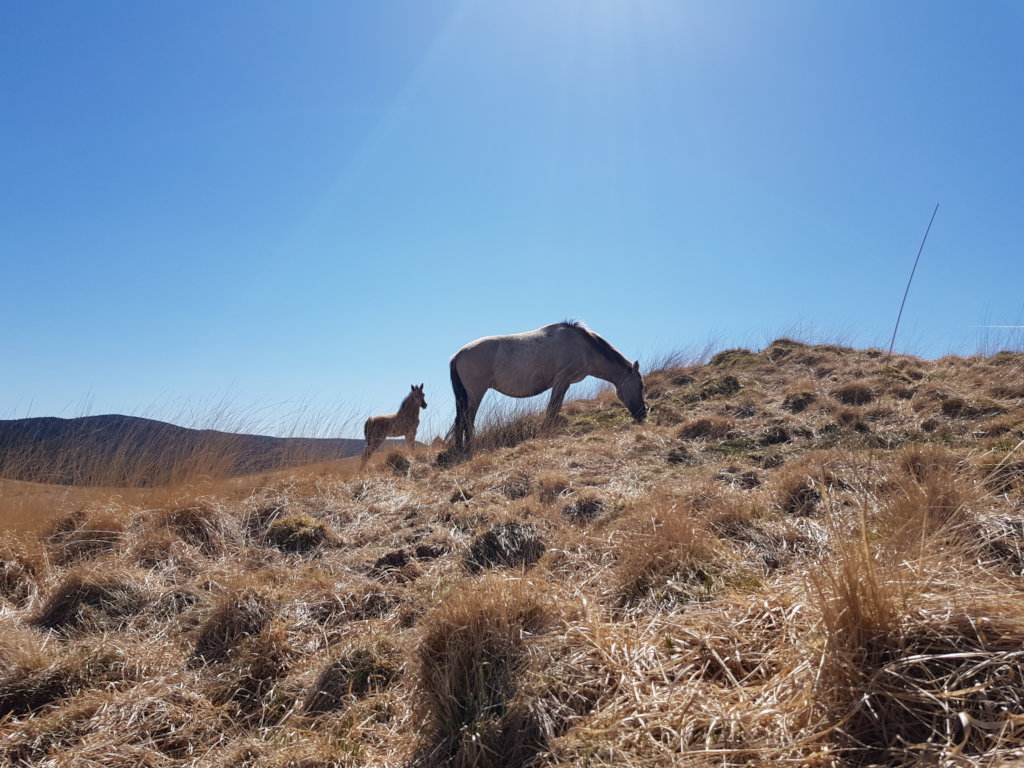
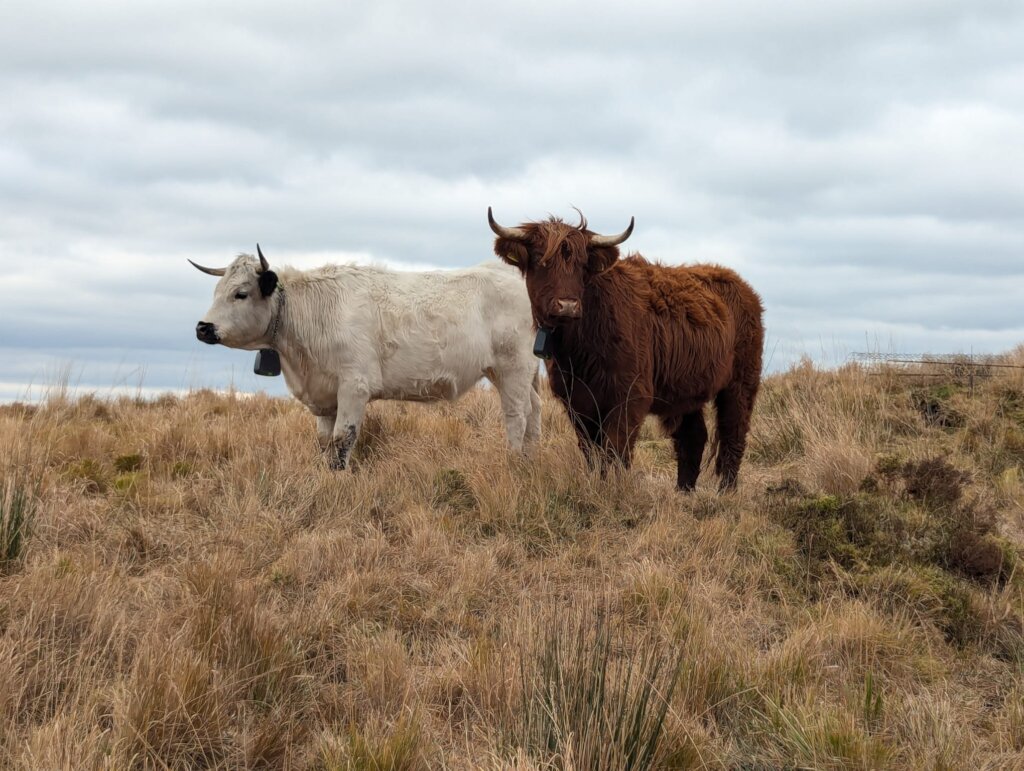
Grazing by our trustee and neighbour’s cattle will resume shortly, with the animals due to return from their winter pasture. Their browsing and trampling are vital for managing bracken, bramble and Molinia in sensitive areas.
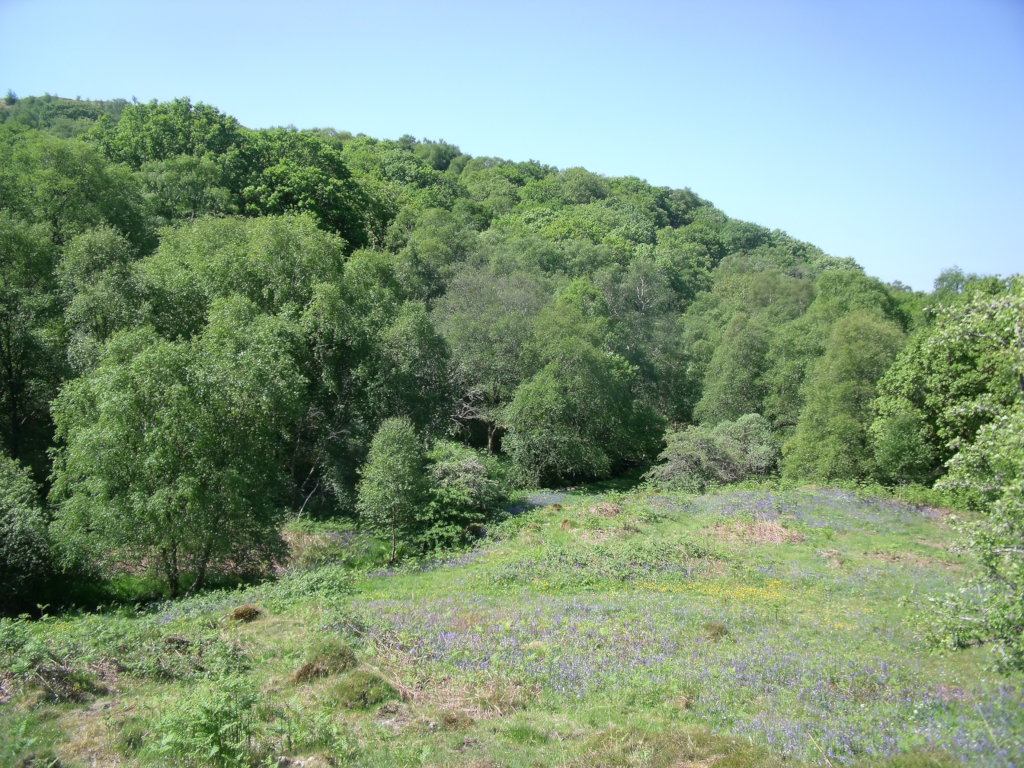
Ecologist Stuart Hedley conducted habitat monitoring focused on the bog and heath areas. Stuart has surveyed Bwlch Corog over many years and was encouraged by the improvement in ecological indicators across the site. He noted particularly positive progress in the restored peatland vegetation scrapes, where translocated sphagnum moss and cross-leaved heath (Erica tetralix) are now establishing well. These early signs of increased diversity are a strong indication that our land management interventions are moving the habitats in the right direction.
Species
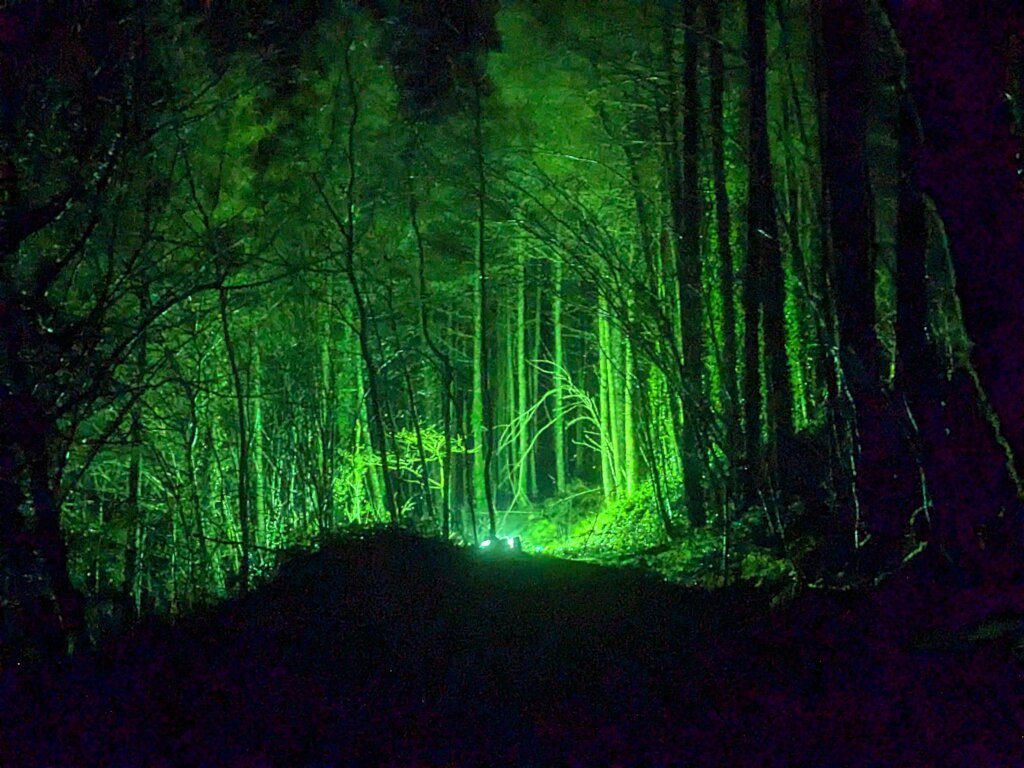
In late March, local lepidopterist Phil McGregor visited Bwlch Corog to carry out a spring moth survey. Two species new to the site were recorded using light traps set in the larch plantation and the Celtic rainforest. These traps attract moths without causing harm; individuals are released after identification. The new records were a striking macro-moth, the Yellow Horned (Achlya flavicornis, or Tant Cyrn Melyn in Welsh), and a micro-moth, Diurnea fagella, also known as the Early Reveller or Tiwbig Mawrth. These discoveries bring the total number of moth species recorded at Bwlch Corog to 202.
Community Activities
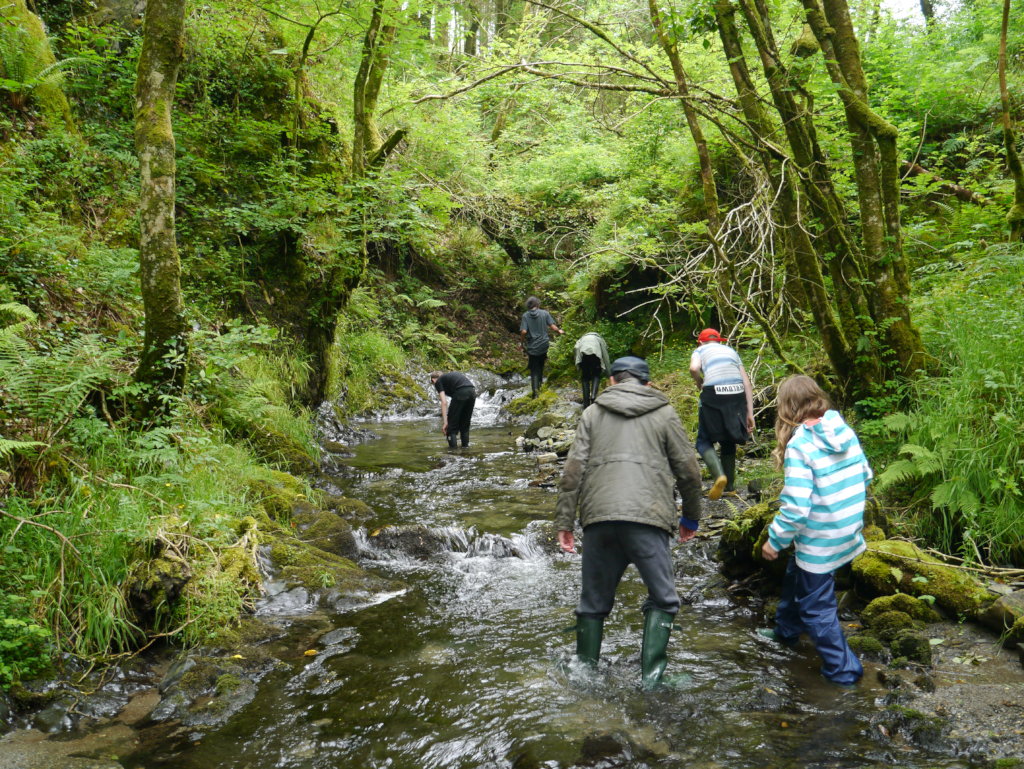
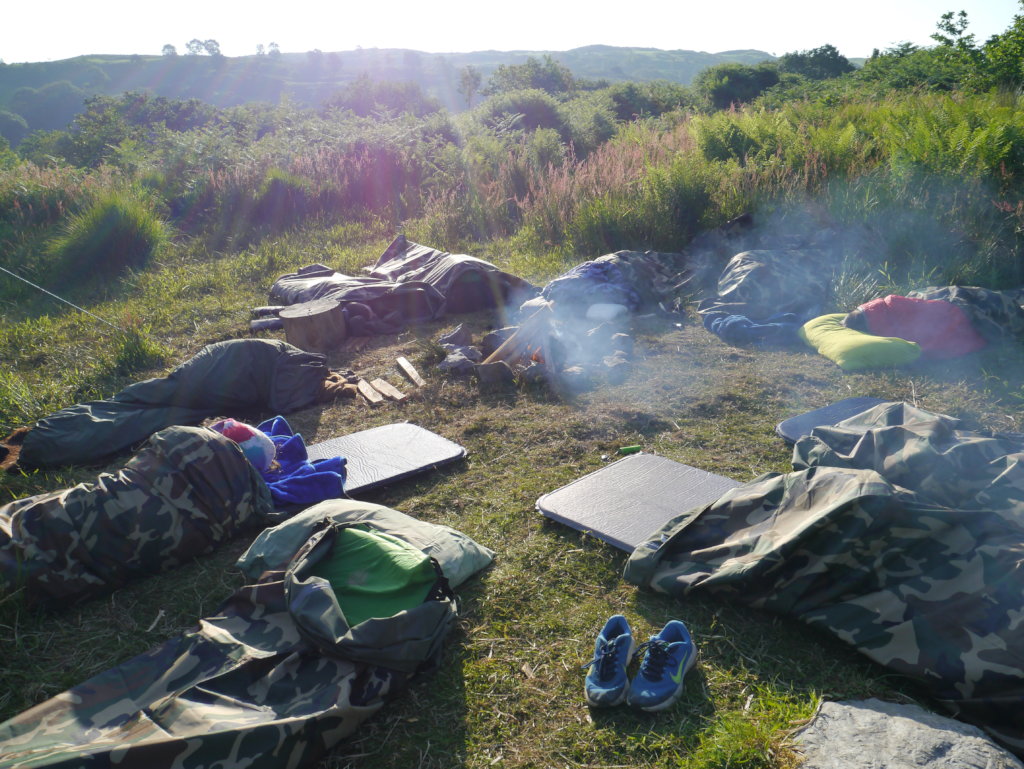
Youth activities have continued through the Nature Ambassadors programme, offering participants a range of seasonal tasks and outdoor learning opportunities. Young people were involved in practical conservation activities such as planting trees, creating insect habitats, and learning about local wildlife.
Several school groups visited the site during the spring term. Activities included woodland and wetland exploration, nature-based games, and environmental learning. Sessions were tailored to the needs of different groups, including pupils with additional learning needs.
Preparations are underway for a series of community events, including a family spring celebration and the annual Open Day on Sunday 11 May.
We have also hosted a range of talks and visits, including a visit from Bangor University MSc Environmental Forestry students, and a talk to undergraduate students from Aberystwyth University’s Environmental Science course. Both sessions focused on our approach to landscape-scale habitat restoration and community engagement. We also gave a presentation to the Wildlife Trusts Wales Upland Network meeting, sharing insights from our work on ecological connectivity across multiple landholdings.
Volunteers
Regular volunteer days have continued across the site, contributing to tasks including tree planting, vegetation clearance, path improvements, and species surveys. Horse logging also offered opportunities for volunteers and visitors to learn about traditional methods and low-impact woodland management.
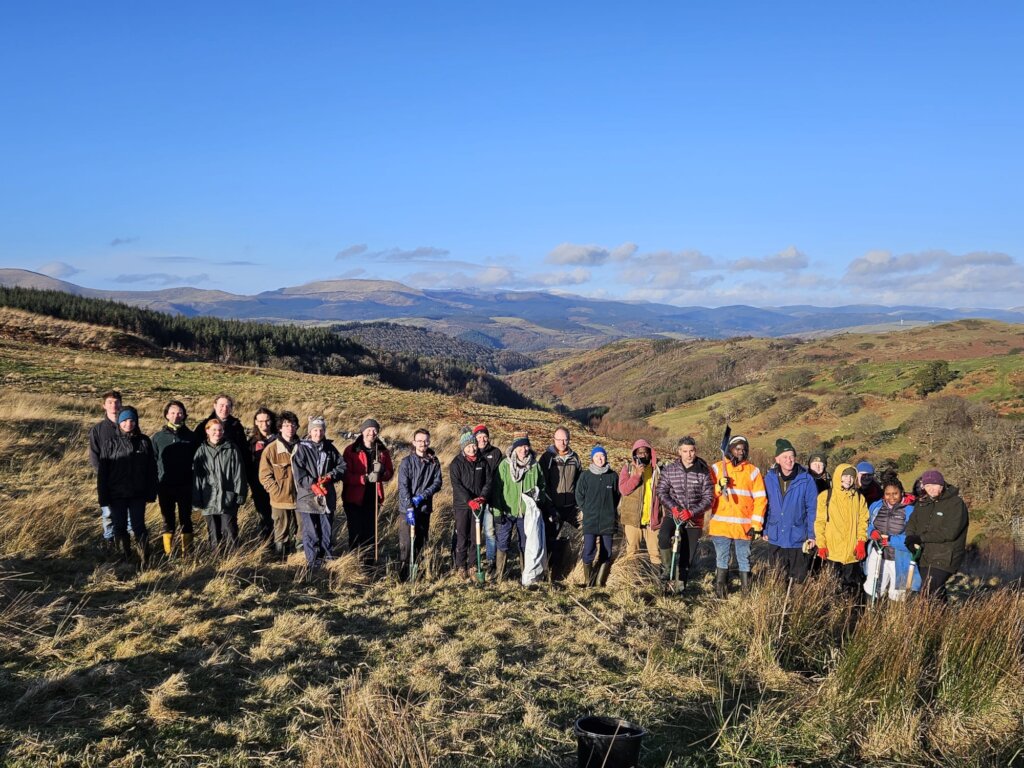
Most of the winter’s tree planting work was carried out by volunteers. In addition to planting, they assembled and deployed steel tree guards, helped with ecological monitoring, split and stacked firewood, and prepared materials for the construction of the new education shelter. One particularly productive day in January saw volunteers from Aberystwyth University’s Conservation Volunteers, Wolverhampton City of Sanctuary, and our regular local team working together to transport, assemble and install 75 steel tree guards on the upland – three quarters of the total for the whole winter. This is tough, physical work in difficult terrain, and we simply couldn’t get through it without the commitment and energy of our volunteers. Their contribution continues to be vital to the delivery of our habitat restoration and infrastructure projects.
Partnerships
In early 2025, we began delivery of our new Nature Networks Fund project, focused on the next phase of habitat restoration at Bwlch Corog. This includes additional woodland expansion, habitat enhancement and community engagement.
Development work also began on the Integrated Natural Resources Scheme (INRS), a Welsh Government pilot initiative to support collaborative land management. Our new landowner group – Cwmwd Einion – includes five neighbouring holdings around the Pen Carreg Gopa SSSI. Over the next three years, the group aims to improve upland habitat condition and connectivity through changes to grazing, tree planting, peatland restoration and access improvements.
Staff Changes
We said goodbye to two members of staff in March: Lora (Project Officer) and Neil (Habitats and Species Manager). Both have played a key role in managing Bwlch Corog and supporting our volunteer and youth programmes. Lora is taking up a new position as Ranger on Handa Island in northwest Scotland, while Neil has returned to RSPB Ynys-hir. He will continue to support Coetir Anian on a freelance basis where possible. We are very grateful to them both for their dedication and expertise.
Following the departure of two trustees announced in December 2024, we are now recruiting new trustees to join our board.
Big Give Green Match Fund Campaign
Donations are an essential part of how we fund our activities, and we are excited to announce our participation in the Big Give Green Match Fund campaign from April 22 to April 29. During this period, all donations made to our campaign will be doubled by Big Give, meaning your contribution will have twice the impact. If you believe in the importance of our work and would like to support us, this is the perfect time to donate. Simply visit our campaign page during the campaign week, and your donation will go even further in supporting our conservation efforts and community engagement initiatives. Your support truly makes a difference, and we’re grateful for any contributions you can make.
Project reports on GlobalGiving are posted directly to globalgiving.org by Project Leaders as they are completed, generally every 3-4 months. To protect the integrity of these documents, GlobalGiving does not alter them; therefore you may find some language or formatting issues.
If you donate to this project or have donated to this project, you can receive an email when this project posts a report. You can also subscribe for reports without donating.



Support this important cause by creating a personalized fundraising page.
Start a Fundraiser