By Nia Huw | Communications and Project Manager
Staff Changes
Unfortunately, at the end of March, our Fundraising Manager left our staff team. Deb joined us in October 2022 and has become a much valued colleague for many reasons, including having been extremely successful in raising funds to secure the future of our project!
The good news is that we have recently employed Leah as our new Fundraising Manager. She holds a PhD in human-wildlife conflict from Durham University and has qualifications in Conservation and Biodiversity, Environmental Sustainability and Fundraising Management. Leah previously worked with farming communities in South Africa, where she focused on mitigating tensions between human communities and wildlife, with an emphasis on sustainable co-existence. She has worked as a fundraiser for Surrey Wildlife Trust, as well as having a hand in funding her previous work. Driven by a passion for conservation, Leah is committed to fostering harmony between humans and the natural world. In her spare time, she enjoys spending time at the beach with her two dogs.
Habitats
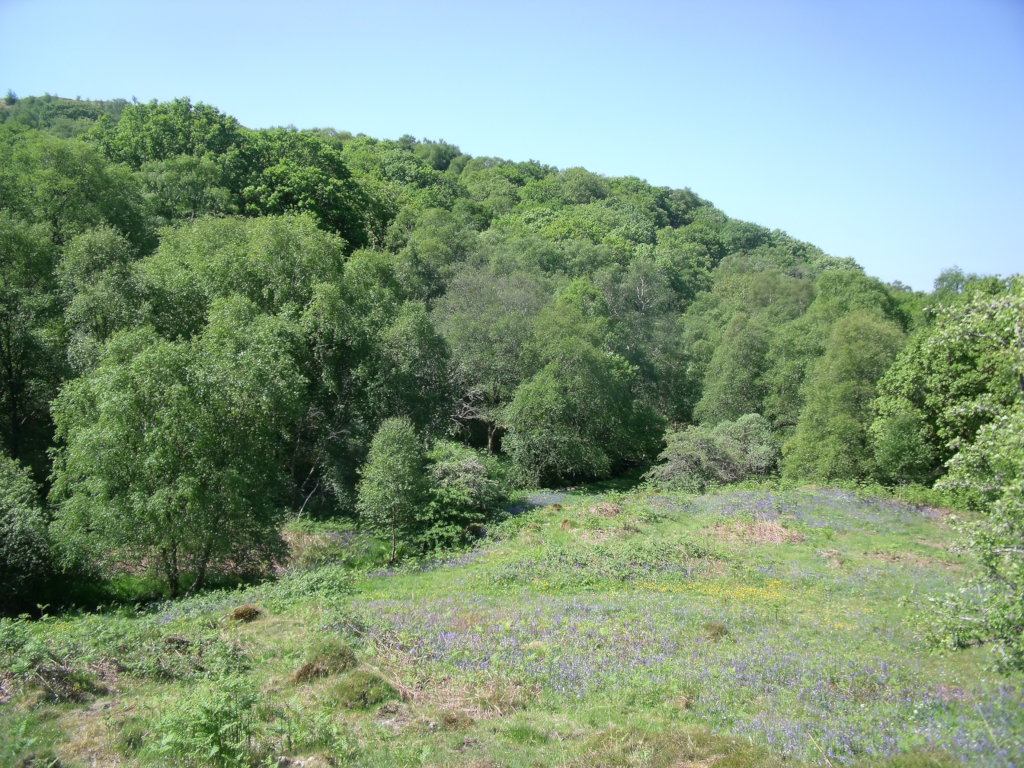
Our programme of larch thinning continues with a further 15m3 extracted from our PAWS (planted ancient woodland sites are ancient woodland sites where the semi-natural woodland has been replaced with a plantation.) As well as felling trees we also carry out some ring-barking, this is the complete removal of the bark from around the entire circumference of a tree. It results in the death of the area above the ring over time. Ring barking the larch also provides standing dead wood, an important habitat for wildlife. Thanks to this work, increased light levels in the woodland have resulted in a well established field layer.
Funding from TWIG (The Woodland Investment Grant) has allowed us to begin the work of increasing the accessibility of our woodland. With help from our volunteers, we have been clearing pathways and staff have begun drawing together plans for further sensitive additions that will make accessing our woodland safer and easier.
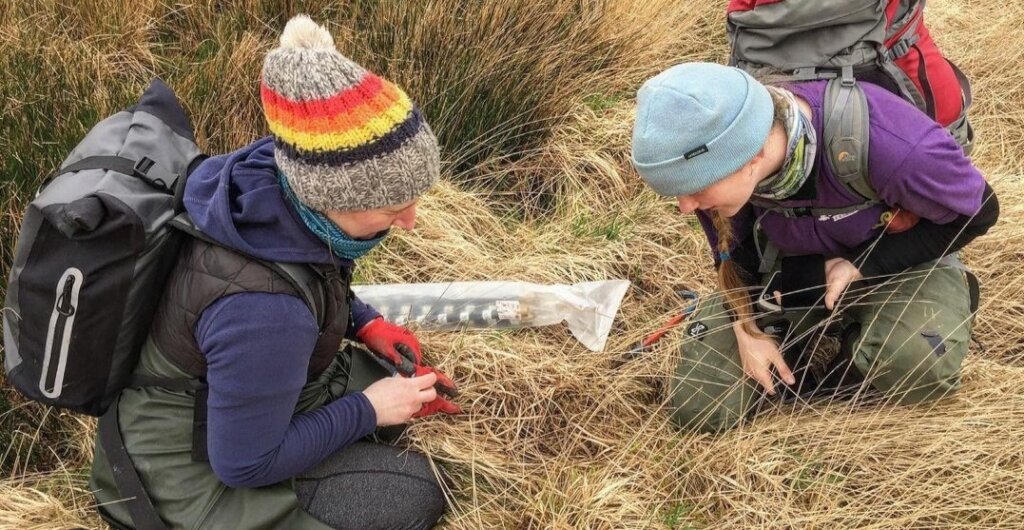
Restoration of our peatland has continued apace. We have been installing dipwells to measure water levels - these will give us an insight into the hydrological conditions underground. By measuring the height of the water table, we will be able to assess whether our grip blocking work in 2019 has been successful in providing the wet conditions needed for sphagnum to establish and peat to form. Further mowing of molinia has been undertaken, this year in trial patches and paths, to enable access to wider areas of molinia by grazing animals. The combined effect of mowing paths to allow grazing animals to trample and eat the molinia appears to be an effective method of increasing plant diversity while only having to mow once.
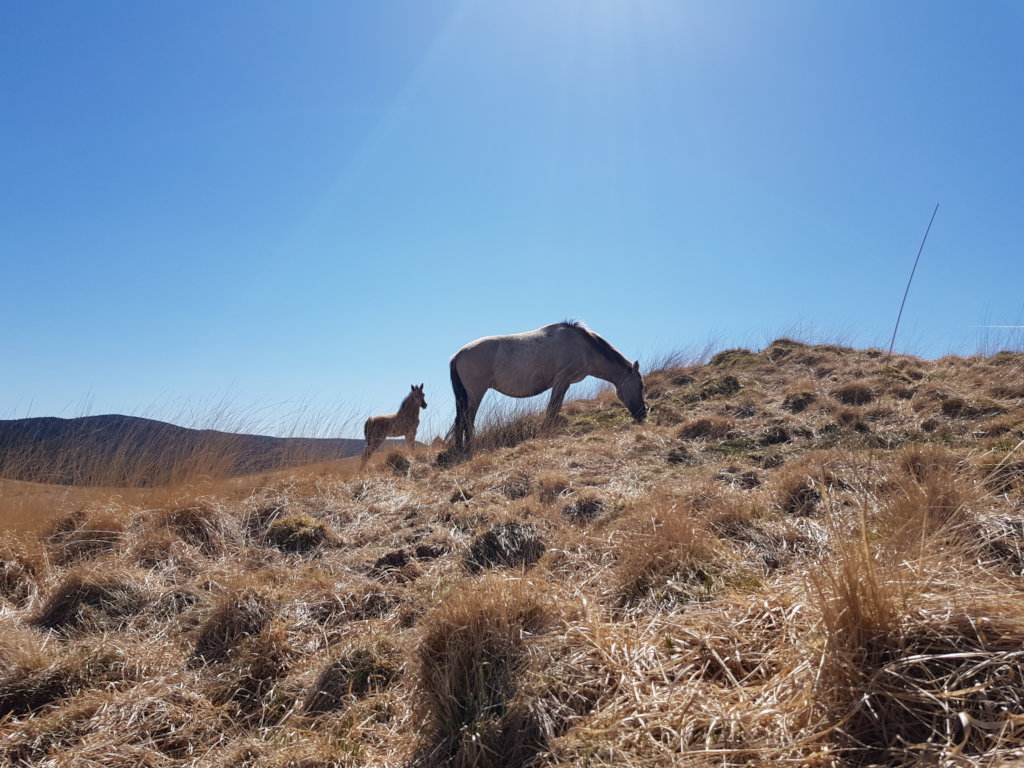
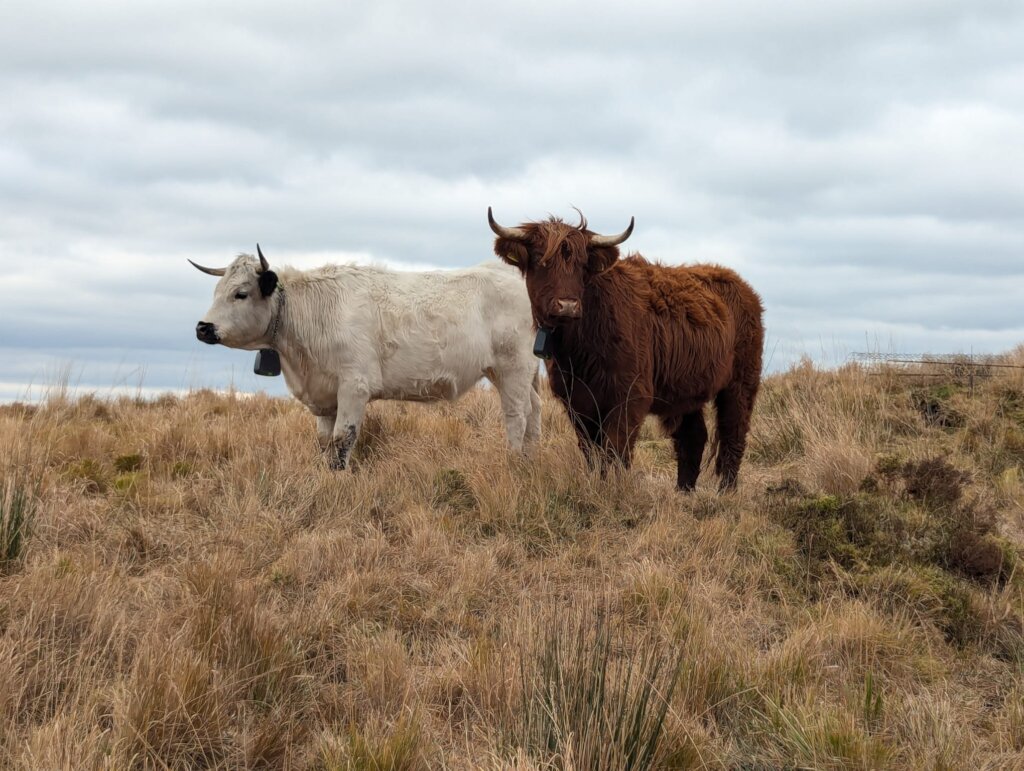
We have continued to plant sphagnum moss plugs into suitable areas, finding that sphagnum translocated from our own site fares best as it is locally adapted. The areas too dry for planting sphagnum will be seeded with heather and other suitable shrubs (cotton grass, possibly bilberry) in autumn 2024. Having received a grazing plan compiled by an expert in conservation grazing, the decision was made to rehome our Konik herd and they are now thriving elsewhere. Carneddau ponies were recommended as a suitable breed for our site, and we hope to home a small herd at Bwlch Corog in the autumn. In the meantime, the cows have returned to graze the molinia during the summer months.
We are pleased that we have recently been awarded a second peatland development grant. This grant will fund peatland surveys in partnership with neighbouring landowners. Through this project, we will contract local ecological surveyors, with the aim of providing those landowners who work with us, with detailed knowledge of the extent and condition of their peatland, and how it could be restored.
Species
Since the release of thousands of pheasants on land in a neighbouring valley, we have been concerned about the impact they might have on habitats and species at Bwlch Corog. Hundreds of these birds have migrated to our site and the damage they cause to the land is becoming increasingly evident. Pheasants predate hazel dormice and we were particularly concerned that our population of these endangered mammals might be under threat. During a volunteer workday, we set about looking for signs of dormouse presence. Many hazelnut shells were found with what we hoped were the tell-tale marks of having been gnawed by a hazel dormouse. Following inspection by our Habitats and Species Manager, we were pleased to confirm that hazel dormice are still thriving at Bwlch Corog. We will continue to monitor the situation in the future.
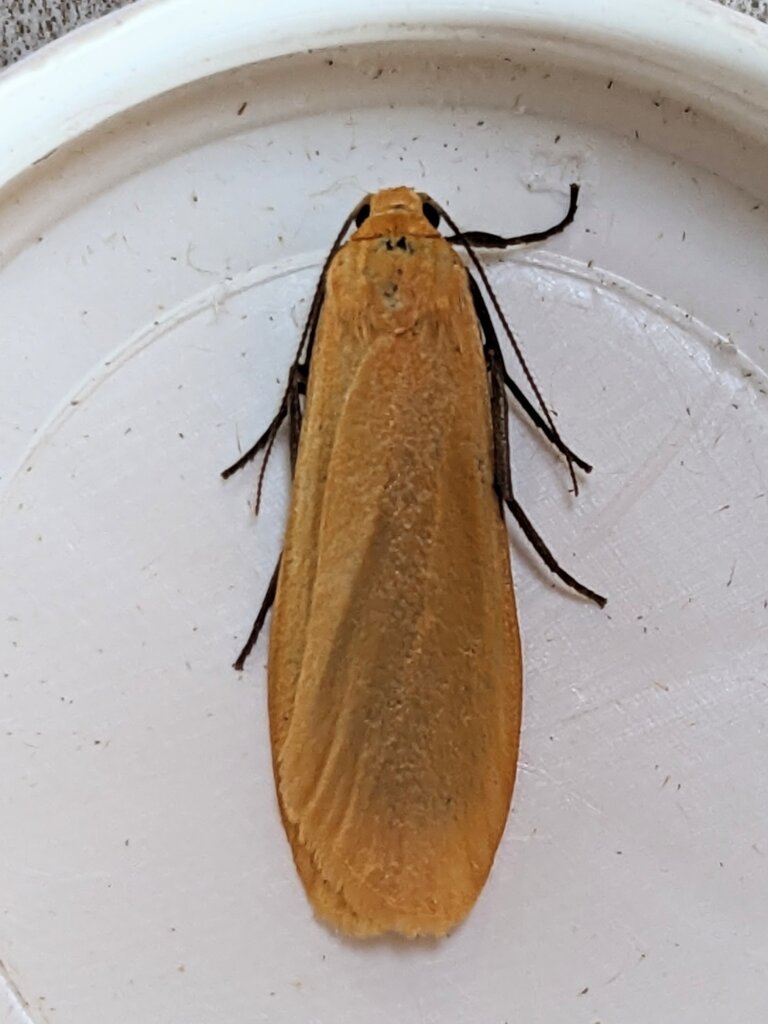
Phil McGregor, a local moth expert and recorder has conducted further moth surveys, and we now have 154 species recorded at Bwlch Corog. His most recent survey identified the presence of the Orange Footman, a scarce moth and one of the species believed to be "moving north", because of climate change. Though we were initially excited to hear that we had a rare moth visiting our site, the reason for its arrival emphasises the worries we have about the climate and biodiversity crisis and re-enforces the need for our work at Bwlch Corog.
Activities
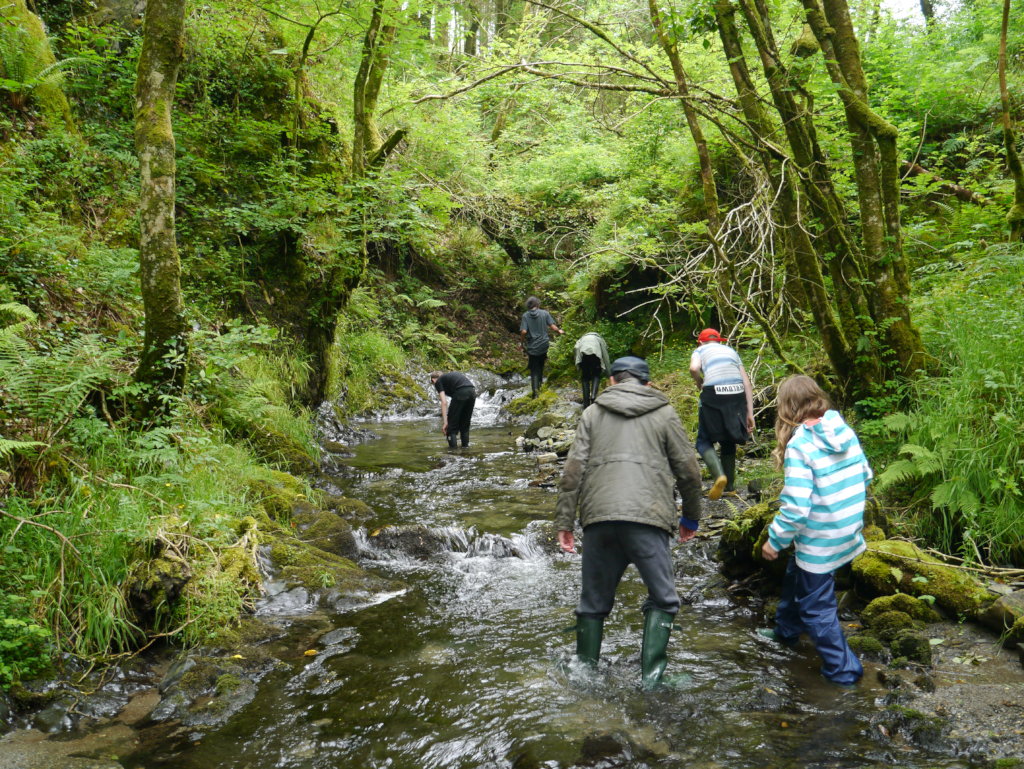
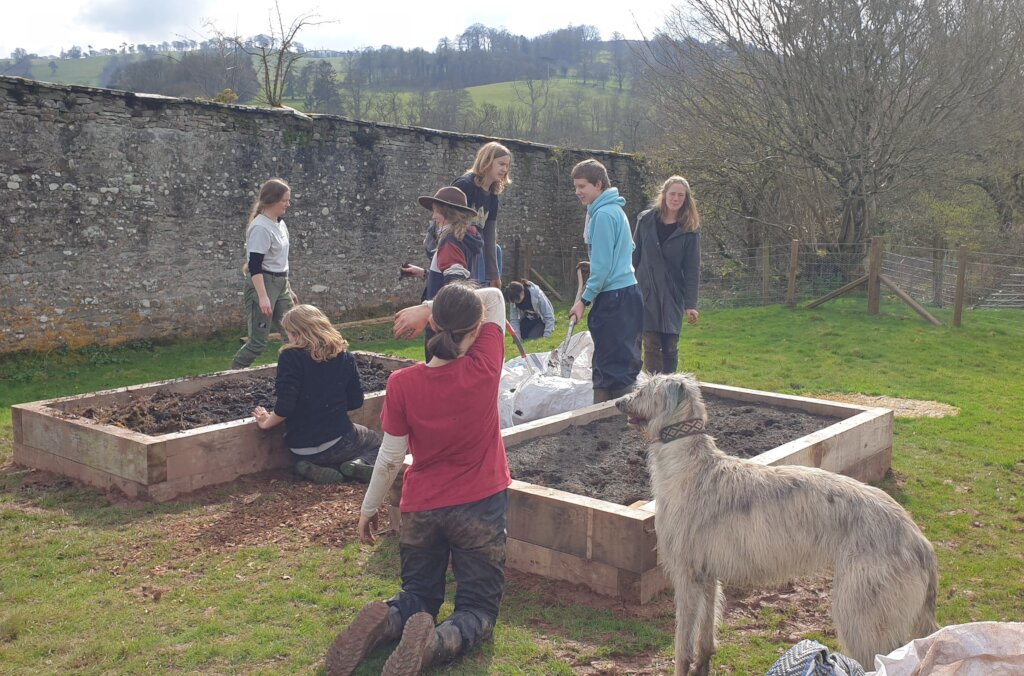
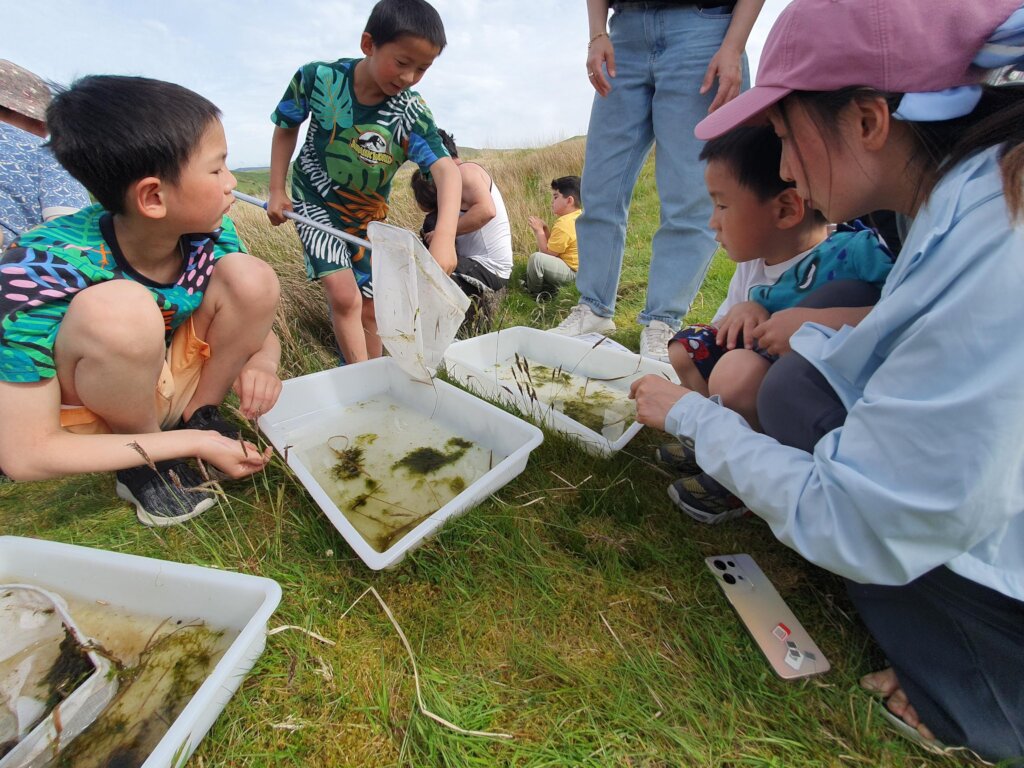
Our new Nature Ambassadors programme truly embedded during the winter months with three groups of young people braving the cold and rain to participate in sessions that build a sense of community and encourage working together on the important task of improving bio-diversity and mitigating against climate change. Conservation activities so far have included measuring and recording peat depth, clearing areas of purple moor grass to give other plants a chance to grow and recording some of our old trees for The Woodland Trust's Ancient Tree Record. There’s also been plenty of time for den building, campfire cooking and nature art and crafts.
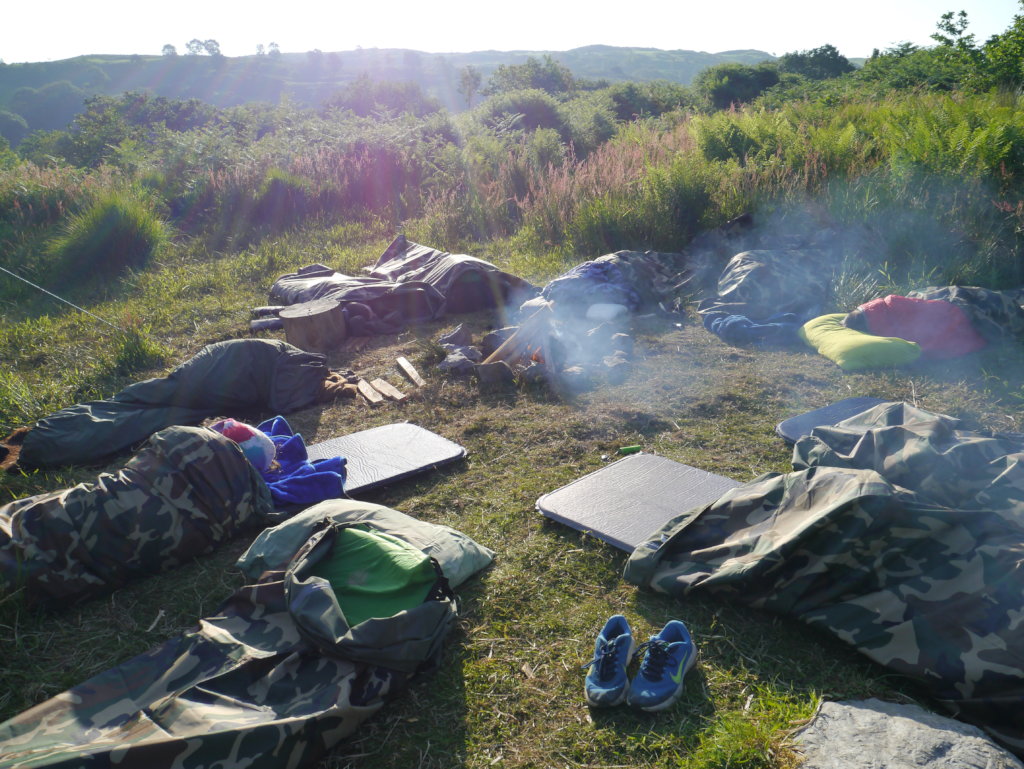
As well as continuing our successful primary schools programme and Wild Days Out for young people, generous donations to our Wild Isles fundraiser have allowed us to create a programme of activities for refugees and asylum seekers. These members of our community are often traumatised by their experiences, leading to poor mental health - many have no experience of living in a city and miss the countryside deeply. Being in nature can relax and inspire, offering brief respite from day to day worries. Therefore, working with our friends at City of Sanctuary in Wolverhampton, we offer the chance to come on a nature well-being day or a short camp, and experience conservation activities, nature crafts, woodland games, bushcraft skills and cooking. We had a great time during our first day, despite the weather - 26 people of all ages came together and we got to know each other by playing games, chatting and singing around the campfire, enjoying good food, tree planting, going on a woodland walk and creating artwork with our own charcoal.
Volunteers
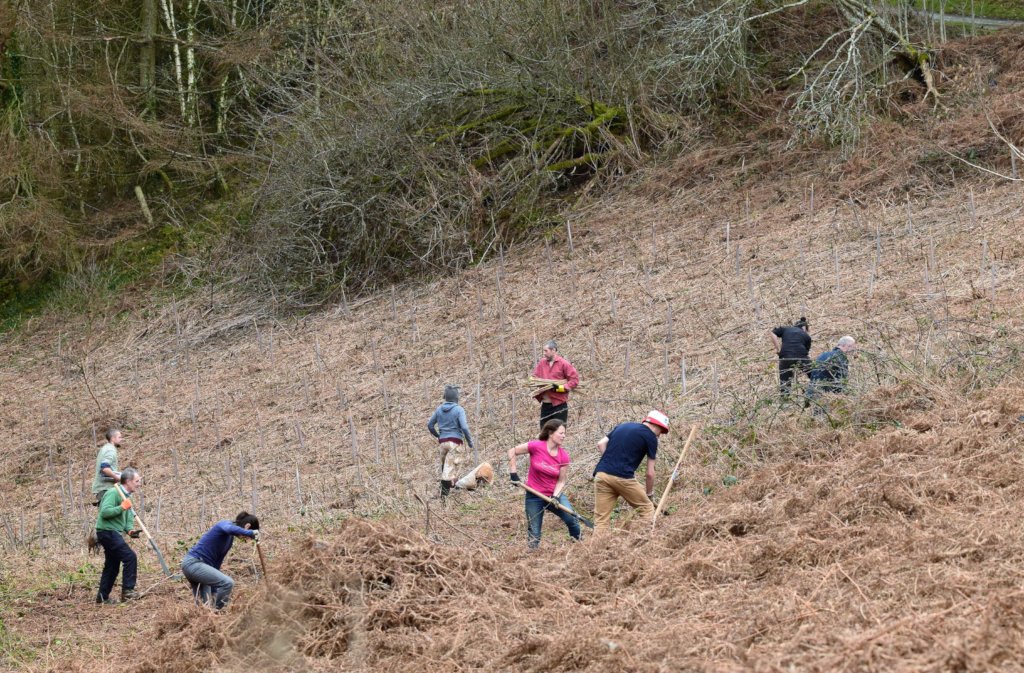
Our volunteers continue to play a crucial role in our work at Bwlch Corog. We now hold two ‘workdays’ a month - usually on the middle Thursday and final Saturday and have continued to see our volunteer base grow and diversify. Our most popular activities have seen up to 39 participants attending. Over the winter, our volunteers have helped with a variety of tasks including sphagnum translocation and planting, measuring peat depth, tree planting, monitoring tree survival rates, ring barking and path clearance.
Partnerships
Our partnership with Tir Canol and neighbouring landowners has continued to develop. One of our recent activities was a walk, beginning at Bwlch Corog and taking in some adjacent properties - this was a great opportunity to learn about the history of the land and discuss possibilities for its future.
Our Communications and Project Manager recently visited the Borders Forest Trust’s site at Carrifran in southern Scotland. It was a great opportunity to see first hand the hugely successful restoration work that has taken place there over 25 years - work there has included a comprehensive tree planting programme as well as restoration of severely degraded peatland. There was also plenty of time to discuss with, and learn from others working in the field of peatland restoration.
Coetir Anian’s Project Director and Education and Communities Manager have been busy building relationships with other projects working with young people in conservation in Wales. A connection was made with the Penpont Project, an intergenerational nature restoration project in the Bannau Brycheiniog National Park where a Youth Leadership Group helps steer their work. Following an initial meeting, a group of young people who attend our Wild Days Out paid a visit to Penpont. They enjoyed a full day of sharing ideas (and good food!), learning from each other, playing games, trying to escape the maze and planting trees and seeds. We’re confident that this experience will have inspired our young people to develop their own ideas about how they can help shape the future of Bwlch Corog.
Visits from university groups have taken place - most recently students from Aberystwyth University came to add some practical fieldwork skills to knowledge gained in the lecture hall. Together with members of the Tir Canol partnership, our Habitats and Species Manager and Project Officer introduced the students to methods of bird surveying and peatland monitoring.
Don’t forget to look at our website www.cambrianwildwood.org where you can find out so much about the project and keep up to date with our news items. Please contact us if you want to be on our newsletter mailing list.
Project reports on GlobalGiving are posted directly to globalgiving.org by Project Leaders as they are completed, generally every 3-4 months. To protect the integrity of these documents, GlobalGiving does not alter them; therefore you may find some language or formatting issues.
If you donate to this project or have donated to this project, you can receive an email when this project posts a report. You can also subscribe for reports without donating.



Support this important cause by creating a personalized fundraising page.
Start a Fundraiser