By Simon Ayres | Project Director
Site
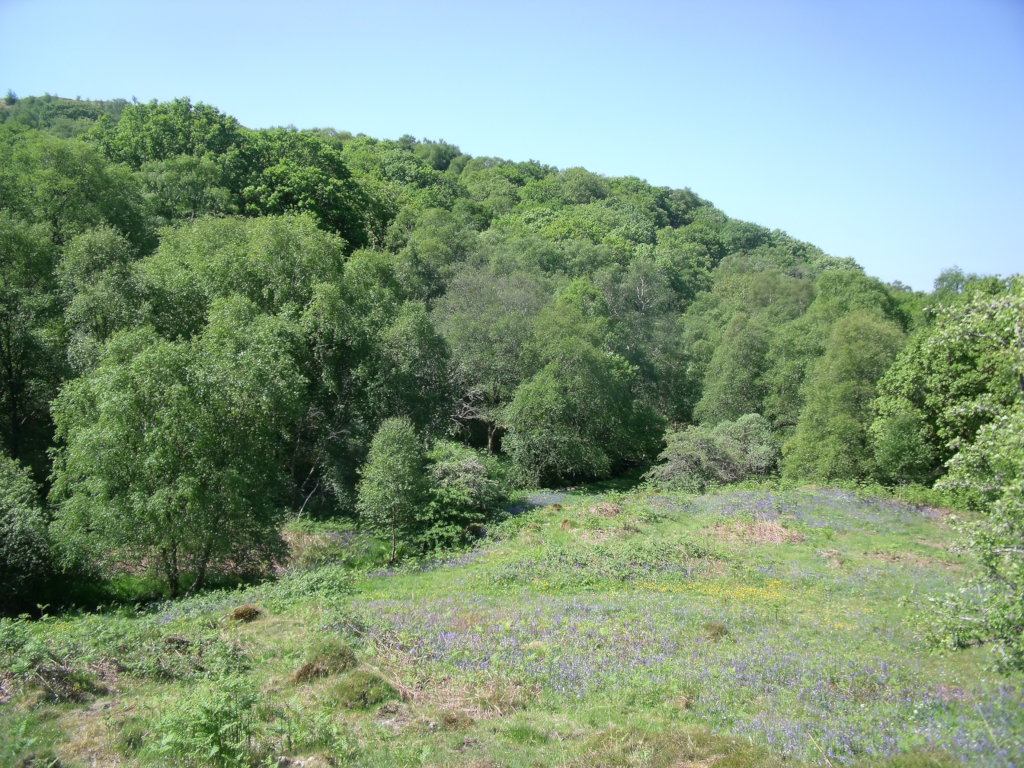
The trees planted in 2019 had their third growing season this year and showed really good growth, having got their roots established and due to good growing conditions this year. On the peatland area, the ponds created by blocking ditches are becoming colonised with aquatic sphagnum, which is a fantastic development, showing the area is reverting to blanket bog, an important habitat type that sequesters more carbon than a forest area, in the right conditions – that is, being waterlogged.
Herbivores
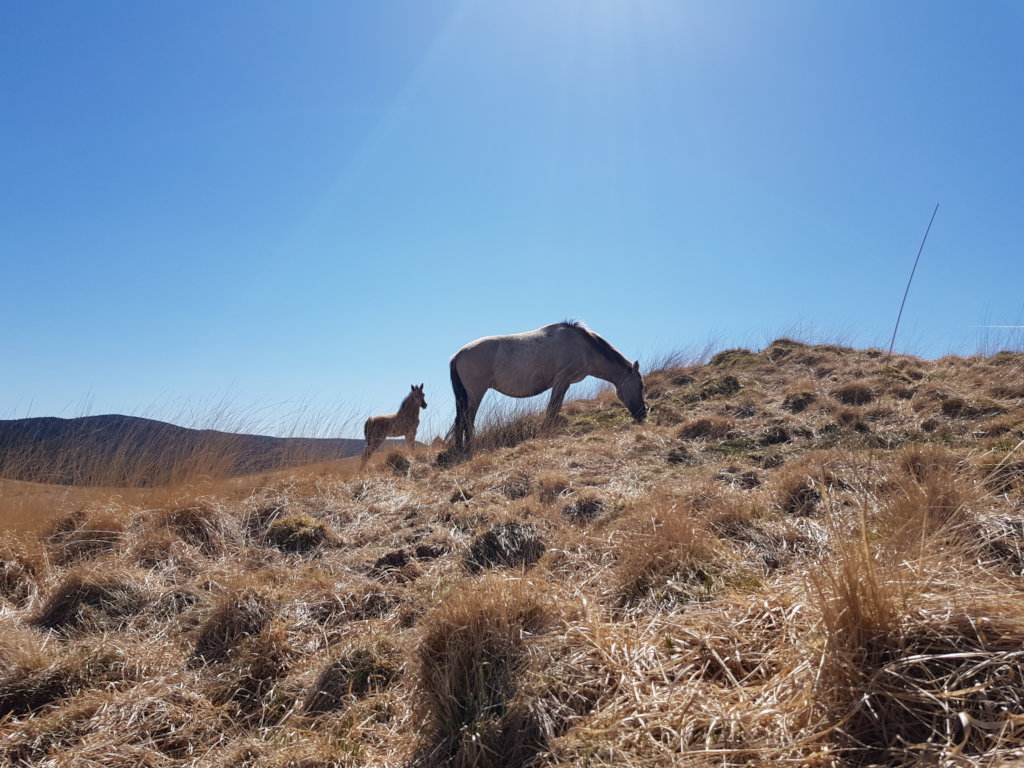
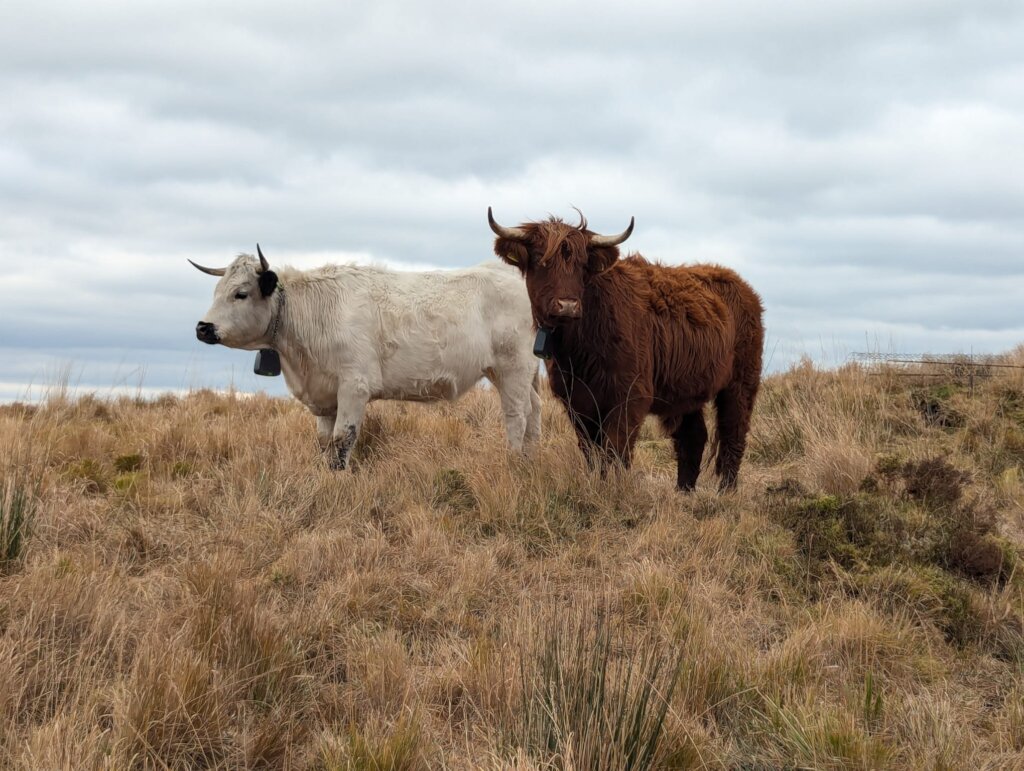
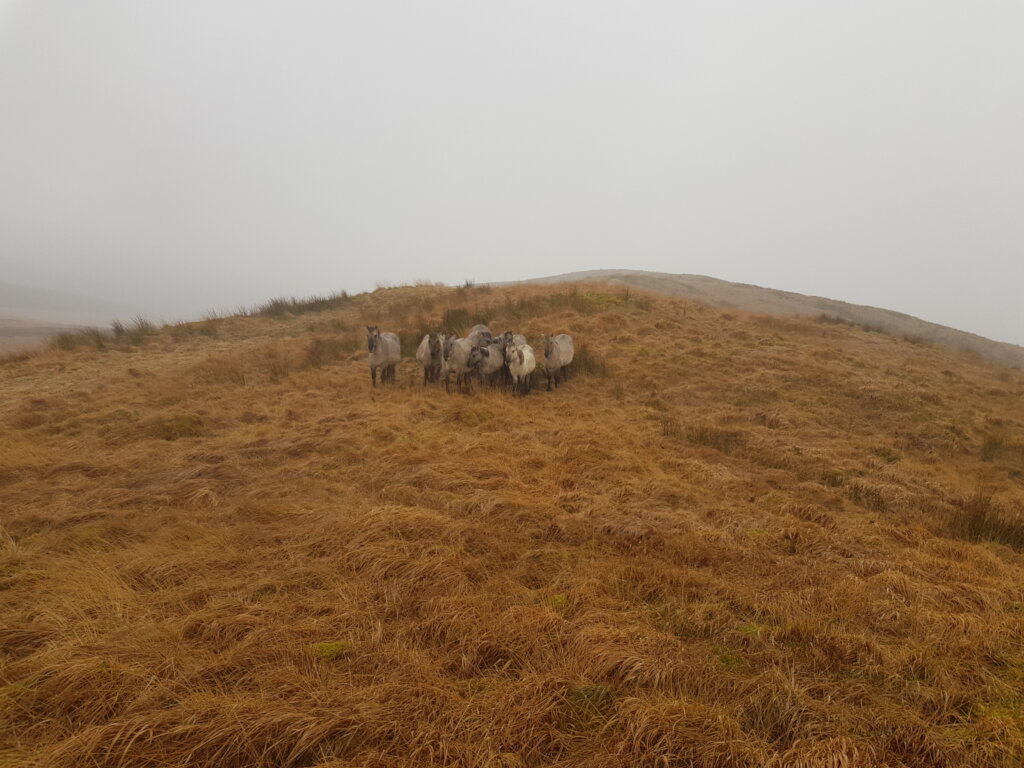
The cattle were taken off the site to their neighbouring, more productive winter pasture. The horses have maintained good condition through the winter, with the two foals looking good. The ‘teenagers’, the 1 to 3 year olds, are often off by themselves keeping away from the older horses, though generally the herd remains all together.
Site work
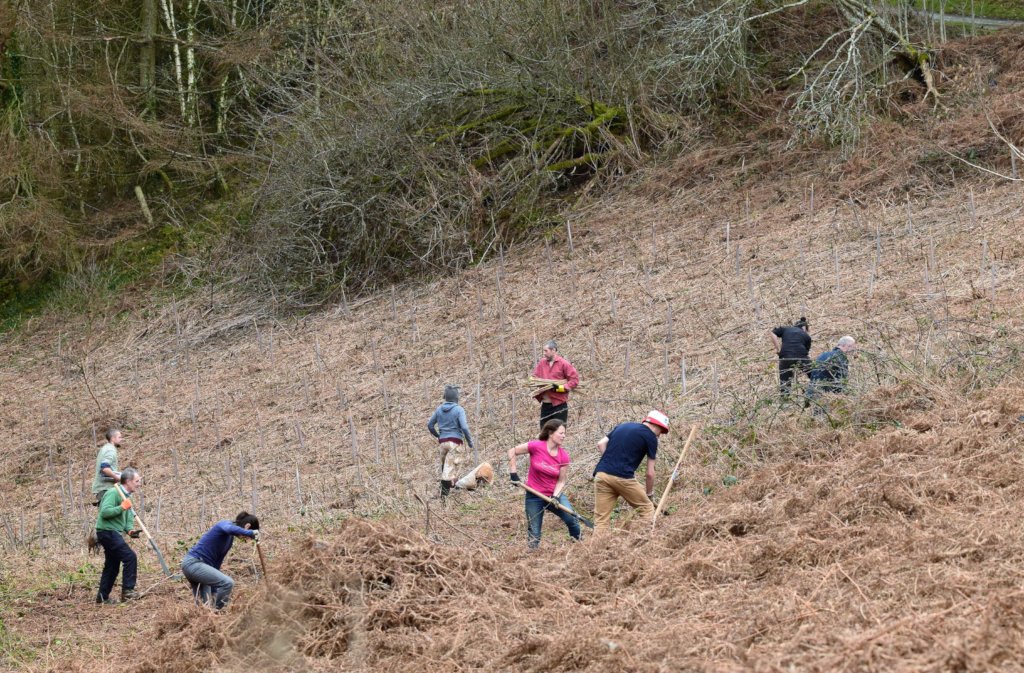
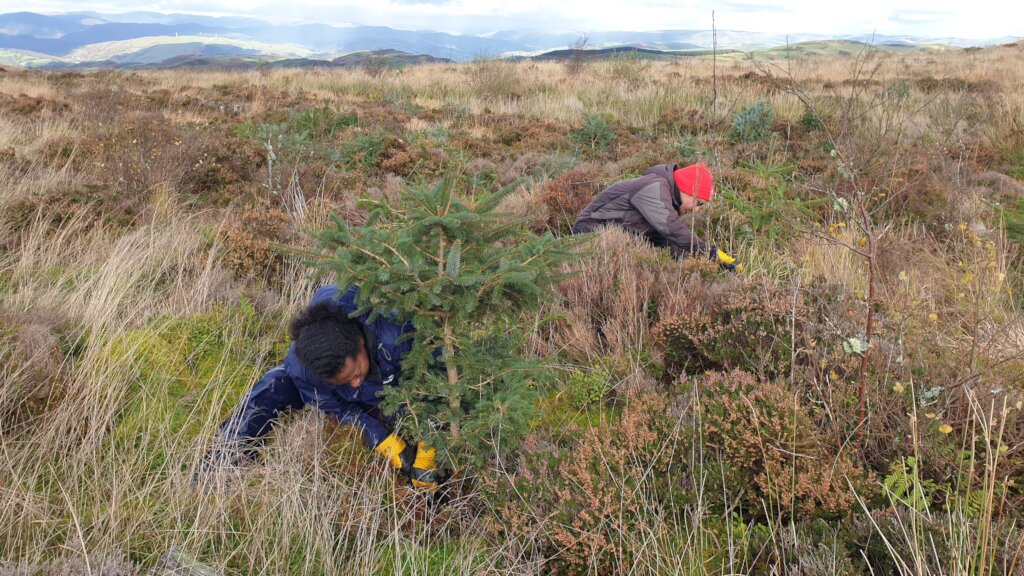
Much of the work on site is carried out on the monthly volunteer work days. In October we worked on the neighbouring forestry property owned by Welsh Government. The area adjacent to our site has been restored to natural habitats of heathland with scattered native trees. A large amount of the non-native Sitka spruce – the commercial timber species – started regenerating in the area. We cut this using hand tools, to protect the native habitat from being dominated by spruce in years to come. In November, we planted willow cuttings to create areas of wet woodland. In January we shifted cut logs from the larch plantation to be processed into fire wood for camp fires. We will be planting trees over the next two work days.
We took some aspen cuttings from a stand in our ancient woodland and planted the cuttings in an open area by the river. One day, when beavers have returned to this catchment, they will be pleased to find their favourite tree species growing here.
There was a bumper crop of rowan berries this year. We spent a day cutting branches laden with berries and leaving them in some of the remote, treeless parts of the site. The idea is that birds will find the berries and spread them around the place, resulting in the germination of some trees.
Every year we collect tree seeds to give to a nursery to grow into trees for us, and to take into schools so they can grow trees to later plant on site. This year we collected a lot of hawthorn berries.
We have developed a project and been awarded a grant for peatland restoration. Having blocked the drainage grips, we have seen significant changes in the new ponds and next to the ditches where the ground has become waterlogged. Elsewhere, however, changes have been less obvious. The area is dominated by a grass species called purple moor grass (Molinia caerulea) which is not favoured by the herbivores even when it is green. During the winter it is dead and provides no nutrition - the horses do not eat it at all. The thick mat of dead grass prevents other plants from growing. The purple moor grass thrives because of its deep roots and creates big tussocks which make the ground inaccessible. The project will use an excavator to scrape small areas of purple moor grass on the flatter, wetter areas. Most of these will be planted with sphagnum plugs to help the area revert to sphagnum bog. Some scraped areas will not be planted, to compare the two treatments.
Education
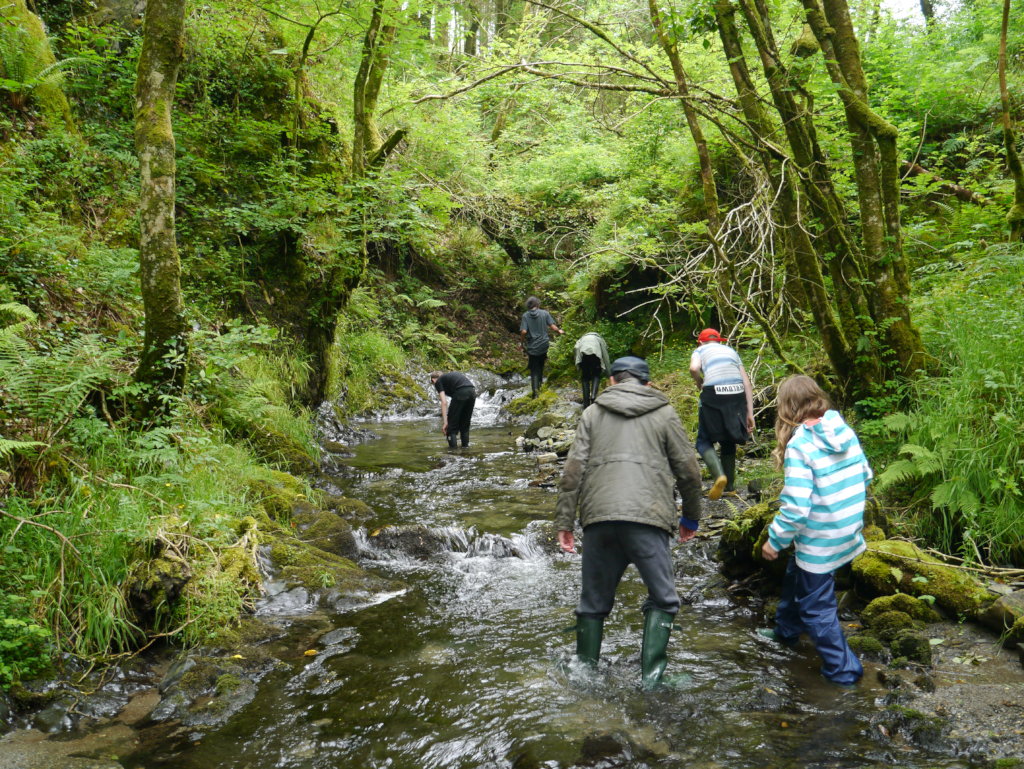
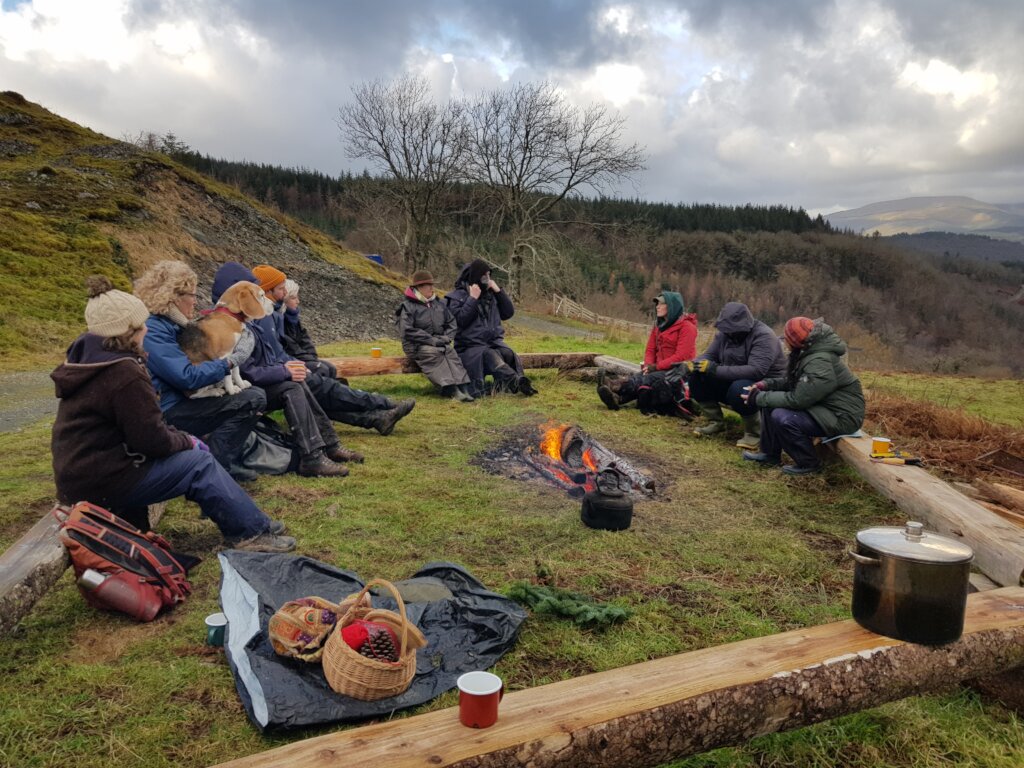
The Primary School groups continued to visit the site during the autumn. Since January we have been hosting groups on Saturdays and during the half-term holiday where they have been learning skills such as candle making and felt making, and generally enjoying being out in nature and hanging out by the camp fire.
Well-being
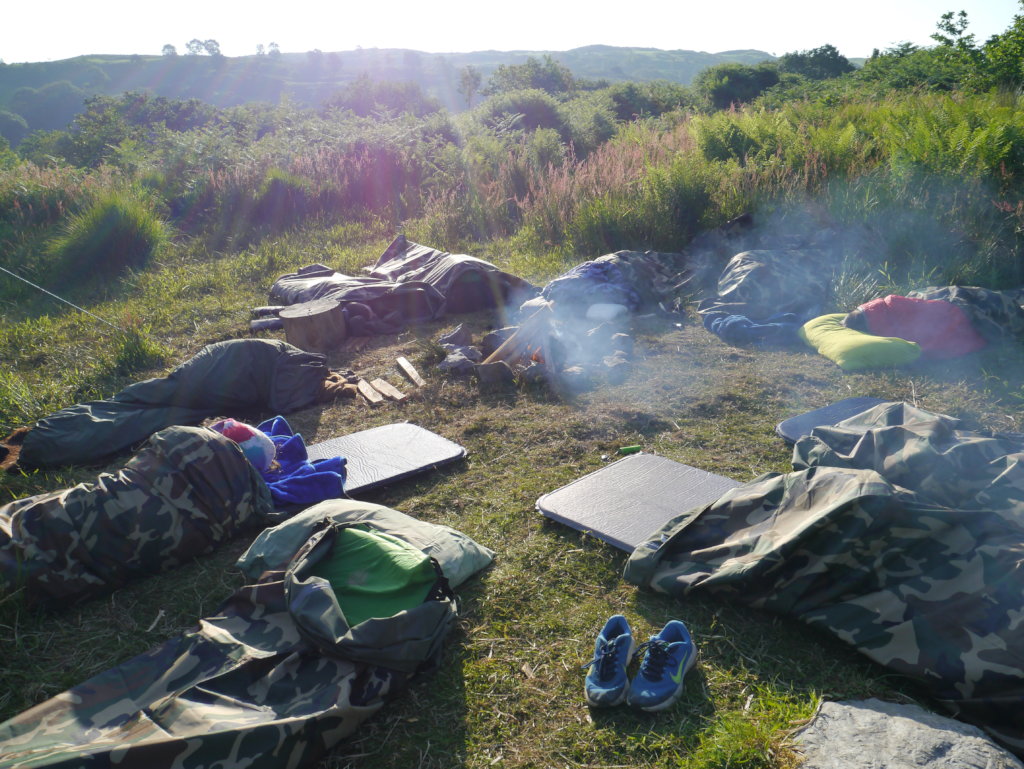
We are developing our new wellbeing programme for adults and families and calling it ‘Drws Agored’ (‘Open Door’ in English). Our pilot programme with people in addiction recovery during the summer was part of this. In October we hosted a group of asylum seekers with a view to continuing this in the summer with days out and a camp. The people are in accommodation in the cities of Birmingham and Wolverhampton, not too far from Cambrian Wildwood, waiting to hear about their applications for asylum, sometimes for many years. They are not permitted to work and have hardly any resources, so it is difficult for them to get away from the city, or participate in activities to take their mind off their predicament. All of them have escaped from dangerous and unpleasant circumstances. Many are from rural areas, so not used to city life. It was such a pleasure to welcome them to our wild and beautiful landscape and to see how much they appreciated the place and the social contact.
In December, as part of National Tree Week, we held a Tree Connection Day, learning about tree medicines and connecting deeply with individual trees.
Monitoring habitats
We have carried out further baseline surveys of the peatland areas so that we can monitor change following the peatland restoration work.
Other monitoring
Other monitoring work includes counting numbers of visitors to the site using automated counters. And the experiences of people attending project activities.
We carry out qualitative monitoring of our education and wellbeing programmes by collecting feedback from participants.
Don’t forget to look at our website cambrianwildwood.org where you can find out so much about the project and keep up to date with our news items. And contact us if you want to be on our newsletter mailing list.
Links:
Project reports on GlobalGiving are posted directly to globalgiving.org by Project Leaders as they are completed, generally every 3-4 months. To protect the integrity of these documents, GlobalGiving does not alter them; therefore you may find some language or formatting issues.
If you donate to this project or have donated to this project, you can receive an email when this project posts a report. You can also subscribe for reports without donating.



Support this important cause by creating a personalized fundraising page.
Start a Fundraiser