By droza08 Roza | Project Leader
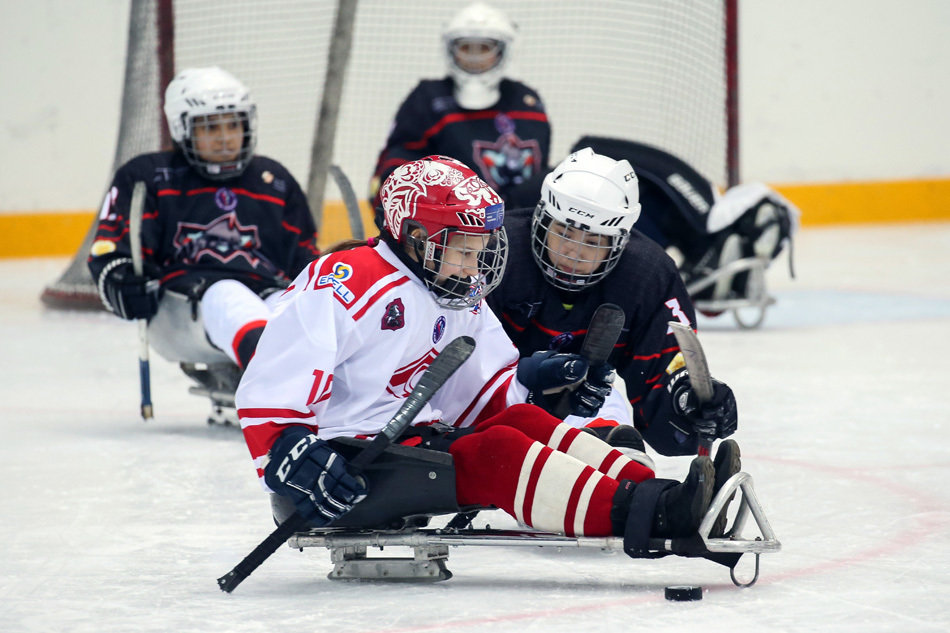
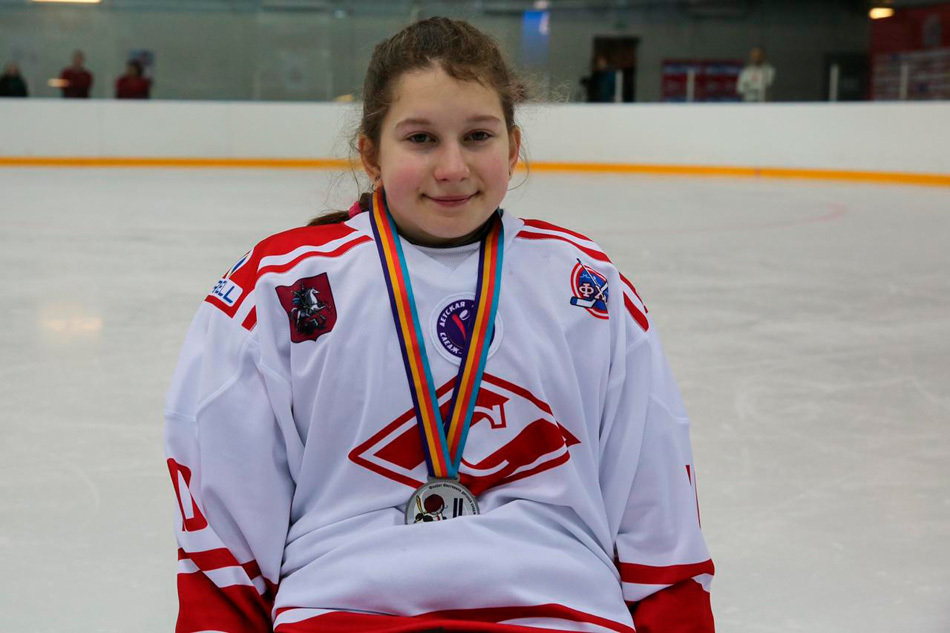
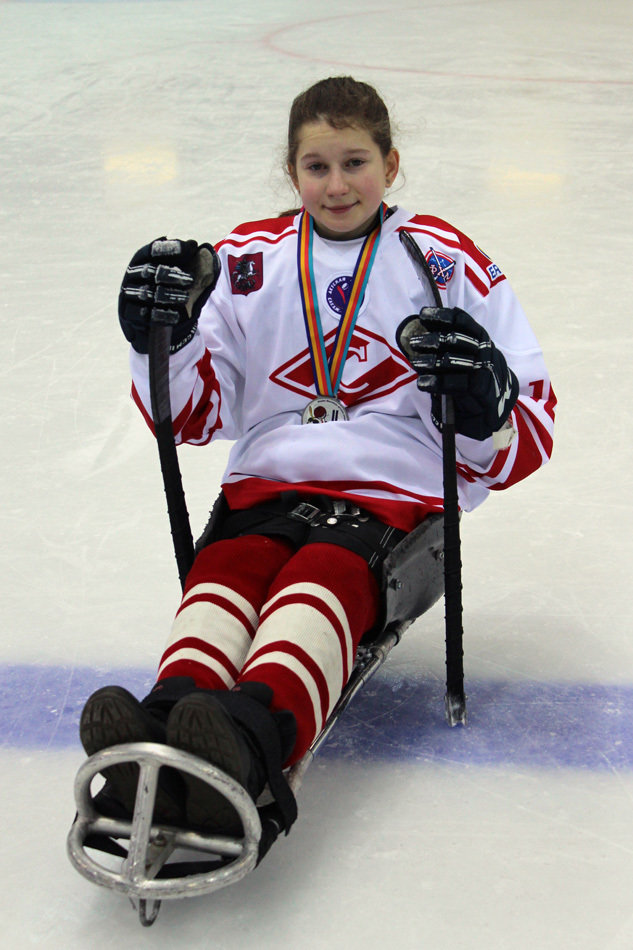
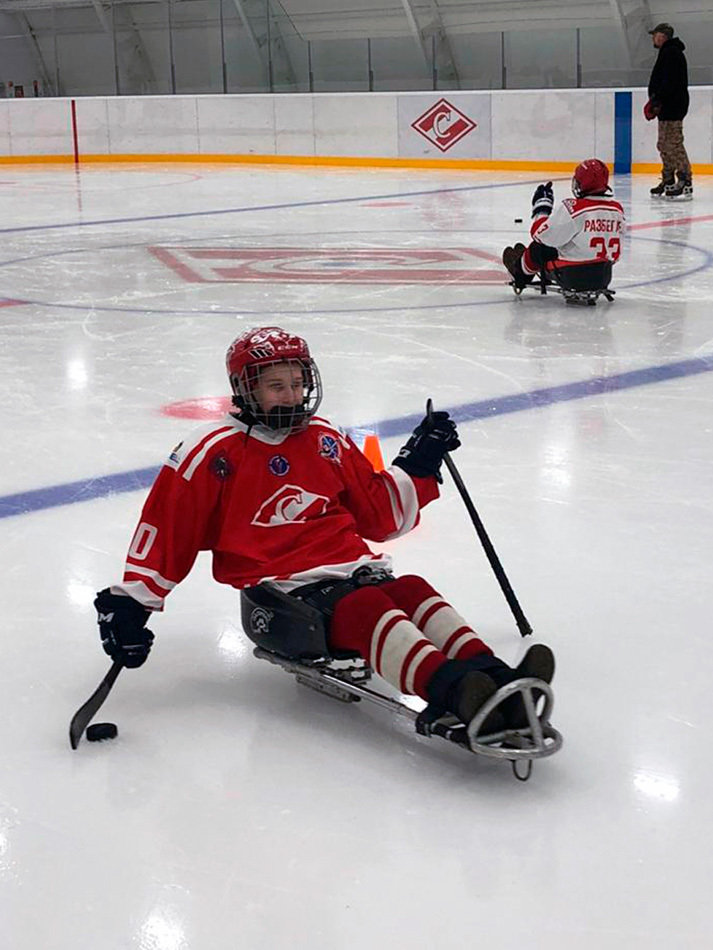
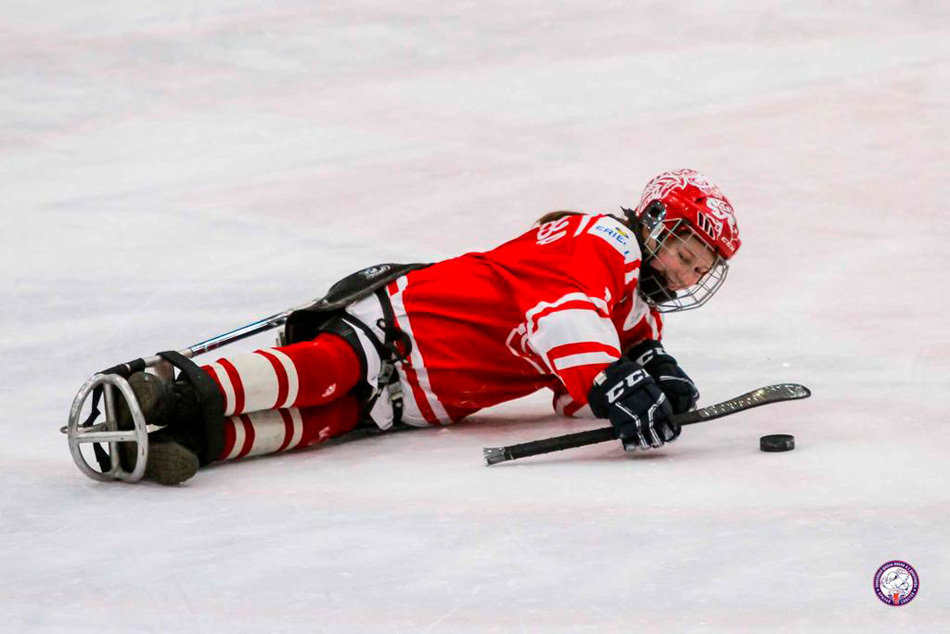
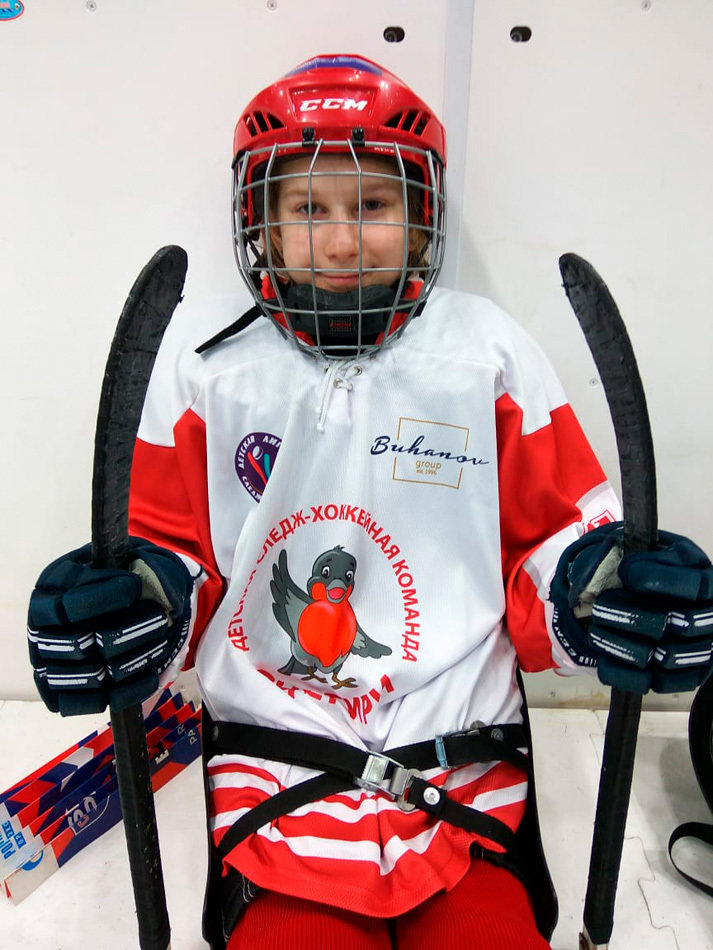
As Nastya readied herself for sled team practice, her mother secured her upper body and legs to the sled. Touching the ice a few times with her sticks, she sped off and was soon out of sight. Nastya was the first girl to play on the boys’ sled hockey team and quickly became a forward: “I enjoy scoring goals and watching as the goalkeeper misses the puck flying into the net.”
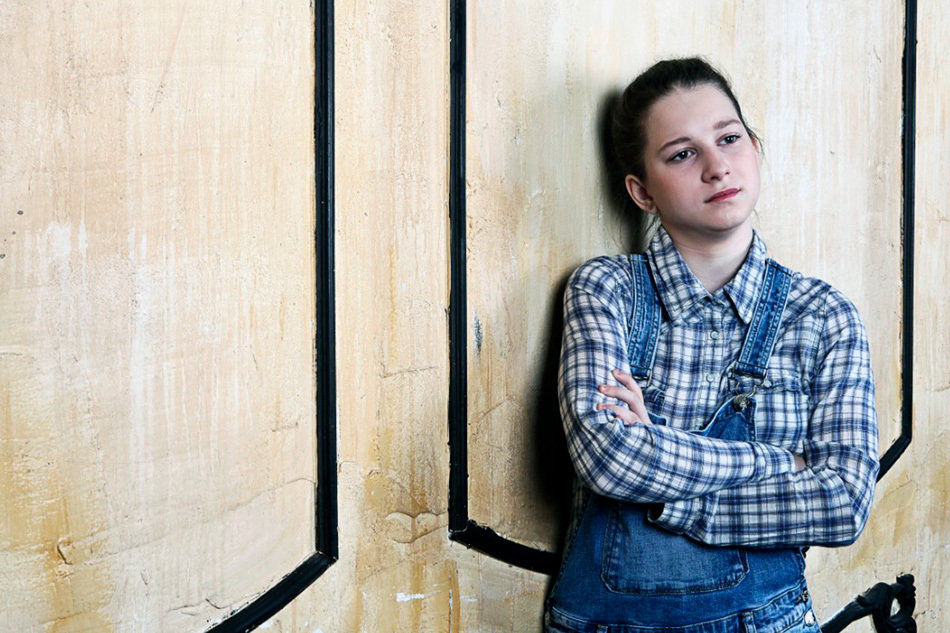
Nastya, 16, has autism and ADHD. Before joining the hockey team, she had difficulty paying attention in school. She became easily overexcited, making it hard to express her thoughts.
According to Yury, her physical education teacher, “Nastya did not understand socializing. For example, during warm-up exercises, she would run away from the team and play alone with a ball, not responding to the teacher’s instructions.”
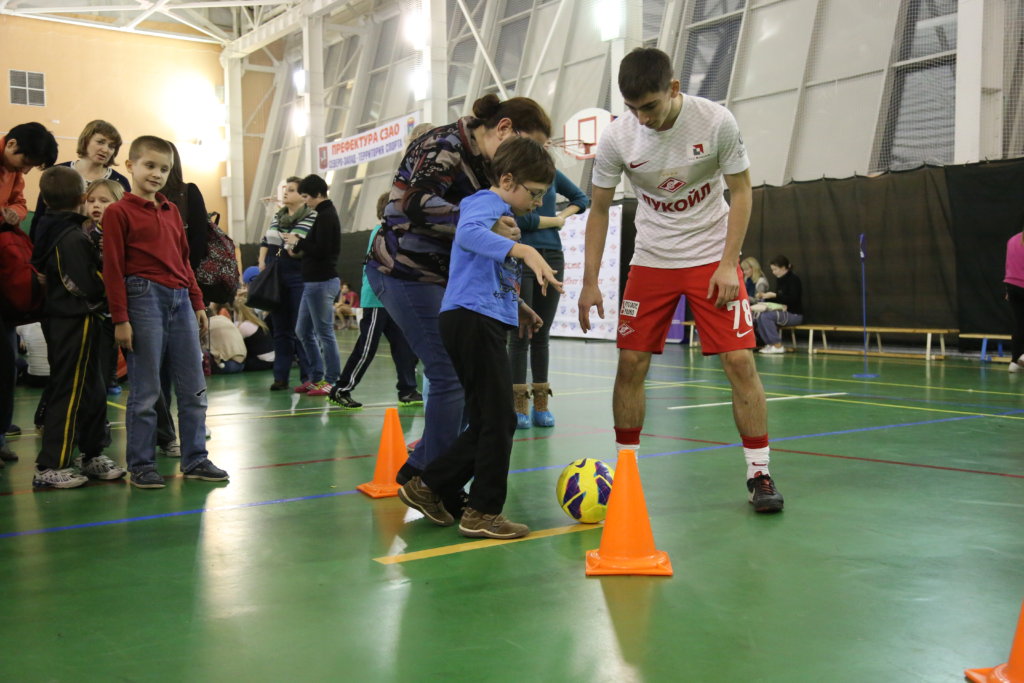
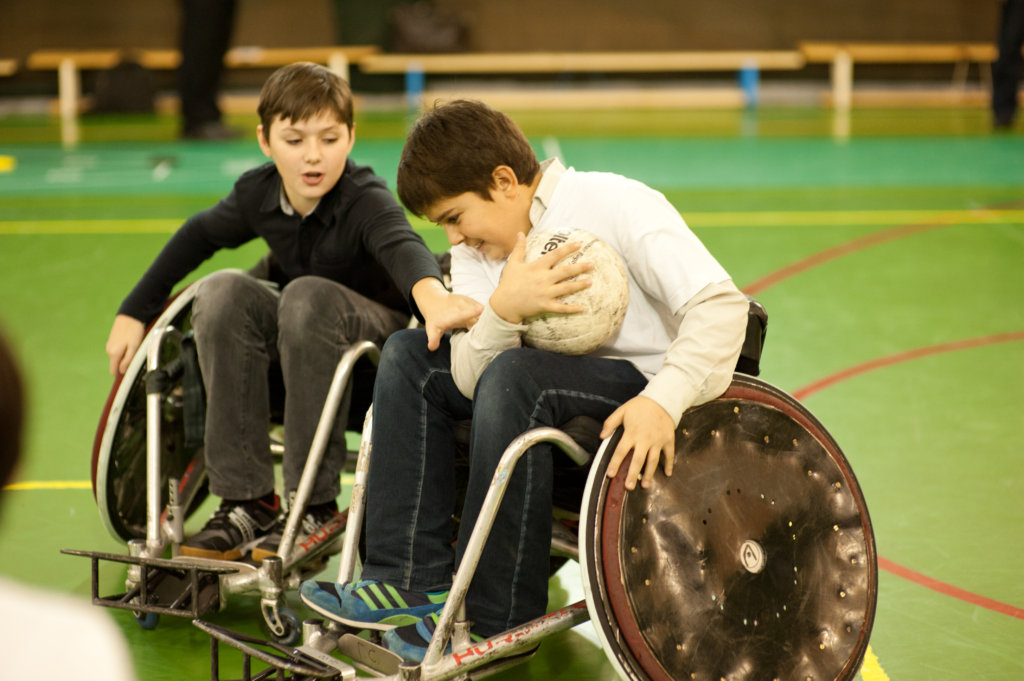
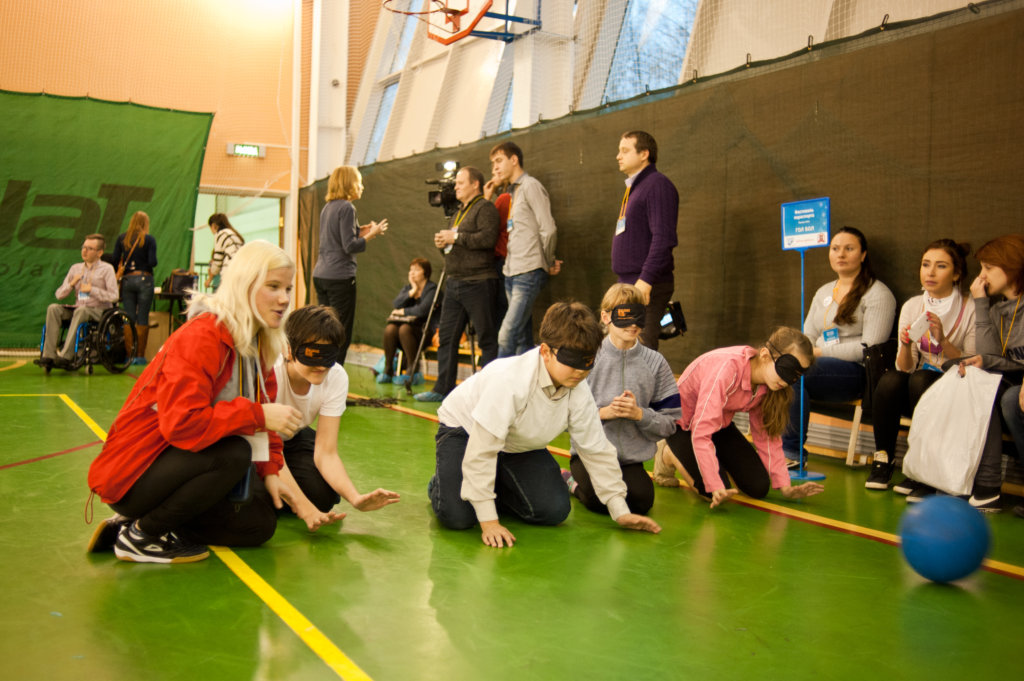
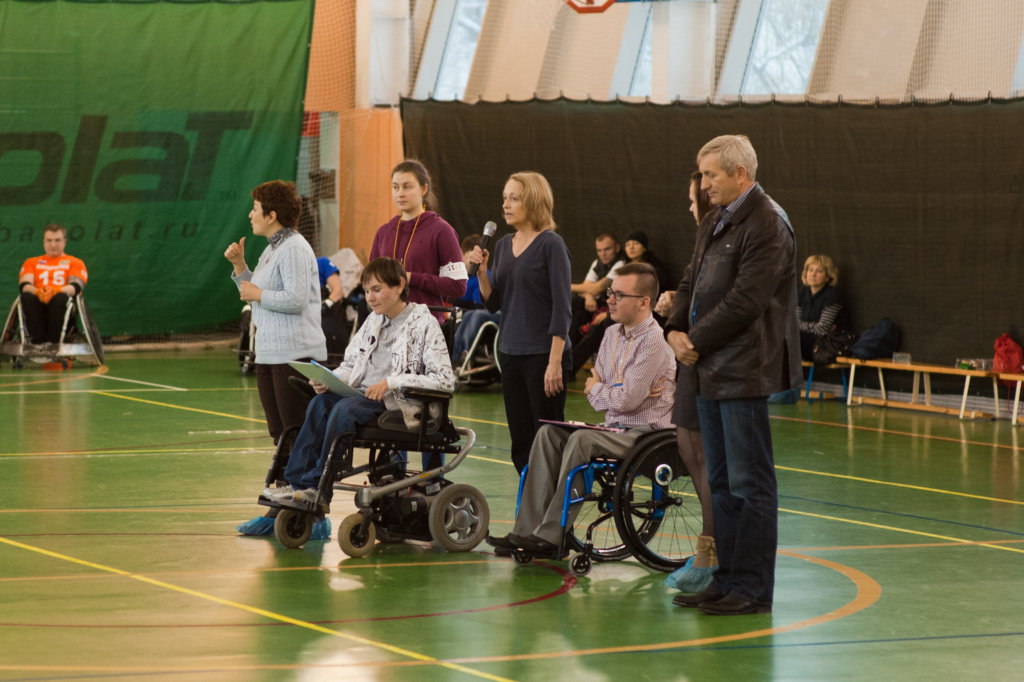
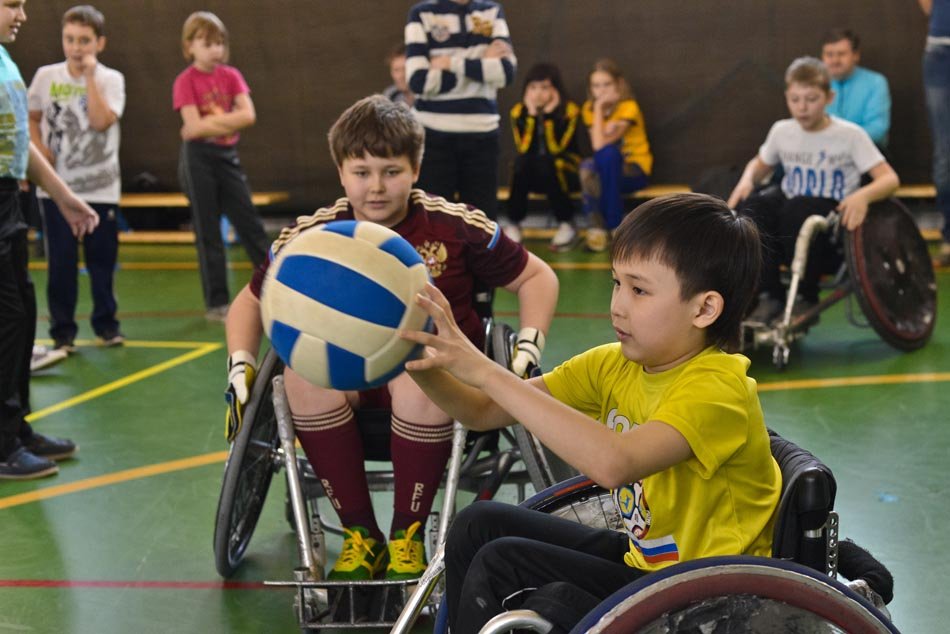
Everything changed when Perspektiva began to organize and hold inclusive sports activities at Nastya’s school. A workshop on sled hockey was one of these activities. Students from her class were invited to participate. Workshop participants also visited an ice-skating arena, Morozovo Stadium, where they met members of the adult team, learned about the game, and had the opportunity to play.
Initially, Nastya's mother was worried about her getting hurt: “While initially Nastya dreamed of playing hockey, that sport often causes injuries. But sled hockey is less dangerous, as the player is secured to the sled. So, I agreed and Nastya joined the team shortly after meeting the other players.”
Nastya has been playing sled hockey for more than three years. She enjoys being part of a team and was very upset when practice was cancelled during the lockdown. Her mother noted that sport has had a positive impact on both Nastya’s physical health and social adaptation: “Nastya has made new friends. She is a valued team player and her teammates respect her. The team participates in tournaments and festivals in other cities. This sport has brought her new experiences and positive emotions. My daughter has become more focused and goal oriented. She has gained stamina and learned how to manage her emotions and exercise self-control.”
The physical education teacher participated in Perspektiva’s training in adaptive physical education, where he learned how to include children with disabilities in sports and PE classes and put his new knowledge and skills into practice. For instance, because people with autism can be visual thinkers, the teacher paired Nastya with a non-disabled peer, who showed her the correct movements. She repeated them over and over until she performed the movements properly. This is also how she learned to play football.
According to Nastya’s physical education teacher, “People on the spectrum are considered “less emotional” and “incapable of being team players”. Nastya defies these stereotypes. Like any child, autistic children are able to make friendships, feel empathy and team spirit. Sled hockey helped Nastya experience and express emotions, strive to play well and win. She has also become more focused and attentive in school.”
Nastya is looking forward to going back to school after studying online in order to return to the ice to prepare for new games and victories!
Project reports on GlobalGiving are posted directly to globalgiving.org by Project Leaders as they are completed, generally every 3-4 months. To protect the integrity of these documents, GlobalGiving does not alter them; therefore you may find some language or formatting issues.
If you donate to this project or have donated to this project, you can receive an email when this project posts a report. You can also subscribe for reports without donating.