By Moza Adilen | Communications and Fundraising Officer
In this story, we honour the hopes and dreams of each and every one of our patients. We recognise that even as their body wilts, the song of their soul continue to hum. And for all of us at Rachel House, this is the song that we try to hear, no matter how faint; and to hum along even when hope dims.
In the city of Palembang in South Sumatra - Indonesia, a city with a population close to 2 million, people did not just know the name Abi*. They recognize him.
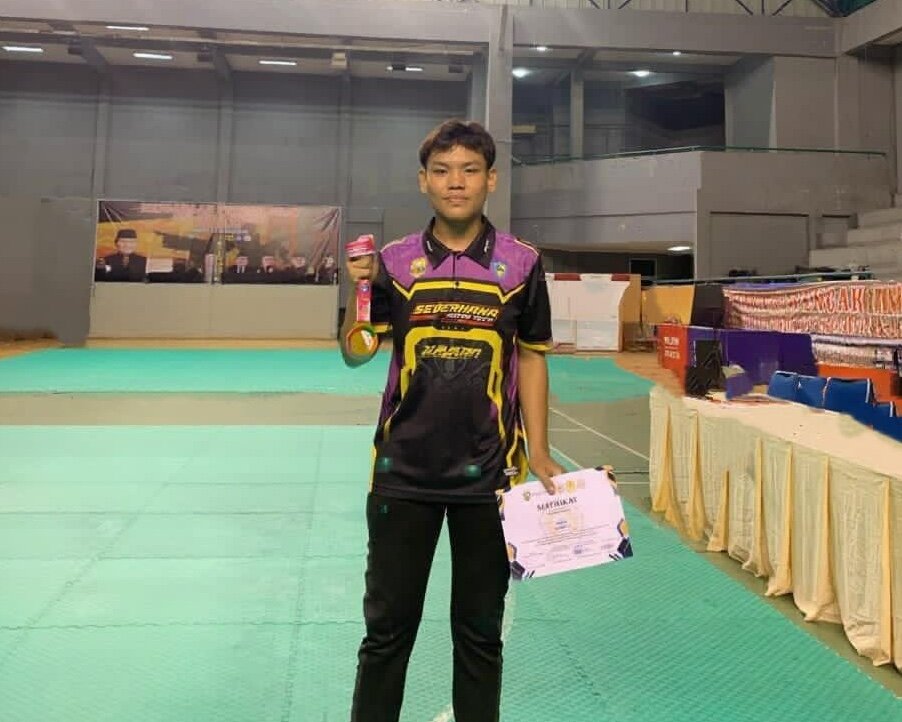
He is known by many names: a prodigy in pencak silat (Indonesian martial art), the boy with the sharp reflexes, he with the focused stare. The one who was always the first on the silat mat and the last to leave. At just 16, Abi was dominating the sport. The kind of student whose body moved before his brain had to think. Competition organizers started to remember his name. There was even a quiet talk about a future with the national team.
He lived at the athlete's dorm, where mornings started with sweat on concrete and ended with sore muscles and shared laughter. Every bruise was a badge. Every ache was earned. His world was discipline, routine, and on fire.
But that life stopped. Abruptly.
It started with a swollen knee. An injury, maybe. Overuse. He pushed through the pain. Fighters always do. But the swelling didn’t go away. The pain grew more intense and more persistent. Then came the hospital visits. Then the scans. Then the diagnosis.
Papillary Renal Cell Carcinoma.
Kidney cancer. Rare. Aggressive.
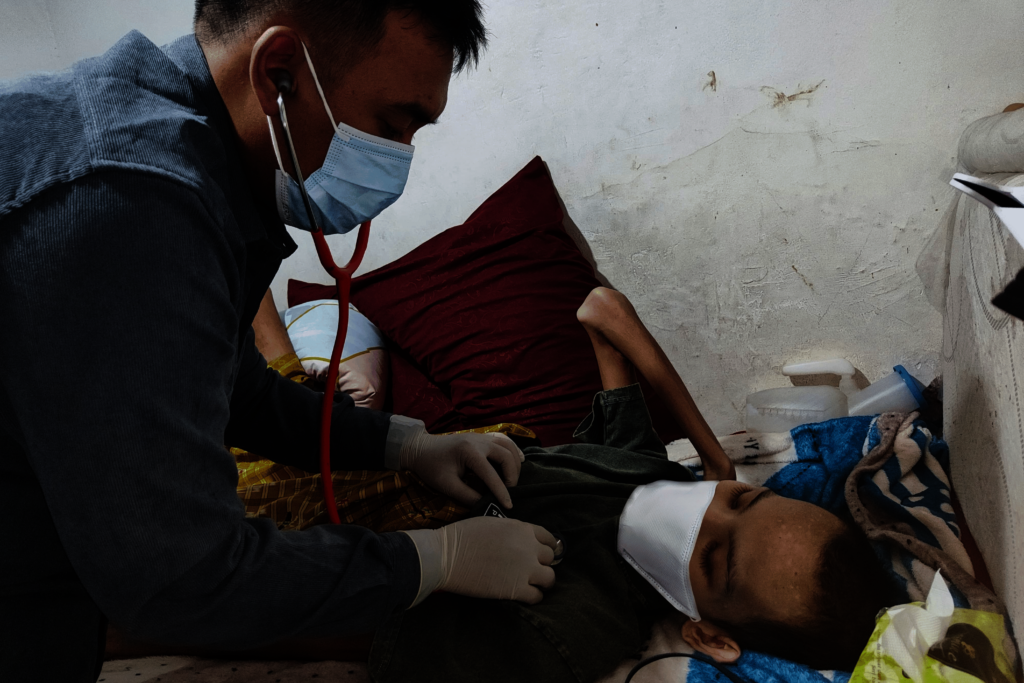
The main mass was in his right kidney, but it had already spread. Another mass had formed on his left pelvis, cutting off circulation in both legs. His limbs began to swell. The pain became unbearable. Abi, who once sparred for hours, now needs morphine just to sleep through the night.
He was pulled off the mat. Out of school. Out of his dorm. Out from his entire world.
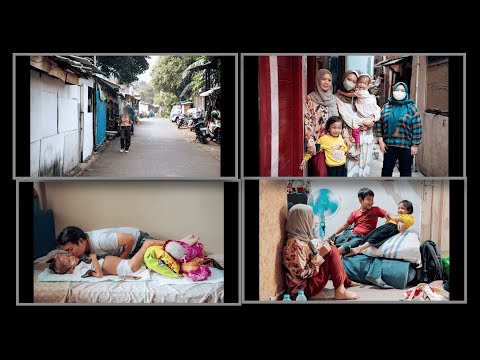
Abi and his parents left Palembang behind and moved to Jakarta - the capital city, in search of hope. Their new life became a small rented room near the hospital. After a few weeks, his father had to return home to work and send money. His mother stays, caring for him day and night. She rarely rests. The exhaustion shows, though she tries to hide it.
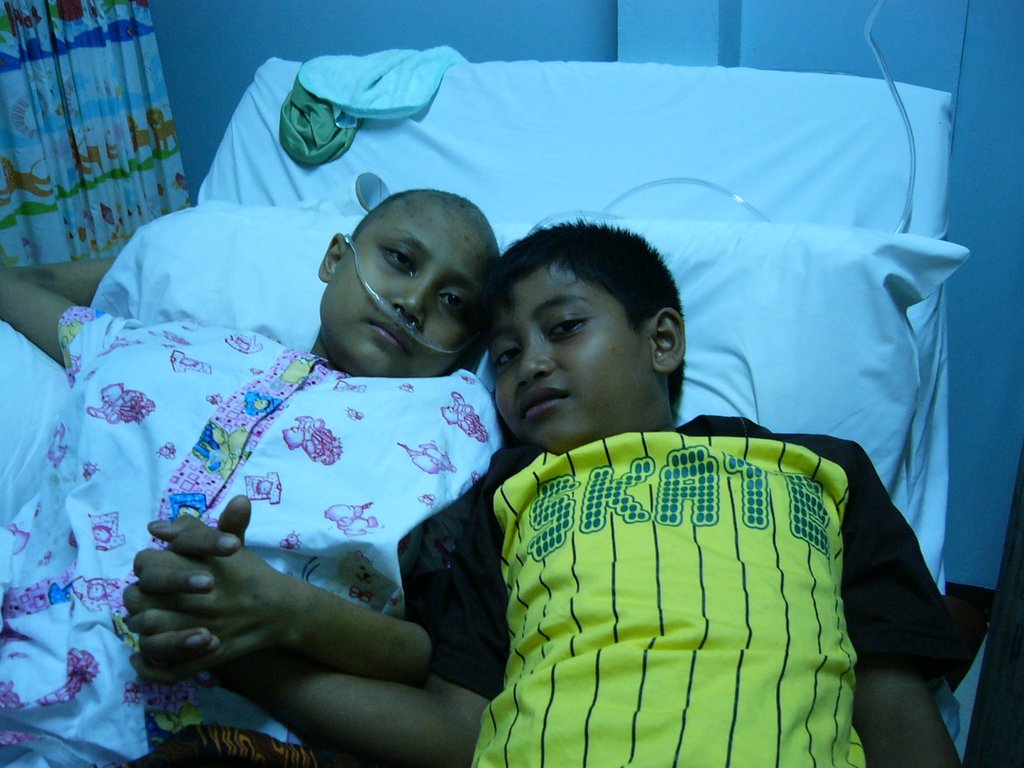
Now, the sixteen-year-old Abi lies in bed. His pelvis marked by a noticeable swelling. Aches and pain are his constant companions.
The silence is unfamiliar. There's no rhythm of training. No teammates shouting in the background. Just the beeping of the machines, the rustle of hospital sheets, and his mother’s faithful hands smoothing back his hair.
But Abi still believes he’ll get up again.
He tells visitors he’s just "resting for now."
He says he’ll go back to silat soon.
He still dreams of competitions, of medals, of returning to the mat.
The oncologists, gently but firmly, have told his family the truth.
The damage is permanent.
The cancer is advanced.
He won’t return to the life he had.
But Abi isn’t ready to hear that.
Not yet.
He holds onto hope like an invisible rope in the dark ravine. His belief is unshaken. Maybe he’s fighting the only way he knows how — by refusing to surrender.
And maybe that’s why the loss hits even harder.
Because this isn’t just about illness.
It’s about identity.
The boy who once moved like the wind now lies still, willing himself to rise again.
But the silence around him speaks of a different future. One he can’t accept. Not yet.
He misses home. Misses his siblings — he is the second of four. He misses the taste of food cooked by his grandmother at home. His appetite is still strong, a quiet sign of life refusing to dim. But his parents, especially his mother, keep his diet strict, afraid that the wrong diet may make things worse.
Jakarta doesn’t know Abi the way Palembang knew him. Here, he’s just “the cancer kid from out of town.” Another patient file. Another fading dream.
But here’s what they don’t see:
Abi still watches silat videos on his phone. The old ones, where his body moved like it had wings. He studies each strike, each stance, each breath. His body may have changed, but his identity hasn’t vanished. It’s waiting. Quietly. Stubbornly.
He doesn’t speak much about the grief of letting go. But it fills the room. Thick. Heavy.
Denial is its own kind of pain.
And yet, through it all — he still believes.
“Silat isn’t just what I do,” Abi says, eyes unwavering. “It’s who I am. Even if I never fight again… it’s still in me. Always.”
No, he may never return to the mat.
But the spirit of the fighter — the one who trained at sunrise, who moved like the wind, who never gave up — still burns inside him.
This isn’t the ending.
It’s a pause.
A reckoning.
A new kind of fight.
*Name changed for privacy
Project reports on GlobalGiving are posted directly to globalgiving.org by Project Leaders as they are completed, generally every 3-4 months. To protect the integrity of these documents, GlobalGiving does not alter them; therefore you may find some language or formatting issues.
If you donate to this project or have donated to this project, you can receive an email when this project posts a report. You can also subscribe for reports without donating.



Support this important cause by creating a personalized fundraising page.
Start a Fundraiser