By Astere Muyango | Fellow and country manager in Burundi
With the help of IBJ, provisions regarding juvenile justice under the new criminal procedure code are implemented.
In Burundi, the eagerly awaited code on the criminal procedure was finally promulgated on 3rd April 2013 by the President of the Republic of Burundi. It contains within it several improvements and provisions softening the treatment of Children accused of crimes. Amongst them, it should be noted that under the realm of this new Criminal Code, the legal assistance of a child accused of a crime is mandatory. Then, every inquiry to be done by the police officer must be undertaken in presence of a lawyer or any other person having sufficient knowledge in juvenile justice. Unless this is respected, the minutes of the inquiry must be nullified.Furthermore, this new code enacts alternative solutions to the detention of a child by allowing the judge to decide to place the child with a foster family or within a reformation center. Similar powers have also been granted to the police officer and the prosecutor who can only decide if the child is to be kept by his parents, guardian or any other person who can be trusted. Thus, this new code aims to limit the detention of children, which according to its terms, must be decided “as a last resort” (Article 222, paragraph 3). Another major improvement is shortening to a non–renewable seven-day period under which a child in conflict with the law can be under warrant of arrest.
The enforcement of the above-mentioned innovation is a core concern of IBJ’s lawyers since it is still a provision well written within texts, but not implemented.In that regard, among 126 accused defended over the last three months by IBJ lawyers in Bujumbura, Cibitoke and Mwaro, 11 were juveniles. These 11 would not have been defended if IBJ had not provided them with lawyers.
One of them, a boy of 17 years old is accused of assassination. The child had been arrested in February 2013, two months before the promulgation of the new code on criminal procedure. The police inquiry has been done without legal assistance. On June 18, 2013 in the public hearing heldthereof, the prosecutor was requesting for the case to be taken in the criminal chamber of the court. If done in this way, this could result in a potential heavy penalty against this child who pleaded innocent from the beginning of the proceedings. The rapid treatment of the case would not be achieved as this would have taken at least one further month for the hearing to be reorganized. Also, the prosecutor was calling for perpetuity as a penalty to be pronounced by the court against the child.
This position of the prosecution has been deemed illegal by Astère Muyango who assisted the case. First, the lawyer proved his client was born in 1996. In addition, under the realm of the new code on criminal procedure, the child, whatever the crime he is accused of, is to be heard in the Special Chamber for Minors not in the criminal chamber. Furthermore, as pleaded by the IBJ lawyer and according to the criminal code, no child can be sentenced to life imprisonment since the article 29 of the criminal code specifies the maximum of sentences for juveniles.
This case proves how it is hard for criminal justice actors to overcome the old practices and truly implement new practices enacted under the new legal framework.
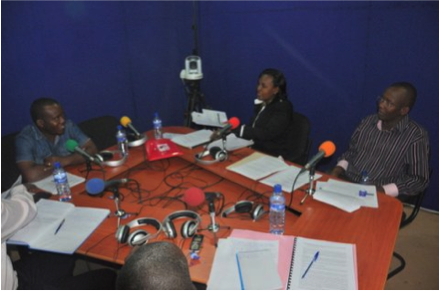
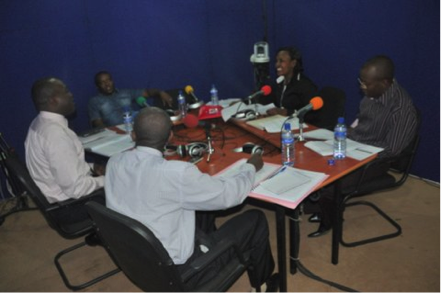
A need for rights awareness activities remains. IBJ intends using its training tools to popularize this new code on criminal procedure. This was also emphasized on the 26th day, a world date dedicated to the fight against torture, where, IBJ fellow Astère Muyango, was invited by the National Independent Commission for Human Rights (CNIDH) to a one hour radio show of five more listened-to radio stations (National Radio, RPA, Isanganiro, Bonesha and Rema FM) which were broadcasting the same program and at the same time in a media synergy. All the speakers, among whom was the vice president of the CNIDH, converged on the great need for trainings and rights awareness. Since it affects juveniles accused of crime, it is important for all stakeholders to help in the implementation of Burundi obligations born after the signature of CAT in 1993.
Pictures:
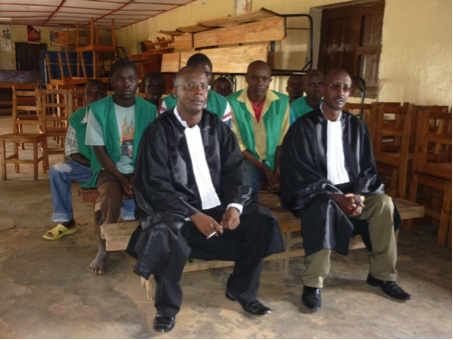
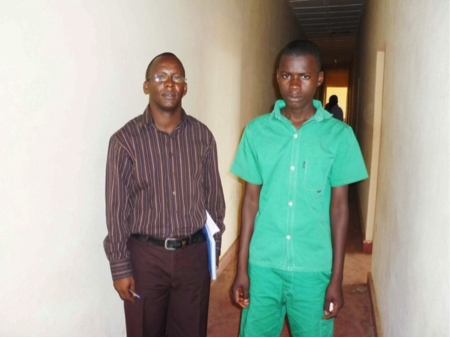
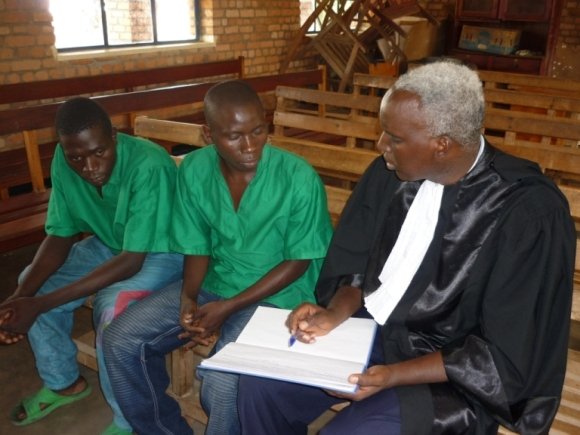
1) Janvier Ncamatwi and Astère Muyango, the IBJ fellow lawyers
2) After legal assistance of the juvenile in public hearings
3) & 4) From right to left, Astère Muyango (IBJ lawyer, Sonia Ndikumasabo (vice president of CNIDH, Serges Nibizi (journalist), Armel Niyongere (President of ACAT), and Fidèle Havyarimana (from the Republic Prosecutor’s department)
By Astere Muyango | IBJ Fellow and Country Manager
By Astere Muyango | IBJ Burundi Fellow
Project reports on GlobalGiving are posted directly to globalgiving.org by Project Leaders as they are completed, generally every 3-4 months. To protect the integrity of these documents, GlobalGiving does not alter them; therefore you may find some language or formatting issues.
If you donate to this project or have donated to this project, you can receive an email when this project posts a report. You can also subscribe for reports without donating.