By Anik Kristina | Administrative officer
Tell Us How Your Project (Help Educate 50 Village Children in Bali - #51469) Is Going
TITLE OR SUBJECT OF REPORT
Conservation-Based Education Program of 50 Village Children at Begawan Learning Centre in Bali during July – October 2022
PROJECT REPORT
Tooth Theme
Throughout July-August 2022, as a part of the ‘Teeth Hero’ thematic program, at the beginning of July 2022, Begawan’s students conducted a tooth decay experiment with eggshells. They chose eggs to represent teeth, as an egg shell is made of a similar substance as tooth enamel. They submerged eggs in different liquids, including coke, juice, vinegar, coffee, milk, alcohol, with water as the control liquid. For each liquid, they prepared an egg covered with fluoride toothpaste and an egg without toothpaste. They wanted to know the effect of fluoride toothpaste on their teeth.
The next day, Begawan’s students observed changes in the colour, size, or shape of the experimental eggs. They found that eggs submerged in coke and coffee left stains on the eggshell, and it took time to clean the stains. They also found toothpaste-covered eggs stained less than those without toothpaste. The most drastic changes occurred in eggs soaked in vinegar. The vinegar completely dissolved the eggshell, leaving just the membrane behind. The students concluded that vinegar is bad for teeth because the acid weakens the tooth enamel.
During mid-July 2022, Begawan Learning Centre’s Eco-Warriors decided to make their own organic toothpaste after researching the toothpaste they normally use, which is full of chemicals. The students used coconut oil as the natural antibacterial, organic cocoa powder as the replacement for fluoride and added flavor, baking powder as a whitening agent, and organic stevia to decrease the sour flavor which came from the coconut oil. Our students began to realize that using regular toothpaste might lead to damaged teeth because of its excessive chemicals. The students also learned the better option of using natural-sourced toothpaste. This activity has proven once again that Begawan is keen to pay attention to its students’ health.
On August 10th, 2022 after the final project entitled ‘Tooth Hero’ at the Learning Centre, fourteen parents of both new and old students attended a meeting. The education team began by giving parents their children’s individual evaluations, entitled Surat Cahaya Bersinar (Shining Light Letter). This evaluation and feedback by the education officers assists parents to know how their children are learning, and gives a better understanding of the learning process. In the next session, they discussed all the activities and programs from previous lessons so that parents became aware of their children’s activities, the upcoming themes, the schedule, and the programs that they want to develop and grow. Following the presentation, the staff gave the parents a questionnaire, followed by a question-and-answer session.
It’s easier to have conversations about tough topics when relationships are strong. The facilitator can tell of student challenges, and parents will have more trust in the education team because of these positive connections. Students are less worried about the learning challenges because they have faith that they can overcome obstacles with their facilitator and their parents by their side. Because trust has been established, the team is able to work more effectively.
Soil and Farming theme
In mid-August 2022, Begawan’s students commenced a new theme entitled Soil and Farming, a theme which will emphasise the significance of soil health, types of soil, functions of soil, soil erosion and conservation, organic and non-organic farming, the rice cycle, and regenerative farming. To introduce the theme, the students learned about different types of soil and soil layers. They understood that soil consists of different layers and each layer has different characteristics. At the end of the month, the students learned about the function of soil to purify water by conducting a science experiment.
Students worked in small groups, dividing the tasks among each member of the group so that their work would be more effective. Some students looked for rocks around the learning centre, other students made dirty water using a bottle of water mixed with dirt or potting soil. They also washed the rocks and sands in readiness for the experiment.
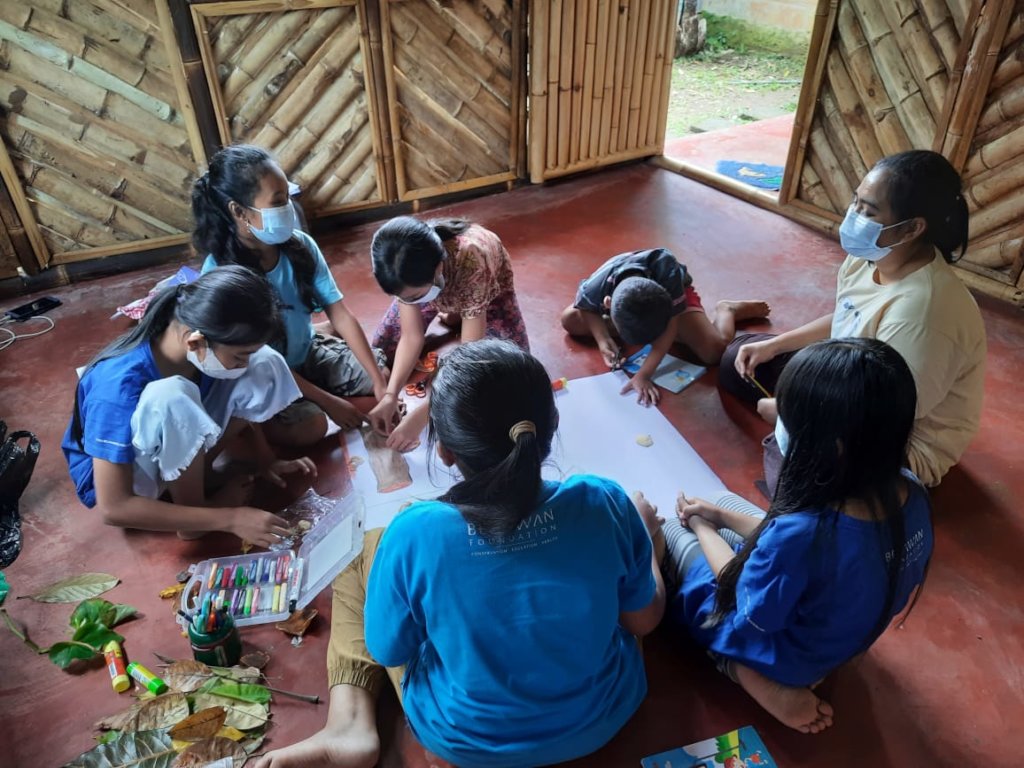
When all the materials were ready, each group sat in a circle and experimented. They arranged the materials to represent the composition of soil layers in nature. At the bottom they put cotton, which represents the pores of the soil layer, then large rocks, which represent the bedrock soil layer. After that, small pebbles represent the regolith layer. Above this, sand represented the subsoil, charcoal then represented the topsoil and organic matter, and the top layer was covered with tissue-like soil pores. After such an arrangement, the water filtration was ready for use. They slowly poured the dirty water into the water filter. All the students watched closely how the dirty water was filtered as it passed through the layers to become clearer water.
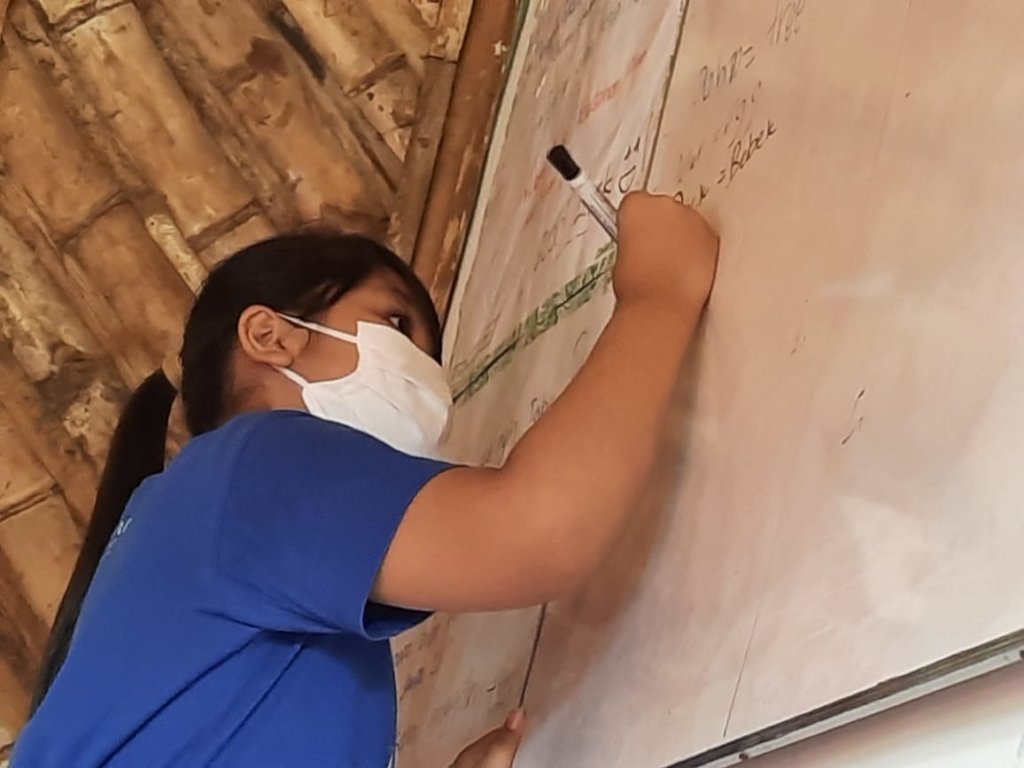
After finishing the experiment, students shared their observations with their friends. All groups noted that the colour of the water after the filter process had changed. Before the experiment, the water was dark brown, but after the filtering process, it became slightly transparent. The experiment demonstrated to students that one of the most important functions of soil is water filtration. To a great extent, here in Bali, we rely on this groundwater, that collects in natural spaces underground to supply us with our clean water.
Begawan also organised a gardening workshop for Begawan’s Eco Warriors and Teenage students. This workshop aimed to regenerate the soil in the garden as well as redesign and redecorate. It was guided by Sayu, a Balinese gardening practitioner and expert who has experience in designing, managing, and maintaining permaculture gardens.
At the beginning of the workshop, Sayu shared with the students the idea of permaculture and regenerative farming, and why these ideas should be promoted amid the excessive use of chemical substances that damage the soil and the environment. As a concept, she affirmed that permaculture is an environmentally, economical, and socially friendly way of making use of the soil and land. It is indeed more eco-friendly and costs less than the conventional way of farming. More importantly, the results of this way of farming produce healthier products.
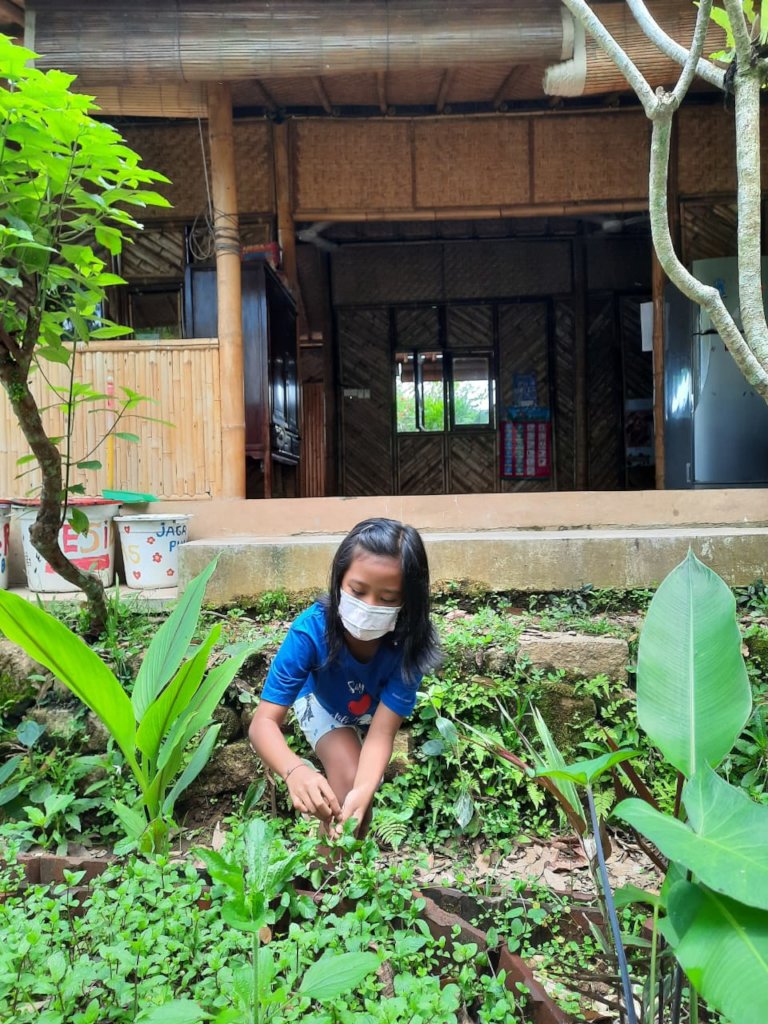
After listening to the idea of permaculture and regenerative farming, the students began a whole group discussion to visualise the design of the garden located just behind Begawan’s learning center. They agreed to transform the garden’s design into a WIFI symbol! During the discussion, the students also divided their roles and responsibilities for revitalising and redecorating the garden. Some of them were engaged in hoeing, some of them cut banana stems that functioned as organic compost, some of them made borders using coconut husks, some of them laid small stones in between the beds, and the rest were busy collecting dry leaves to regenerate the soil. This was a great student collaboration!.
At the end of the workshop, Sayu taught the students how to make an organic liquid fertiliser from a mixture of water, rice bran, compost, and palm sugar. This organic fertiliser will be used once in a week by the students to supplement essential nutrients in the soil needed by all plants for healthy and vigorous growth.
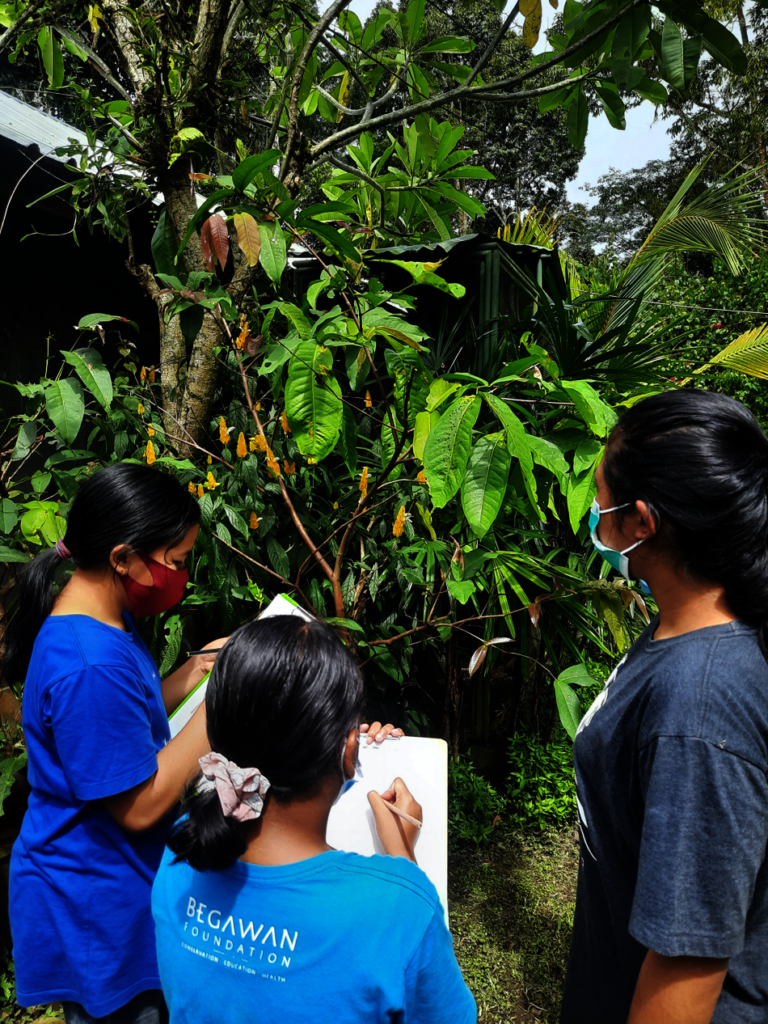
At the end of August, Begawan’s Eco Warriors learned about soil pH (a measurement of the acidity and alkalinity in soils). They explored what soil pH means, the function of measuring soil pH, the impacts of different level of soil pH on plant growth and health, browsed information about how to neutralize acidic and alkaline soils using tablets, and directly practiced measuring soil pH using a pH-moisture meter. In these learning activities, the students enriched their knowledge that soil pH level is one of major indicators of whether the soil is suitable for planting plants or not. Soils that are too acidic or alkaline should be given the necessary treatments before planting. It should be conditioned in such a way to make it neutral (pH level between 6.5 – 7.5). More importantly, the students also directly practiced using the pH-moisture metre to measure soil pH in different locations around the learning centre. As a result, the students learned how to use the tool and understand the soils around the Learning Centre which have a neutral pH level, and are thus suitable for growing a variety of plants.
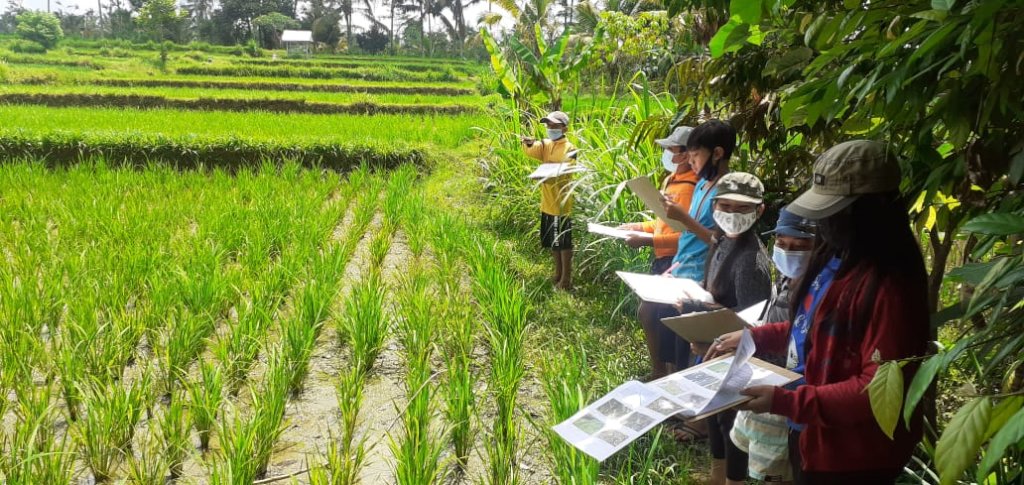
At the end of this session, the Begawan’s Eco Warriors also learned about different types of soils. Begawan’s Education Team provided some soil samples taken from different places, such as Begawan’s rice field, the garden, the riverside, and the compost pit. Some soil samples from places around the Learning Centre were also taken for the students to observe. The students were challenged to observe and feel these soil samples to find out which ones have the brightest and the darkest colours, and which ones have the smoothest and roughest textures. They took turns to directly touch, feel, and observe the soil samples and then discussed the answers with their group. Finally, they discussed as a group and decided which type of soil is the best for agriculture.
Not to be missed, during August, the students also visited pottery makers at Arta Derau, Tegalalang, Gianyar. Puti, the business owner of the pottery, described the ceramics manufacturing process before the activity started. The students observed the equipment used to fire pottery inside the kiln. They engaged in a question-and-answer session on the material used, the method for creating ceramics, the temperature needed for combustion, the combustion process, the glazing process, the distribution of colors and paints, and ceramic sales and distribution. The next step was to look for inspiration by looking at various examples of pottery that were ready to be traded. There was a wide variety of pottery that appealed, including plates, cups, bowls, teapots, ashtrays, beads, figurines, spoons, and many more. They moved around the workshop while enquiring how to create particular shapes. There were also other artisans working in the space, creating ceramics on potter’s wheels and painting ceramics that have been through the air drying process.
Following a tour of numerous workshop spaces, the students had the opportunity to create pottery while being guided by the two facilitators. Each received one coloring set and 500g of clay, and they learned how to build cups using the pinch technique. The cup was then colored and decorated. In the second task, the facilitator gave freedom to the children to express themselves. The majority of them created incense holders in the shape of flowers, cats, initials, statues, and plants.
The activity closed with a break and sharing potluck. They reviewed the process of making pottery and became aware of the characteristics of the soil that can be processed into craft materials.
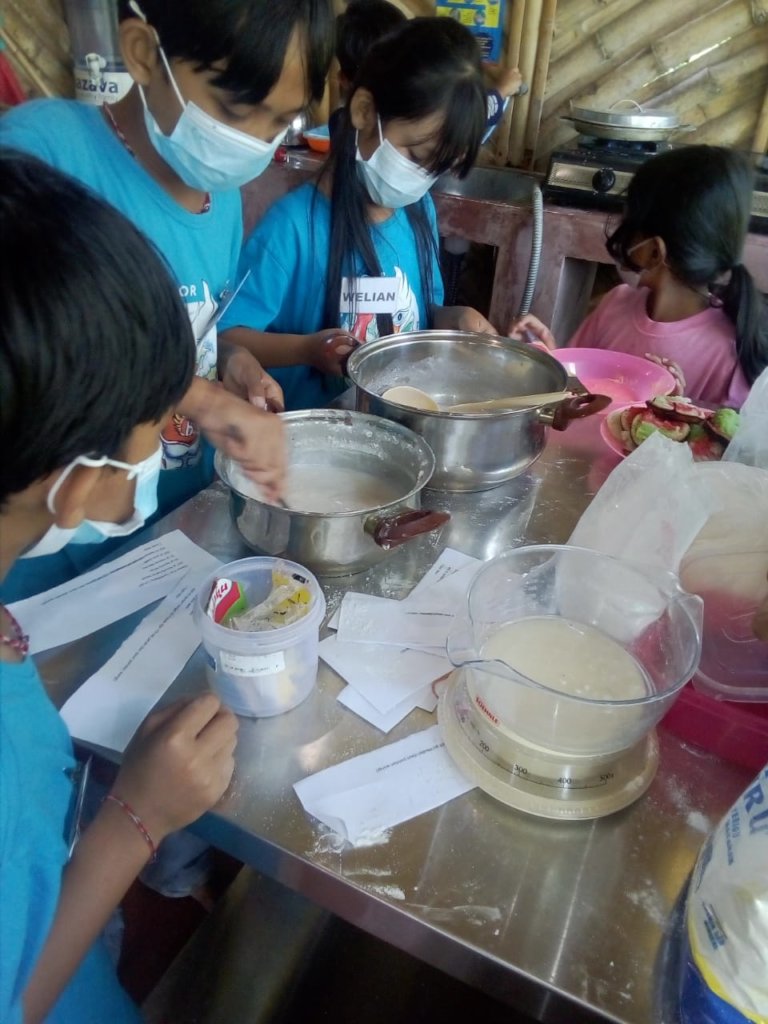
In September, after a few weeks of discussing soil, Begawan’s students commenced a discussion about agriculture and food. They started the discussion by reflecting on the question, “Where does food come from?” On September 19, our students processed some agricultural products to make plant-based food. They made vegan butter from refined coconut oil, soy milk, apple vinegar, olive oil, and sea salt. In small groups, they follow the recipe, carefully measuring the ingredients precisely so that the butter would taste good. They blended the ingredients until smooth, poured the mixture into a butter dish and refrigerated it until it set. After a week in the refrigerator, they checked the result, observed the texture, and tasted it, spreading their own home-made vegan butter on bread and then baking it.
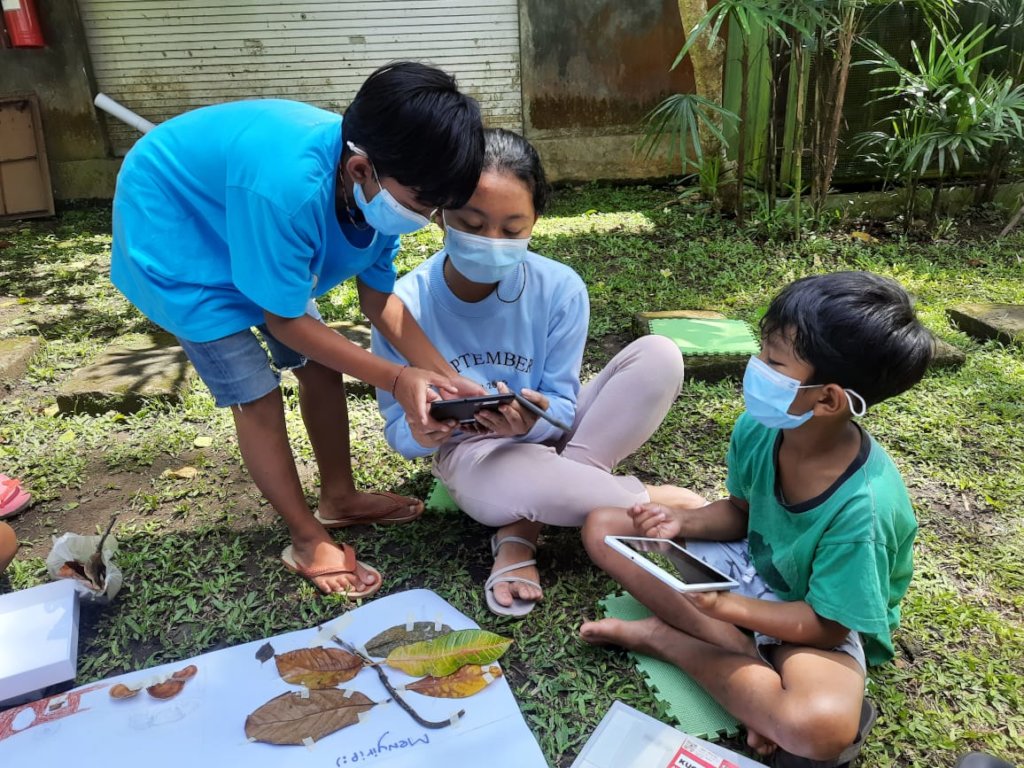
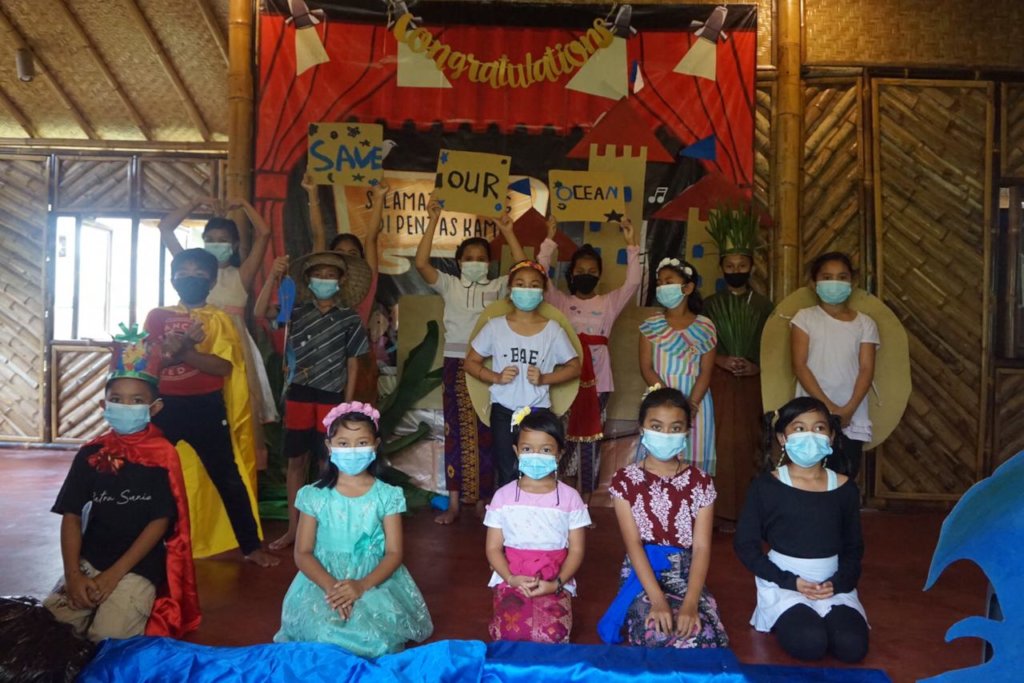
In October, Begawan’s students commenced several activities such as Seed selection, Science expo, and robotics. The seed selection activity is part of the soil and farming theme. Students selected which seeds are best and ready to farm. Finally they held a science expo at a local primary school.
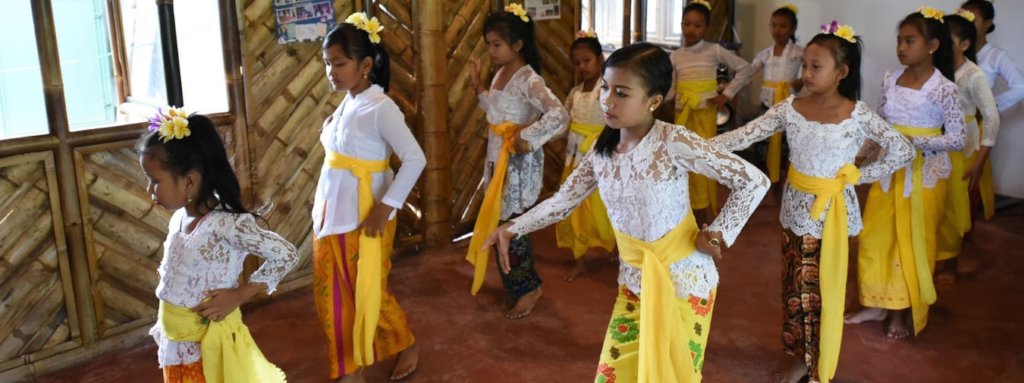
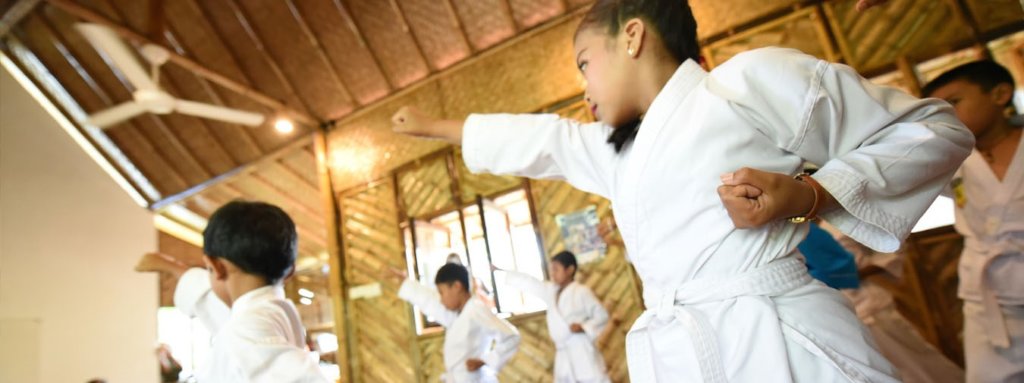
To conclude, Begawan runs on six days a week, with a duration of four hours per day. Apart from the lessons and classes above, Begawan also actively provides a free healthy lunch program and extracurricular activities; culinary and nutrition classes, martial arts training to help in self defence, Balinese traditional and modern dancing, permaculture classes, and Balinese literature classes. At the beginning of November robotics classes commenced, to introduce of a new computer proficiency class, as a continuation of the coding class
Links:
Project reports on GlobalGiving are posted directly to globalgiving.org by Project Leaders as they are completed, generally every 3-4 months. To protect the integrity of these documents, GlobalGiving does not alter them; therefore you may find some language or formatting issues.
If you donate to this project or have donated to this project, you can receive an email when this project posts a report. You can also subscribe for reports without donating.