By Rodney Holt | Founder/CEO
Why Blind Sports
Blindness can cause certain motor problems such as difficulty in attitude
integration and body-awareness (since sight is an important factor here); balance
problems; problems with motor co-ordination; posture problems; and orientation
difficulties.
Apart from the numerous motor and physical qualities which Judo helps to
develop in people with normal health, it is perhaps, useful to mention the
manner in which these are indispensable for blind people.
Falling: It is essential for a blind person to learn to fall in a suitable manner,
since uncertainty of movement, due to blindness, often leads to painful falls. By
learning secure positions, blind people can avoid accidents in everyday life.
Balance: This is a fundamental element of Judo and an indispensable factor
for the blind. It helps to encourage the visually impaired person's integration in
space.
Exercise: Just like sighted people, a blind child must learn to develop his or her
physical capacities. He/she will then be able to know and control the body better.
Improved control over the motor forces, such as strength, speed and agility, will
provide a weapon to combat the consequences of blindness which can otherwise
include a sedentary existence.
Kinesthetic sensations: It can be said without exaggeration that blindness does
not constitute a serious problem for a Judoka. In practice, seeing persons do
not look at their opponents during combat; they try to distribute their strength
and adapt their behavior. A blind person is, therefore, not impaired in the
discovery of these physical sensations or in their refinement. It is the perception
of the strength and behavior of the opponent which induces the choice of the
appropriate reaction. Sight does not play a preponderant part in this process.
The psychological se ctor
It is sometimes necessary to reduce the impact of a visual impairment in order
to obtain:
Autonomy: Judo teaches blind people to take the initiative without risk. Blind
people learn to manage without the special assistance of other people. This
encourages self-assurance in everyday life allowing them to take calculated risks.
Blind people quickly learn to find their bearing (space, time) in judo training and
to move around with self-assurance.
Motivation: Judo is attractive because it permits blind people to measure
themselves on an equal basis with seeing people. Blind athletes can participate
officially in the competitions organized by the International Blind Sports
Association and its member countries, as well as all tournaments for the sighted.
They can attain the same ranks and titles as seeing people. All these factors
contribute to self-assurance in their physical capacity, which forms a counterbalance
for their visual impairment.
The s ocial se ctor
It is sometimes necessary to reduce the impact of a visual impairment in order
to obtain:
The battle against isolation: A disability of any description often entails isolation
and a sedentary existence. Membership in a sports organization provides the
opportunity to get out of special schools, to meet other people and measure
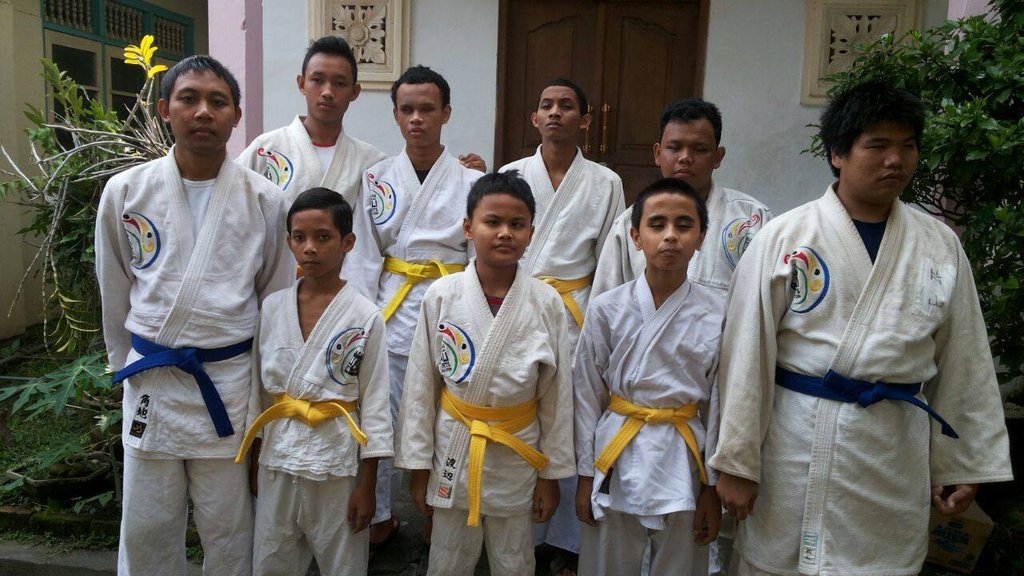
against them on an equal basis.BSF Blind Judoteka’s train with seeing
judotekas.
Respect for rules and for other people: Blind people are often suspicious of their
environment and even avoid contact which could he a source of insecurity. This
is why motivating, physical activity can reduce the obstacles, facilitate contact
with other people and promote integration with the world of the seeing.
Sportsmanship: As with sighted students, blind individuals learn through their
participation in sports all the values of good sportsmanship. Judo in particular
has a character building component that stresses the development of a strong
ethical code.
The f uture
Holt continues “our long term plan is that by the Asian ParaGames in 2018
here in Indonesia,the BSF Blind Judo athletes can represent Indonesia.”
Project reports on GlobalGiving are posted directly to globalgiving.org by Project Leaders as they are completed, generally every 3-4 months. To protect the integrity of these documents, GlobalGiving does not alter them; therefore you may find some language or formatting issues.
If you donate to this project or have donated to this project, you can receive an email when this project posts a report. You can also subscribe for reports without donating.