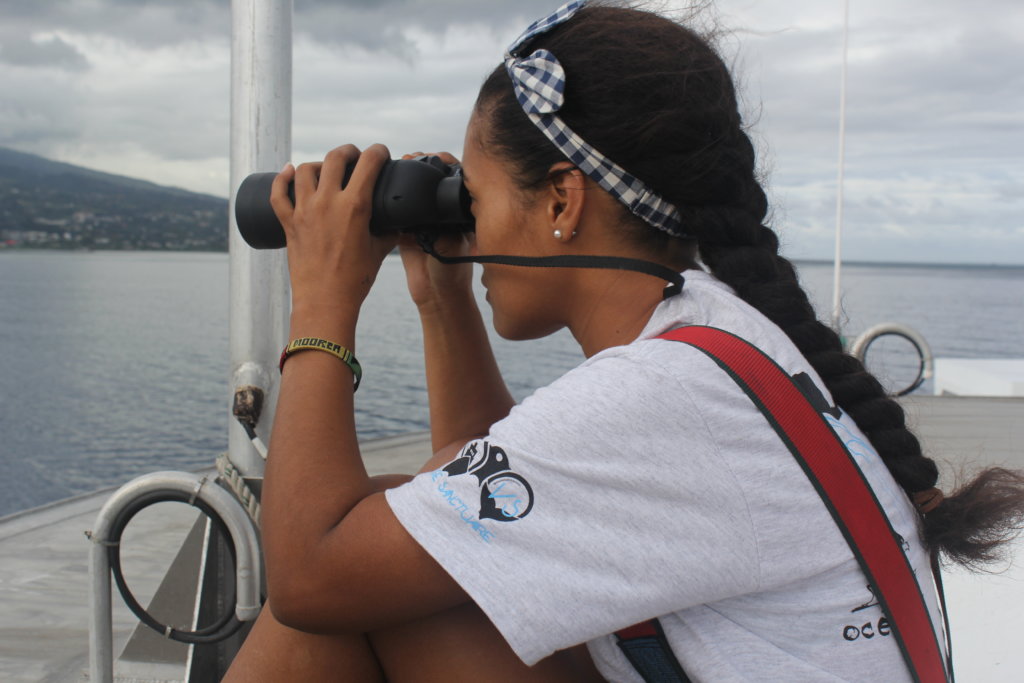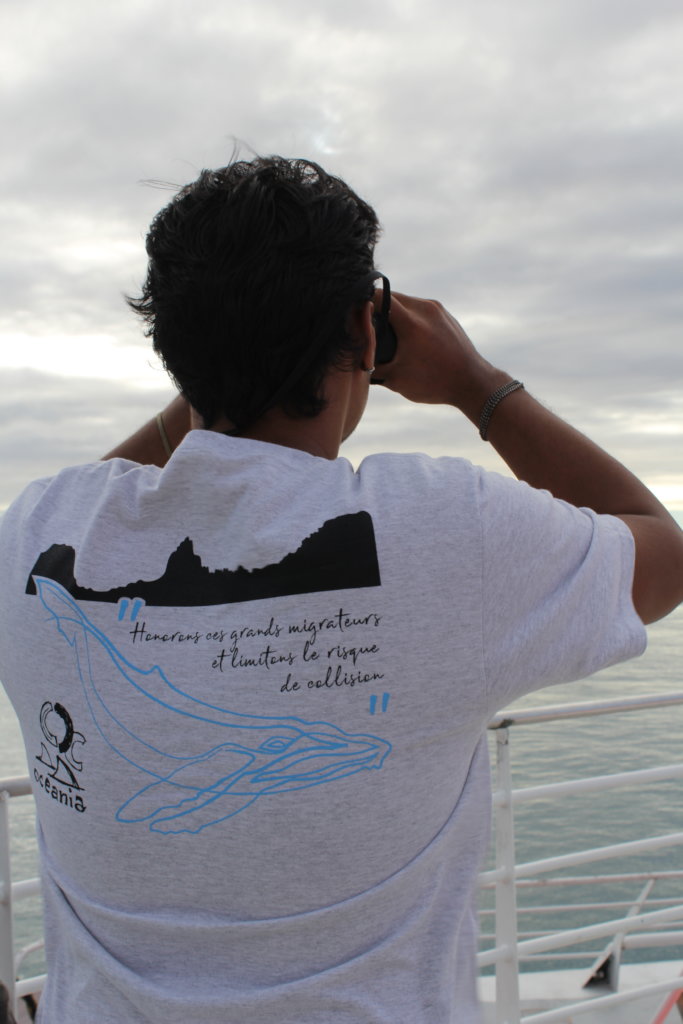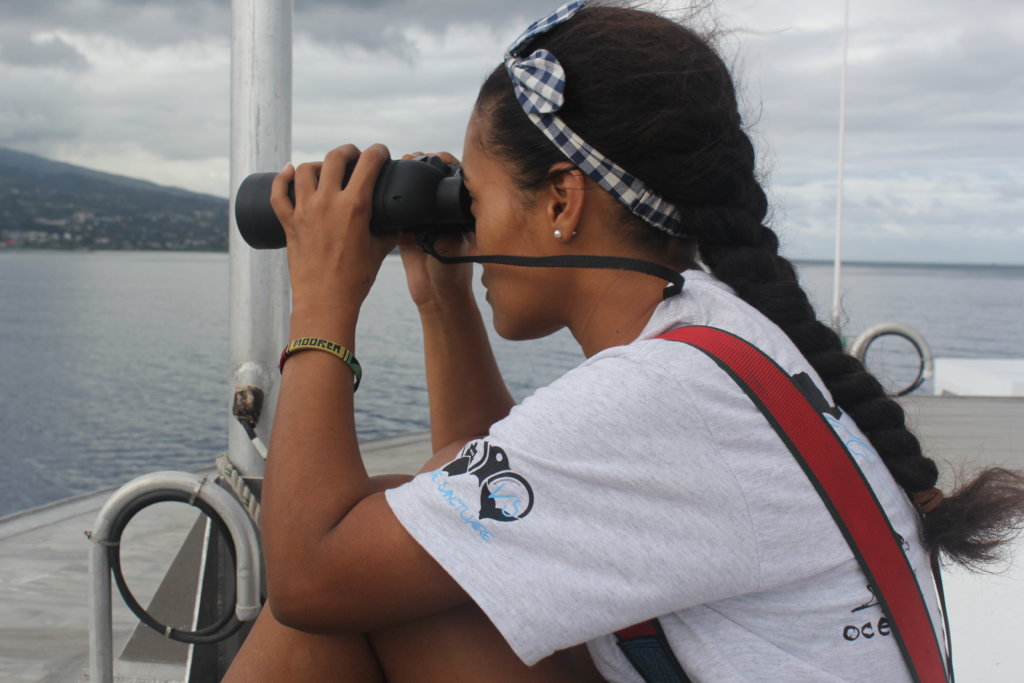
The MMO (Marine Mammal Observer) aims to detect humpback whales over long distances to minimize the risk of collision. When the distance between the animal and the ship is less than 200 m an avoidance maneuver is triggered (change of course and reduction of speed). In 2018, this program accounetd for 556 hours of real time observation during 13 644kms. This allowed us to prevent 96 potential collisions.
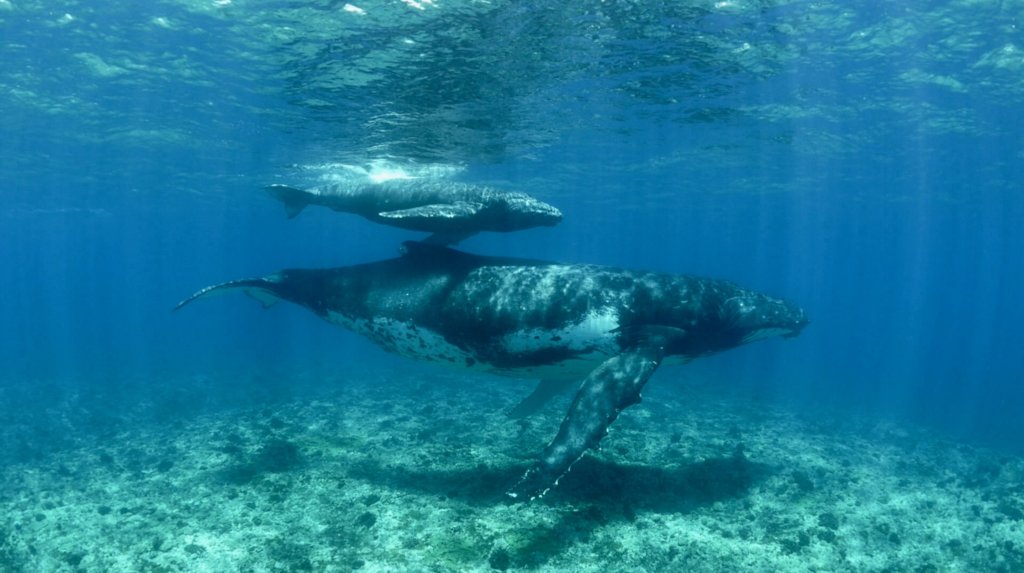
In terms of biodiversity, we know that despite the status of humpback whales in the World ("Least Concern"; IUCN) the population of Oceania and therefore French Polynesia (F2) is still considered to be in danger ("ENdangered", IUCN). This special status requires environmental managers to pay special attention to their preservation. The collision issue has become a global concern for the conservation of cetaceans. Indeed, it is to date one of the first causes of mortality of large cetaceans.
In accordance with an increase in maritime traffic on the Tahiti Moorea maritime route, no particular concern is currently taken for cetaceans in this area. Each year the humpback whales come to our waters to reproduce, give birth and rest; the study area is very busy during the season. Oceania provides a non-stop surveillance 7/7 for 4 months. Every day, avoidance maneuvers are put in place and ensure the future of its populations.
The project will educate and re-insert young people from priority neighborhood by providing job for them. Each season thousands of people are made aware of cetaceans and the major environmental challenges. By ensuring the good health of cetaceans in our oceans its a way to protect our future. Whales play a huge role in the balance of our oceans (for example, their feces allows the growth of phytoplankton).
This project has provided additional documentation in a PDF file (projdoc.pdf).