By Chikara Ushiki | Associate
Ashoka Japan has launched two new media initiatives to share the experiences of young changemakers and introduce the ideas that shape Ashoka’s work.
The first is a series of long-form interviews with former Youth Venturers. The second is Ashoka Spotlight, a recurring social media series introducing Ashoka’s key concepts and perspectives in accessible language.
Together, these initiatives aim to create more opportunities for people to encounter the stories, questions, and ideas behind changemaking.
Following the Journeys of Youth Venturers
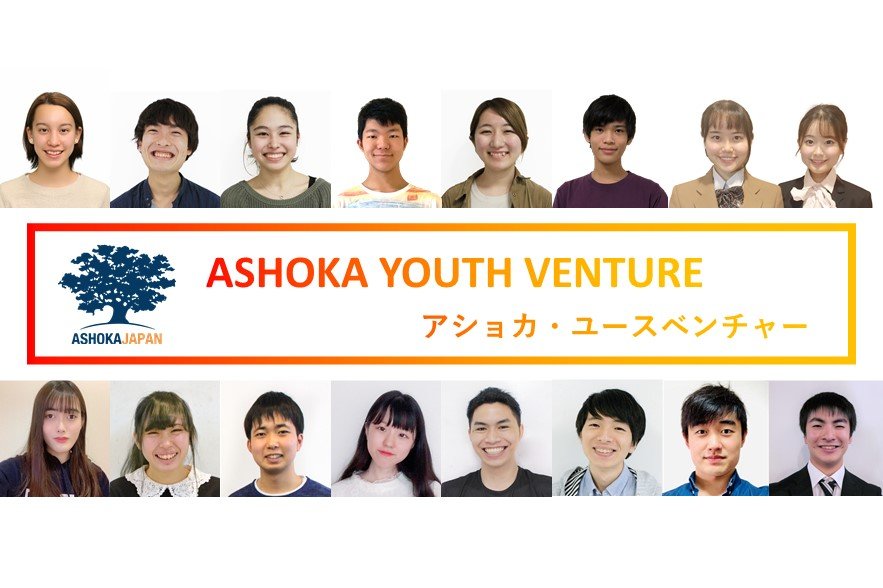
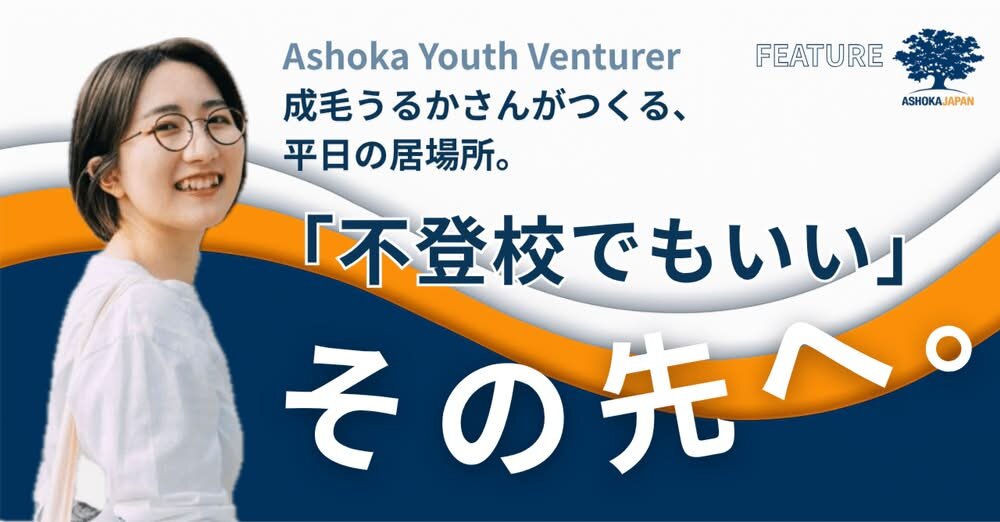
The first interview in the new series featured Uruka Naruge, who was selected as an Ashoka Youth Venturer in 2018.
Drawing on her own experience of not attending school, Naruge has continued to explore what kinds of places and choices are available to young people who spend their weekdays outside the formal school system.
While the idea that “it is okay not to go to school” has become more widely recognized, another practical question often remains:
Where can a young person actually go during the day?
Naruge began by organizing small gatherings where young people could spend time together outside school. Through these experiences, she came to see the lack of places to go not simply as an individual difficulty, but as a wider social gap.
She is now developing Heibura, an online platform that helps young people find welcoming places they can visit during weekday hours.
The interview followed not only the development of her activities, but also the changes in her thinking—the experiences that first moved her to act, the questions that emerged through practice, and the direction she is now beginning to pursue.
Rather than presenting her work as a completed solution, the article captured a journey that is still unfolding.
Stories Told by Young People
The interview was conducted and written by Yuna Nonaka, a former Youth Venturer who is currently working as an intern with Ashoka Japan.
Nonaka is also the founder of the YANGON Karuta Project, which uses karuta, a traditional Japanese card game, to introduce people to Myanmar’s culture, history, and everyday life.
Through the interview series, former Youth Venturers are helping document and communicate the experiences of other young changemakers. Their questions and perspectives make it possible to explore not only what someone has achieved, but also how their understanding has changed along the way.
Introducing Ashoka’s Key Ideas
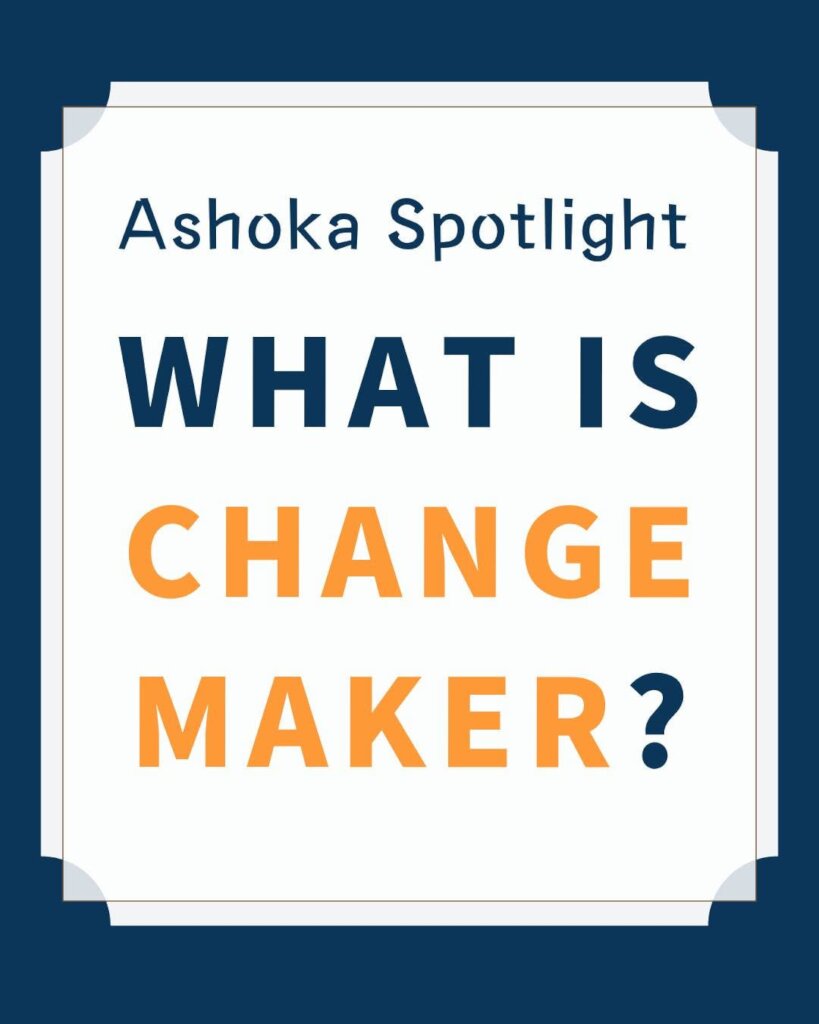
Ashoka Japan has also launched Ashoka Spotlight, a recurring social media series introducing the concepts and language central to Ashoka’s work.
The first post focused on Changemaker.
Ashoka describes a changemaker as someone who does not simply wait for society to change, but notices a problem, recognizes it as something connected to their own life, and takes action.
A changemaker does not need to hold a particular title or position. Age, educational background, profession, and social status do not determine who can contribute to change.
The post invited readers to see changemaking not as something limited to exceptional individuals, but as a capacity that anyone can begin to develop.
The second post introduced Cognitive Empathy.
When people hear the word empathy, they may think of feeling the same emotions as another person. This is often described as emotional empathy.
Cognitive empathy, by contrast, involves trying to understand the world from another person’s perspective—what they see, why they may think or feel as they do, and how their experiences differ from one’s own.
Ashoka sees this ability as fundamental to changemaking. Understanding different perspectives allows people to move beyond assumptions, develop new ideas, and collaborate across differences.
Cognitive empathy can also be developed through education and experience. For this reason, Ashoka considers it an essential capacity for creating an Everyone a Changemaker world.
Creating Different Points of Entry
Ashoka Japan will continue sharing interviews with former Youth Venturers and introducing key Ashoka concepts through the Ashoka Spotlight series. Through these efforts, we hope to make the experiences and ideas of young changemakers more accessible to a wider audience.
Links:
Project reports on GlobalGiving are posted directly to globalgiving.org by Project Leaders as they are completed, generally every 3-4 months. To protect the integrity of these documents, GlobalGiving does not alter them; therefore you may find some language or formatting issues.
If you donate to this project or have donated to this project, you can receive an email when this project posts a report. You can also subscribe for reports without donating.



Support this important cause by creating a personalized fundraising page.
Start a Fundraiser