By Dominik Braun, Martin Sykora | Project Managers
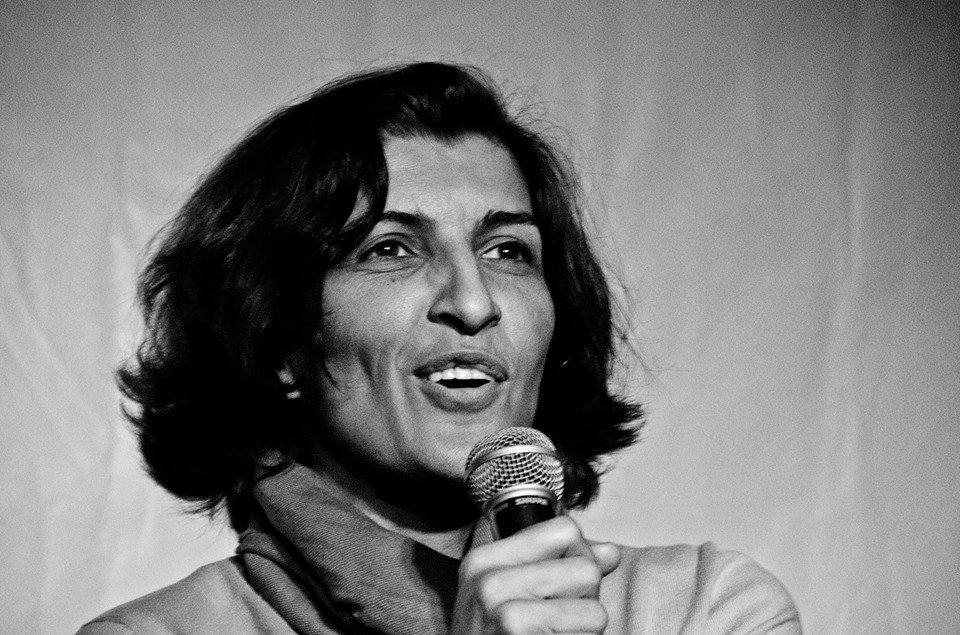
Venus Jahanpour is an energetic and optimistic woman who, in her adolescent years, fled from Iran to Sweden through Pakistan. Sweden, as she realized later, wasn’t enough for her. She wanted to go somewhere further. Somewhere, where people will need her help.
Venus was born in Iran. Along with her parents and siblings, she spent her childhood in Tehran. Her whole family practices Bahaism, Iran’s second most spread religion after Islam. “Your religion is very obvious in Iran, unlike in Europe, where it’s more private. You can distinguish who practices what religion just by looking at people. In school, I faced different prejudices because of my religion and had to prove that it doesn’t mean anything bad all the time. All our conversations at home looked the same – my asking why do people say all these things about us and my parents’ trying to support me and my brothers in telling people about our faith. There’s a story from my childhood that I recall: I was five years old and my family was buying a car. My father left it up to me to make the decision about the color and I remember how happy I was when I felt that my opinion mattered.”
Her childhood and adolescent years were full of negative memories too. “The revolution started when I was around eleven years old, and my daily activity became buying the newspapers for my parents every morning so that they could check whether any of their friends had been executed or arrested. Our neighbor once told my mother she had heard gunshots coming from the execution site. You think about whether it was someone you knew all the time in a situation like this. We lived nearby the prison designated for people labeled as political prisoners. When my brothers were imprisoned, I found my father crying in his room. He had always been an optimistic person, he never gave up and believed in better tomorrows. Seeing him in such despair and not knowing how to help him must have been one of the worst experiences of my entire life. Finding out he had died in a car accident while I had been living in Sweden for over a year was also one of them. It was my faith which helped me get over these moments. Bahaism is a very pacifistic religion which emphasizes the mutual understanding between various religions and cultures. Bahai people are supposed to always tell to truth because we believe it gives us strength.
The revolution drastically changed Venus’ life, and she decided to flee Iran when she was just sixteen years old. “My parents wanted me to escape. I traveled through Pakistan, where I spent three months. In Islamabad, I could feel the difference between the poor and the rich for the first time. Despite all of what my family had to endure, I grew up in a calm environment and coming from the middle class, it was a huge change for me. After living in Pakistan for three months, I received my refugee passport and traveled to Sweden, where my older brother had already been living for some time. I had studied in Sweden for six years before I moved to Czechoslovakia.”
Why Czechoslovakia? “Throughout my studies at the university in Sweden, I participated in a lot of extracurricular activities with exchange students form the Olomouc university. We worked with the Red Cross, Amnesty International, UNICEF and the UN on questions regarding gender equality and we supported the “world citizenship” idea, topics I found extremely important. What helped me decide to move to Czechoslovakia were these students, some of my teachers and the fact that what was taken for granted in Sweden, the freedom of expression, for instance, were still unthinkable in other countries. Upon my arrival in Czechoslovakia, I realized that people are interested in such topics because the system was imprisoning them in their own country. I felt I could help the community who couldn’t express themselves clearly, just like in Iran. My initial plan was to stay for one year. My stay has obviously prolonged, and I had tried a few cities, Banská Bystrica and Olomouc, for example, before I moved to Bratislava where I live and work at the moment. “
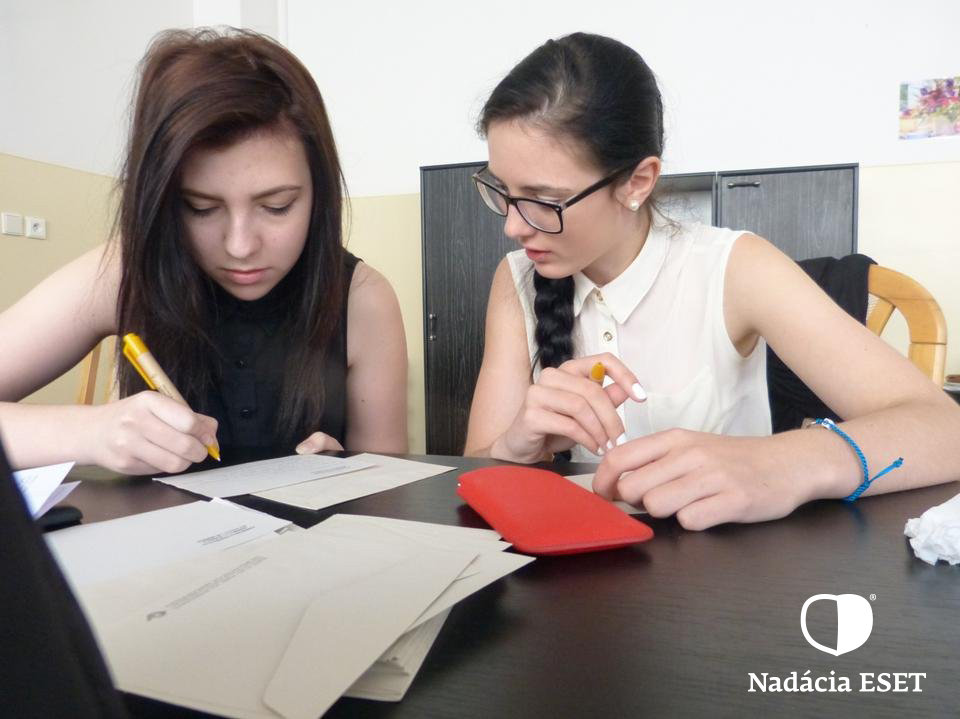
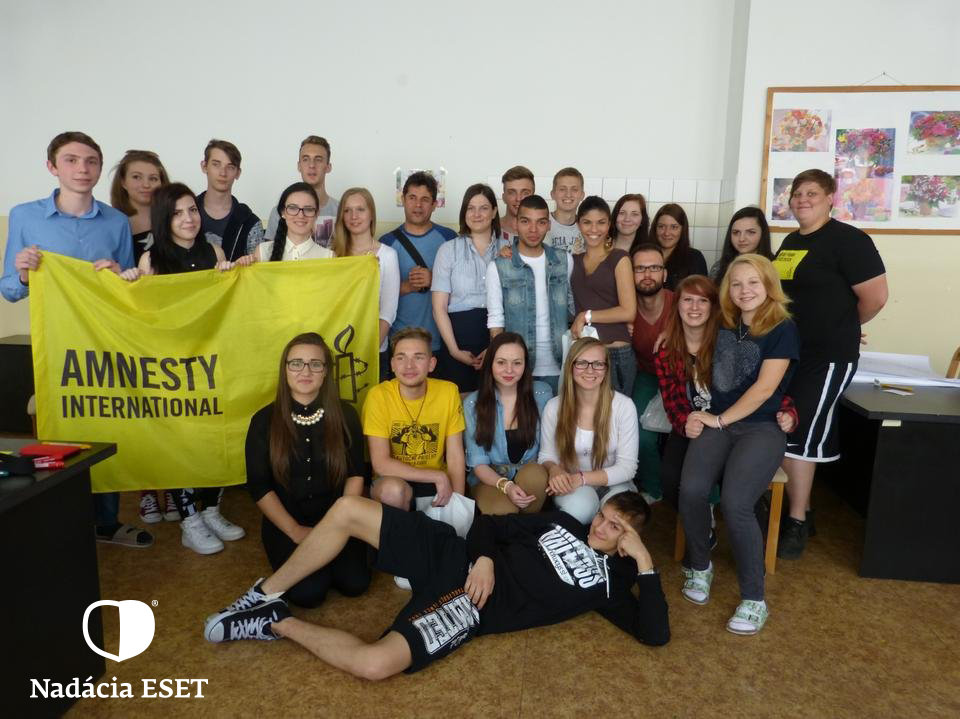
Venus first met Amnesty International while she was studying in Sweden. “At the university, I developed a strong interest in the human rights. Many people begin working for NGOs while pursuing their university studies and in the Bahai community, we are always ready to land a helping hand. With Amnesty International, I had the chance to visit schools and show the students that the situation in many countries is worse than in Sweden.” Venus continued to work with Amnesty International in Czech Republic and Slovakia. “Throughout the last 7 – 8 years, I was trying to inform government- and non-government organizations about the situation in Iran. I felt it was my responsibility. Sometimes, the only way to help is to inform the international community about what’s happening – the ongoing repressions and persecutions of Bahai people, and other citizens of Iran.”
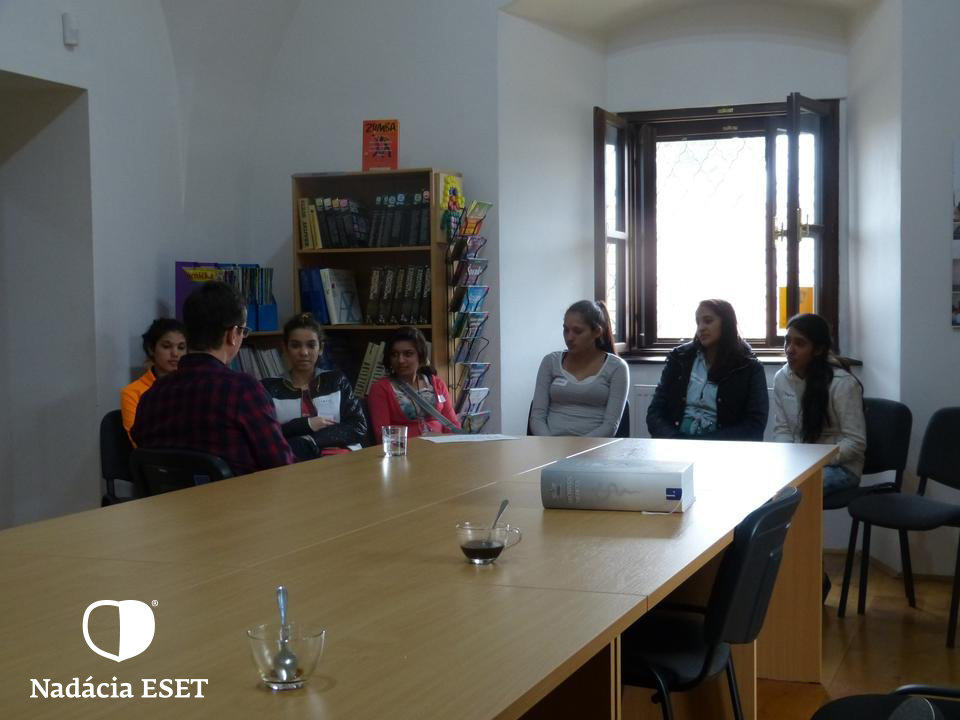
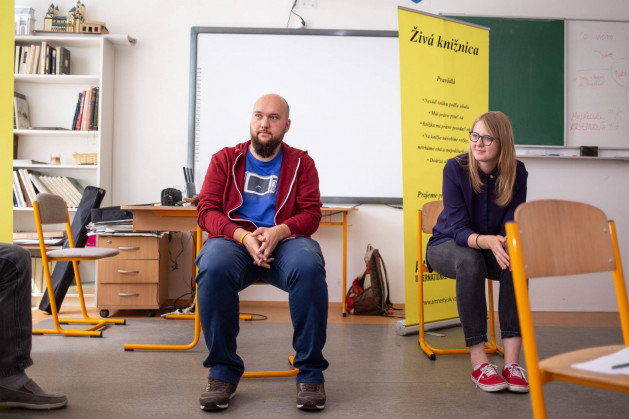
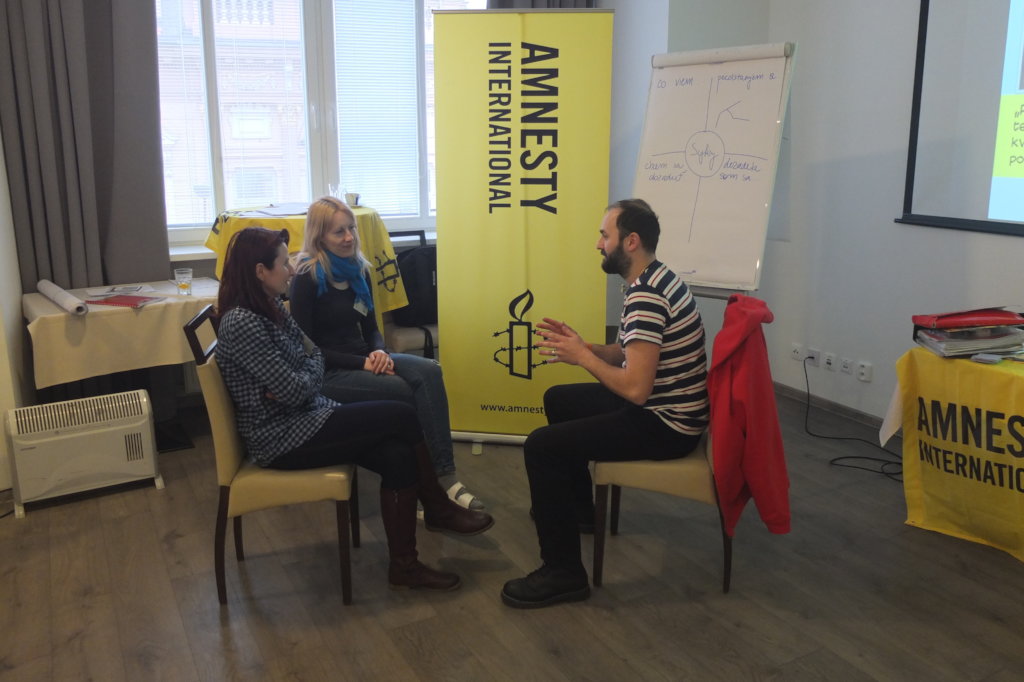
Venus has been actively visiting high schools as a living book for over a year now. Why did she decide to become one? “My Bahai friends from Vienna told me they had become a part of this project a couple of years ago. I didn’t know about it so I looked it up at home and fell in love with it. I met people from Amnesty International during the Humanity Challenge project my daughter participated in. I was looking for volunteers for my projects with Roma communities and they were looking for living books for the Living Library project.”
It wouldn’t be a Living Library without the questions form students. What are the frequently asked ones? “Most typical are: Why does the Iranian government persecute the Bahai, and what was my last meal before leaving Iran (laughter). Girls often ask whether it was difficult to leave my whole family behind. Another frequent one is whether I’m happy and why don’t I live in Sweden where life is easier. I also get asked which of all places is my home. My answer to this one is: Anywhere, where a person can contribute to the society, hence it’s Slovakia at the moment.”
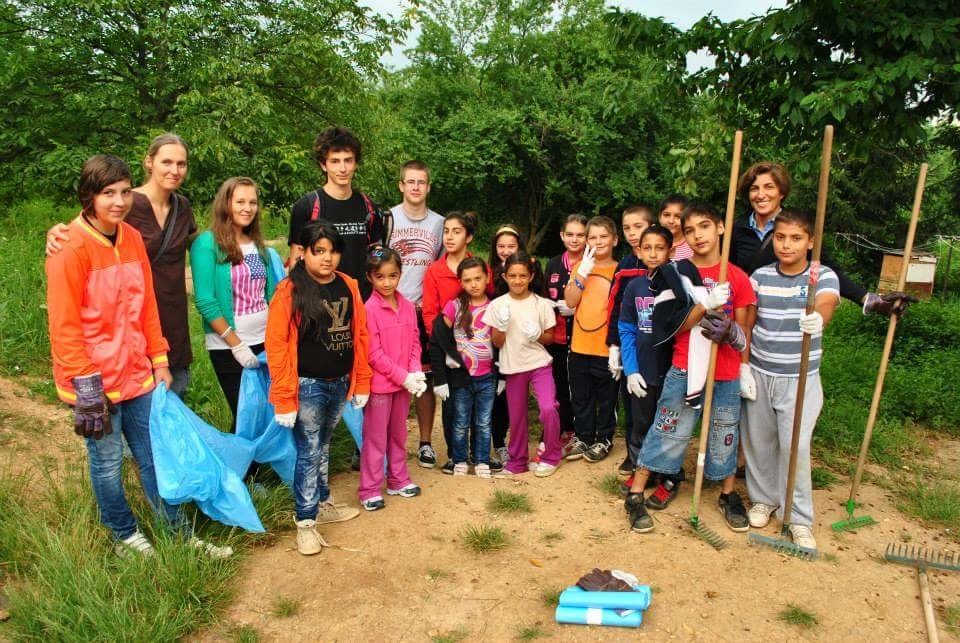
Besides working in a kindergarten, Venus dedicates her time to helping other people in various ways. One of them is working with the Roma community in Banská Bystrica “Working with Roma people has been fantastic. I’m working in a program which has its roots in Latin America and aims to improve children’s education. I realized that it shouldn’t only be designated for the Bahai community and decided to spread it further, which is why I began to engage myself in Bratislava. Doing such meaningful thing like helping children and families with their education is very fulfilling for me. I engaged my children too. We visited courses together and used the knowledge and experience of educating the Roma children to create a camp where these kids could get to know each other. It was a huge experience for us. Many of my friends from Bratislava and other places as well, have a lot of prejudices about this group of people but I’ve learnt to overcome them by a closer contact. One American photographer wanted to visit a Roma settlement with a security one, and I persuaded her to come with me instead. I showed her how a lot of Roma mothers care about their children’s homework and their doing well in school. Most of the people don’t believe it unless they see it with their own eyes.”
And what are Venus’ future plans? “I founded my own kindergarten because I wanted my children to grow up in a different way. Later on, we started taking in more children and soon, our house became too small, so we rented a bigger space. We worked our way up to a point where we founded an elementary school and this year we’re welcoming our first first-year pupils. It’s obviously hard work but you actually realize how easy it is to create this government for the kids. They are more creative and pursue various kind of art. Seeing your child happy is very satisfying. I always want to improve and learn. Maybe I will return to Iran or Afghanistan one day and to pass experience of educating children further on. Here in Slovakia, we still must learn how to understand our minorities and how to integrate them better, it’s a long way. It’s very important to teach children to be honest and just, and to show them how to dedicate their energy and talent to the sake of all humanity. It’s not just a challenge for me, it’s a challenge for the whole world.”
By Tatiana Rehakova | Project Manager
By Tatiana Rehakova | Office Manager
Project reports on GlobalGiving are posted directly to globalgiving.org by Project Leaders as they are completed, generally every 3-4 months. To protect the integrity of these documents, GlobalGiving does not alter them; therefore you may find some language or formatting issues.
If you donate to this project or have donated to this project, you can receive an email when this project posts a report. You can also subscribe for reports without donating.