By Laurel Lyle | Director-Fundraising Programs
Modern science is, by necessity, built on specialization. A century ago, one man—Dr. Alois Alzheimer—knew everything there was to know about Alzheimer’s disease. Today, thousands of Alzheimer’s researchers specialize in neuroimaging, signaling, inflammation, stem cells, genetics and so on. It takes a village to cure this disease.
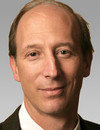
Dr. David M. Holtzman, Andrew B. and Gretchen P. Jones professor and chairman of neurology at Washington University in St. Louis, is one of the rare researchers who stands above this hyper-specialization. For more than 20 years, Holtzman has been a leader in Alzheimer’s research in large part because of his breadth. While diving deeply into topics such as the neurobiology of the apoE protein and the molecular structure and metabolism of Abeta, he has labored to constantly stay connected to the many different pieces of the puzzle.
Holtzman, who is also the Paul Hagemann professor of neurology and developmental biology, the associate director of the Alzheimer’s Disease Research Center and the scientific director of the Hope Center for Neurological Disorders, was this year awarded Washington University’s Carl and Gerty Cori Faculty Achievement Award for “embody[ing] the ideals of individual and collaborative excellence.” He is also a practicing neurologist who has found that seeing patients has led to a wider understanding of the disease. “I’ve always made sure that if I’m going to study something, it should be directly relevant to what’s going on in human beings,” he says. “That has led directly to some of our unique findings.”
With his then post-doctoral fellow at the time, Randy Bateman, for example, Holtzman co-developed a technique to determine in a human being the synthesis and clearance rates of proteins in the brain. Holtzman also was involved in creating a biobank of CSF and plasma that he and such colleagues as Anne Fagan and John Morris utilized to carry out a series of fluid biomarker studies to demonstrate that measurements of certain proteins could be utilized to diagnose preclinical Alzheimer’s disease as well as to predict who will convert from cognitively normal to impaired.
“Initially, this biobank was for my own research on apoE,” he says, “but it burgeoned into a huge biomarker program.” Holtzman joined Cure Alzheimer’s Fund’s Research Consortium in 2008 at the invitation of Consortium Chair Rudy Tanzi. His first CAF-funded study explored the relationship between synaptic activity and Abeta “plaques.” Subsequently, Holtzman developed a new method to measure tau levels in the extracellular space of the brain in order to understand more about the connection between amyloid plaques and the tau “tangles” in Alzheimer’s. Holtzman also has explored the role of certain vascular factors present in the disease such as “amyloid angiopathy,” in which amyloid deposits form in the walls of blood vessels in the brain; and contributed greatly to our understanding of how anti-amyloid antibodies affect Alzheimer’s pathology and how Abeta potentially can be cleared from the brain of Alzheimer’s patients.
Holtzman also has played a vital role on the policy stage. For the past four years, he has served on the National Advisory Neurological Disorders and Stroke Council at the National Institutes of Health (NIH). “People look to David as a leader,” says Tanzi. “He’s a careful thinker, and he can bring many different strands together to make an important new observation or ask just the right question.”
Some of Holtzman’s latest work focuses on how sleep influences Abeta metabolism. “We found that, in the brains of animals and humans, Abeta is regulated by neuronal activity,” he says. “The levels of Abeta fluctuated during the day and night. During wakefulness, the levels of protein were higher than when sleeping, and if an animal was sleep-deprived, it caused a much earlier onset of Abeta deposition in the brain. This suggests that if you optimize non-REM (deep) sleep, it might delay the onset of Alzheimer’s disease. But once you get the pathology, it further disrupts your sleep.”
Holtzman has found Cure Alzheimer’s Fund energizing. “Certain institutions have a special collaborative spirit,” he says. “But at Cure Alzheimer’s Fund, we’ve gotten to know each other so well that we trust one another and share information all the time across many institutions. That stimulates what each of us is doing.”
“The feeling is mutual,” says Cure Alzheimer’s CEO Tim Armour. “We’re very fortunate to have such a deep and invigorating relationship with David.
Project reports on GlobalGiving are posted directly to globalgiving.org by Project Leaders as they are completed, generally every 3-4 months. To protect the integrity of these documents, GlobalGiving does not alter them; therefore you may find some language or formatting issues.
If you donate to this project or have donated to this project, you can receive an email when this project posts a report. You can also subscribe for reports without donating.



Support this important cause by creating a personalized fundraising page.
Start a Fundraiser