By Bob McCready | Wildlife Conflict Resolution Program Manager
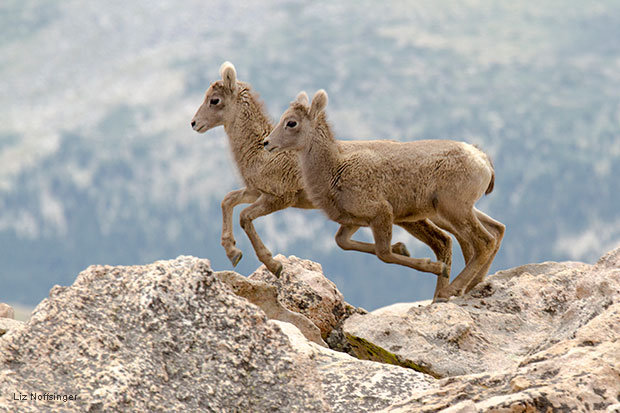
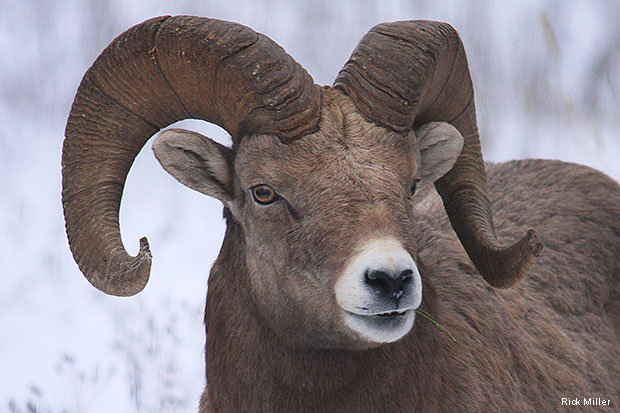
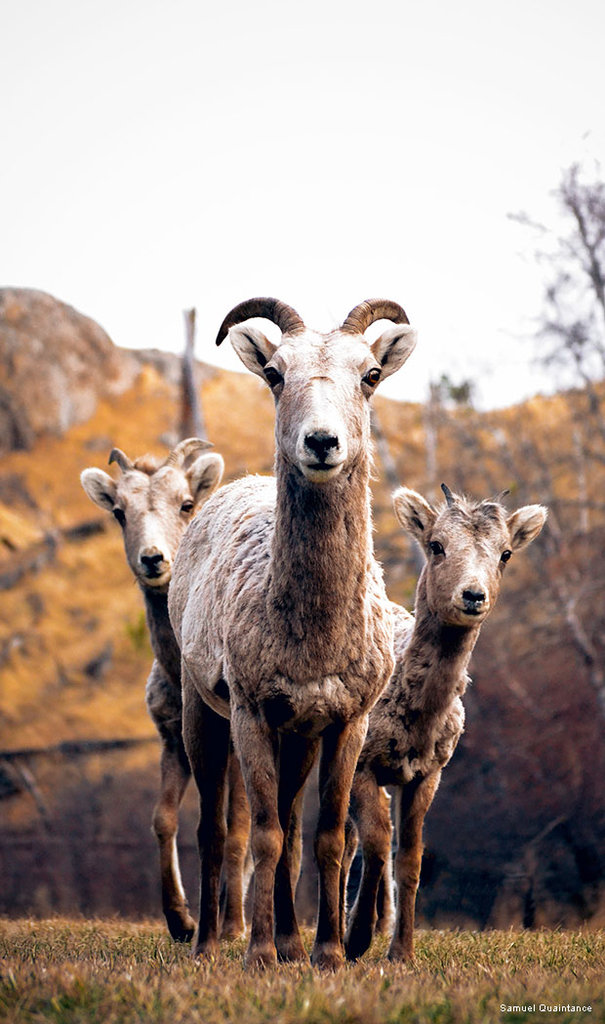
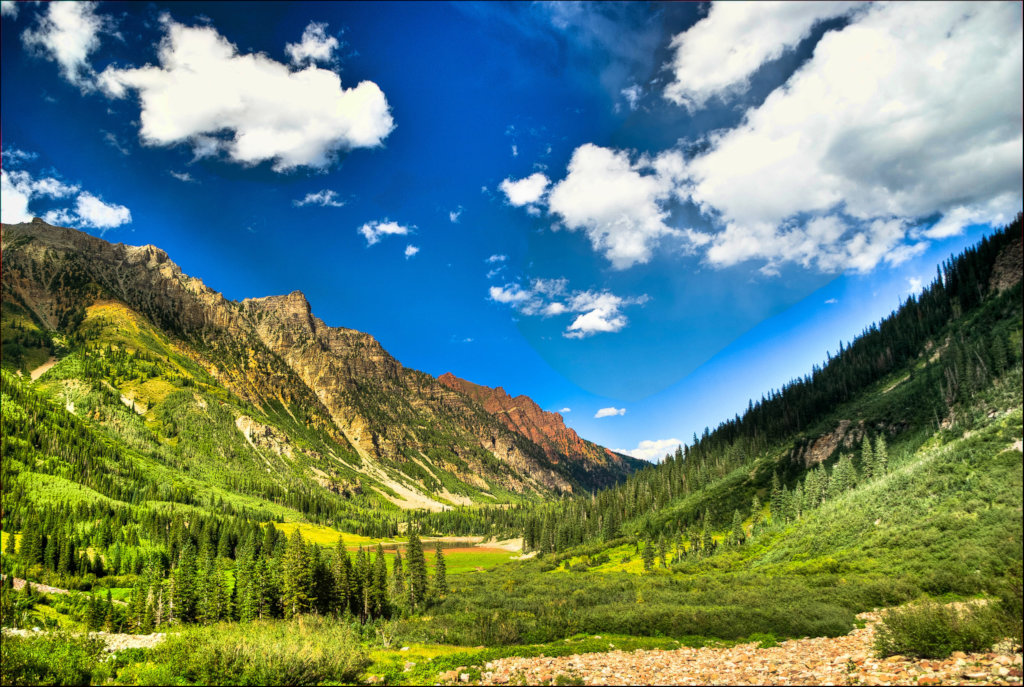
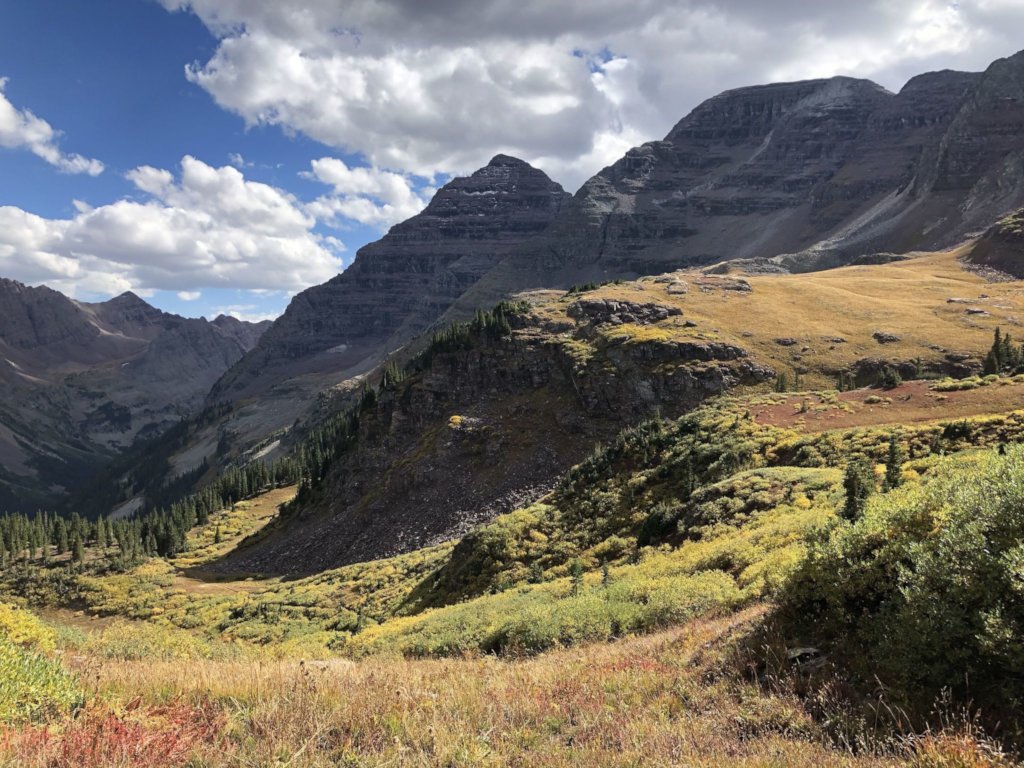
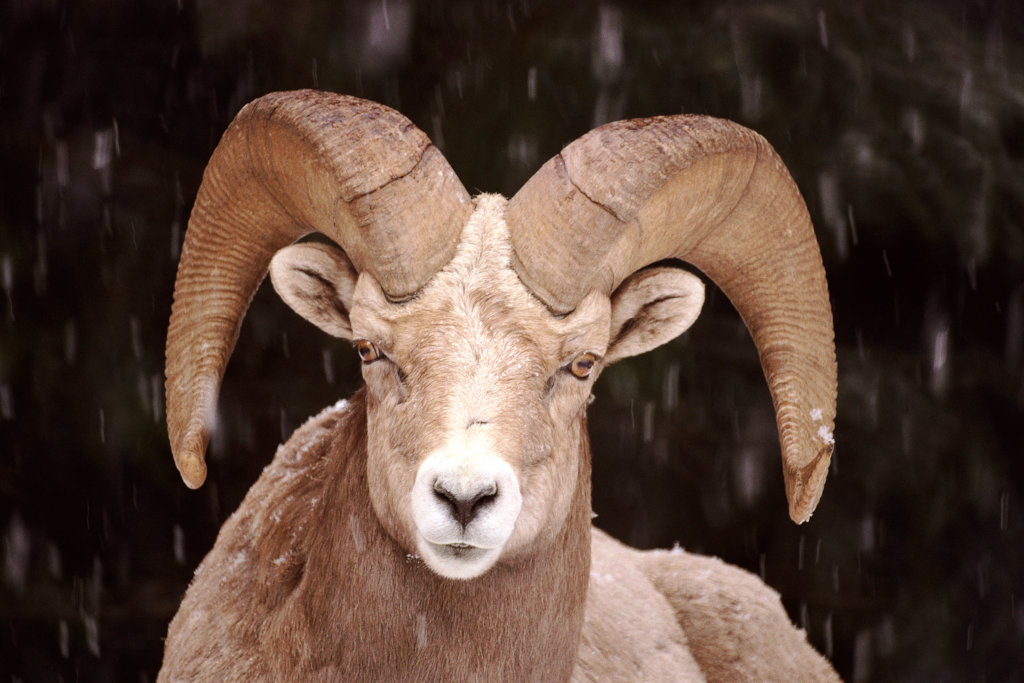
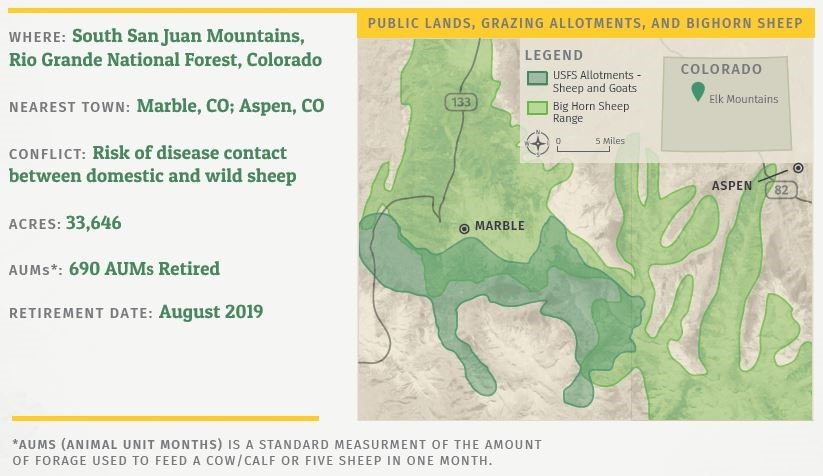
Rising high above the Colorado Mountain Towns towns of Aspen, Carbondale and Marble Colorado is the Elk Range, are some of the highest and most rugged mountains in the United States. There are the two Maroon Bells, Pyramid Peak, Snowmass Mountain and Capitol Peak, all over 14,000 feet. Nestled among these giants are many more peaks over 13,000 feet, named and unnamed. Separating the peaks are high alpine meadows, steep valleys, ice-cold lakes and streams that provide critical habitat for one of the highest priority bighorn sheep herds in Colorado as well as mountain goats, elk and other high-elevation species such as yellow-bellied marmot, american pika, white-tailed ptarmigan, brown-capped rosy finch, and nesting peregrine falcons. And up until this year, when NWF finalized the retirement of the 33,000 acre Upper Crystal River grazing allotment, 2000 domestic sheep could also be found roaming this fragile landscape between the months of July and September.
Unfortunately, domestic sheep carry a number of pathogens that if transmitted to bighorn sheep, can cause the die-off of most or even all of that bighorn herd, something that occurred in the Eastern and Western Snowmass bighorn herds in the Elk Range in the late 1980s. At that time, the total size of the two herds numbered over 450 individuals, but after likely contact with domestic sheep, the herds experienced an all-age die off, the effects of which persist to this day. The good news is that the western herd is slowly recovering, numbering approximately 200 individuals, but the western herd is languishing at approximately 60 animals and continues to decline. Although somewhat speculative, it is possible that this herd was re-infected with another strain of the pathogen causing another die-off event.
The only effective strategy to address this conflict, is to create separation between domestic and wild sheep. The historic population of bighorn sheep the western United States was 2 million which due to extreme overhunting in the late 1800s and disease over the last several decades has dwindled to 65,000 animals nation-wide and 7,000 animals in Colorado. Without removing the risk of contact between domestic and wild sheep, it is unlikely that the state-wide population will be able to grow beyond 7,000 and of course, there is the risk that the population could decline as we’ve seen with the Western Snowmass Herd. To build on our success in the Elk Range, NWF has identified approximately 20 very high risk domestic sheep allotments that if removed, would provide the conditions for the recovery of the species in large areas of southwestern Colorado.
The approach taken by The National Wildlife Federation’s Wildlife Conflict Resolution Program is to negotiate a fair-market price with interested ranchers who hold domestic sheep public land grazing allotments in exchange for retiring their right to graze that allotment. In the case of the Upper Crystal Allotment and the Snowmass bighorn herd, NWF staff approached the permit-holder and negotiated the retirement of his permit. He was happy with the outcome and told us “this was a good business decision for me and a win-win. My sheep had gotten a lot of attention and with the money I received from NWF, I was able to buy another permit for an area farther away from bighorns which makes the wildlife people happy.” The outcome is that the only domestic sheep allotment in the Elk Range has been removed virtually eliminating the threat of pathogen transmission to wild sheep.
This NWF approach is completely voluntary and in our view, provides an equitable solution for ranchers who hold permits for high conflict grazing allotments while also meeting wildlife conservation goals by removing livestock from these high priority areas. This market-based approach recognizes the economic value of livestock grazing permits and fairly compensates livestock producers for retiring their leases. After twenty years of success, the National Wildlife Federation has established a new national model for resolving intractable conflicts between livestock and wildlife habitat retiring to date, over 1.5 million acres of public land grazing permits, an area the size of Delaware.
Project reports on GlobalGiving are posted directly to globalgiving.org by Project Leaders as they are completed, generally every 3-4 months. To protect the integrity of these documents, GlobalGiving does not alter them; therefore you may find some language or formatting issues.
If you donate to this project or have donated to this project, you can receive an email when this project posts a report. You can also subscribe for reports without donating.



Support this important cause by creating a personalized fundraising page.
Start a Fundraiser