By Swathi P M | Coordinator, ATRC, Prajwala
In India there is a huge disparity in data about an exact number of women and children in commercial sexual exploitation due to the variations and modus operandi of sex trade. In 2009 the Ministry of Women and Child Development, Government of India predicted an approximate of 3 million of which 40 percent are children. According to the National Crime Records Bureau (NCRB) nearly 1,80,000 children and more than 1,50,000 women were reported ‘missing’ of which one-third still remains untraced during the period 2008-2011. A startling fact is that 64% of the total children who remains untraced are minors. The numbers above is really upsetting when it crosses anyone’s mind that if there are 2-8 million women/children in sex trade demanded by a minimum of 10 customers a day, then the total number of service demanding men in a single day will be 20-80 million. And what is the state of mind of the men who only demands children? Is it because the children’s has poor understanding of sexuality and sex that can be easily exploited? Or is it the stumpy self-confidence of the men when he has sex with an adult?
Trafficking for the purpose of sexual exploitation accounts for 58% of all the trafficking cases globally, and approximately 80% in India. Commercial Sexual Exploitation is a demand-driven phenomenon, made possible by traffickers, sold to the brothels and bought by the ‘customers’ as per the requirements. Vulnerability is an added factor that makes women and children easy targets for being trafficked. In most of the times the social economic conditions makes them defenceless and fairly low risk of recognition. Children are more exposed to sexual exploitation as they are not matured enough or legally empowered to make their own choices.
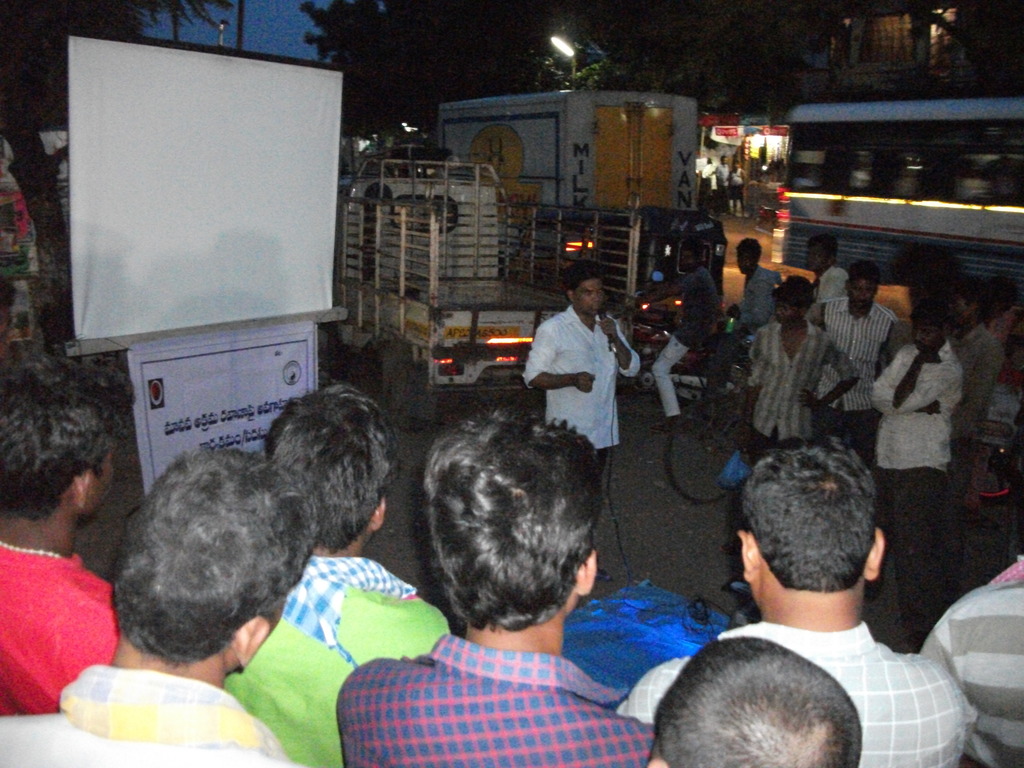
The sexual exploitation of women, especially girl children, depends on the demand. It is a known actuality that flesh trade cannot be wiped out until men stop demanding ‘services’. These demands are high in specific areas which in turn are the gateways for the development of red light areas across the borders. Many of the time the silence and non-involvement of the public also encourage the commercial sexual exploitation of women and children. It is in this regard that Prajwala’s active department, Community Based Prevention Program implemented an effectual campaign called Men Against Demand (MAD). The program has been delivering first-rate responses from the public as well as the law enforcements since its implementation in 2007.
The campaign involves gathering the attention of the public in the first place and then it moves onto involving the ‘common’ men and encourage them to change the collective opinions. The speeches, movies, as well as posters and handouts shown during the campaign questions the common assumptions, believes and other superstitions which are the root causes of the demand.
The documentaries and other survivor statements question the morals of the public gathered with regard to the existence of flesh trade and its direct indication with demand. The campaign has also resulted in several thousands of Community Vigilant Groups (CVGs) to fight sex-trafficking alongside with Prajwala. With an average of 150 campaigns an year, it has been able to gather 242,981 participants, 2630 CVGs and 2,19,799 signatures since 2007.
Links:
Project reports on GlobalGiving are posted directly to globalgiving.org by Project Leaders as they are completed, generally every 3-4 months. To protect the integrity of these documents, GlobalGiving does not alter them; therefore you may find some language or formatting issues.
If you donate to this project or have donated to this project, you can receive an email when this project posts a report. You can also subscribe for reports without donating.