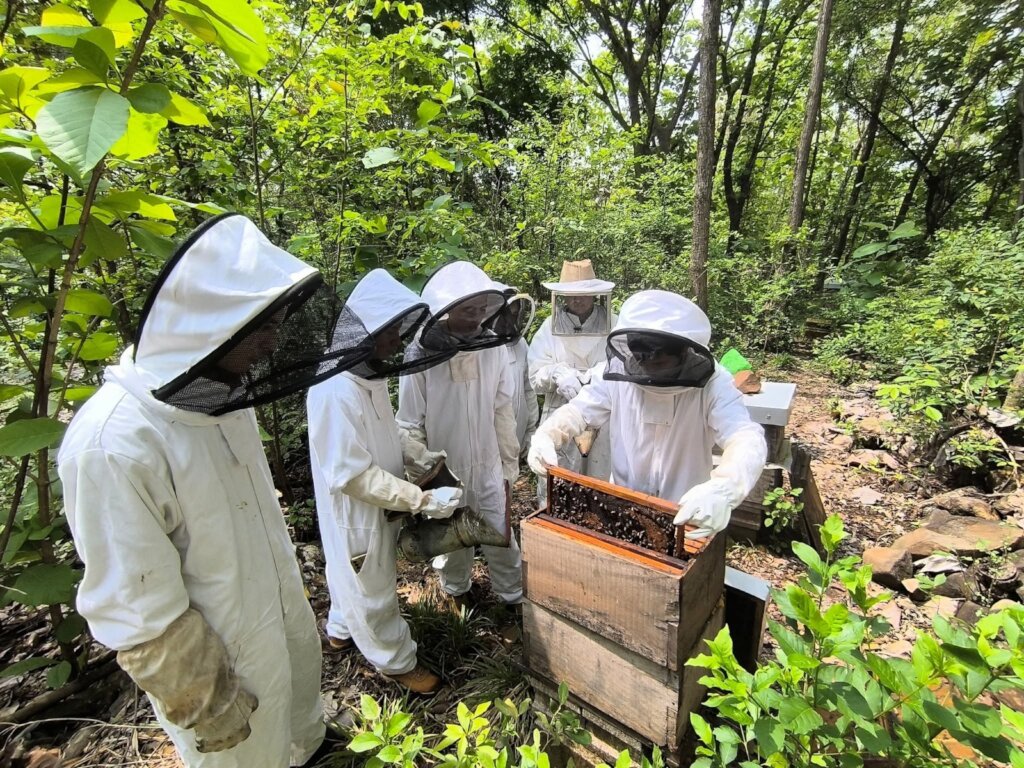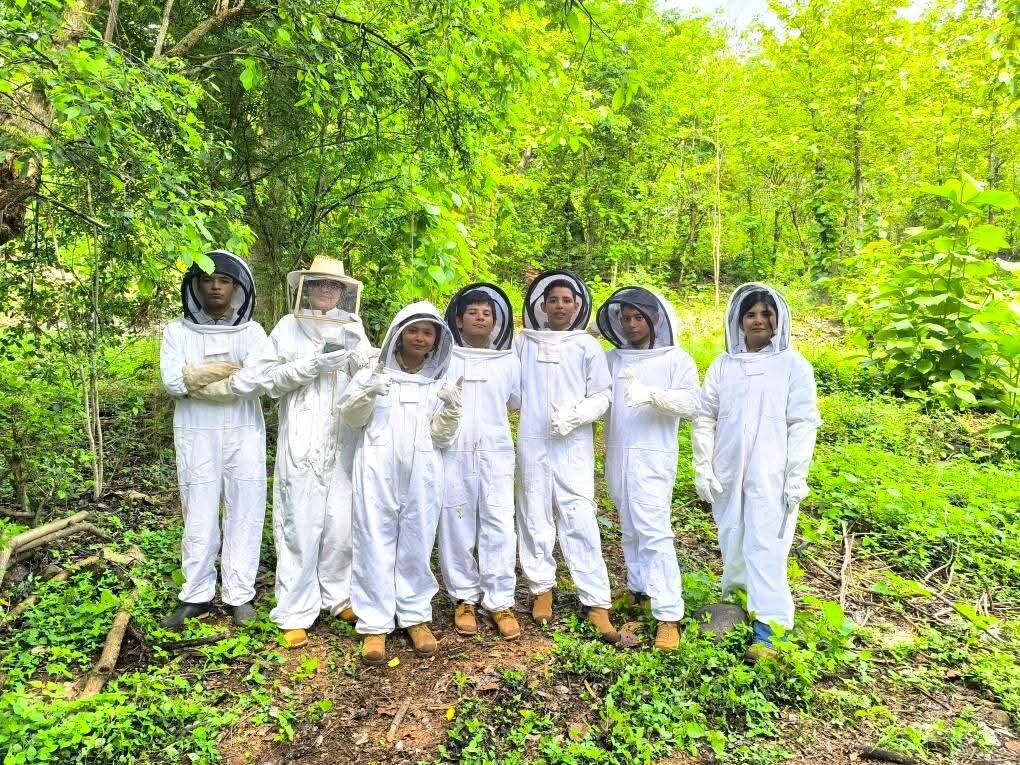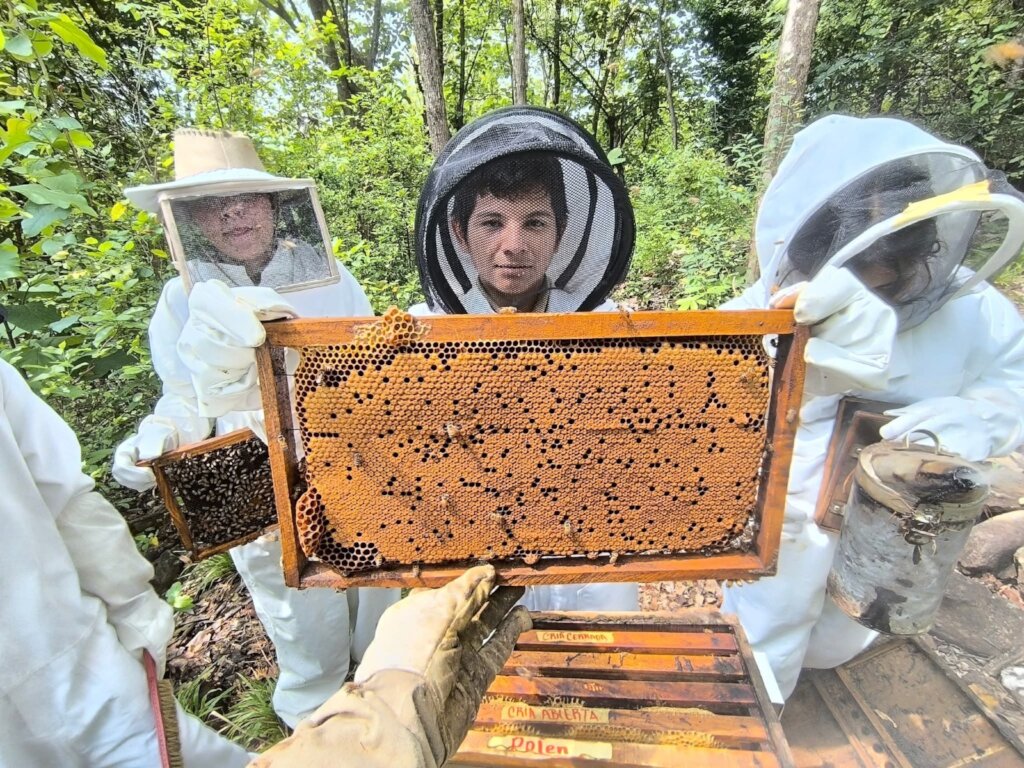
Students at a public High School in Morazan are leading an innovative project that seeks to replace the aggressiveness of Africanized bees with genetically more docile queens. Their goal: to produce honey more safely and efficiently, improving the productivity of local beekeepers and strengthening the family economy in Morazan, El Salvador.
Local beekeepers and educational centers face difficulties managing hives due to the high aggressiveness of Africanized bees. This limits honey production, raises occupational risks, and reduces profitability, affecting rural families who depend on beekeeping.
The students genetically develop and adapt more docile queen bees, capable of integrating into existing hives and reducing their aggressiveness. With technical support, they are transforming a safety problem into an innovation that improves apicultural production and sustainability.
The project will allow for safer and more profitable beekeeping management, increasing honey production and family income. Furthermore, it will train young people with applied scientific competencies and will replicate an innovative model for other rural educational centers.