What connects global conversations to actual change? This article follows one local leader turning big ideas into lasting impact.
Earlier this year, AfricaXChange brought together African actors and representatives from international organizations, to reflect on the future of development in Africa. Hosted by three US-based foundations with roots in Africa, the event aimed to spotlight locally-led approaches, share innovative models and encourage bold action.
The experience was energizing and offered plenty to reflect on, but it also surfaced a familiar tension. At times, we found ourselves questioning the gap between the ambition of the conversations and the lived realities of grassroots leaders.
The “we” here is Rachel Smith VP of Programs at GlobalGiving, and Luke Jakoywa Founder of Sheepcare Community Centre in Kenya.
“It was a great opportunity, but I did feel there weren’t many grassroots leaders like me in the room,” Luke said.
This article shares Luke’s story and the reflections he and Rachel brought back from the conference, offering a chance for us all to ask together:
How might we shape spaces where those already leading change in their communities (though often unseen) are not just included, but centered?
The term “locally-led” is gaining welcome traction in development and philanthropy spaces. But even within that, there are important distinctions particularly when it comes to how close organizations are to the communities they serve.
Luke’s organization, Sheepcare Community Centre, is what many would call truly grassroots: deeply rooted in local context and shaped by community priorities. Yet organizations like his are not often visible and still overlooked in high-level conversations.
They might not speak the dominant language of development or have the systems in place to navigate complex funding processes, and they rarely get a seat at high-level meetings. Yet they are often the first to respond, the most trusted by their communities and the most consistent presence in times of need—which is exactly why GlobalGiving works to bridge funding gaps for community-based organizations like Sheepcare Community Centre.
Luke grew up in rural Kenya, raised by a single mother and supported by Catholic missions to pursue his education. After working as a computer consultant for the Kenyan government, he was building a house in Nairobi when he encountered a group of children living in the nearby slums. Moved by their situation and drawing on his own experience of being helped as a child, he paused the construction project and began caring for the children.
That decision marked the start of Sheepcare Community Centre. What began as a small initiative has grown into a thriving community development vehicle whose main goal is community transformation through the provision of quality education, health care, agriculture, water and sanitation, currently serving more than 700 children across two sites, supported by a staff of 49.
We asked Luke to share more about his work, the challenges he faces and his reflections from the conference.
While building my house, I saw children in need from the slums nearby. I couldn’t ignore them. I had also grown up in poverty, but people helped me and I wanted to pass that on.
It started with just a few children, but now we serve over 700 every day. We have a strong team and even started another project in my rural hometown. The needs are huge, but so is the impact when you’re consistent.
Funding is the hardest. Not for projects, but for ongoing costs like salaries and food. We want to attract and keep good staff, but it’s hard to do that without steady support.
Yes, I started a water purification project and have looked into agriculture and real estate. But we’ve faced challenges with licensing, corruption and ongoing costs. I hope to build a Sheepcare complex one day that can support and sustain itself, but it’s a big vision and needs partners who believe in it.
It was encouraging to hear shared recognition among many speakers that real development must start at the grassroots. There was a genuine appetite for doing things differently and a growing awareness of the need to shift power. But at times, the conversation felt distant from the lived realities of the communities we work with. Without grassroots leaders in the room, critical voices and experiences were missing. My concern is that without those perspectives at the table, even well-intentioned gatherings risk becoming cycles of high-level meetings that don’t translate into real change on the ground.
That said, it was valuable to see a range of international organisations coming together with a shared commitment to open dialogue and a willingness to reflect on how things can be done differently. With meaningful follow-up and implementation there is real potential to close the gap between vision and practice.
For Rachel, the experience echoed a broader pattern she’s observed in the development sector: a growing focus on shifting power and centering communities, but limited practical support for those who don’t fit into familiar funding or operational models or are not well networked.
“It’s not about blame,” she said. “It’s about asking ourselves, are we doing everything we can to remove barriers, and are we actively seeking out people like Luke for shaping solutions?”
Barriers persist. Funding proposal formats often assume a certain level of formal education. Eligibility criteria often exclude the very groups most embedded in community life. And sustainability is frequently treated as a question for grassroots leaders to solve alone, rather than one donors and governments could co-invest in.
The AfricaXChange conference aimed to coalesce participants around locally-led development as a shared goal, one that requires different strategies depending on who we’re trying to reach. Supporting grassroots leadership means being open to new ways of working that include those who are best places to respond to the challenges they face.
“We are already transforming lives,” Luke said. “But we can do so much more if we’re given the chance to spearhead solutions”
Luke’s story is one example of the power of community-led change. Across the world, local organizations like Sheepcare Community Centre are developing solutions grounded in local knowledge, lived experience and long-term commitment. When donors give with trust and flexibility, they enable these organizations to do what they do best—rather than relying on larger, well-known organizations to pass on support, where funding may be reduced or misdirected.
Without a deep understanding of the local context and how these communities operate, even well-intentioned aid often fails to meet their real needs or make a lasting impact. It’s about building relationships, supporting local leadership and ensuring those closest to the challenges are able to inform conversations about what’s needed to make lasting, transformative change.
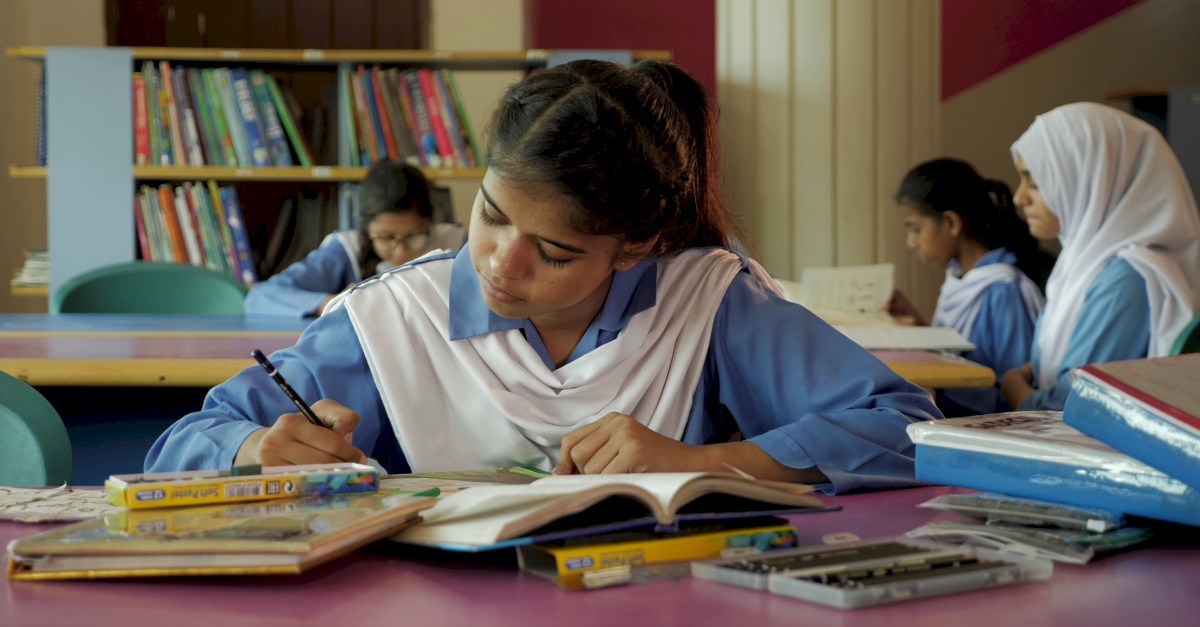
Featured Photo: Educating children in the Mathare by Sheepcare Community Centre
Want to back grassroots leaders like Luke? Get in touch to find out how.
Find exactly what you're looking for in our Learn Library by searching for specific words or phrases related to the content you need.