Traveling across India to visit GlobalGiving partners, I found myself returning to a question: how does impact travel across language and distance? What gets lost or flattened along the way, and what becomes clearer as we get closer?
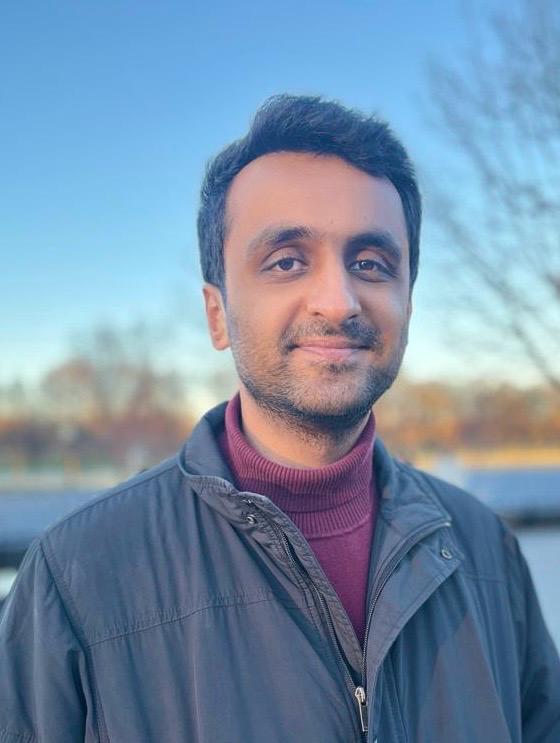
I landed in India in January, after a long flight, stepping back into a place that is my home, and yet, this time, felt slightly different.
Home, for me, is Moradabad, a city in northern India where my family still lives. I grew up here. I know the language, the rhythms, and the small social cues that often go unnoticed. But this time, I wasn’t returning to linger over home-cooked meals, familiar streets, and conversations that stretch late into the evening.
This time, I was traveling across the country to meet GlobalGiving partners. For the next three weeks, I’d be moving between cities, conversations, and contexts, carrying with me the perspective of the organization I represent, and the culture that I come from.
Some places were new to me. Others were familiar. And somewhere in all that movement, I found myself occupying an in-between space. And from this space, I found myself in conversations that felt rich and winding, shaped by the everyday realities of the people I met.
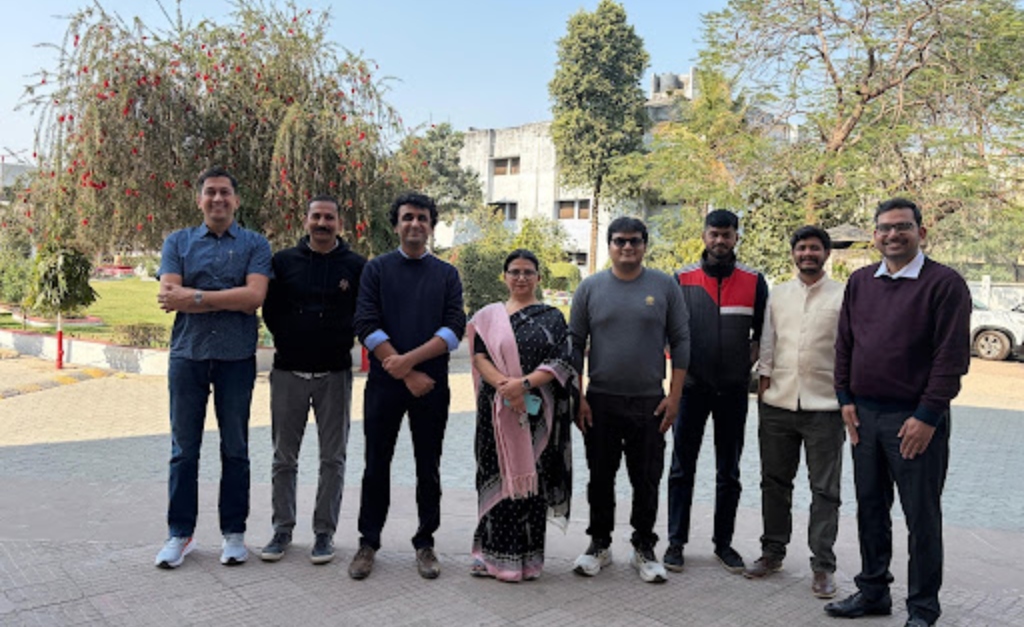
A five-hour train journey brought me to the first stop: Lucknow, the capital of Uttar Pradesh, India’s most populous state. As I walked onto Sitare Foundation’s campus on a warm February morning, I was greeted by the chatter of students between classes, the hum of ceiling fans, and a quiet sense of focus that filled the space.
This organization runs a fully funded residential computer science program for students from low-income families within a large private university. Most of the students here come from small towns and villages, from families where higher education is uncertain and private education is simply unaffordable.
And yet, here they are, learning to code, preparing for careers in industries they had little exposure to just a few years ago. Here they were: arguing, trying, failing, trying again.
One student spoke about wanting to work in manufacturing. Another mentioned the automotive sector. Someone else talked about data science roles.
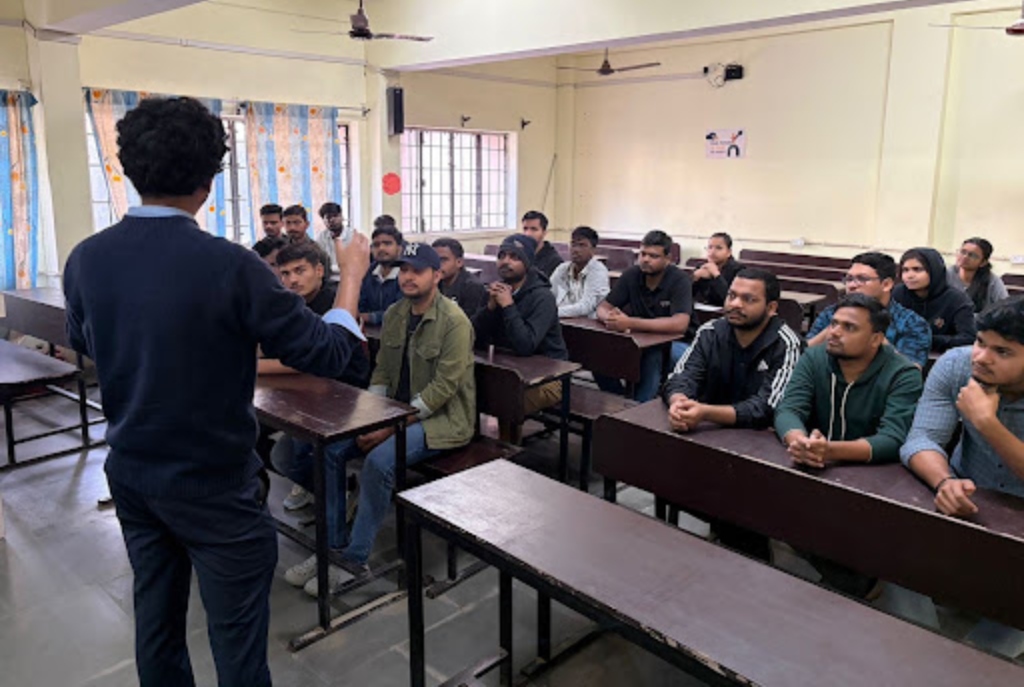
“Before this, we did not know these options even existed,” said one student undramatically.
A teacher I spoke with later shared something similar: “The biggest change is not in their skills,” he said. “It’s in how they see themselves.” He spoke about how that shifts steadily through exposure, repetition, and small wins.
Another student told me she wants to use her education to challenge child marriage in her village.
She did not frame it as a social issue. She framed it as something she would do.
That distinction matters because it reflects a shift from awareness to agency. And sitting there, it became difficult not to think about the alternative: What happens when programs like this don’t exist? Because the ability and dream was always there, it was the access that was absent.
It became clear the longer I stayed that Sitare is not just about creating opportunities, it’s about making other futures visible.
Once a future becomes visible, it becomes something you can move toward.
That shift is what stayed with me long after I left the campus.
From Lucknow, I boarded a short flight to Delhi. A few hours later, I found myself in Vrindavan, where the conversations shifted from young people imagining new futures to women rebuilding lives after profound loss.
In Vrindavan, I visited Maitri India, which runs two ashrams that provide long-term residential care for women who have been abandoned, displaced, or left without family support.
Around 250 women live across these spaces.They are often referred to as amma, Mothers. Many of them arrived years ago. Some were abandoned. Some had lost their families. Some had been pushed out of their homes. Many came in extremely fragile condition, physically weak, often malnourished, carrying stories that are difficult to fully comprehend.
I later learned that when many of these women first arrived, the situation was critical. So the organization began with something simple: food and regular meals. Over time, that consistency did something profound: Health and strength returned, routine formed, and community emerged.
What exists now is not transformation in the way we often describe it: It is stability and a life that is no longer defined by abandonment.
From Delhi, I flew west to Udaipur on a Monday afternoon to meet Seva Mandir, an organization that works across more than 1,500 villages in southern Rajasthan. I spent most of my time with Bhavar Singh, who has led Seva Mandir’s work in Jhadol block, a rural development district in the region, for the past 26 years. 26 years. While my entire world was constantly shifting, Bhavar was here, walking the same paths and helping anchor an entire region.
As we drove from one village to another, the roads narrowed, the air turned drier, and the landscape opened up into scattered homes and fields stretching into the distance. At each stop, a familiar face greeted Bhavar by name. Conversations picked up where they had left off the last time.
In one village, we sat with a group of farmers under the shade of a tree. They spoke about the seeds they received: small but mighty gifts that allowed them to grow crops more reliably.
They did not speak in terms of “impact.” They spoke about having a little more certainty than before. Later, as we sat together speaking, Bhavar Singh said something that stayed with me:
“Things do not always happen the way we plan them on paper.”
There was no frustration in the statement.
In rural communities like these, needs shift like the weather. A failed monsoon. A sudden health crisis. A fracture in local dynamics. Programs must bend, or they break. That is where flexibility transforms from a luxury into a lifeline.
But beyond the need for adaptive funding, the pace of this trip is what stuck with me. Real change here is slow, layered, and entirely bound to human relationships. It cannot be rushed by a grant cycle. It cannot be imposed from a boardroom. It has to be lived.
In much of the humanitarian sector, impact is often explained through what can be measured, compared, and communicated across distance: how many wells are built, how many students are taught, and so on.
But as I traveled between these places, something shifted for me. Not in what I was seeing, but in how it was being understood.
The same kinds of work—education, livelihoods, care—looked different depending on how close I was to them, and what I could see in that proximity
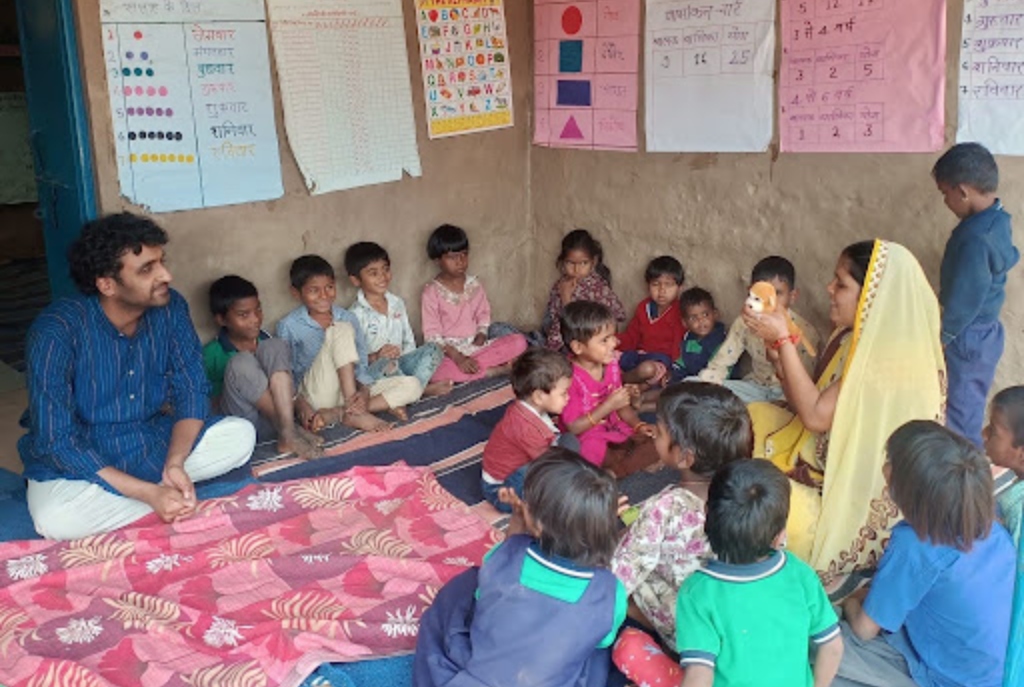
At Seva Mandir, a small learning gain could feel modest in a report, but in a village where many children are starting from zero, it carried a different weight entirely. At Maitri, impact was not about scale or expansion, but about dignity, routine, and continuity built slowly over years of presence. At Sitare, the outcome was not only “students getting jobs,” but young people beginning to see futures that had previously not been visible to them.
As I moved across cities, conversations, and roles, I became more aware of where I stood. Sometimes representing GlobalGiving, sometimes simply being from here. And sometimes holding both at once.
That space in between comes with responsibility—to listen carefully, to not oversimplify, to carry context across.
And that requires a broad lens.
One way of seeing the work is structured and easy to explain. It lives in proposals, dashboards, and funding cycles—the version that travels well across distance. The other lives in how people speak, what is left unsaid, and the quiet continuity of how things unfold on the ground.
Over the days, I moved between these ways of seeing; sitting in classrooms, traveling through neighborhoods, walking through spaces built on care and continuity.
And this is where another question began to surface: perhaps GlobalGiving is less a fixed vantage point than a bridge between different ways of seeing the same work. Between how the work is described at a distance, and how it is experienced up close. Between the language we use to communicate impact, and the more layered realities that language is trying to hold.
So maybe closeness is not about producing a different truth, but about making the work more fully legible.
Closeness adds texture, friction, color, and humility to how we understand and communicate impact.
I came back with more questions than answers, but also with a clearer understanding of one thing: Meaning shifts depending on where you stand and the language you choose to carry forward.
Featured Photo: Rehabilitation of Rural Communities in IndiaFind exactly what you're looking for in our Learn Library by searching for specific words or phrases related to the content you need.