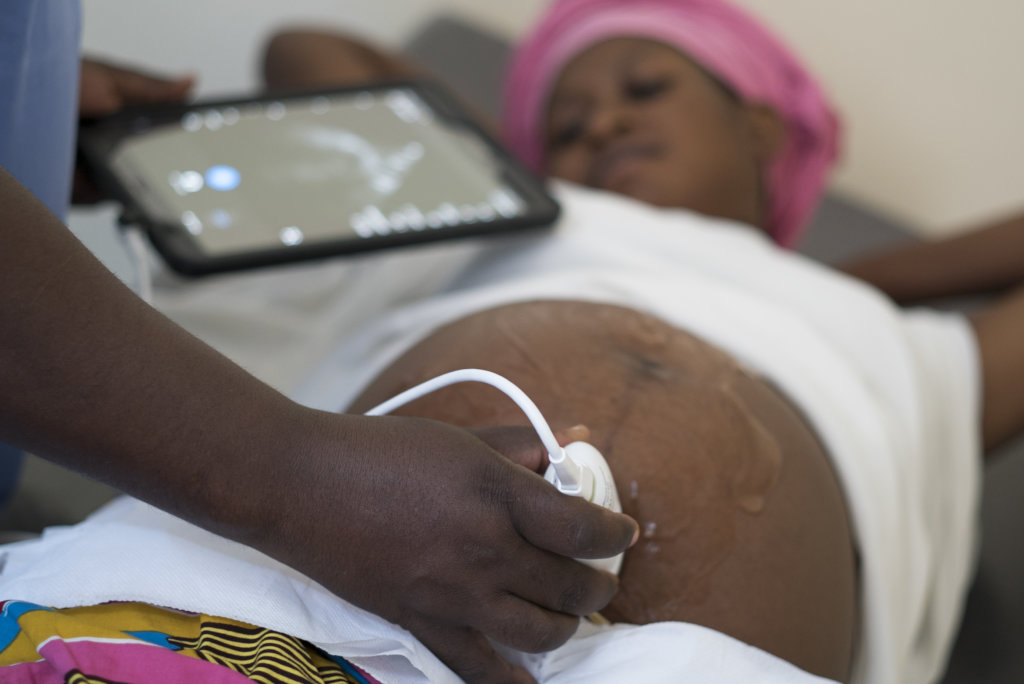
HFOS is a 501(c)(3) non-profit that advocates for women and girls suffering from and at risk for obstetric and traumatic fistula. We share their stories and raise support for the effective treatment and prevention of this hope-destroying condition and the empowerment of the women and girls we serve. Our vision is a world where women are valued, live to their fullest potential, and are positive change-agents within their communities. Fistula is an abnormal communication, or hole, between the tracts of the bladder and its structures with the vagina, the rectum with the vagina, or both. These holes allow for the constant leakage of urine and/or feces from the vaginal opening. Fistulas most oft... read more HFOS is a 501(c)(3) non-profit that advocates for women and girls suffering from and at risk for obstetric and traumatic fistula. We share their stories and raise support for the effective treatment and prevention of this hope-destroying condition and the empowerment of the women and girls we serve. Our vision is a world where women are valued, live to their fullest potential, and are positive change-agents within their communities. Fistula is an abnormal communication, or hole, between the tracts of the bladder and its structures with the vagina, the rectum with the vagina, or both. These holes allow for the constant leakage of urine and/or feces from the vaginal opening. Fistulas most often occur from obstructed labor, in which women strain to deliver their infant for several days and the pressure from the infant's head causes damage to the soft tissues of the pelvic region. A second cause of fistula is from extreme sexual violence. Fistulas are nearly obsolete in high-income countries. Currently, our work is based in Angola, the Democratic Republic of the Congo (DRC), and Nepal. We have specific organizational partners in each of these locations that enable us to carry out programs that we have either designed on our own or chosen to act in as involved partners. (Since we fund this work for our partners to carry out, we are not required to have licenses to operate within each country.) Our partners are doctors, nurses, program directors, outreach coordinators and support personnel. We seek to eradicate fistula by way of a three-pronged, cyclical approach - prevention, treatment and empowerment. Because nearly one million women worldwide are currently living with fistula, and surgical capacity in most low- and middle-income countries (LMICs) cannot address both the number of new cases each year and the backlog of women who already have fistula, prevention is critical. We are unique among fistula advocacy organizations in that prevention, not treatment, is our main focus and expenditure. We fund Fistula Education & Awareness Sessions that provide women, men and healthcare workers with important information about what fistula is, its causes and how to prevent it, and how to seek treatment. These have been instrumental in helping to reduce the shame and stigma surrounding the condition of fistula. We also carry out an Ultrasound Empowerment Program in which one of our partner doctors takes a portable ultrasound into remote areas to provide families with information about their pregnancy. Women who are at risk for complicated delivery, such as fistula survivors, women carrying multiples or those whose babies are in sub-optimal positioning, are counseled to seek cesarean deliveries or assisted delivery from trained personnel at the time of labor. Related to this, we administer two Maternal Health Funds in which money is set aside to help pay for cesarean deliveries for women who cannot afford the procedure in part or in full. One program straddling the space between prevention and treatment is that of our surgical education funds, given to support physicians who go on to become gynecological surgeons under the tutelage of the Pan-African Academy of Christian Surgeons (PAACS). These surgeons remain in Africa once the program is complete in order to provide cesarean deliveries and/or fistula repairs for women who have already suffered from an obstructed labor or violent act. In this way, some fistulas may be prevented and others will be reversed. In terms of treatment, we always have and still fund some fistula surgeries. However, many other groups are focused on this and we find that our money is often able best applied to other areas of need that are unaddressed. Empowerment is the final important piece of our cycle. In Angola, we have an empowerment program for women recovering from or awaiting fistula surgery, in which they are taught basic literacy and some vocational skills, such as sewing and basket weaving. This enables these women to provide for themselves if they cannot return to their communities, as many have been abandoned by their husbands and families due to their condition. The program teaches women that they still have value and can contribute to their communities. In DRC, we are funding Sexual Gender-Based Violence groups, in which women who have been victims of assault are empowered to share their stories with others in order to bring about gender equality and mutual respect between men and women. These programs are administered by World Relief and have been very successful and important as the DRC continues to heal from years of armed conflict. Our partners at home and abroad all have a heart for the eventual eradication of fistula. It is a devastating, tragic condition that is easily preventable and fixable were there are better systems in place for health promotion and gender equality in some of our partner countries and other low and middle income countries around the world.

Each of GlobalGiving’s nonprofit partners is required to send quarterly donor reports detailing the impact of their work. Here are some of their recent updates:
By Cara Brooks | HFOS Board of Directors Member & Clerk
The team at Hope For Our Sisters Inc., in partnership with the team at the Wellness Clinic in Goma, DR Congo is pleased to bring you our latest impact report for our project to "Fund Life-Saving... Read the full report ›By Cara Brooks | HFOS Board of Directors Member & Clerk
The team at Hope For Our Sisters Inc., in partnership with the Aftercare team at CEML Hospital in Lubango, Angola, is pleased to bring you our latest impact report for our project to "Enable 50 Women... Read the full report ›By Cara Brooks | HFOS Board of Directors Member & Clerk
The team at Hope For Our Sisters Inc., in partnership with the team at the Wellness Clinic in Goma, DR Congo is pleased to bring you our latest impact report for our project to "Fund Life-Saving... Read the full report ›


