By Kathryn Reid | World Vision Communications Officer
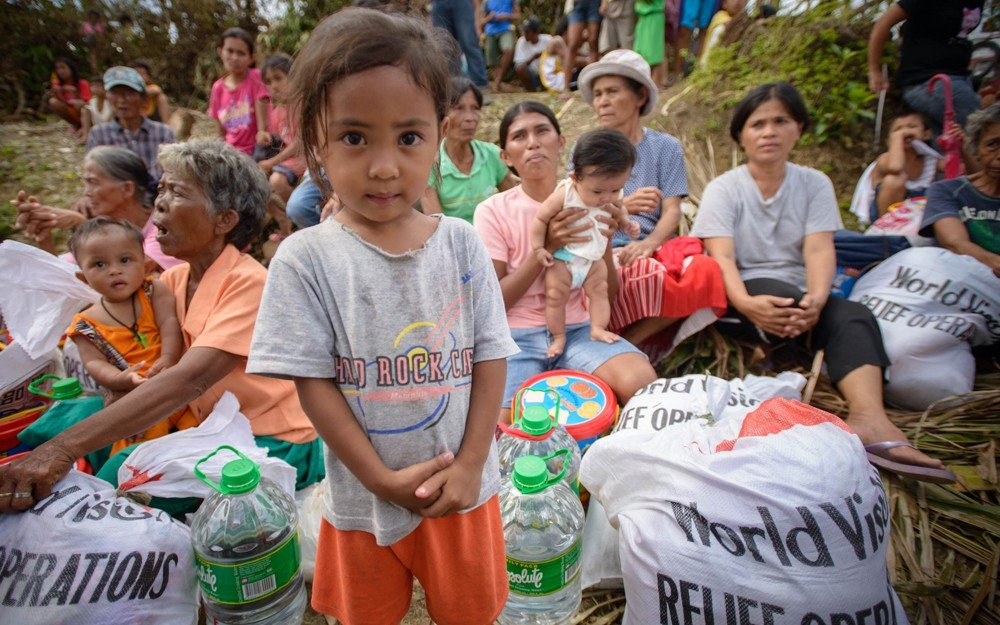
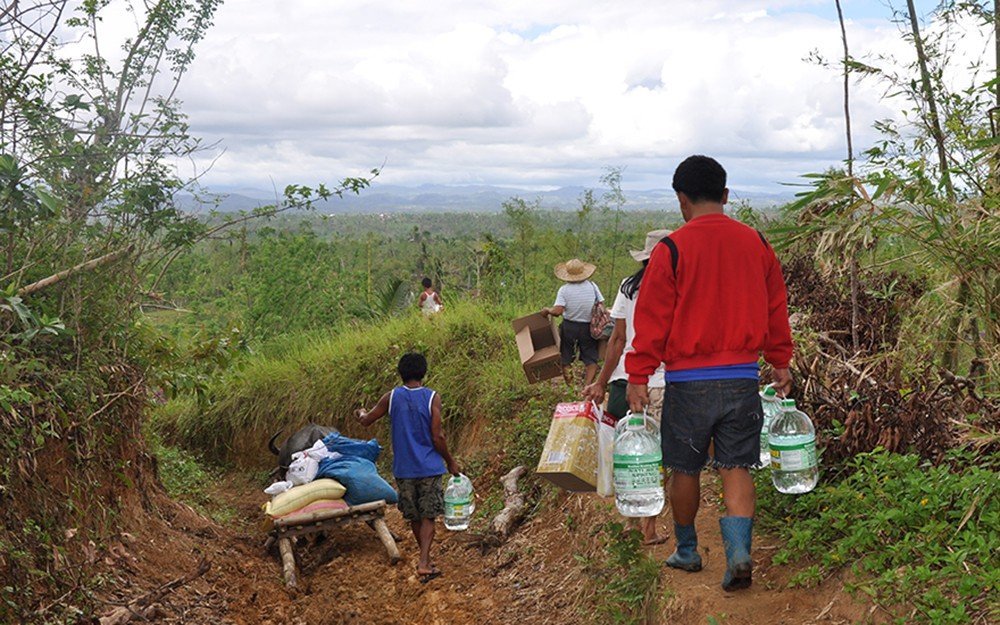
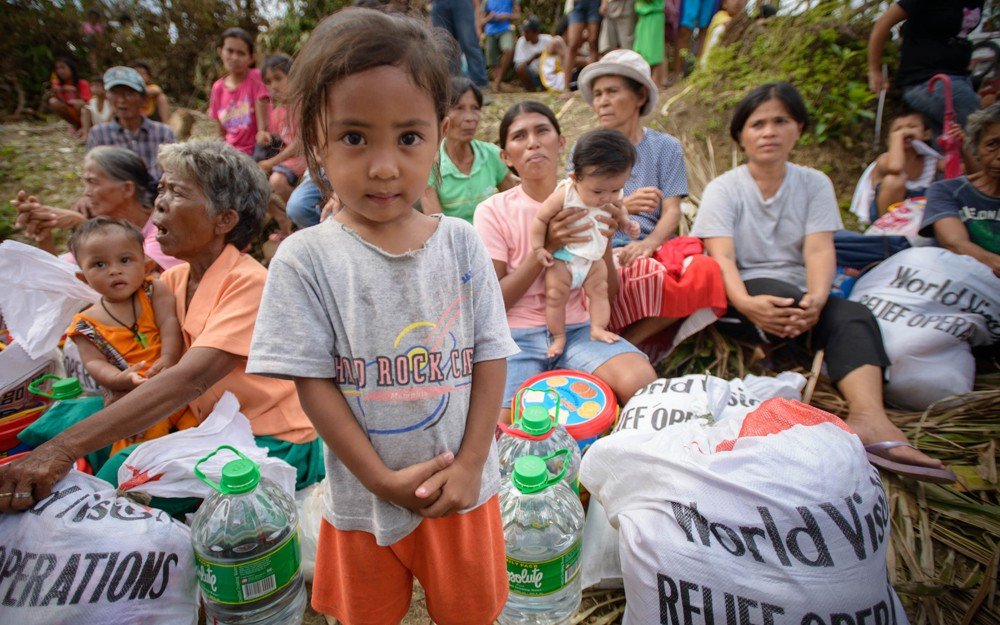
The tarpaulins come from Great Britain, the mosquito net from a neighboring island in the Philippines. Aid recipients load them onto covered motorcycle or wooden pushcarts to take them home. They pile on bags of beans, rice, and canned fish, jugs of drinking water, cooking pots, and soap — 165 pounds of goods.
By Dec. 20, World Vision had distributed relief items to provide assistance to nearly 250,000 people.
Leonel Ojales’s home in Old Kawayan, near Tacloban, was destroyed by Typhoon Haiyan on Nov. 8. Since then his family of five has cooked, eaten, and slept under the roof of their tiny kitchen.
The shelter kit, hygiene kits, food and non-food personal and household items received from World Vision will give his family enough stability for him to pursue work, he says. The tricycle he drove was destroyed in the storm and the local fishing industry isn’t operating. Leonel may have to go away from home to find work to support his family.
“To have impact in communities, we have to give everything we have,” says Adonis Casinillo, a manager for World Vision’s distribution in Tacloban. Don-don keeps up with a constant flow of trucks and goods going in and out of the Tacloban warehouse on their way to communities in Leyte and Samar provinces.
Orchestrating aid delivery
As a relief provider, World Vision acts like an orchestra conductor, coordinating the actions of many players.
There’s logistics, harmonizing schedules of suppliers, vehicles and transport, warehouse staff, and volunteers who repack materials bought in bulk into kits. And there’s the human side: local governments provide lists of affected families, community leaders and volunteers help staff validate the lists and notify families about the distribution.
“We ask the community to help to verify names on our list of beneficiaries, to make sure no one is left off or duplicated,” says World Vision’s Lisa Branal, member of an advance team that located distribution sites in Ormoc.
Discrepancies often have to be sorted out at the distribution site, so it’s important for relief providers to have strong relations and good communication with local volunteers and community leaders.
At the Old Kawalan distribution, one family was listed twice, but in different members’ names. Two other families weren’t on the list, because they had left temporarily. Nelie Consebit, a World Vision monitoring and evaluation specialist ran a help desk during the distribution. She says, “It took a little work with the families and volunteers to straighten it out,” but in the end everyone was satisfied that the aid was provided fairly.
Luz Mendoza, response manager for Leyte and Samar, says sharing information with communities has helped to improve distributions. “In Ormoc (Leyte), people came very early, before goods arrived, so we had an orientation. When we told people what was in the kits, they clapped.”
“There was a lot of chatting after that,” she says, “and some people started walking away. ‘We’re going home to get more sacks,’ they said, ‘so all these things will be easier to carry.’”
'Random' distributions create dependency
Contrast a well-planned aid distribution with a “random” distribution, in which private citizens or civic groups load sacks of rice or other goods into their vehicles and distribute them along the roadsides where families are in need. As time goes by, these spontaneous distributions become expected.
“People get conditioned to it, so that when a truck stops they expect to get something. They swarm the vehicle to get there first,” says Vince Mirioti, a World Vision logistics and security expert.
He says informal distributions don’t encourage sharing and recovery; instead they make recipients more dependent and competitive for aid. They can be dangerous, too, especially for children who rush into traffic to catch items tossed to them.
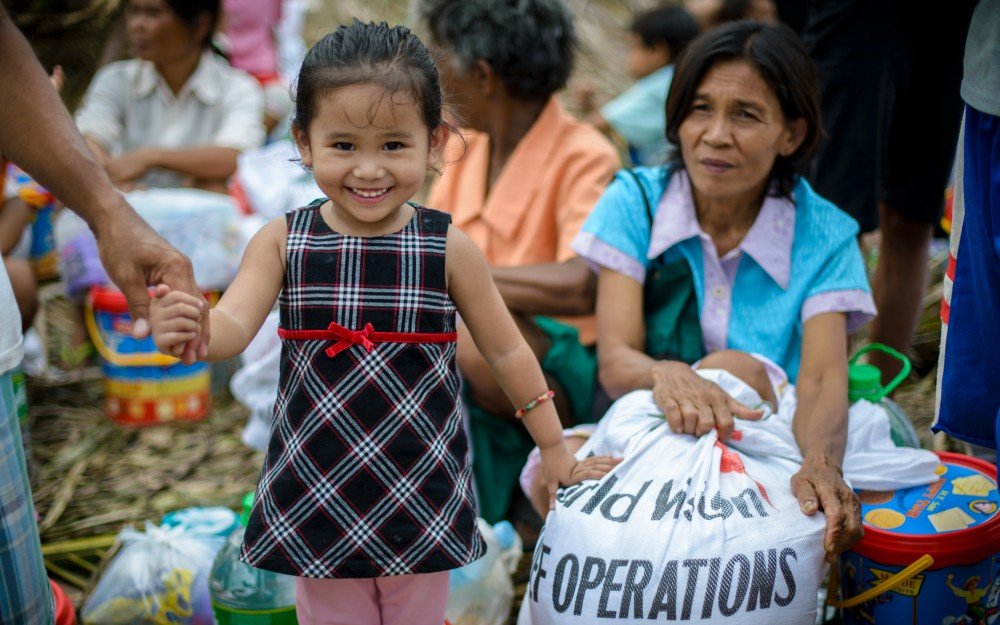
Photo #1 : The promise of food makes for happy children at a World Vision food distribution to Typhoon Haiyan survivors in the Philippines. World Vision completed a well-organized and calm distribution of food and hygiene kits in northern Cebu, benefiting 780 families, nearly 4,000 people in mid-November.
Photo #2 : With a long walk ahead of them through a mountainous area, the Formilo family carries relief goods they received at a World Vision distribution in Bingawan, Iloilo state, Philippines.
Project reports on GlobalGiving are posted directly to globalgiving.org by Project Leaders as they are completed, generally every 3-4 months. To protect the integrity of these documents, GlobalGiving does not alter them; therefore you may find some language or formatting issues.
If you donate to this project or have donated to this project, you can receive an email when this project posts a report. You can also subscribe for reports without donating.