By Brannon | Country Director
As part of CHF's participatory approach to development, we first organize beneficiaries of program activities into community-based Water User Associations (WUAs), which are utilized as the organizational framework around which to structure all activities. WUAs serve as a mechanism to ensure the sustainability of the interventions undertaken beyond the end of the program.
Through participatory decision-making, the elder councils confer with their respective communities to identify the needs to improve the quality of water sources and identify the contribution from those that will benefit. Management of the community contribution to the rehabilitation, training of the community on hygiene and sanitation, awareness raising and distribution of the water purification systems, and creation of the market opportunities for the continued supply of Water Guard, becomes the responsibility of the WUA.
Members from each WUA (both men and women) participate in a "Training of Trainers" program that covers gender issues, family planning, nutrition, hygiene and sanitation, malaria prevention, and traditional practices such as female genital mutilation. CHF also recognizes that HIV/AIDS can greatly deplete the productivity and resources of communities and households, and seeks to reduce the economic and social vulnerability inevitably caused by the disease. As HIV/AIDS is such a critical health issue, the topic receives special attention in the training cycles to ensure proper understanding by beneficiaries. HIV/AIDS prevention and awareness training is conducted for beneficiaries to improve their understanding of the causes of the disease and appropriate prevention mechanisms.
A key aspect to ensuring community led implementation of a project, which will result in selfsustainability of interventions, is the drafting and acceptance of agreements between CHF and the specific beneficiary communities (WUAs). These agreements define the nature of participation to be exercised by each stakeholder. CHF views communities as both beneficiaries and program partners, and by incorporating all stakeholders in the identification, prioritization, and implementation of activities, we create local “ownership” of the process and the resulting vested interest in its success and sustainability.
In the last quarter, CHF: > Organized and trained 18 Water Users Associations; > Conducted 23 community meetings; and > signed 18 agreements with WUAs
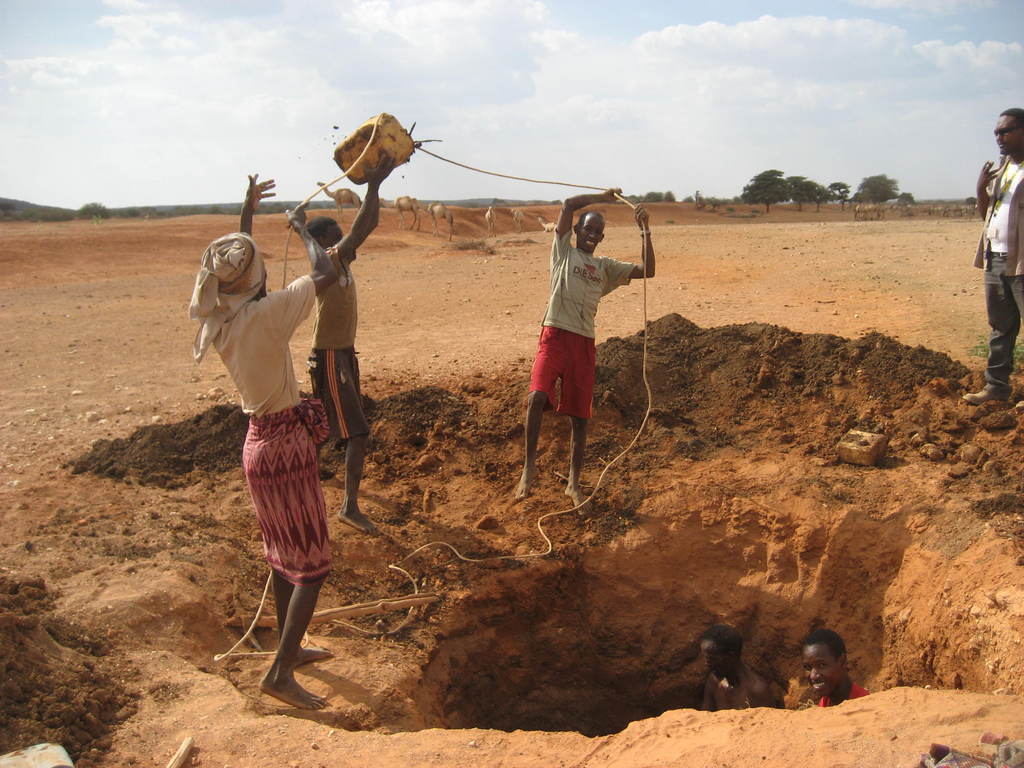
In the next phase, CHF will consequently: > begin construction of 23 shallow wells; and > begin construction of 180 latrines.
Project reports on GlobalGiving are posted directly to globalgiving.org by Project Leaders as they are completed, generally every 3-4 months. To protect the integrity of these documents, GlobalGiving does not alter them; therefore you may find some language or formatting issues.
If you donate to this project or have donated to this project, you can receive an email when this project posts a report. You can also subscribe for reports without donating.