By Ellen LaPointe | VP of Strategic Partnerships
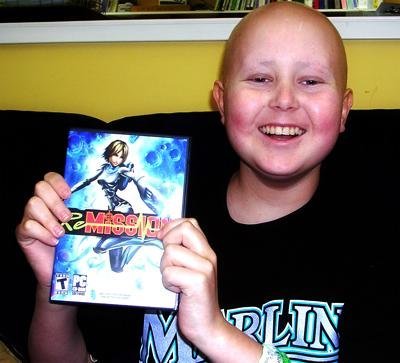
Answering that question was, in many ways, the reason HopeLab was founded and the vision behind the Re-Mission video game for teens and young adults with cancer. On August 4th, HopeLab announced evidence that games can indeed be designed for good, as demonstrated by research on Re-Mission published in the medical journal Pediatrics.
“We now know that games can induce positive changes in the way individuals manage their health,” said Steve Cole, HopeLab vice president of research and co-author of the study. “The game not only motivates positive health behavior; it also gives players a greater sense of power and control over their disease – in fact, that seems to be its key ingredient.”
The Re-Mission study is the largest randomized, controlled study of a video game intervention ever conducted, following 375 teens and young adults with cancer at 34 medical centers in the United States, Canada and Australia.
Participants who were given Re-Mission:
• Maintained higher level of chemotherapy in their blood • Took their antibiotics more consistently • Showed faster acquisition of cancer-related knowledge • Showed faster increase in self-efficacy
HopeLab is proud to have contributed to the growing scientific evidence that games can be a powerful tool in healthcare. The fact that Re-Mission works is one of the reasons we’re so passionate about getting the game into the hands of young cancer patients who can benefit!
Check out some press below
Links:
Project reports on GlobalGiving are posted directly to globalgiving.org by Project Leaders as they are completed, generally every 3-4 months. To protect the integrity of these documents, GlobalGiving does not alter them; therefore you may find some language or formatting issues.
If you donate to this project or have donated to this project, you can receive an email when this project posts a report. You can also subscribe for reports without donating.