By Robin Van Loon | Executive Director
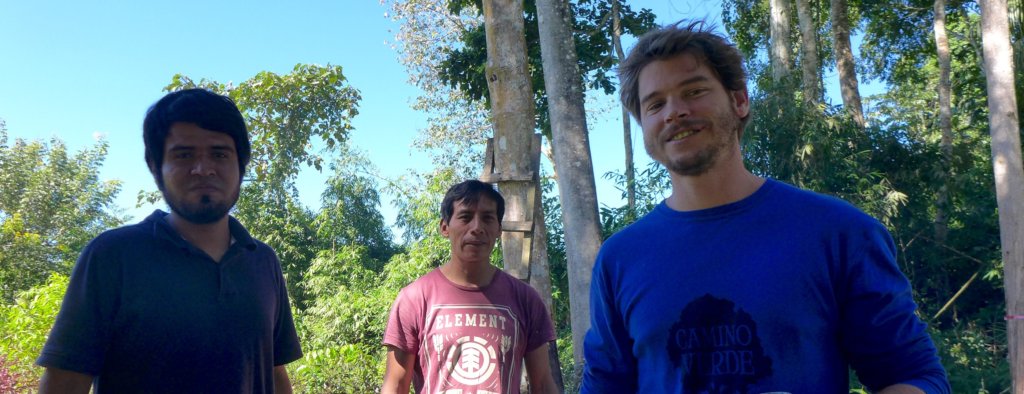
My friend Luis says he hardly notices it, clearing his throat sharply. See, Luis lives right next to a hard-working family that makes its living by producing charcoal, right here in the Peruvian Amazon. There’s a local market for hardwood charcoal, which city dwellers and rural folk alike use for home cooking. Though it’s not the only source of fuel (Peru is rich in natural gas, used for kitchen stoves and even as a fuel for cars in the country), charcoal is relatively cheap and easier to deal with than firewood.
But what Luis and his neighbor don’t know is that charcoal production takes a heavy toll on public health. Living in close proximity to charcoal production is linked with a variety of chronic respiratory ailments. The wood gases and particles released during the processing of most artisan charcoal impact human health, especially children and pregnant women. Whenever it is they want to have children, Luis and his wife won’t have the luxury of moving away from this invisible menace.
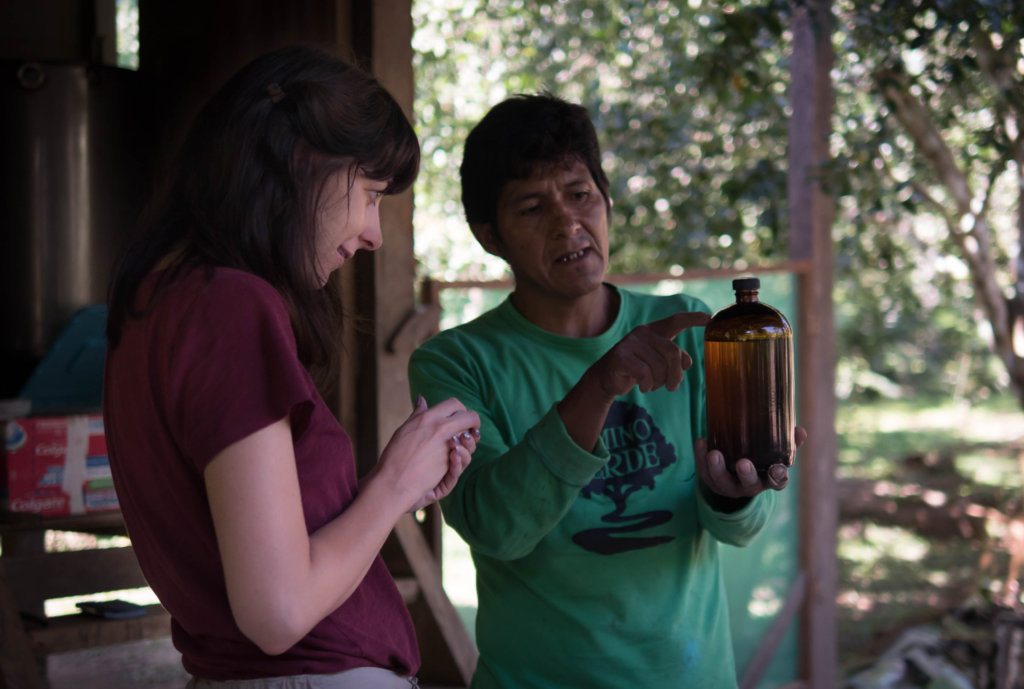
The charcoal producers aren’t exactly the picture of big toxic offenders. Born in the highlands and fleeing to the rainforest to escape the terrorism of the Shining Path in the early 90’s, the couple in charge of this family char operation is welcoming and friendly. We get to talking and you can tell these are hard-working people. What they do is actually a form of recycling. They pick up small leftover pieces of lumber from sawmills and carpentry shops – where they represent a waste that’s often burnt, to ash. The carboneros rightfully claim to turn it into something more useful.
Intriguingly enough, Luis is happy to help himself to the charcoal dust which is itself refuse to his carbonero neighbor. That’s because Luis is an organic farmer, and charcoal dust is great for the soil. When used in agriculture, it’s called biochar. Some specialists believe biochar represents a revolution in organic farming.
So the problem isn’t the what, it’s the how. People need charcoal, and producing it from discarded materials is actually ideal. But what if the neighbors could create this needed product in a way that doesn’t affect the health of the community.
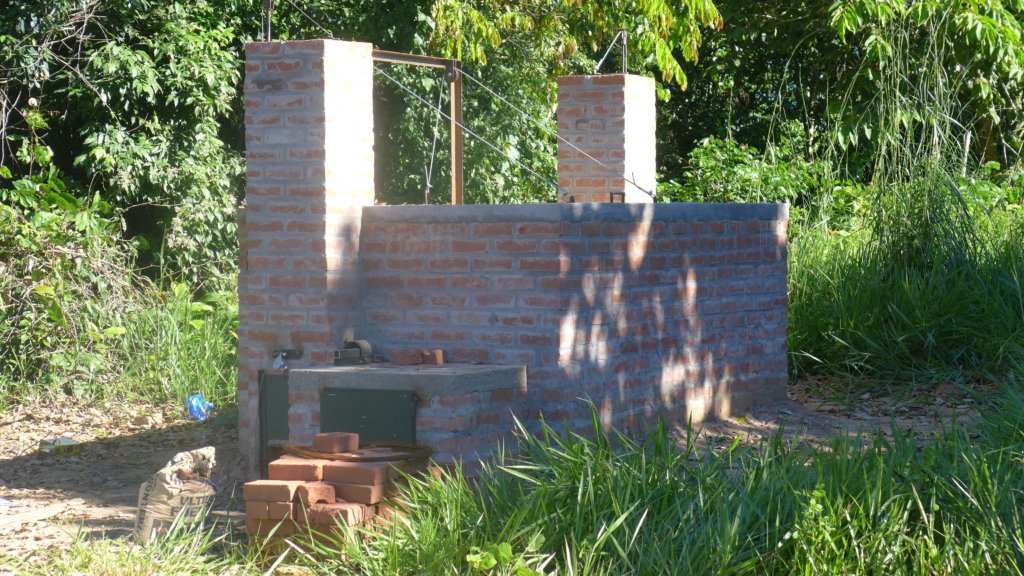
In fact, there are just such environmentally sound ways of producing charcoal, in which emissions are minimized and a net carbon negative effect is reached (the carbon in charcoal is held in a very stable captured form, at least when used as biochar). One of these environmental techniques is found in the Adam Retort oven, an appropriate technology design made from materials readily found at low cost in most developing countries. Developed in East Africa by Dr. Christoph Adam, the retort that bears his name is now found all over the world – and, for the first time ever, in Madre de Dios, Peru.
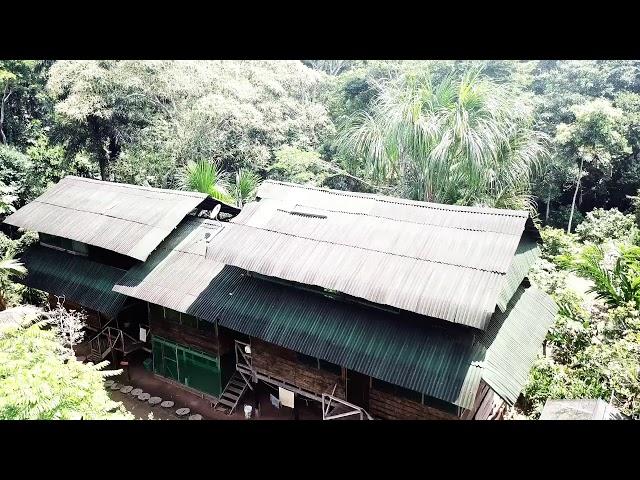
Camino Verde’s first Adam Retort was constructed last month, thanks to your support. Located at our La Joya Forestry Nursery, the oven will provide charcoal for our nursery soil mix and to farmers who want to try it out. With carbon partners and GlobalGiving donors alike, we can now measure in pounds or kilograms the actual amount of carbon captured in stable form for hundreds or even thousands of years. Biochar is a stable carbon sink, and along with reforestation is one of the world’s simplest, most cost effective methods to pump carbon out of the atmosphere.
Now you can neutralize your carbon footprint in a totally transparent way. Your donation goes directly to production of charcoal that traps CO2 for centuries to come. No joke. This ancient technology is more important now than ever before. Please drop us a line if you want help calculating your carbon footprint.
We’re grateful for your support. We truly couldn’t do it without you. Please read on for brief headlines from the rest of Camino Verde’s programs in the Amazon of Peru.
The first half of 2017 has seen our models for Amazonian regeneration reach a previously unimagined scale of impact. Our trees are growing and our reach has grown. Here’s a quick run down of what we have accomplished so far this year:
All the best from the Amazon of Peru. Together we're greener and stronger.
Project reports on GlobalGiving are posted directly to globalgiving.org by Project Leaders as they are completed, generally every 3-4 months. To protect the integrity of these documents, GlobalGiving does not alter them; therefore you may find some language or formatting issues.
If you donate to this project or have donated to this project, you can receive an email when this project posts a report. You can also subscribe for reports without donating.