By Taher Mohammed Alhatif | Secretary General of the Organization
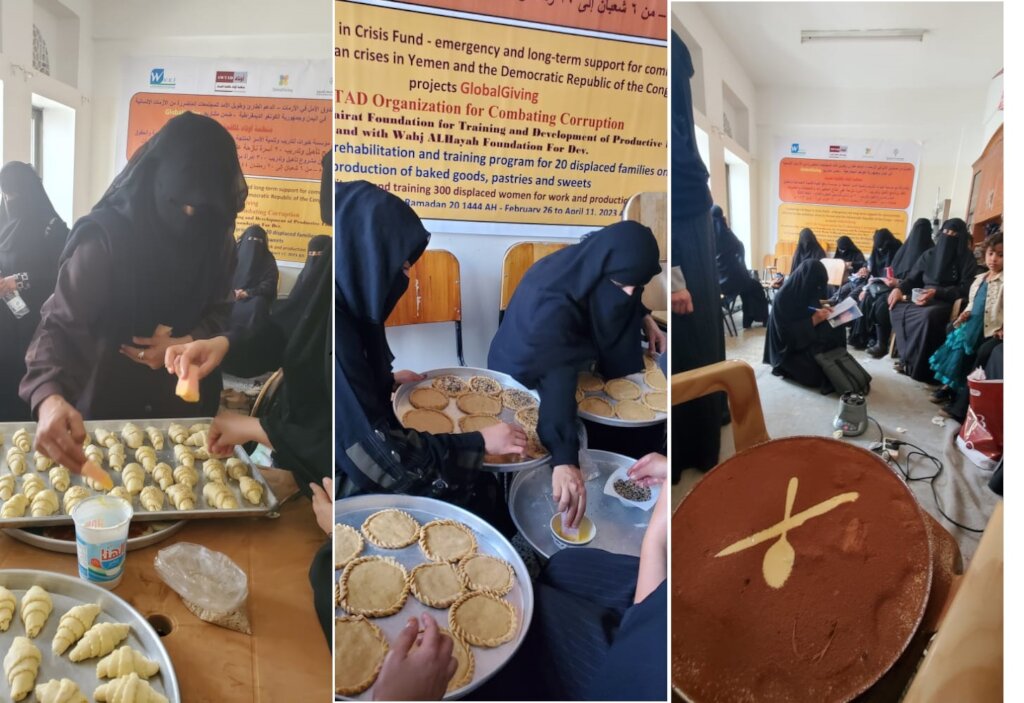
After the implementation of the first and second phases of training and qualifying the third batch of displaced women in the field of producing baked goods, pastries and sweets, the implementation of the third phases (marketing) and the fourth (monitoring and evaluation) began during the months of April and May
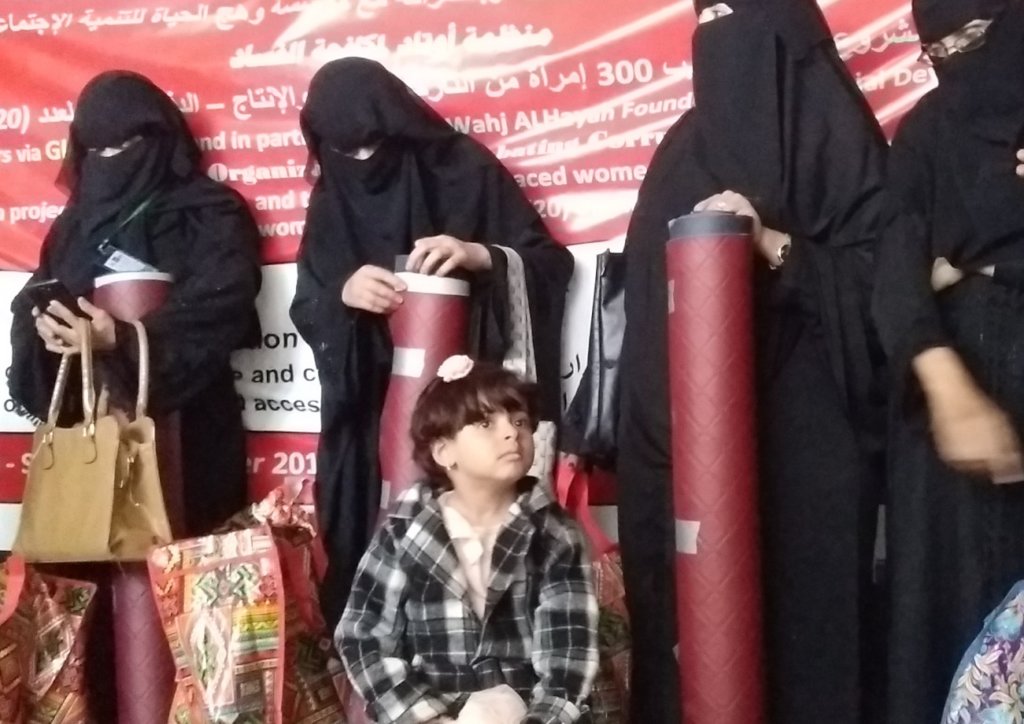
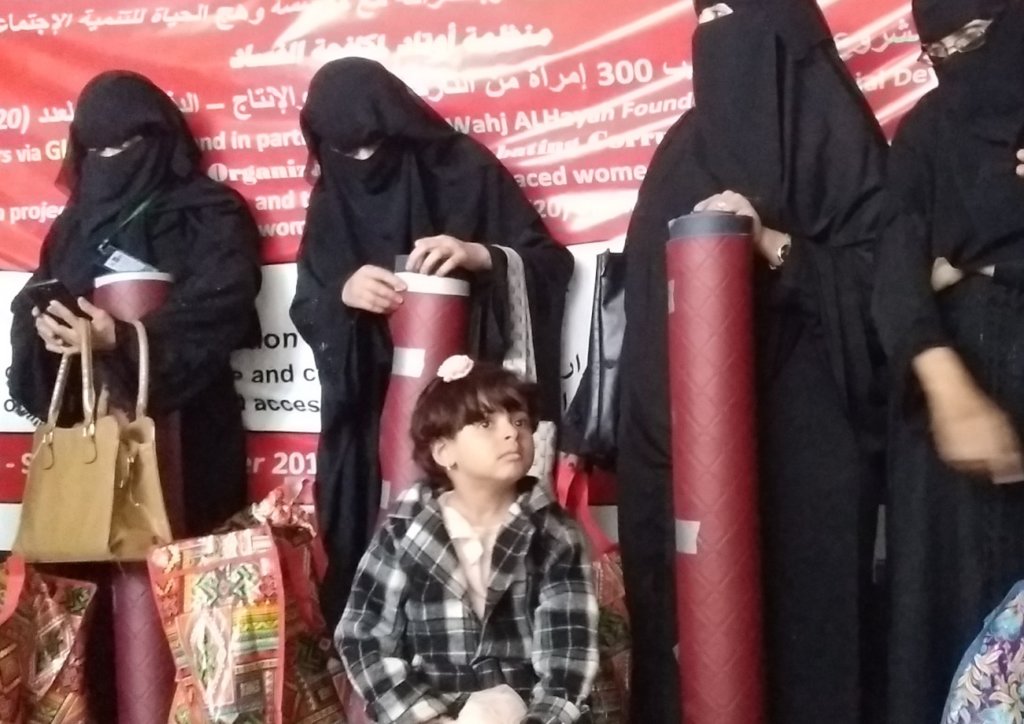
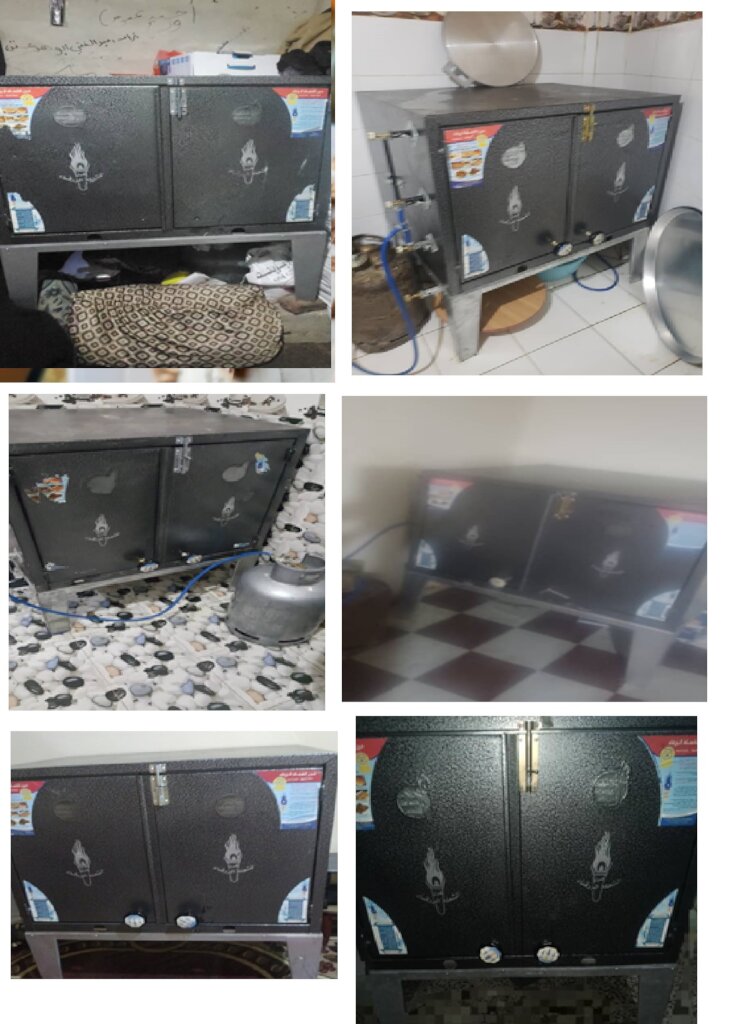
After the equipment and raw materials were distributed to establish small home projects for all trainees at the end of the second phase in conjunction with the approach of the blessed month of Ramadan, the trainees began home production and marketing during the blessed month of Ramadan according to the project plan (because the demand for pastries and sweets is increasing sharply in Islamic countries)
The M&E team conducted two field visits to the homes of all trainees to see their productive activity, assess the level of implementation, and provide assistance to the trainees for marketing
The first field visit lasted two days from 3 to 4 April: On the first day, the displaced trainees residing in the districts of Al-Safia and Maeen in the capital were visited, and on the second day, the displaced trainees residing in the districts of Al-Thawra and Bani Al-Harith in Sana'a were visited.
During which it was verified that the displaced women have prepared suitable places for the equipment and equipment that was disbursed to them from the project, as sites for their home projects, and to ensure that they are producing in their homes, and to know the mechanism of selling and marketing the products.
The team found that 12 displaced women have started working and producing in their homes and selling their products, but in varying proportions, while 8 displaced women are facing some problems.
During this visit, an amount of 20,000 Yemeni riyals was disbursed to each trainee, in order to help them in marketing and selling their products.
Mrs. Arwa Al-Hababi, Director of the Office of Social Affairs and Labor in Al-Safia District in the capital, Sana'a, participated in this visit
The second visit on April 16 (coinciding with the approach of Eid al-Fitr) in which all the displaced trainees were visited, and the team found that 18 displaced women had started working and producing in their homes and selling their products, but in varying proportions, while the displaced women were unable to provide places for production because their housing is narrow and there is not enough space in it.
During this visit, an amount of 20,000 Yemeni riyals was also disbursed to each displaced woman, in order to provide more raw materials required for the production of sweets and pastries, which will be marketed and sold on Eid Al-Fitr.
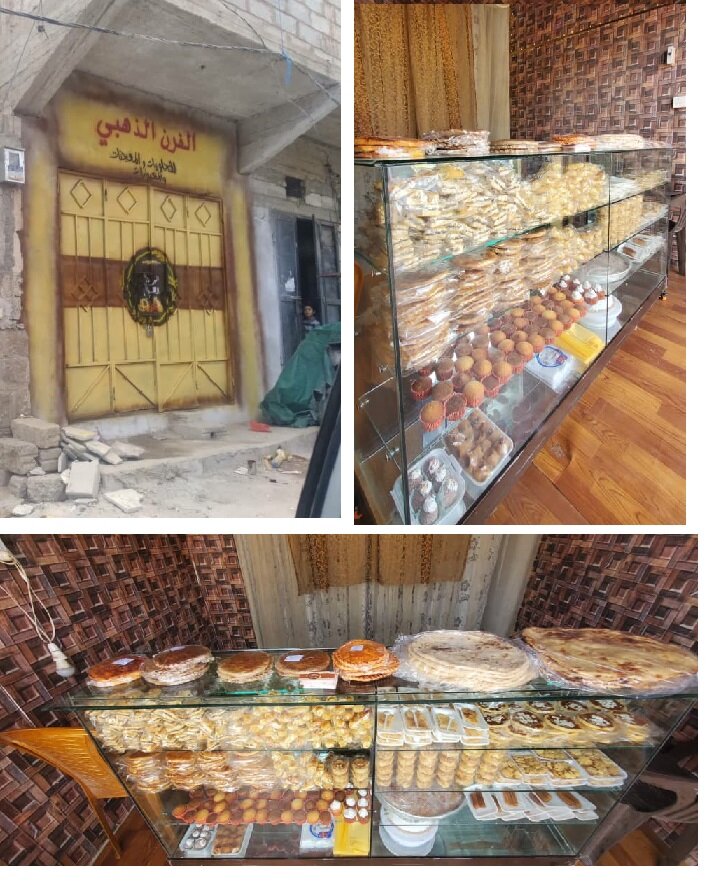
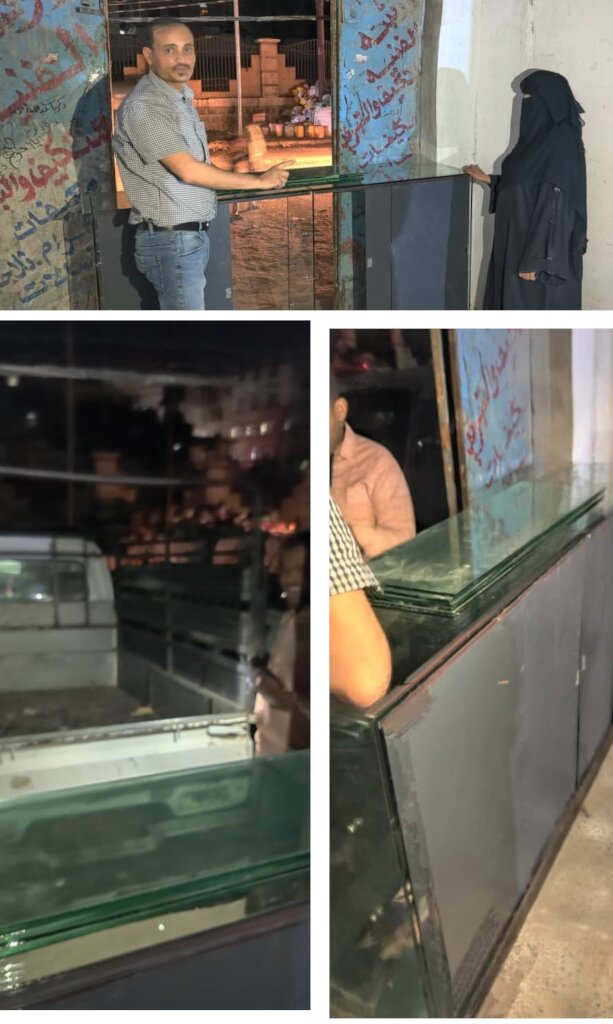
Before the end of last June, and in conjunction with the approaching Eid al-Adha, the first small commercial project was supported and launched for the trainee, Mrs. "Fatima al-Zaidi", who achieved good success in home production and marketing. She was able to set up a small shop in her neighborhood called "The Golden Furnace" to sell her products. She asked the project to help her, as she needs a glass cupboard to display the products at the entrance of the shop, and a sunshade for the gate.
The financial officer of the project, Mrs. Ruqia Al-Sayyad, was assigned to purchase and install the glass cupboard and the sunshade for the shop of the displaced woman, under the supervision of the head of the monitoring and evaluation team for the project, Mr. Fouad Abdo.
The happiness of the displaced woman, "Mrs. Al-Zaidi", was great on the day she opened her shop.
The organization had allocated part of the project budget to support successful cases
This is the first success of the trainees and within a short period of not more than two months, which encouraged the rest of the trainees to increase their efforts in production and marketing, and the monitoring and evaluation team is still communicating with the rest of the displaced trainees to help them.
After the end of the blessed Eid al-Fitr holiday, the project management began to follow up with the competent government agencies in order to obtain an official permit to implement the project, and not to complete the training and qualification of the rest of the batches until the permit is issued.
Civil society organizations and international organizations are facing difficulty in obtaining permits, due to the complex procedures imposed by the de facto authorities in the Yemeni capital, Sana’a. It is expected that the permit for the project will be issued before the end of this July, as it was agreed with the relevant government agency (the Supreme Council for Humanitarian Affairs and International Cooperation) on the detailed budget for the project, the timetable for its implementation, and the mechanisms for selecting the targeted displaced women.
Coordination and preparation are currently underway for the training and rehabilitation of the fourth batch, and it has been agreed with the Happy Childhood Foundation to establish the training program at their headquarters, due to the good experience and qualified cadres of this institution for training in the field of plastic waste recycling.
Links:
Project reports on GlobalGiving are posted directly to globalgiving.org by Project Leaders as they are completed, generally every 3-4 months. To protect the integrity of these documents, GlobalGiving does not alter them; therefore you may find some language or formatting issues.
If you donate to this project or have donated to this project, you can receive an email when this project posts a report. You can also subscribe for reports without donating.