By Janak Kumari Gandhi | Volunteer
In India participation of children with disabilities (CwD) in formal education environments, so far, is very limited. Most CwD have difficulty in accessing even basic education. In this context, the role that information and communication technologies (ICTs) can play in breaking up traditional access barriers and promoting equal opportunities is increasingly being recognized. The technology revolution has created new learning channels and formats that can enable CwD to access education with ease and effectiveness. Harnessing this power of ICTs to build a strong system of inclusive education in India may ensure that all students, irrespective of their impairment, be in schools and learning.
This can be achieved only when organizations working for CwD are aware about the availability and usage of new technologies and tools. At the same time developers also need to be in touch with these organizations for successful implementation and perfection of the tools.
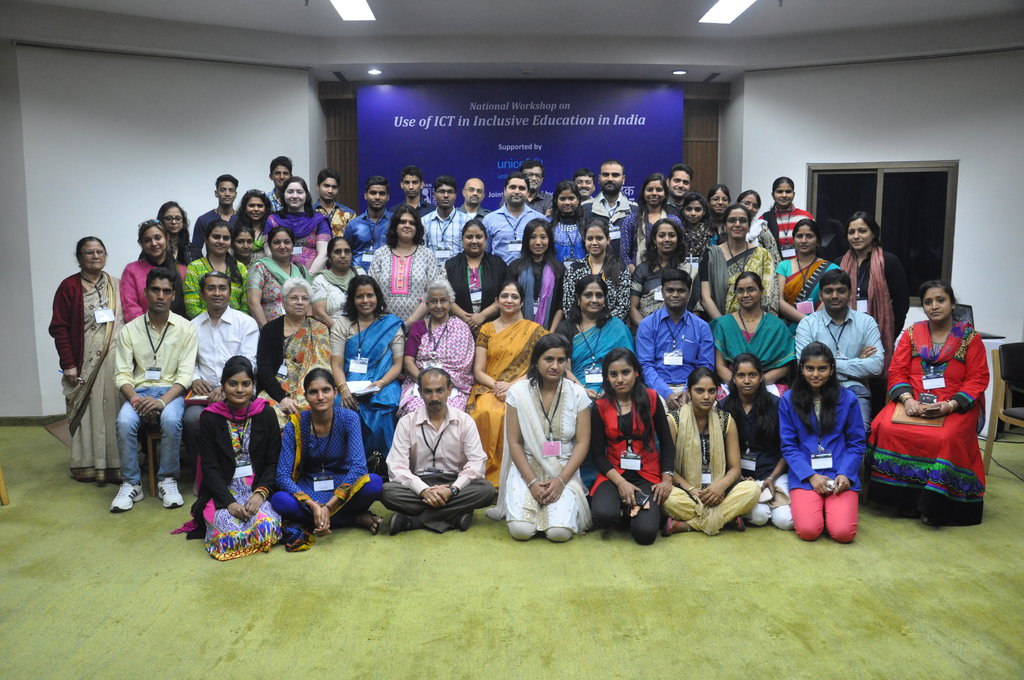
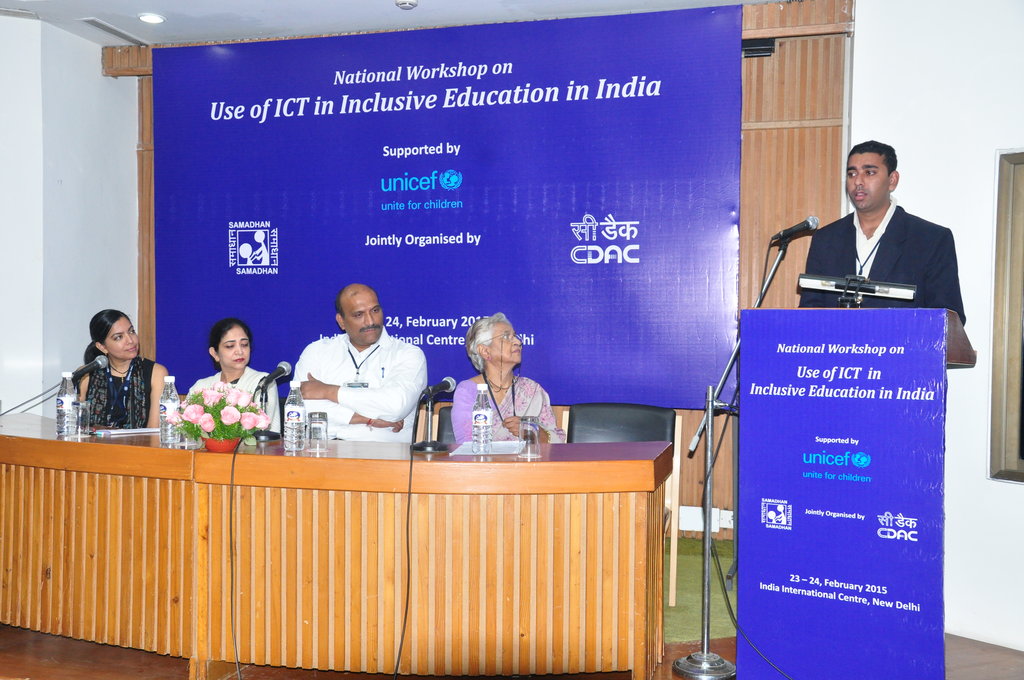
The need for a common, meaningful platform to bring together the various stakeholders and enable information exchange on the issue prompted SAMADHAN and the Centre for Development of Advanced Computing (C-DAC) to organize a two-day national workshop on “Using ICT for Inclusive Education in India” on February 23–24, 2015, at India International Centre, New Delhi. United Nations International Children's Education Fund (UNICEF) partnered this workshop, which was a follow-up to the UNICEF mandate for conducting a desk analysis on the use of ICT for inclusive education in India.
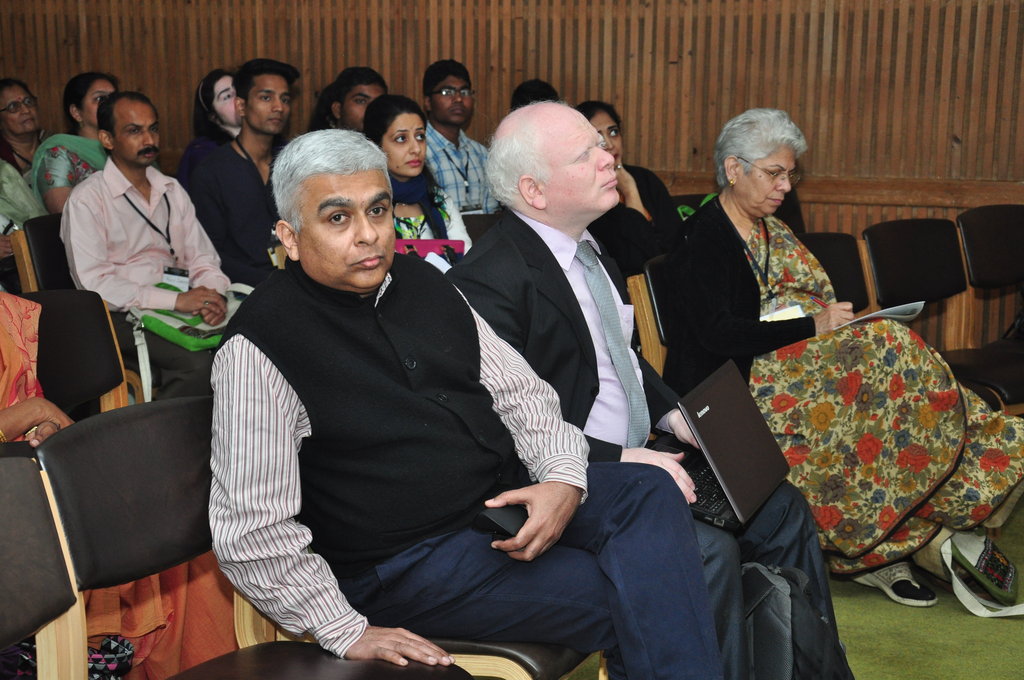
The workshop brought together stakeholders from concerned government departments, institutions, NGOs, researchers and academicians, IT engineers, special educators, parents, trainee teachers, and volunteers. It provided the participants, totaling over 80, the opportunity to share information and insights about the various ICT applications and aids for children with cognitive and physical disabilities as well as to share experiences of using innovative teaching-learning methodologies.
Among the speakers, there were persons with special needs who have been using ICT for their benefits. They shared their experinces and empasized the need of using ICT.
The discussions drew on the rich and varied experience of the different stakeholders and presented an opportunity for exploring the diverse range of available ICT tools and solutions. The presentations are available at https://sites.google.com/site/ictforie/.
The workshop, thus, evolved an improved understanding of the various issues, challenges, and opportunities for using ICTs for inclusive education. The biggest achievement of the workshop lay in drawing out the information about available ICTs and practices from different scattered pockets and bringing it together on a common platform to enable learning, ideation, and adoption.
It also brought into sharp focus the need for supportive policy framework; use of universal design in educational materials and environments; research and development (R&D) on new ICT solutions and practices; and training and capacity building of special educators, among others.
Project reports on GlobalGiving are posted directly to globalgiving.org by Project Leaders as they are completed, generally every 3-4 months. To protect the integrity of these documents, GlobalGiving does not alter them; therefore you may find some language or formatting issues.
If you donate to this project or have donated to this project, you can receive an email when this project posts a report. You can also subscribe for reports without donating.