By Indu Chauhan | Psychotherapy Intern at SAMADHAN
For my special interest internship, where I am given a choice in deciding with what kind of space I want to engage with for a period of 4 weeks, I was surprised by my own choice. When I applied to Samadhan I was attracted to their ways of working with children of special needs, with disability, the use of Dramatherapy and creative methods in engaging with the children. When I heard back from Samadhan, and finally got an opportunity to intern with, I found myself experiencing a good mixture of relief, excitement and anxiety. I realized that my anxiety was coming from the idea of engaging with the children of special needs. Before this, I have never engaged with them, never been even close to one. I struggled with the concern of how will I connect with them? Will it be too overwhelming? There is so much helplessness around the idea of children with special needs in my mind, such difficulty and sense of powerlessness in my own biases towards disability; as I experienced a strong need of wanting to distance myself from experiencing even an ounce of that helplessness, I realize disability is never easy to be engaged with, for anyone.
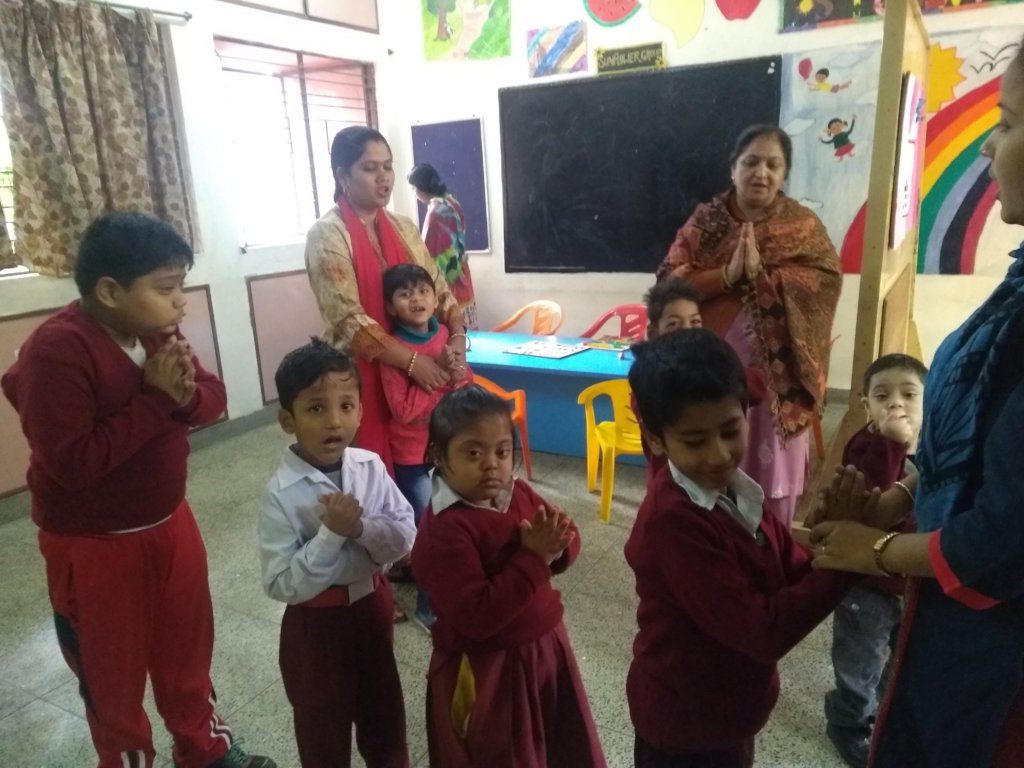
On my first day to Samadhan, I entered the early intervention centre, which is on the ground floor of Samadhan’s Dakshinpuri’s centre. It is big room, with lot of windows, letting good amount of sunlight pour in on that December winter morning, green curtains and robin blue cupboards brighten up the room, there were drawings and paintings adorning the walls. Over the next few weeks, as I ventured deeper in my internship, the room started to represent warmth and comfort for me, much more than just an early intervention room for me.
I met and observed teachers who have been with the organization for many years, some of them mightn’t have fancy degrees but their skills have been forged and honed by years of experience. I felt it as a ideal mixture of young teachers with professional training along with older teachers who have the experience and who belong to the same community and hence knows the families, their backgrounds, and relate to their day to day struggles well, together creating a space whose foundation seems to created on intricate bonds of knowing each other, trusting each other.
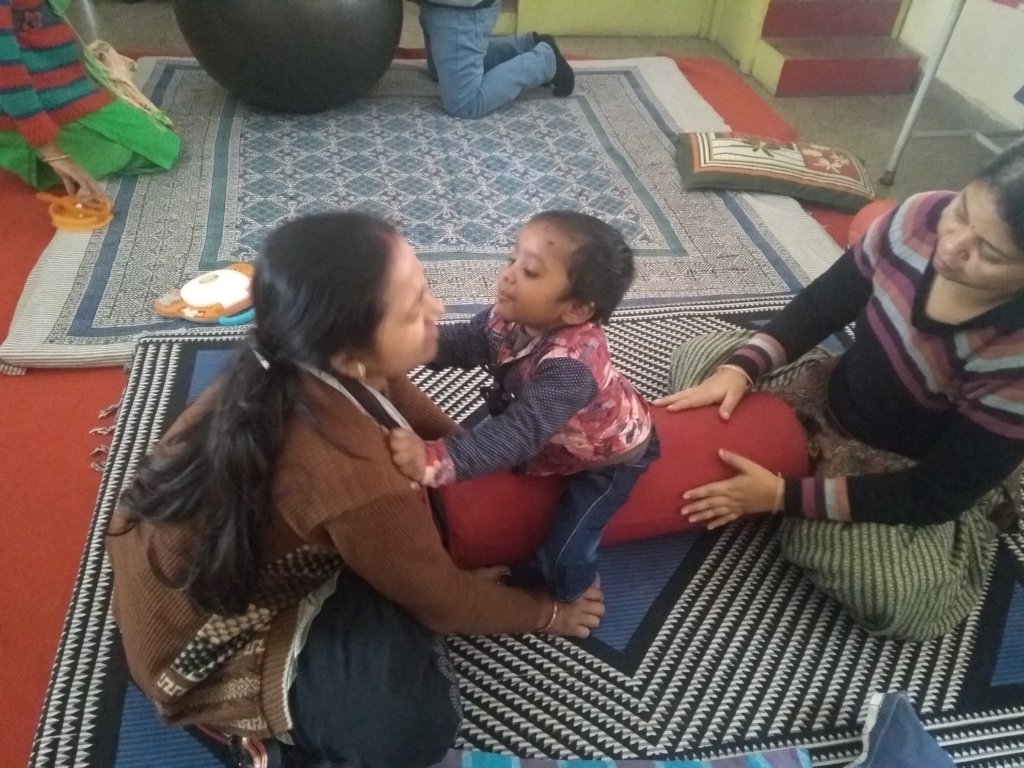
What I found comforting most was this environment of comfort in each other’s presence; representation of a micro environment of a community within the room, where the teacher, caretaker and child come together, to undergo the journey towards gaining more self sufficiency and agency for the child; a journey towards enabling the child to be more independent, a journey which is fostered by care and respect. Care and respect, two simple words, but so needed, especially when it comes to disability, especially when there is a general lack of awareness and engagement in our society around it; it becomes a necessity, a requisite, for the child’s growth into a person, into a being. The children are encouraged through various exercises, gently pushed towards exerting themselves each day, broadening one’s limits, strengths each day. It’s a daily struggle, a step by step process, made easy by the playful relationship between the teacher and the child. This relationship enables for a space to be created where through the various activities, a space is created for play also, which is essential for the child to make sense of his/her external and internal world.
What was extremely welcoming about the space was this unit of teacher-child-caretaker. There is an active engagement of the caretaker in the process, helping out in exercises, being there with the child, supporting the child with their presence, attention, and warm words of encouragement. Together they create a space of potential; a space where they believe in the child’s potential, through which slowly and steadily the child too begin to believe in his/her own potential. I felt, that this space was not just for the child, but also the caretaker. The caretakers are often neglected beings, their own anxieties and need neglected and pushed back so that the focus is on the child. But through this space, through this community within the room, I felt, their anxieties are also engaged with, heard, listened too; through this space they too experience being held, being supported. I realized soon that my fears about not connecting were a waste, as I too experienced that my anxieties and concern were taken care of by the warmth in this place which was filled with voices of conversation and laughter.
Links:
Project reports on GlobalGiving are posted directly to globalgiving.org by Project Leaders as they are completed, generally every 3-4 months. To protect the integrity of these documents, GlobalGiving does not alter them; therefore you may find some language or formatting issues.
If you donate to this project or have donated to this project, you can receive an email when this project posts a report. You can also subscribe for reports without donating.