By Pramila Balasundaram | Founder-Mentor
Manju and Kamal Rajoura are residents of Dakashinpuri where our first service centre is located. Unlike many families in this community of largely migrant daily wage workers Kamal has completed std 10 in a local school and his wife has also done her schooling till std 8. They run a small stationary shop and are more informed than most of their neighbours.
Their first son Ishant was born in a local charity hospital and was the cause of much celebration. However when Ishant was two years, he contracted acute jaundice and although he was taken to a local hospital it left him with considerable disability. Doctors seem to have explained that the child could become disabled but no information had been given on how or where to go for the kind of services the child needed. Later, being literate with some education the parents were concerned that the boy did not show signs of normal development. He had deteriorated alarmingly and although earlier he had begun crawling he now began scooting on his buttocks.
In 2011, during the regular surveys carried out by the Samadhan community worker Sarojini, Ishant was identified as disabled and referred him to the Rehabilitation Clinic in our centre. He was provided with all the services available and the paediatrician diagnosed Ishant with Apraxia Cerebral Palsy with generalised hypotonia and delayed milestones. (Apraxia Cerebral Palsy, is a condition caused by brain injury or brain malformation that occurs while the brain is still developing — during the fetal stage, at birth, or after birth — in areas of the brain that affect motor control associated with lack of voluntary coordination of muscle movements. Hypotonia is a state of low muscle tone (the amount of tension or resistance to stretch in a muscle), often involving reduced muscle strength. )
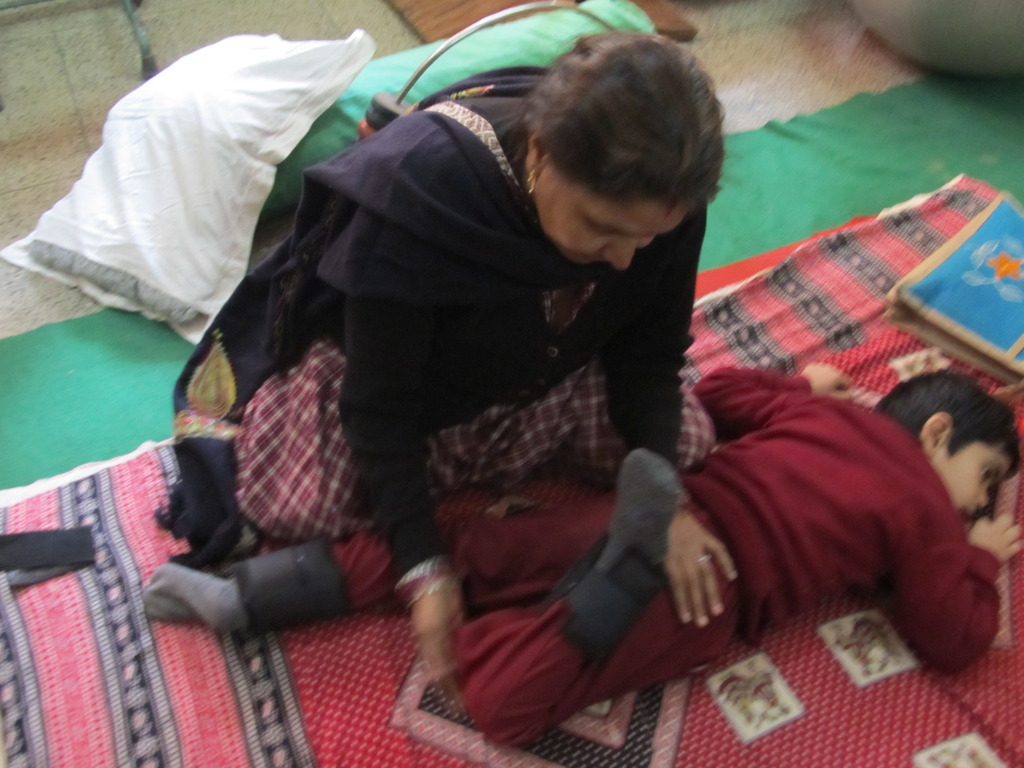
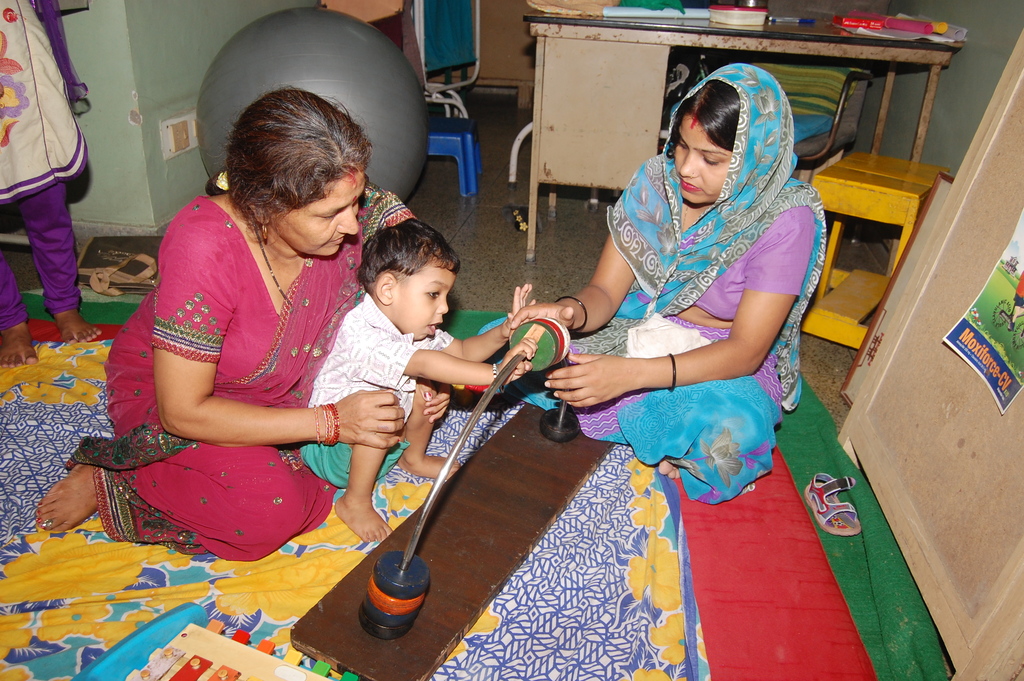
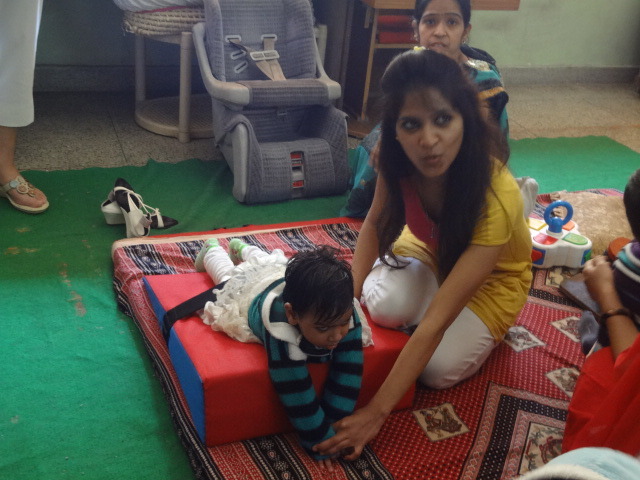
The team of professionals then completed individual assessments and came up with a plan for rehabilitation. As a first step focus was on the mobility of the child and for this purpose they provided daily physical exercises such as sitting on CP chair, exercises of the extremities, walking with support or with a walker, stair climbing and parallel bars, gait training etc.
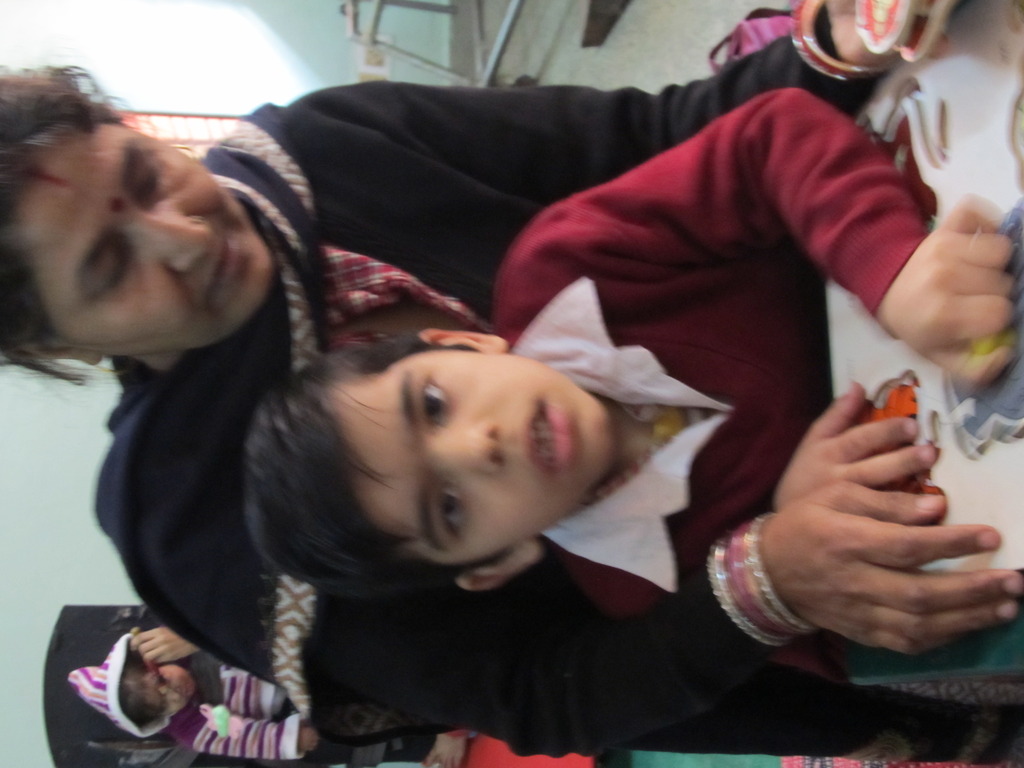
Over a period Ishant improved gradually and reached a stage where he started walking and speaking two/three words. At a case conference when the professional team met, it was decided to admit Ishant into the education unit in the centre itself since the children with apraxia needed a more intense speech practice opportunities and this would contribute to an improved speech pattern. Subsequent to his admission in Samadhan’s preschool unit, Ishant’s speech improved dramatically and he was able to now participate with the other children in drama and singing; his cognitive skills also improved. He can now count, identify objects, animals, fruits etc., and imitate sounds of animals and birds, knows Hindi and English alphabet, can tell the names of family members, can fill colours within shapes, can count up to 20.
Three years of regular intervention at SAMADHAN, has changed the life of Ishant and that of his parents. He is turning 7 this year and his parents look forward to a time of celebration and are acutely aware of how timely intervention had changed Ishant’s future into one filled with hope. There is every reason to hope that he will develop further and improve his skills.
The most supportive factor in Ishant’s improvement has been the consistent and dedicated input of his mother and father. The Psychological professional provides counselling as needed and in Manju’s case she needed consistent and friendly support to continue with the exercises that Ishant was to carry out at home and focus on his improvement. It has impacted on the family as well as neighbours and the community. Seeing the marked improvement in the child that they had all given up as hopeless, has even changed the negative perceptions the community had about disability in general. Ishant, and his family, all unknowingly have been a major agent of change from seeing disability as totally irrevocable situation to a more positive and hope filled perspective.
.
.
Links:
By Sumathi Morgan | Director - SAMADHAN
By Sumathi Morgan | Director
Project reports on GlobalGiving are posted directly to globalgiving.org by Project Leaders as they are completed, generally every 3-4 months. To protect the integrity of these documents, GlobalGiving does not alter them; therefore you may find some language or formatting issues.
If you donate to this project or have donated to this project, you can receive an email when this project posts a report. You can also subscribe for reports without donating.