By DR.KRISHNA R MURTHY | PROJECT LEADER
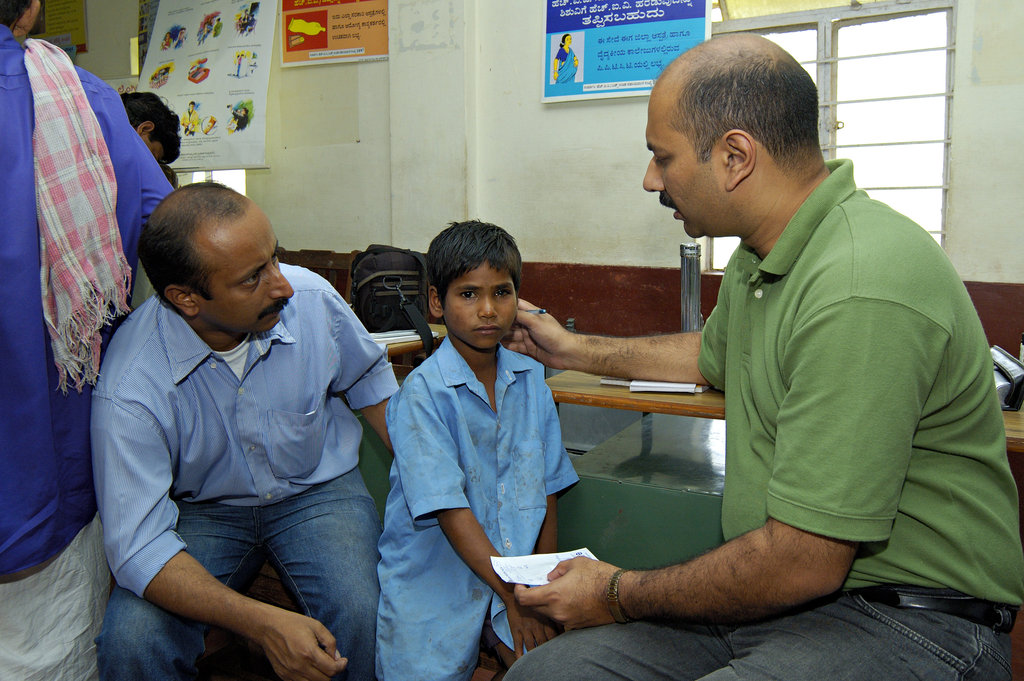
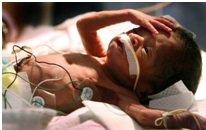
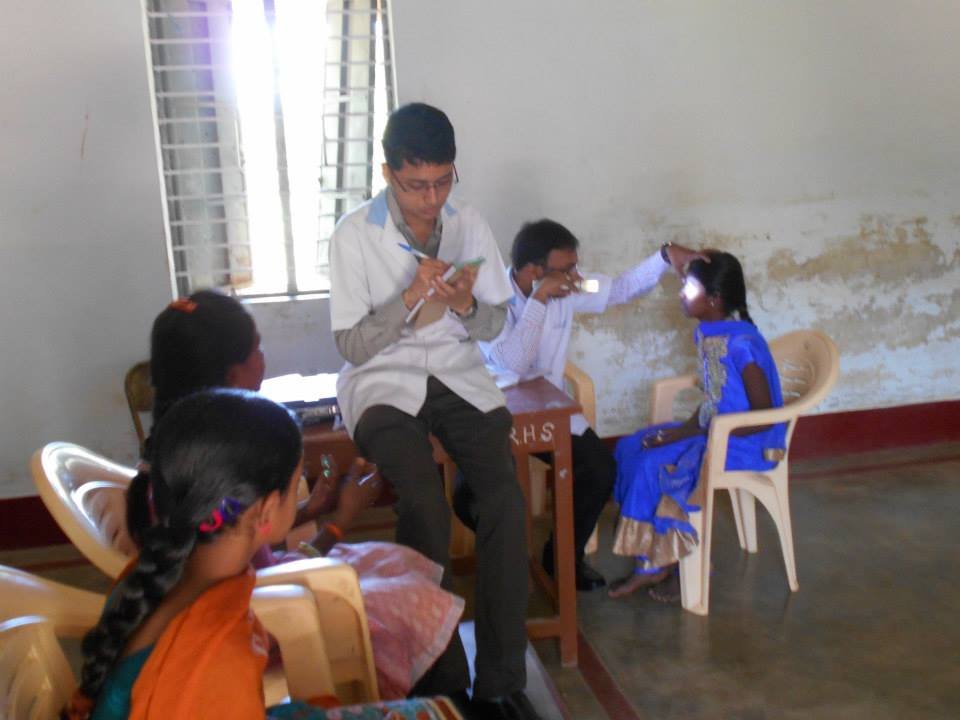
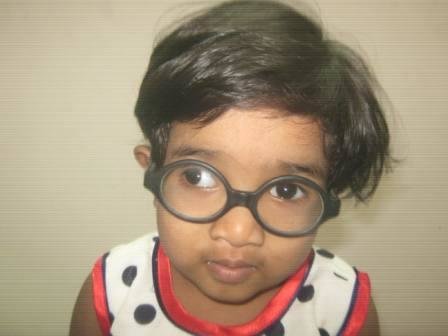
Childhood blindness is an important cause contributing to the burden of blindness. Preventing childhood blindness requires access to prenatal care, primary health care, and good nutrition. Children’s eyes are very sensitive and are easily affected by infection and nutritional deficiencies. Childhood blindness is caused by a number of diseases and conditions. Vitamin-A deficiencies, cataracts from rubella, corneal scarring from measles, strabismus, and retinopathy of prematurity from premature birth. Prevention and treatment depends on the cause of blindness
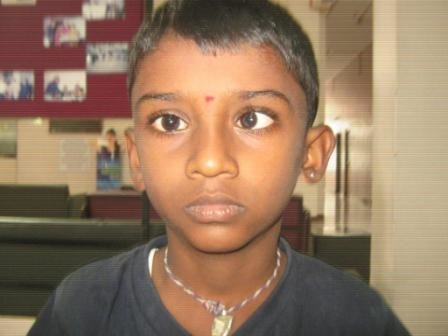
Squint
A 6 yr old male boy was operated for squint. The child was diagnosed to have bilateral alternating exotropia (SQUINT) - A squint is a condition where one eye is out of alignment, Squints can affect the eyesight in childhood, as the brain will begin to ignore a squinting eye causing the sight in it to be worse that in the other eye. The child was advised to undergo bilateral squint correction surgery (2 muscles) under General Anaesthesia. The benefits of squint surgery are an improvement in the appearance of the squint, reduction in the severity or frequency of double vision, an improvement in the control over the squint. In young children a benefit may be allowing the eyes to work together as a pair.
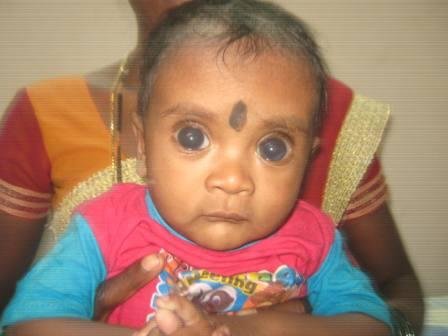
Congenital Glaucoma
A 7 months old baby was seen by us. The baby is under treatment for coronary heart disease (CHD) + PDA (CHD means a child is born with an abnormally structured heart and/or large vessels & Patent ductus arteriosus (PDA) is a persistent opening between two major blood vessels leading from the heart). On examination the child was able to fix and follow light in both eyes. Anterior segment examination showed Megalocornea (Megalocornea is an extremely rare non-progressive condition in which the cornea has an enlarged diameter, reaching and exceeding 13 mm). Fundus examination showed pigmentary changes in both eyes. The child was advised for EXAMINATION UNDER GENERAL ANAESTHESIA. Impression – both eyes congenital glaucoma with irido/ trabecular dysgenesis will need to plan both eyes trabeculotomy under GA.
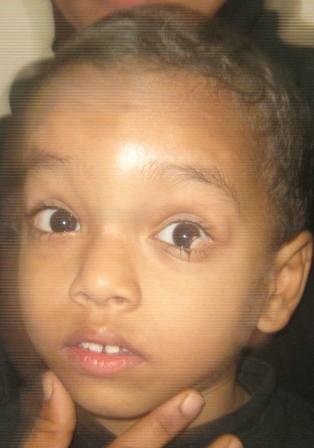
Superomedial Dermoid
A 4 yrs old female child was operated for dermoid. The mass is a firm one, non mobile, non tender, fixed to bone. Dermoid cysts grow slowly and contain mature tissue; this type of cystic teratoma is nearly always benign. In rare cases the dermoid cyst is malignant. The child was advised forLEFT EYE – Superomedial Orbitotomy & biopsy under General Anaesthesia.
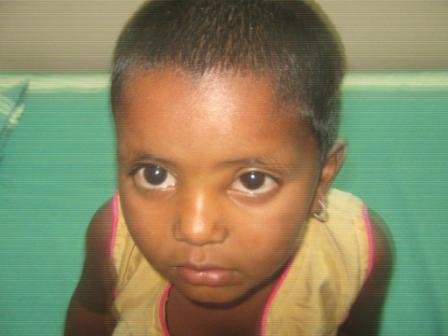
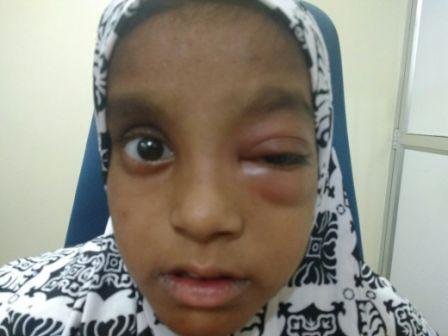
ORBITAL CELLULITIS
A 9 ½ yr old female child was operated for ORBITAL CELLULITIS. Orbital cellulitis is an inflammation of the soft tissues of the eye socket behind the orbital septum, a thin tissue which divides the eyelid from the eye socket. Orbital cellulitis most commonly refers to an acute spread of infection into the eye socket from either the adjacent sinuses, skin or from spread through the blood. The child was advised for ORBITOTOMY UNDER GENERAL ANAESTHESIA. The complications of orbital cellulitis are meningitis and death. As the fungal infection had spread to brain; we were unable to save the life of the child.
LIMBAL DERMOID.
A 3 yrs old male child operated for Limbal dermoid. Limbal dermoids are benign congenital tumors that contain choristomatous tissue (tissue not found normally at that site). They appear most frequently at the inferior temporal quadrant of the corneal limbus. The child was advised for LIMBAL DERMOID EXCISION WITH AMNIOTIC MEMBRANE GRAFT UNDER GENERAL ANAESTHESIA.
Project reports on GlobalGiving are posted directly to globalgiving.org by Project Leaders as they are completed, generally every 3-4 months. To protect the integrity of these documents, GlobalGiving does not alter them; therefore you may find some language or formatting issues.
If you donate to this project or have donated to this project, you can receive an email when this project posts a report. You can also subscribe for reports without donating.