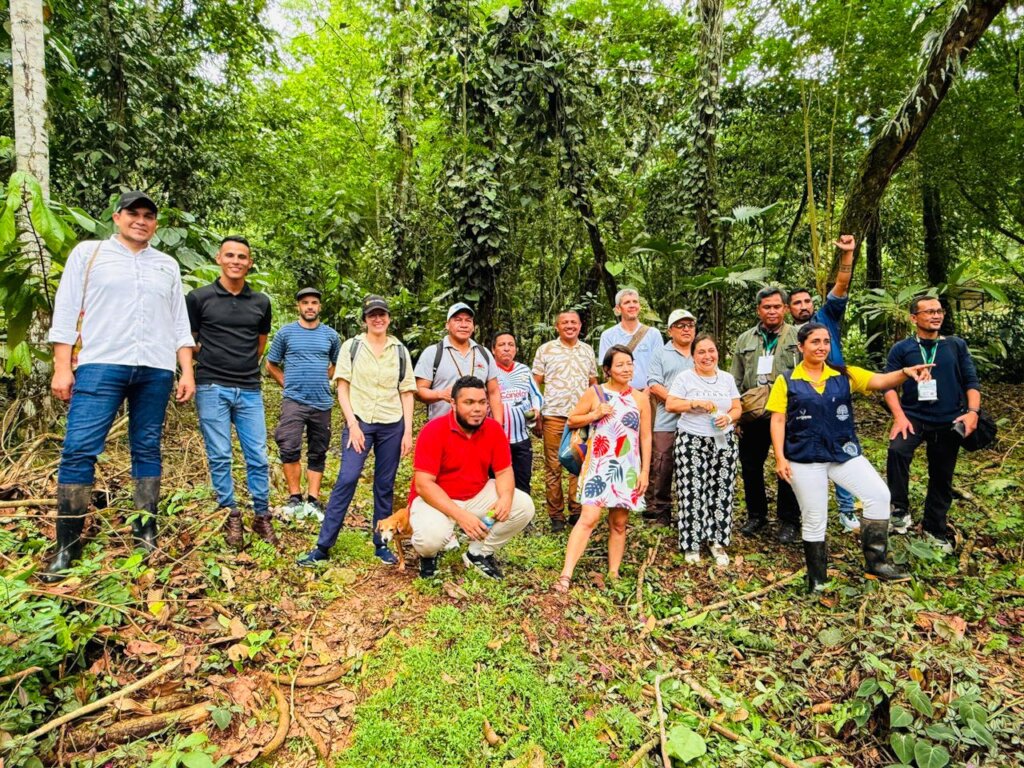
The fund tackles the climate crisis, biodiversity loss, and pollution through regenerative and bioregional approaches. It restores ecosystems, empowers communities, and promotes resource autonomy. The bioregional approach prioritizes ecological governance beyond political limits, with examples like Barichara, Montes de Maria, Sibundoy Valley, and Micay Canyon. The regenerative approach focuses on reversing damage, restoring ecosystems, and strengthening resilience.
The fund addresses the pressing challenges of the climate crisis, biodiversity loss, and pollution. These issues threaten ecosystems, weaken community resilience, and reduce autonomy in resource management. Existing governance structures often fail to integrate ecological and bioregional perspectives, leading to unsustainable development and environmental degradation.
The project applies regenerative and bioregional approaches to restore ecosystems, strengthen communities, and promote sustainable resource management. It focuses on ecological governance beyond political boundaries, regenerative agriculture, water conservation, biodiversity restoration, and local economic models. By fostering collaboration among territorial foundations and key stakeholders, the fund enables long-term, community-led solutions.
This initiative will contribute to the large-scale regeneration of degraded ecosystems, enhance community resilience, and establish sustainable economic models. By decentralizing philanthropic funding and empowering local leadership, it promotes self-sufficiency and long-term environmental stewardship. Over time, it will build stronger territorial governance, ensuring a balance between human activities and ecological sustainability across the Northern Andean region.
This project has provided additional documentation in a PDF file (projdoc.pdf).



Support this important cause by creating a personalized fundraising page.
Start a Fundraiser