Project Report
| Sep 9, 2013
Friday for the Muslims and Shabbat for Jews
By Dr. Yehuda Stolov | Executive Director
Thursday, May 9th 2013
Encounter of students from the two schools – Dekel, Karmiel & A-Sallam, Majd el-Krum
The theme of the encounter was the sanctity of Friday for the Muslims and the sanctity of the Shabbat for the Jews.
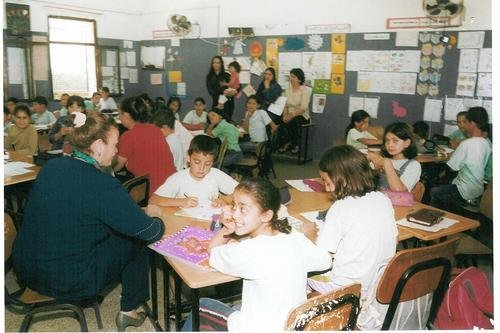
The children were divided in mixed groups, each facilitated by bi-lingual facilitators who guided them with relevant working sheets.
Each of the groups wrote about the two days in the two communities. The pupils noted the similar and different, for example:
Friday for the Muslims
- No work
- Sanctity and prayers
- Cooking
- Family visits
Shabbat for the Jews
- No work
- Prayers
- No-cooking
- Family visits
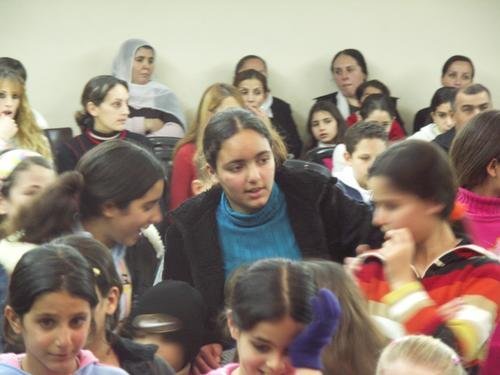
We ended with a feedback conversation in which the children shared how wonderful, successful was the day and how much joy and fun it was.
Links:
Attachments:
![Share on Twitter]()
![Share on Facebook]()
Jun 5, 2013
Joint "Day of Good Deeds" - March 5th, 2013
By Dr. Yehuda Stolov | Executive Director
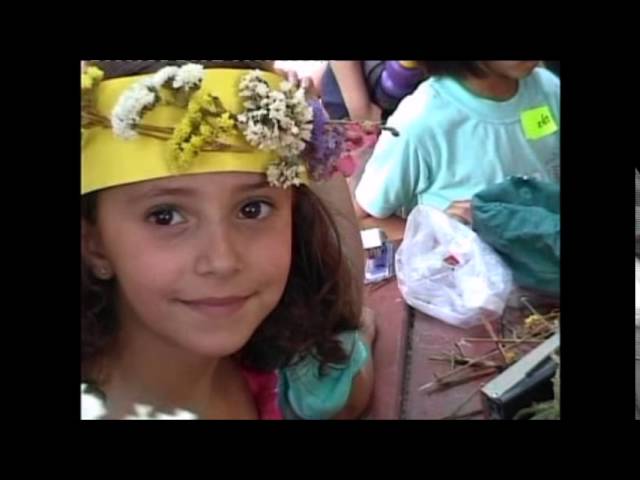
First all students gathered in the school yard and divided into groups. Each of the groups took one of the tasks for the day, such as:
- Painting the walls;
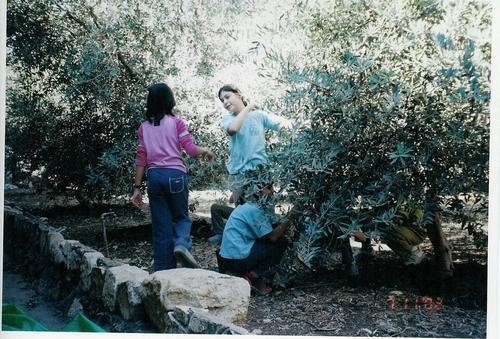
- Planting trees in various corners of the school;
- Drawing paintings that illustrate joint life and mutual respect;
- Drawing religious people of different communities;
- Drawing traditional costumes of the two communities.
At the end of the day we held joint activities for the students: music, dancing and a joint lunch.
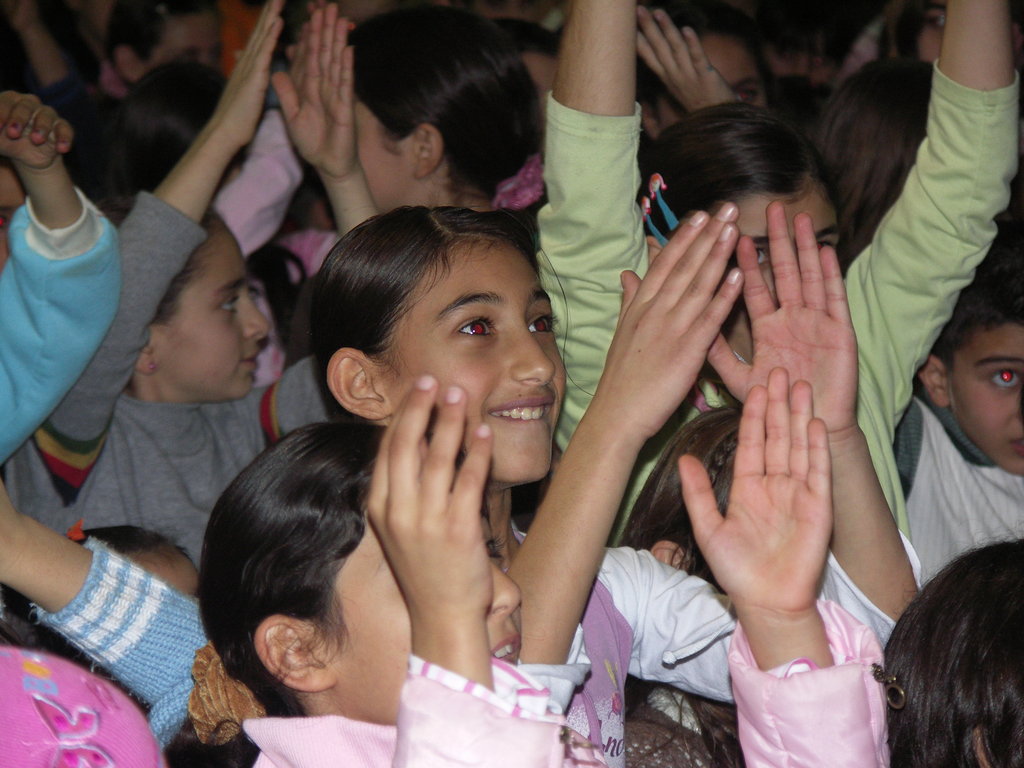
To conclude: we had an inter-cultural encounter between the students of both sectors, which testifies to the willingness of the students to contribute together good deeds for the benefit of the community and the environment and to take advantage of this opportunity to do something good, small or large. The students enjoyed very much the joint work and each one of them felt they contributed to the success of the day.
Links:
Attachments:
![Share on Twitter]()
![Share on Facebook]()
Mar 19, 2013
Students' Cooperation - December 3rd
By Dr. Yehuda Stolov | Executive Director
We divided the students into three groups. Each group had an Hebrew specking facilitator and an Arabic speaking facilitator.
- First activity: who remembers the names of students from the other group (most of them did remember…)
- Putting stickers with the names;
- The students wrote their names in both Hebrew and Arabic;
- The students cooperated in the writing of the names and in the acquaintance activity;
- Activity to mix the students. The facilitators mentioned peace greetings in Hebrew and Arabic, such as: hallo, shalom, salam etc.
- Temporary groupings of children according to similarities:
- All those who like basketball;
- Those who played football yesterday;
- Those who wear a coat;
- Those who have brown eyes.
- Breakfast break:
Students ate together breakfast that included elements related to the olive harvest season: Zatar, Labaneh, oil, olives…
They enjoyed a lot the joint meal.
- Work in small groups:
- Planet in space: students cooperate and help each other to have the "earth" stay steady in the place indicated by the facilitators;
- Presentations of various groups. Each student explained what he saw in each of the groups. The goal was that each student will be aware of the group s/he is part of and at the same time be able to identify with other groups.
Each time the students and facilitator held a conversation about the explanation of the student to the group.
- Choosing five words and presenting them in movements – an activity that requires cooperation and concentration.
- Creating Mandalas:
First the students were presented with different Mandalas and shared what they saw, what is common to all drawings, what feelings the drawing arouse.
Then they received explanations about the Mandala:
- the meaning (center, circle in ancient Indian language)
- Mandala-like drawings are found in several world cultures in America and
Asia, without connections between them. The Mandala symbolizes
existence and the human sole.
- Mandala is a drawing that has a central point with branches going out of it,
making a circle full of lines, symbols and circles.
- Its purposes are art, healing, conveying a message of wholeness and
equality, circle of life and implication of world peace.
Students expressed their satisfaction and joy from this encounter and the connections and conversations between them, with mutual respect and acceptance. We all look forward to the next encounter.
Links:
![Share on Twitter]()
![Share on Facebook]()