By Ranin Awad | Fundraising and Reporting Coordinator
Report for the project "Support Lifesaving Gender Based Violence Services (70647)"
Project Objective: Improved protection of conflict-affected women and girls GBV survivors and increased their access to safe, gender responsive and inclusive multi-sectoral GBV services.
Outcome 1: Conflict-affected women>18-59 and >59 years and girls 14-17 years GBV survivors have meaningful access to multisectoral GBV protection and response services.
Output 1: Conflict-affected women>18-59 and >59 years and girls 14-17 years GBV survivors benefited from GBV services.
Activities:
Throughout the reporting period 2025, Women’s Affairs Center (WAC) achieved remarkable progress in supporting conflict-affected women and girls in Al-Mawasi – Khan Younis and Deir al-Balah through the provision of comprehensive protection, psychosocial services. WAC’s interventions focused on ensuring access to safe spaces, and psychosocial support (MHPSS) for survivors of gender-based violence (GBV) including internally displaced women, with disabilities, cancer patients, older women, pregnant and lactating women, and female heads of households (widows, divorced, separated, and bereaved). These efforts contributed to improving the safety, well-being, and dignity of women and girls amidst the ongoing humanitarian crisis.
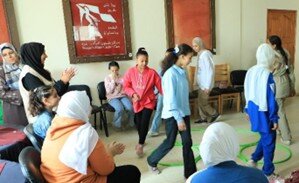
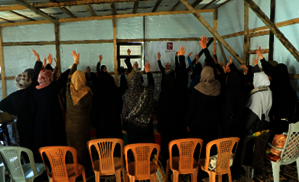
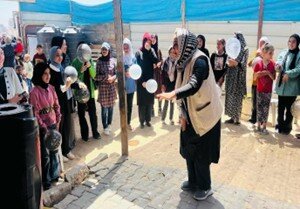
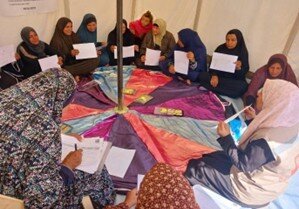
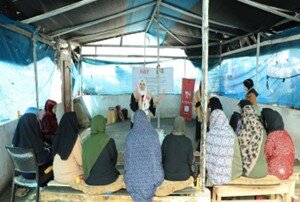
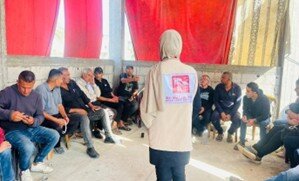
WAC conducted 40 group psychological first aid (PFA) sessions, reaching 480 women, and 120 girls in Al-Mawasi KhanYunis and Dir al-Balah. These sessions provided a safe and supportive space to reduce stress and anxiety and contributed to emotional recovery and resilience, and refer severe cases that need further support to individual PSS.
Furthermore, WAC conducted individual psychological support sessions to 80 women and 20 girls using WAC PSS manual in Al-Mawasi KhanYunis and Dir al-Balah.
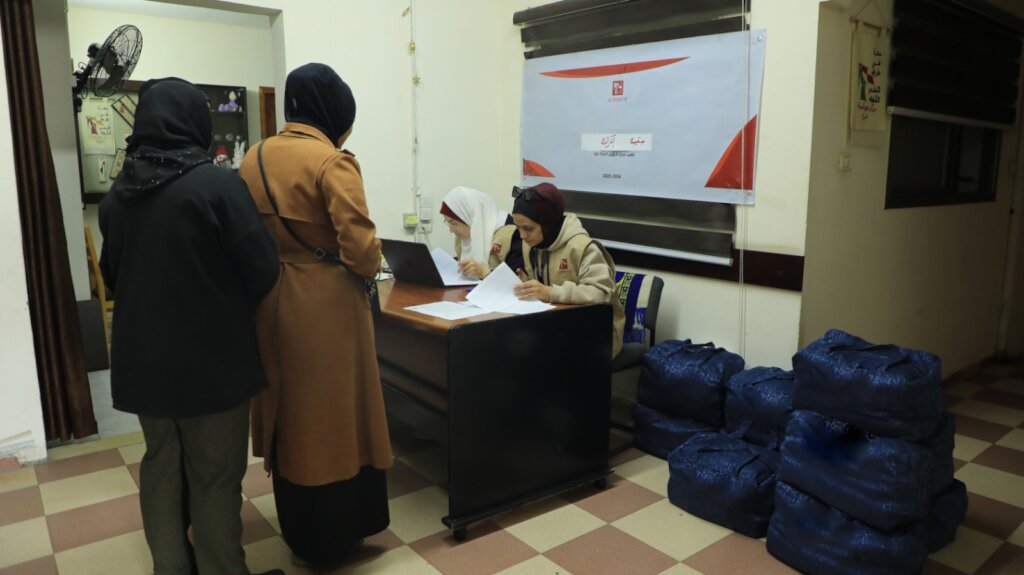
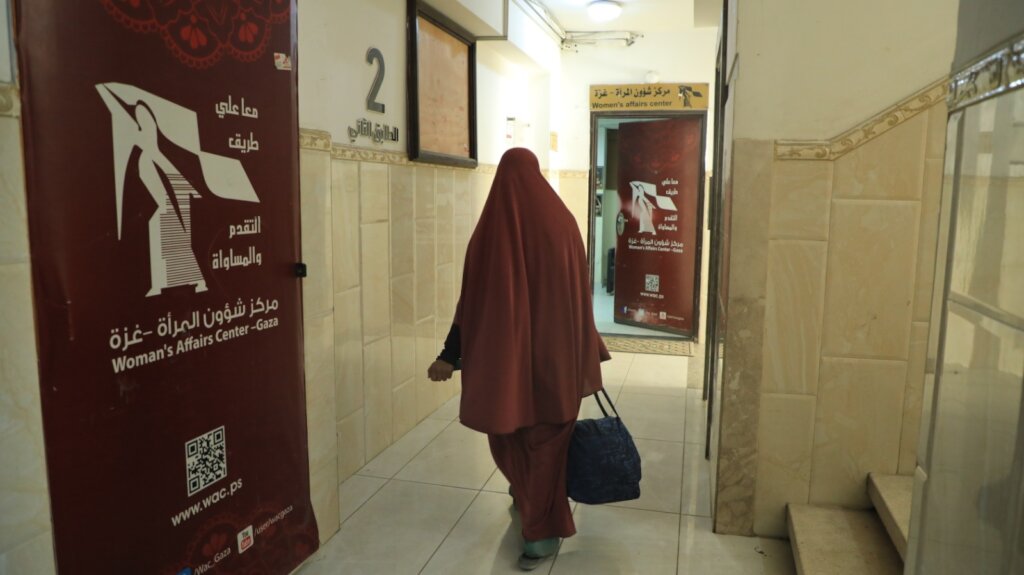
In addition, 200 dignity kits were distributed to GBV survivors living in shelters or with host families. The kits helped meet urgent needs with safety and dignity; contributing to the preservation of their health, dignity, and personal protection.
All activities were guided by a comprehensive assessment process and tailored to the needs of the most marginalized women affected by the ongoing conflict, ensuring targeted, meaningful support in this critical period.
A1.1.1 (40) group psychological first aid sessions were delivered to 480 women and 120 girls (15 women/ group)
(40) group psychological first aid sessions were delivered to 480 women and 120 girls in Dir al-Balah and Al-Mawasi – Khan Younis with 15 women per group.
These sessions aimed to create a safe and supportive space for women to share their experiences, emotions, and psychological and social challenges, fostering early recovery and improved mental health.
Mechanism: Project’s staff conducted field visits to shelters and held community meetings to coordinate on the project’s goals and target criteria. The targeted group included marginalized women mostly- affected by conflict/violence — especially: GBV survivors (including displaced women and women with disabilities), women with cancer, pregnant or breastfeeding women, elderly women, women with chronic illnesses, and female heads of households (widows, divorced, separated women, suspended women).
Targeted Group Criteria:
• Internally displaced women
• GBV survivors
• Women with disabilities
• Female heads of households
• Women and girls affected by the conflict
Group PFA Sessions Methodology:
• Introductions & Icebreaker: Presenting the pomologist and WAC center, emphasizing services provided before and during the war to build trust with participants.
• Initial Psychological Evaluation (Mood Check): Conducting a brief assessment to understand participants’ emotional state.
• Discussing Psychological Stress: Exploring definitions, causes, types, and physical/psychological effects of stress.
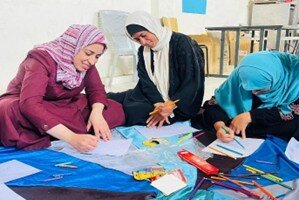
• Emotional Release – “My Drawing Today”: Participants express their feelings and experiences during war through art, enabling safe emotional release and identification of needs using PFA principles:
- See – Observe and identify needs
- Listen – Practice active listening and validate emotions
- Link – Refer to available center services
• Stress Management Techniques: Teaching breathing, relaxation, and body tapping exercises to reduce tension and anxiety.
• Session Summary & Final Evaluation: Recap session topics, reassess mood, and offer space for questions and reflections.
Forms Used:
• Women’s Affairs Center (WAC) Emergency Manual.
• Beneficiary Database.
• Psychologist Session Report.
Each session followed a structured methodology designed to create a safe, supportive, and healing environment.
WAC’s psychologists employed multiple therapeutic tools including active listening, empathy, guided dialogue, relaxation techniques, and free drawing. These approaches created solidarity within groups, allowing women and girls to rebuild trust and confidence.
The activity also faced significant challenges, including security risks to facilitators during field movement, damaged roads, and restricted access to shelters due to overcrowding. WAC mitigated these by mobilizing alternative transportation, coordinating with local committees, and maintaining flexible scheduling.
In summary, the PFA sessions served as a crucial gateway to mental health and psychosocial support services, while also functioning as a referral route for individuals needing personalized care. Through a combination of structured methodology, inclusive targeting, and strong community partnerships, WAC effectively implemented a life-saving intervention that alleviated psychological distress and empowered women and girls to start restoring their dignity and resilience.
A1.1.2 Provide individual psychological support sessions to 80 women and 20 girls using WAC PSS manual in Al-Mawasi KhanYunis and Dir al-Balah.
WAC’s psychologists provided individual psychological support sessions to 80 women and 20 girls using WAC PSS manual in Al-Mawasi KhanYunis and Dir al-Balah in WAC’s safe spaces. Each case received (3) structured sessions to provide deep, individualized psychosocial support.
Selection criteria prioritized survivors of GBV, widows, divorcees, abandoned women, cancer patients, internally displaced women, those with more than four dependents, women with chronic illnesses.
The first session focused on trust-building, active listening, mood assessments, PTSD screening, and guided deep breathing for relaxation. In the second session, survivors received psychoeducation on stress and trauma, learned to connect symptoms to lived experiences, and practiced coping techniques such as behavioral activation and reframing negative thoughts. The third session emphasized " holistic self-care skills—psychological, social, physical, cognitive, and spiritual" before concluding with post-session evaluations and closure.
These interventions enabled survivors to express emotions more freely, regain confidence, and acquire practical coping skills, while also reducing anxiety, trauma symptoms, and psychosomatic pains—critical steps toward resilience and recovery in the face of ongoing conflict.
A1.1.3 Provide dignity kits to 200 women IDPs in formal and informal shelters and with host families to meet their urgent needs in safety and dignity.
WAC distributed (200) dignity kits to women survivors of gender-based violence from Al-Mawasi KhanYunis and Dir Al Balah. Dignity kits include prayer suit, wipes, slipper, underwear, tights, sanitary pad, shampoo, tissues, soap, tooth brush, tooth paste.
Testimonies:
Challenges:
Many of the women experienced recent and traumatic losses, in addition to the displacement and difficult conditions, requiring specialized psychological interventions in some cases.
Security constraints made it difficult to access some locations, disrupting the session schedule and consistency.
4. Continuous displacements.
Lessons Learned:
- Establishing partnerships among NGOs to consolidate resources and experiences to implement WPS agenda projects.
- Continue providing a blend of remote and in-person safe and dignified multisectoral GBV services to women and girls GBV survivors. To provide remote modalities, follow ethical guidelines like informed consent, privacy and confidentiality, while apply minimum safety and precautionary procedures in face-to-face service delivery.
- Maintain providing women GBV survivors with dignity kits.
- Handle effectively the complaints made by the targeted women and girls and provide appropriate remedies.
- Expand helpline services to reach remote and hard to reach communities to leave no one behind. Help line services should be the entry point to target women and girls for GBV services.
- Mainstream people with disabilities, protection, gender, PSEA, AAP and the environment.
- Ensure full access of WWDs/GWDs particularly with physical, hearing and vision disabilities.
- Include qualitative indicators to measure meaningful progress.
- Providing psychological support service to vulnerable groups had a clear positive impact on their psychological status, so keep providing this service will maintain the family in a PSS stable condition.
- Providing responsive multi sectoral services to women and the variety of activities helps women to be fine in short time.
-Providing women with psychological support promote them be responsive to other services.
Success Story:
R.A., a 28-year-old, is a widow and a mother of three young children. She lost her husband during the war in Gaza in 2023. Her home was completely destroyed, and she faced severe psychological and humanitarian hardship. She joined the group PFA sessions in this activity. Firstly, she showed signs of deep grief, continuous anxiety, and emotional withdrawal. She was hesitant to speak or engage with others in the group. After she had the sessions, M.S. began to open up, sharing her pain and emotions with women facing similar struggles. The sessions helped her regain emotional balance and introduced her to simple coping strategies for dealing with daily stress and taking care of her children. Weeks later, M.S. began supporting other women in her community, offering empathy and encouragement. She referred to receive individual PSS, she said: "I felt like my life was over, but when I saw other women grieving like me, and we talked together, I realized I wasn’t alone. These sessions were my first step toward standing again for my children." Her story demonstrates the life-changing impact of timely and compassionate psychological support, showing that recovery is possible, even in the darkest moments. After that, she received a dignity kit. She stated: “Everything in the kit was highly helpful, and it arrived just when I needed it most. I was especially grateful for the prayer suit as I just had one and already ruined, as I hadn’t had any for a long time.”
Project reports on GlobalGiving are posted directly to globalgiving.org by Project Leaders as they are completed, generally every 3-4 months. To protect the integrity of these documents, GlobalGiving does not alter them; therefore you may find some language or formatting issues.
If you donate to this project or have donated to this project, you can receive an email when this project posts a report. You can also subscribe for reports without donating.



Support this important cause by creating a personalized fundraising page.
Start a Fundraiser