By Erin Mote | Manager of Resource Development
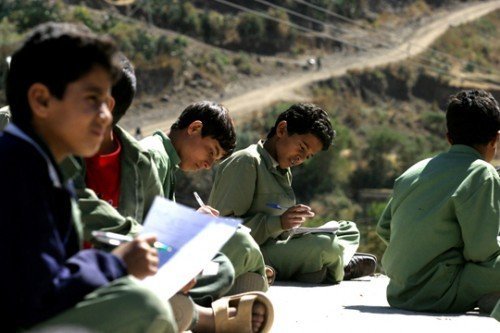
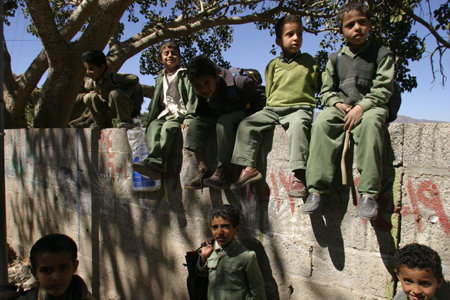
A new US-funded project aims to raise awareness of, and significantly reduce, child labour in four of Yemen’s 21 governorates.
Launched on 21 December, the three-year programme is funded by the US Department of Labor at a cost of US$3 million and will be implemented in the governorates of Aden, Hudeidah, Taiz and Hajjah. Thousands of children could benefit.
The programme, known as Alternatives to Combat Child Labour through Education and Sustainable Services (ACCESS-Plus), is to be implemented by the Cooperative Housing Foundation (CHF) International and the Charitable Society for Social Welfare (CSSW), a local NGO.
"Hudeidah, Aden and Taiz have the highest incidences of child labour in Yemen. Hajjah was selected not because of child labour but because of child trafficking," Kunera Moore, the ACCESS-Plus programme director, told IRIN.
She said the programme would take children out of the worst forms of child labour, and on an individual basis determine whether they could be re-enrolled, go to school for the first time, or access vocational training and or literacy courses.
Over 4,000 children could benefit
She said the programme aimed to reduce the number of child labourers by 4,100, and work with another 3,000 at risk of entering the worst forms of child labour.
According to her, the worst forms of child labour are the trafficking of children into Saudi Arabia, the exploitation of children in slavery-like situations in the fishing and mining industries, and their involvement in illicit activities such as `qat’ [mildly narcotic leaf] smuggling.
"There is child soldiering [in Saada Governorate]. Children are sometimes given as loan-payback guarantees [debt bondage], and there is also child prostitution, especially in Aden," she said.
"Then you have work which… is likely to harm the health or safety of most children: For example, in agriculture, children without the necessary protection are working with pesticides dangerous to their eyes and skin."
Abdullah, 17, has cancer as a result of using pesticides on his father's `qat’ farm in al-Baida Governorate. He said he was spraying `qat’ trees with dangerous kinds of pesticides without knowing they would harm his health. "I was spraying `qat’ trees with pesticides and at the same time chewed the `qat’ leaves," he said.
Raising awareness
According to ACCESS-Plus officials, the programme will attempt to combat child labour through raising awareness at local, governorate and national levels, with the help of religious leaders, community leaders, local councils, and in cooperation with the Ministry of Labour and Social Affairs, the Supreme Council for Motherhood and Childhood, and the International Labour Organization (ILO).
It will also campaign for the implementation of national policies aimed at combating child labour and trafficking. CHF will conduct research in targeted areas.
ACCESS-Plus was built on a previous programme known as ACCESS-MENA (Middle East and North Africa), implemented by CHF and CSSW in 2004-08 in the governorates of Hajjah, Ibb and Abyan.
"ACCESS-MENA was successful as it had planned to reach 3,000 children but reached 7,700 children, more than double the targeted number," said Kunera Moore of CHF, adding that the programme also benefited many others indirectly by improving the school environment and raising awareness of child labour.
How many children?
There is no precise data on how many working children there are in Yemen, but a government survey in 2000 found there were 421,000 child labourers nationwide, according to Muna Salim, head of the Combating Child Labour Unit at the Ministry of Social Affairs and Labour.
"But the real number is much more than that. At present, the number of child labourers is increasing rapidly due to high food prices and deteriorated economic conditions," she told IRIN.
According to the 2000 survey, 52 percent of the child labourers were girls and 48 percent boys aged 10-14, and they worked 17 hours non-stop, Muna said.
"Parliament has yet to approve the 2002 law prohibiting the worst forms of child labour," she added.
Project reports on GlobalGiving are posted directly to globalgiving.org by Project Leaders as they are completed, generally every 3-4 months. To protect the integrity of these documents, GlobalGiving does not alter them; therefore you may find some language or formatting issues.
If you donate to this project or have donated to this project, you can receive an email when this project posts a report. You can also subscribe for reports without donating.