By St. Jude | St. Jude
Gene variations offer clues to cancer risk
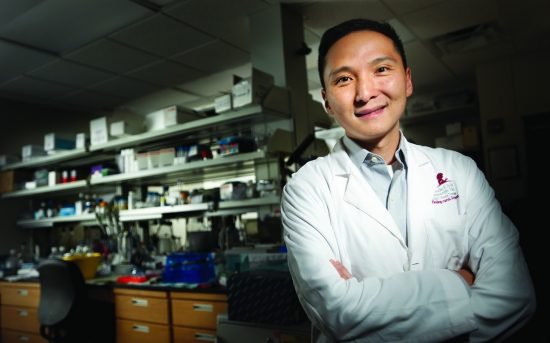
Jun J. Yang, PhD
A small change in a single gene suggests why childhood acute lymphoblastic leukemia (ALL) has turned up in two generations of one family. Research led by St. Jude investigators identified the change and found other young ALL patients had variations in the same gene.
The ETV6 gene plays an important role in the blood system. St. Jude researchers discovered that one copy of the gene is altered in a family in which the mother and two of three children are survivors of childhood ALL.
All three childhood cancer survivors carry the alteration, which is predicted to cause the gene to malfunction. The daughter who is cancer free has the same alteration. The father does not have cancer and does not carry the alteration.
When researchers checked an additional 4,405 children with ALL they found almost 1 percent had changes in the same gene. Research is underway to understand the magnitude of the risk associated with ETV6 variations and develop recommendations for monitoring affected children and families. The family in this study has received counseling and follow-up care through the St. Jude Hereditary Cancer Predisposition Clinic.
“The results also suggest that inherited susceptibility to pediatric ALL may be more common than currently believed,” said Jun J. Yang, PhD, of St. Jude Pharmaceutical Sciences. A report on this study appeared in the journal Lancet Oncology.
Links:
Project reports on GlobalGiving are posted directly to globalgiving.org by Project Leaders as they are completed, generally every 3-4 months. To protect the integrity of these documents, GlobalGiving does not alter them; therefore you may find some language or formatting issues.
If you donate to this project or have donated to this project, you can receive an email when this project posts a report. You can also subscribe for reports without donating.