Project Report
| May 8, 2018
May 2018 Helen Bamber Foundation Report
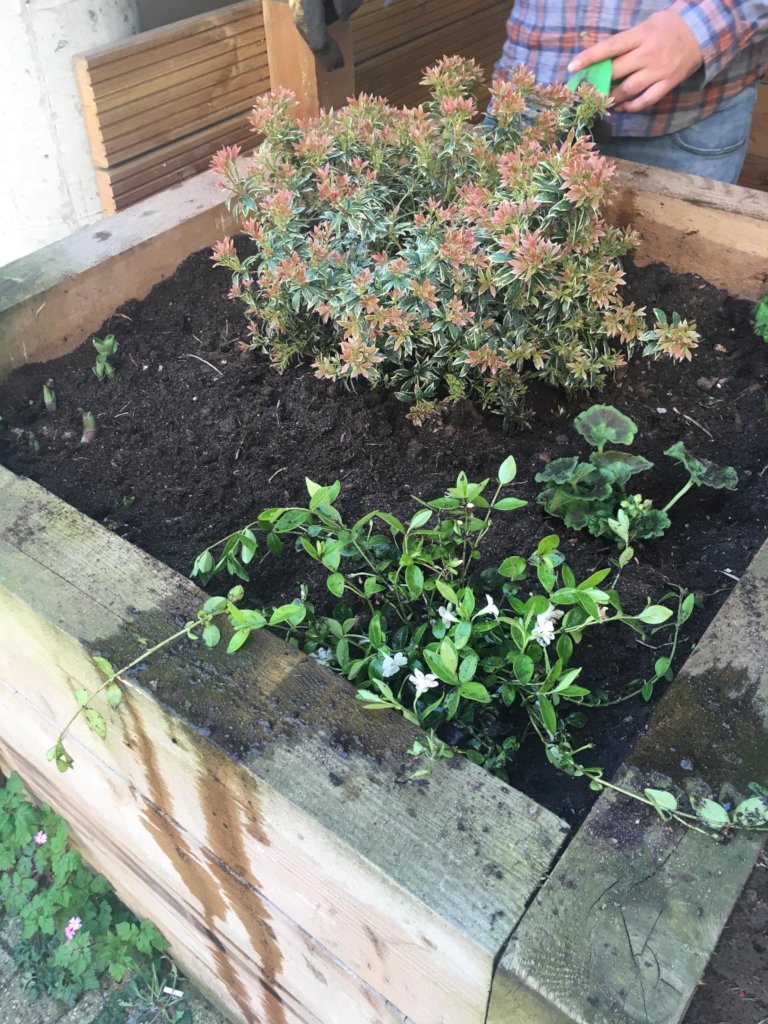
![Clients planting the office garden]()
Clients planting the office garden
Hello Friends,
We hope you all had a wonderful weekend. We almost half way through 2018 and so excited to share what we have been up to with you. We would also like to think you for your support and allowing us to provide recovery support to survivors of human cruelty. Thank you!
In this report we would like to focus on the work of our Therapy Department. Over the last 12 months, our therapy team has supported 100 women and 99 men from 44 countries, including many survivors from Cameroon, Albania, Iran, Pakistan, China and Somalia. A team of 28 therapists (including 13 volunteers and 8 trainees) delivered 1,646 individual therapy sessions, including:
- 501 Narrative Exposure Therapy (NET) sessions – a specialist trauma-focussed therapy for survivors of multiple and complex trauma. NET involves emotional exposure to the memories of traumatic events and the reorganisation of these memories into a coherent chronological narrative. The treatment helps survivors understand and overcome their experience and symptoms.
- 339 Trauma-informed Cognitive Behavioural Therapy (CBT) sessions – a treatment that works sensitively to survivor’s traumatic experience to examine how beliefs and thoughts are linked to behaviour and feelings. This type of therapy helps clients develop skills to change their behaviour and style of thinking to better cope with stressful situations.
- 175 Integrative Psychotherapy Sessions - a combined approach for survivors who have successfully completed trauma-focussed therapy but who continue to suffer challenges relating to self-worth and confidence. Integrative psychotherapy brings together different treatments including: humanistic therapies, psychodynamic therapies, cognitive and behavioural therapies, aiming to ensure that all levels of a client’s being and functioning (mental, physical and emotional health) are maximised so that survivors can move forward to an independent and fulfilling life.
- 21 Risk sessions – where clients are supported through an acute period of risk relating to self-harm or suicide.
- 699 Counselling / Casework sessions – where clients are supported through challenging periods relating to their housing, welfare and / or legal case with combined therapeutic and practical support, often delivered by volunteer Assistant Psychologists.
- 283 Assessment & Evaluations – a bespoke therapy appointment to assess a client’s psychological needs and risks. Assessments and evaluations are conducted on an on-going basis to ensure clients are receiving support that is most effective for their complex needs.
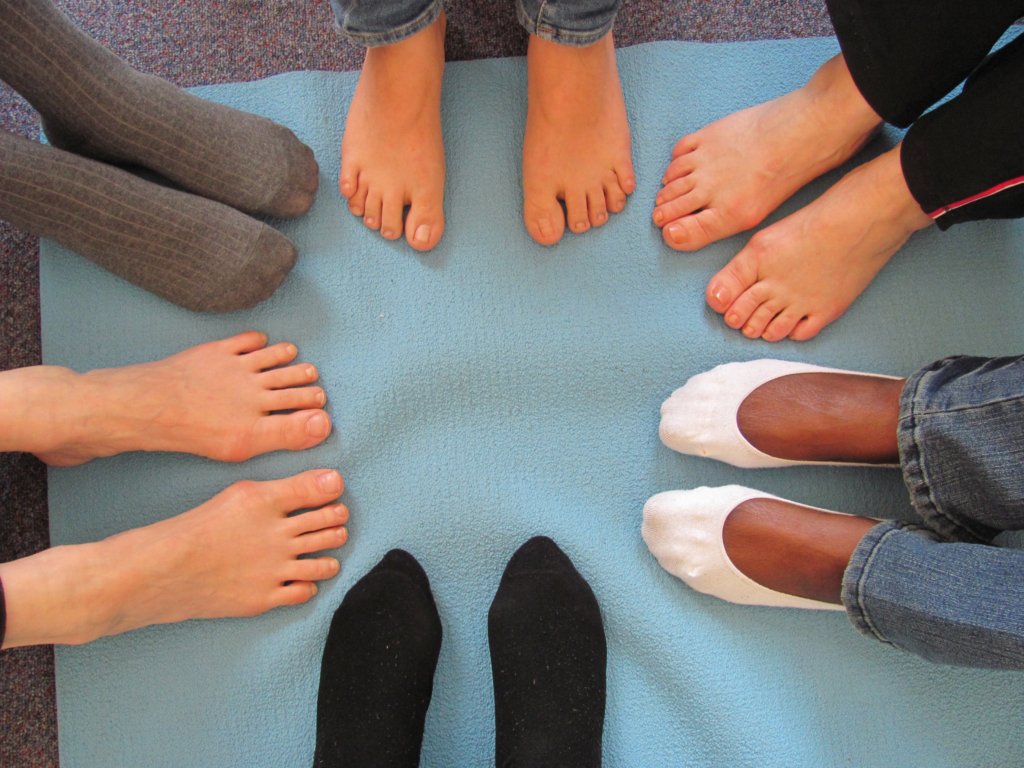
- 85 Group therapy sessions, including 48 therapy community groups, 24 women’s group sessions and 13 Compassionate Mind Therapy sessions.
Not only does our therapy team support HBF clients, but they also disseminate best practice to others working with survivors of torture and human cruelty to help survivors around the world to receive the recovery support needed to rebuild their lives. Our dissemination activities include:
Teaching
- Teaching day for clinical psychology students at the University of Hertfordshire on Post-Traumatic Stress Disorder assessment and treatment.
- Teaching day for clinical psychology students at the University of Lancaster on working with survivors of Female Genital Mutilation and trafficking, and preparing Medico-Legal Reports.
International
- Sitting as an Expert Panel Member at the United Nations Voluntary Trust Fund on Contemporary Forms of Slavery Conference to mark the International Day for the Abolition of Slavery.
- Delivering training in Narrative Exposure Therapy to local psychologists/counsellors in the Democratic Republic of Congo.
- Acting as a member of the Advisory committee revising the Office for Democratic Institutions and Human Rights (ODIHR) guidance on the National Referral Mechanism across the 62 countries. HBF has been commissioned to write an appendix to the new guidance on psychological approaches in working with victims of human trafficking and slavery.
Policy
- In collaboration with other human rights organisations, on 7th February 2018, HBF hosted a parliamentary briefing with Lord Alfred Dubs. At the briefing, MPs, Lords and professionals from the sector discussed the situation of vulnerable people (including survivors of torture) who suffer harm in detention, and the urgent legal and policy actions needed to reform immigration detention in the UK. The event was attended by 90 individuals.
- On 9th of February, HBF submitted case evidence to the National Health Service highlighting how the ‘Charges to Overseas Visitors’ regulations are impacting negatively on the vulnerable individuals we work with by deterring and/or preventing them from accessing services that they need and are (more often than not) fully entitled to.
- HBF’s Head of Counter-Trafficking alongside our Head of Therapies wrote a chapter on the need for Special Measures in court for victims. This is for a guidebook for lawyers which is being published by Bloomsbury. It explains in accessible format for lawyers, the psychological impact of trafficking and best practice methods of working, drawing upon both the OSCE report and Trafficking Survivor Care Standards as well as other HBF reports and papers.
The impact
We measure the impact of our psychological therapies using the standardised clinical CORE Outcome Measure, which is designed to identify changes to client’s levels of psychological distress. The CORE is a self-reported questionnaire which is administered at regular intervals; clients complete the questionnaire and their answers are collated to identify their level of psychological distress, on a five point scale from Severely Distressed to Healthy. Core outcome data collected throughout the grant period indicated that following:
- 62% of clients achieve a reduction in the levels of psychological distress
- 31% of clients achieve a significant reduction (moving 3 or more points ‘down’ the scale)
- 15% of clients achieve a ‘Healthy’ rating
This is an incredibly significant rate of success and impact for a population with such severe trauma symptoms.
Thank you once again for your support and we look forward to sharing more of our work with you in our next report.
Best regards,
Helen Bamber Foundation
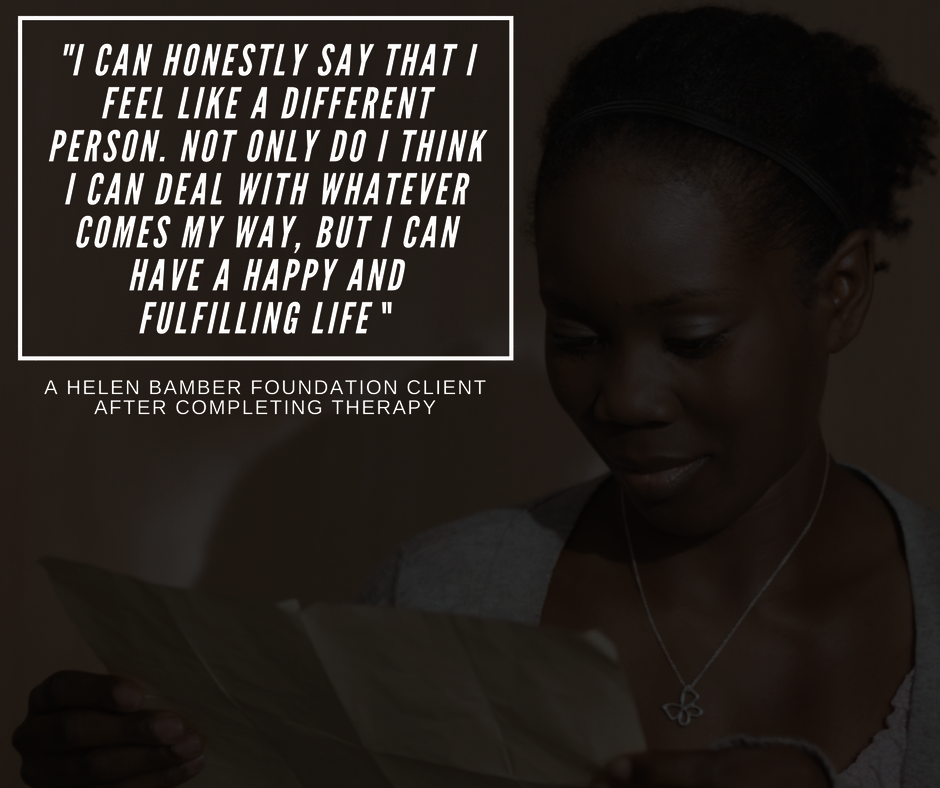
![Client quote after completing therapy]()
Client quote after completing therapy
![Share on Twitter]()
![Share on Facebook]()