By Jane Rumball | Right To Play Athlete Ambassador
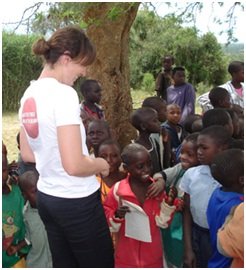
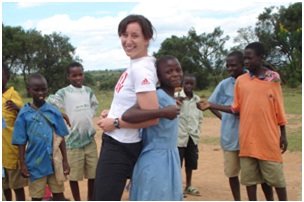
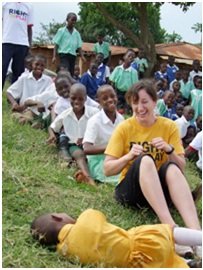
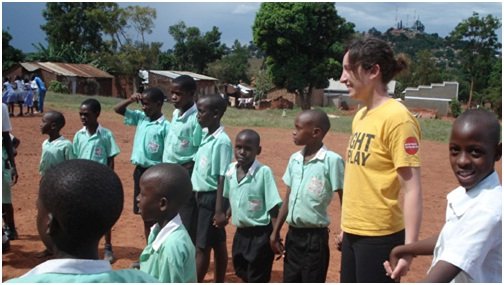
Jane Rumball, Olympian and Athlete Ambassador, spends time sharing sport and play with children in Uganda (2009 visit)
By Jane Rumball, Olympian and Athlete Ambassador
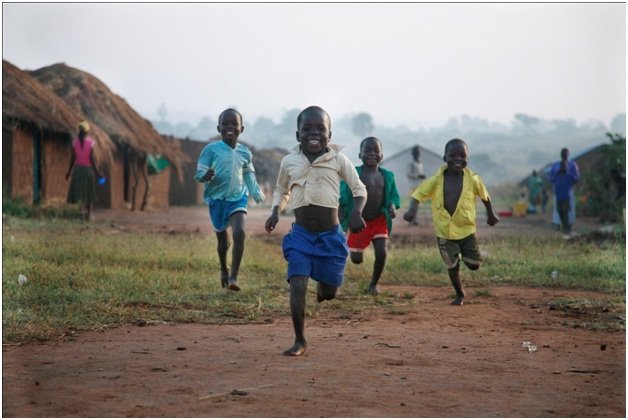
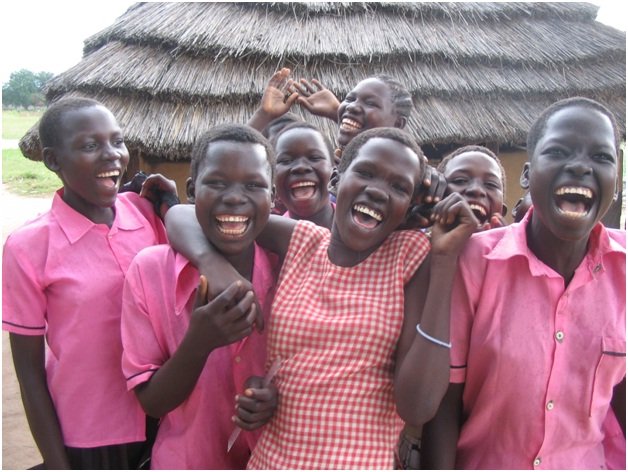
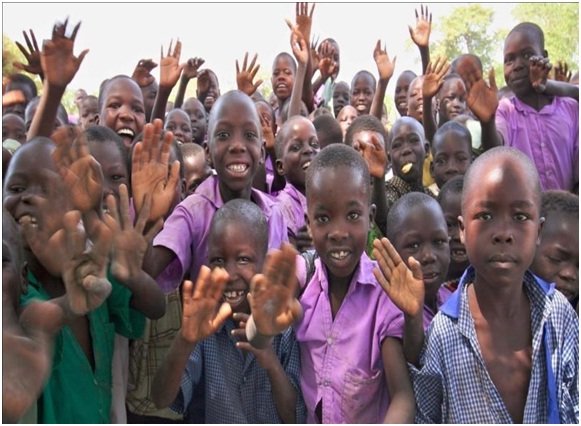
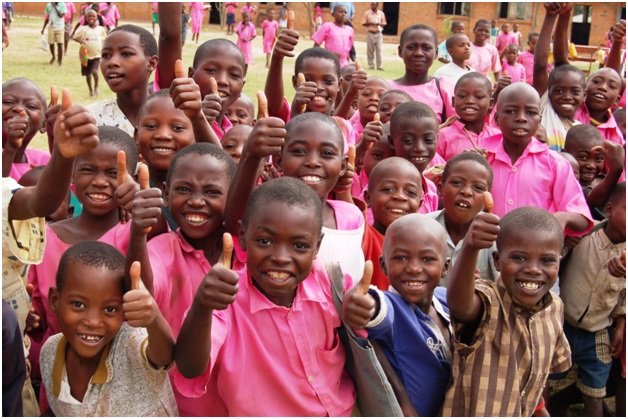
The scene was one I will never forget: crowds of joyful, boisterous African children laughing and clapping, giggling at the awkward muzungu Olympic athlete who couldn't match their rhythm to save her life!
It all happened under the unbelievably blue Ugandan sky, with rich red earth and lush greenery surrounding. It was surreal. For a moment, we probably all forgot where we were: Navikale refugee camp, home to almost 50,000 displaced persons who had to flee their countries in order to survive. Although they have experienced immense poverty, rampant diseases, and unspoken stories of conflict, nothing here seemed to faze the children. For a brief moment in time, everyone at the school in Nakivale forgot about conflict, hunger, poverty, and sickness. Instead, we laughed, danced, and got rich African soil all over our faces and bodies.
Right To Play Uganda operates with a single-minded focus: reach the children who need their help the most, and use the value of sport and play as a tool for development. Games have added value: after each game is played, we take time to reflect, connect, and apply the lessons from that particular session. The Right To Play curriculum teaches kids how to say no to peer pressure, to resolve conflict, to set aside gender barriers, and to learn about caring for their own health and that of others. As an Athlete Ambassador, I serve as a role model to athletes and children alike, and tell my story to raise funds for what I deem to be an extremely worthy cause: using the common language of sport to teach children to look after themselves and look after one another.
My trip to Uganda with Right To Play involved visiting different field projects in Kampala and Navikale, and each one had its own special story. There was Naguru on the first day, an outreach from Right To Play that drew children living in poor slum areas of Kampala. To put it into perspective, 30 per cent of the children in the communities we visited are HIV-positive. 40 per cent of the volunteer project leaders are also HIV positive. These are groups of children that include former child soldiers, where at least 1 out of every 5 children are orphans. You would never believe these statistics by just seeing the kids play, though. All barriers were removed, and they were doing what they did best: they were being kids.
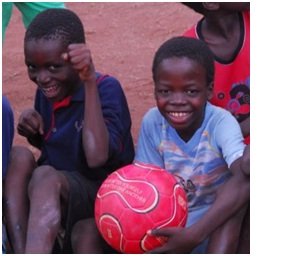
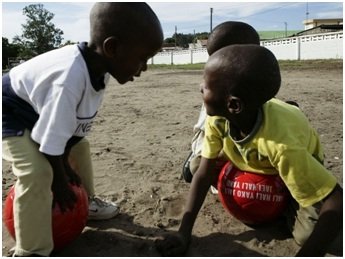
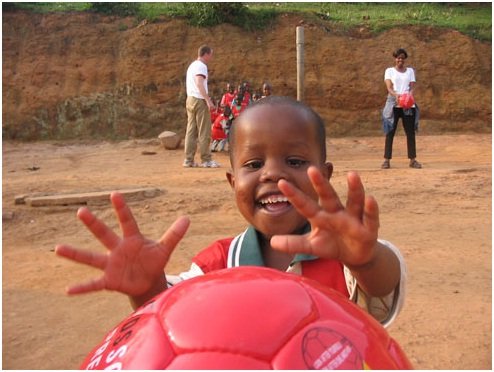
The games were phenomenal - games like "mosquito tag" where once you are tagged, you remain frozen until the doctor comes by with medicine (a red soccer ball), rolls it under your legs, and heals you to run again. Or Boda Boda (the names of the motorized bikes), where one person gets blindfolded and the other steers them by tapping them on various spots on their bodies. Afterwards we discuss how it feels to be blind or lost, and what we can do to help those people around us who may feel the same way. There was a game with someone labeled as "White Blood Cells" having to fight off tuberculosis, malaria, and other common illnesses here. The white blood cell finally seemed to succumb to another child labeled "HIV/AIDS". But who came to the rescue? The children, in unison, announced: "ARVs!" I was and still am in awe that these eight-year-old children know about anti-retroviral medications.
Before we got to Uganda, it was sometimes hard to imagine what I could offer. I have lived my life in relative luxury and comfort, participating in a sport that is only accessible to the wealthy. The Ugandan Right To Play staff explained the value of the role, though, and they made it crystal clear. The children look forward to the Athlete Ambassadors visits with huge expectation. A muzungu, a white person, and one who went to the Olympics, actually cares enough to visit them. They know that our presence means that they are not forgotten, that we are trying to do our part to help them.
I tried to take on this challenge and participate with my whole being. This meant fully participating in the games, taking time to talk to as many children as possible, and saying a few words to the children. I tried my best to teach them how to row in an eight (on dry land, with hand motions only!), although the eight turned into twelve and fifteen as more volunteers came forward! One of the times our coxswain (the smallest volunteer in the group) fell over laughing at the absurdity of it all. It made me wonder if our own coxswain (Olympic gold medalist Lesley Thompson-Willie) actually felt that way sometimes too!
At a particularly difficult stop along the way in Nakivale, I found a little friend who I will never forget. She was a beautiful but severely malnourished girl who held tightly onto my hand throughout all the games. She had severely infected bumps on the side of her head, but still tried to dress up with earrings that looked like they were fashioned out of paper clips. Once she realized that she could hold my hand, she started slowly to rub her face on my arm. For a brief moment I wanted to pull away for fear of somehow getting that infection transmitted to my own skin. But then I realized that most people probably do draw back and make her feel bad. I wanted to be different and let her just stay put beside me for the rest of the session. It ended up being a very special moment for both of us, I think. She started to get into the games and laughed and danced like the other children around her.
Right To Play's tagline is "when children play, the world wins". Most of us would probably agree with that intuitively, but it came to life for me in the Ugandan refugee camp called Nakivale.
Links:
Project reports on GlobalGiving are posted directly to globalgiving.org by Project Leaders as they are completed, generally every 3-4 months. To protect the integrity of these documents, GlobalGiving does not alter them; therefore you may find some language or formatting issues.
If you donate to this project or have donated to this project, you can receive an email when this project posts a report. You can also subscribe for reports without donating.