Project Report
| Dec 3, 2018
Why music is important for early childhood learning
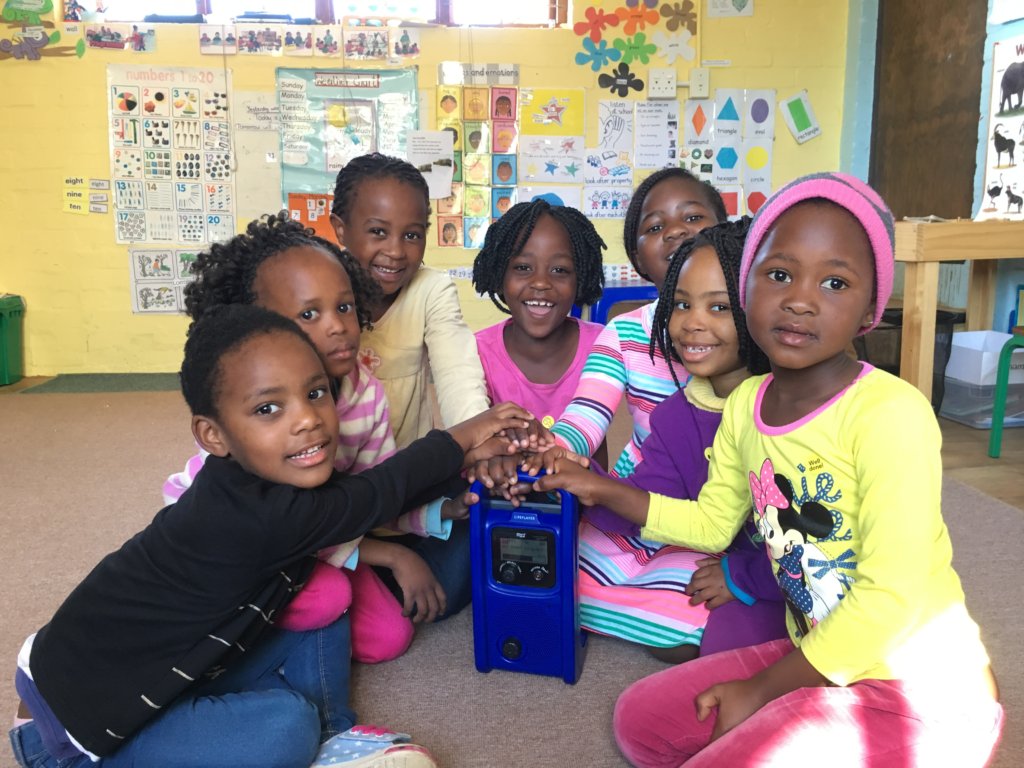
![Cape Town class listening to songs on Lifeplayer]()
Cape Town class listening to songs on Lifeplayer
One of the reasons we love the SoundStart project is because of the music. The songs, which are pre-loaded onto our Lifeplayer MP3, are created by Wriggle and Rhyme and resonate with children irrespective of if they speak English or not. Wriggle and Rhyme is based near us in Cape Town.
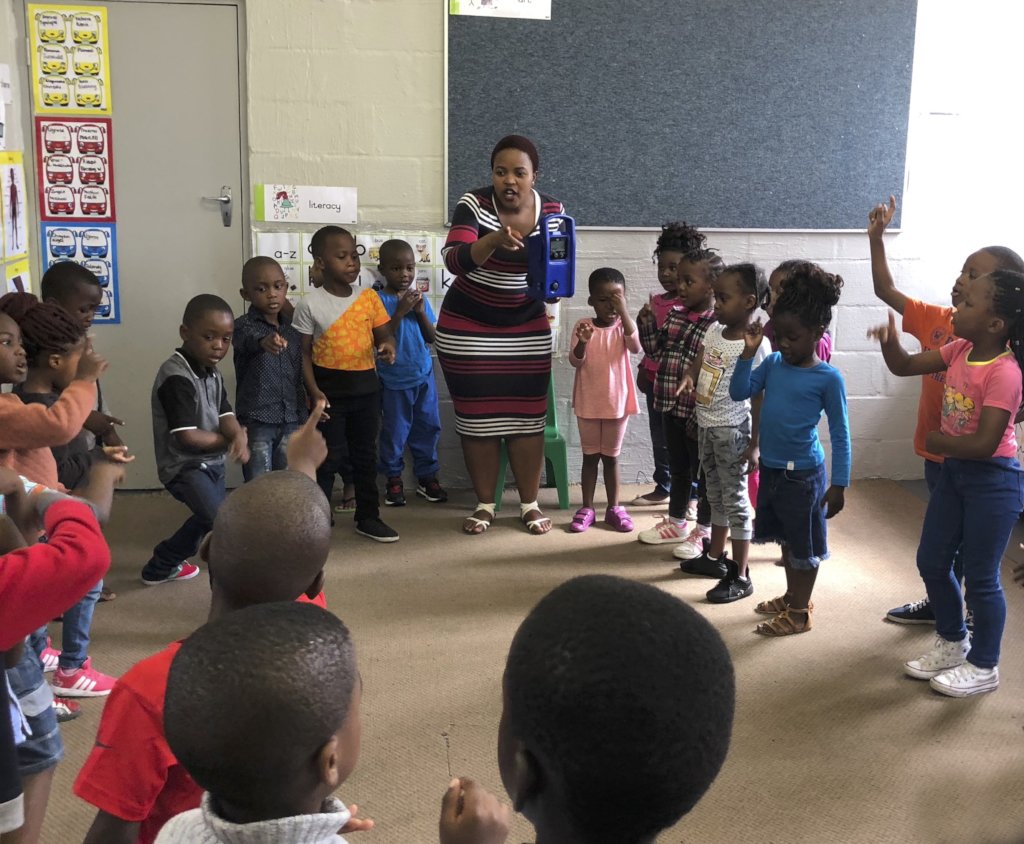
We’ve seen for ourselves what the experts have told us - music is a phenomenal teaching tool. Whether in rural village Zambia, a prison day care center in Kenya, or in a refugee camp pre-school, the Wriggle and Rhyme songs get kids moving and put a smile on their face.
And, with progress in the field of neuroscience over the past decade, there is now much more data to back up what we’ve witnessed. Functional MRI scans allow neuroscientists to see what’s happening in the brain, when engaged in various activities. What being discovered is that music is the one activity that lights all areas of the brain simultaneously. It gives the brain the equivalent of a full body workout!
This is especially exciting as it confirms what teachers have known all along – structured and intentional musical activities are powerful tools for learning and development. Here are many ways that music exercises the brain:
1. Memory - music has a way of embedding information into our memory in a powerful way – not just the information, but often the circumstances as well.
For example, a child may struggle to remember a poem, but as soon as it’s put to music, it can be easily recalled. This means that music can be used to embed learning into the brain in a positive and safe way, which a child can then access at a later stage.
2. Language and listening – music connects the language center of the brain. It’s a powerful tool to increase vocabulary, improve auditory processing, improve speech and even feed into early literacy skills, needed for learning to read at a later stage.
3. Emotions - music has the ability to make us feel positively and even happy because it connects us with our emotions. Music can be used, not only to help children identify and express their emotions, but to give them tools to regulate their responses.
4. Movement - music creates movement. Intentional movement to music promotes fine and gross motor skills as well as hand-eye co-ordination. All of this stimulates oxygen flow to the brain, setting up the brain to concentrate and learn.
5. Social skills - team based activities promote social skills such as working together, sharing, etc. However, music is unique because it can incorporate emotional awareness into the social aspects – especially sensitivity and consideration to those around us. Just like a group of instruments is full of unique and beautiful sounds, they need to work together with sensitivity for the greater good.
Music-based learning resources give children the opportunity for a culturally rich learning experience, tapping into many areas of the brain and stimulating development, as a result. For GROW with Educare pre-schools and day care centers where our Lifeplayer MP3 units are placed, music is an ideal medium. Many learners are the children of immigrants and do not share a common home language.
SoundStart is undergoing its first formal evaluation now and we’ll be able to report that in our next update. Stay tuned and thank you for your continued support.
![Share on Twitter]()
![Share on Facebook]()