By Khanyisa Hlohla | Project Manager
Mankosi Skills Development Center report
Introduction
SDC deals with youth unemployment and poverty. It is empowering youth to take care of themselves. It will offer individual programs that provide them with insights into the possibilities of job opportunities and a sustainable income. This way the Mankosi youth will provide for themselves and gain confidence in the community.
This document is intended to give an update on what has been done so far. My name is Khanyisa, one of the managers of SDC.
Building
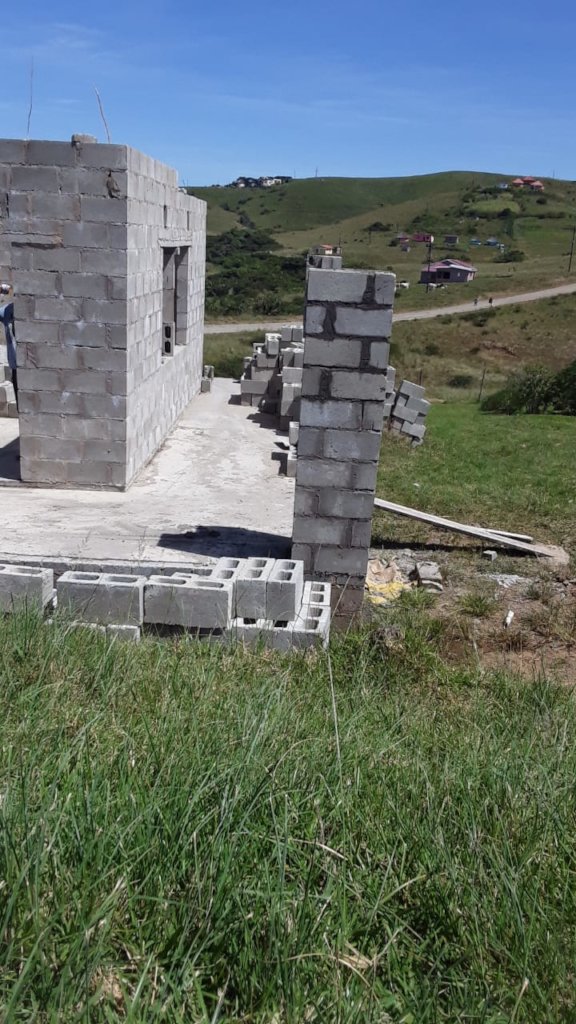
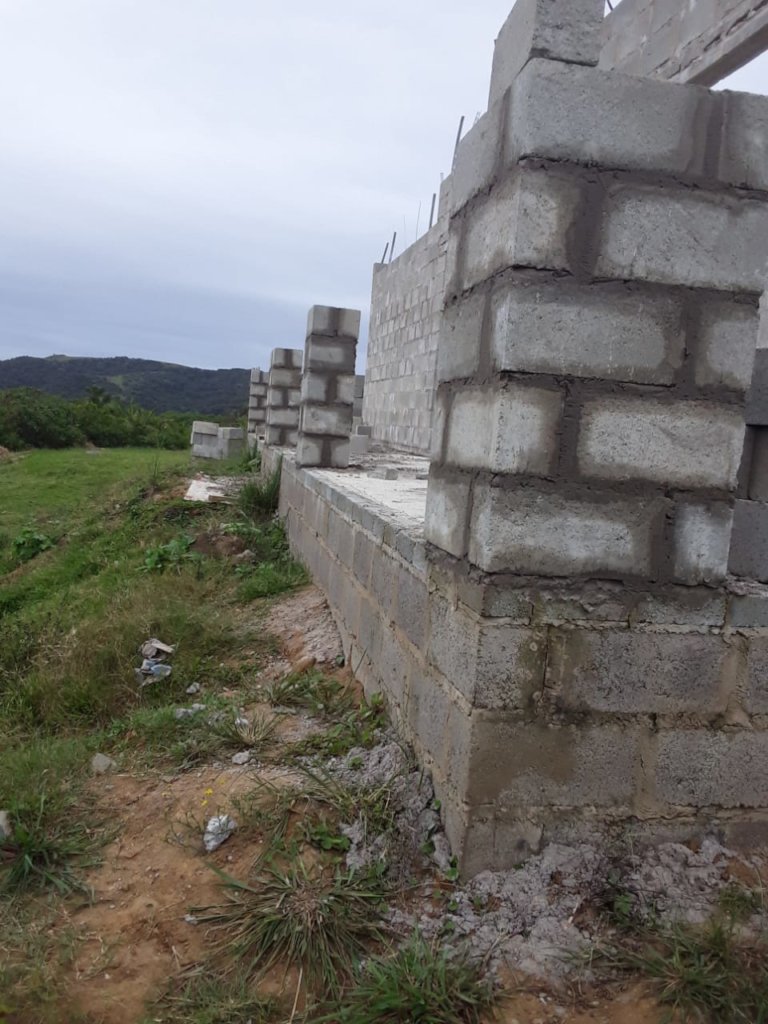
We are very excited to announce that we were able to start building our Skills Development Center. The center will accommodate the office for the managers, a small shop to sell our products, a classroom for the Adult Education and Training program, and the sewing workshop.
The design of the building was drawn by 3 architects from the Netherlands, who volunteered their time for this project. The sun and wind conditions of the location were considered to make this building a sustainable entity. Daniel, project manager of the SDC, is the building manager who is in charge of receiving goods and communications between the builder and the architects. Sandiswa, an engineer from our community was laid off because of Covid and she volunteered her time to help us with quantity surveying. David our head builder is very skillful and did the casting of the foundations and building the walls. We employed another 4 laborers to dig the foundation trenches, mix the cement, and bring sand and water. The building process took 8 weeks, over June and July 2020.
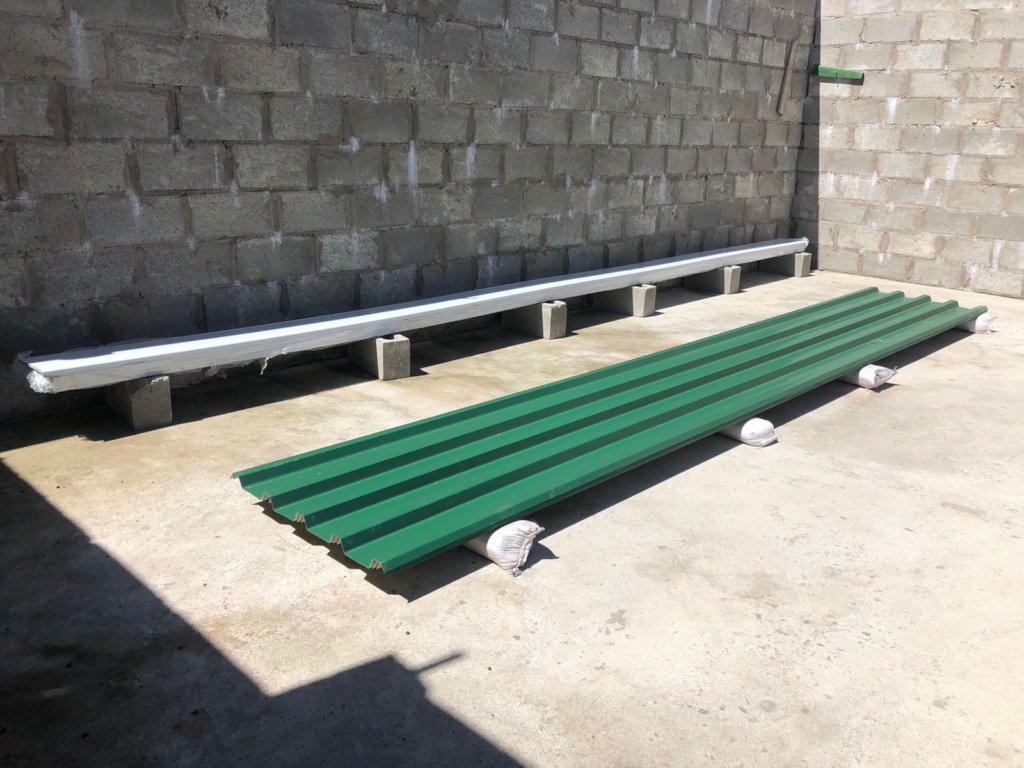
Between August and January, we engaged in more fundraising activities and we resume building the roof on the 8th of March 2021. We build the pillars on the verenda of the building and started securing the rafters onto the building. By next week the roof sheeting will go on.
The sewing project
Nosphelele and Nolethu are well-trained seamstresses of the Skills Development Center. They already learned so many techniques including how to work with an electric sewing machine and overlocker. The sewing ladies have made 20 graduation gowns and they are busy making graduation hats which can be sold to the nearby Preschools. The sewing workshop is a powerful learning space to bring experts, teachers, and learners together and create a sustainable income for the youth of Mankosi.
Siwe, a young guy from the community received sewing training and was a potential candidate for a Microfinace loan. But unfortunately he started drinking alcohol again and is not reliable enough anymore.
Adult Education Training
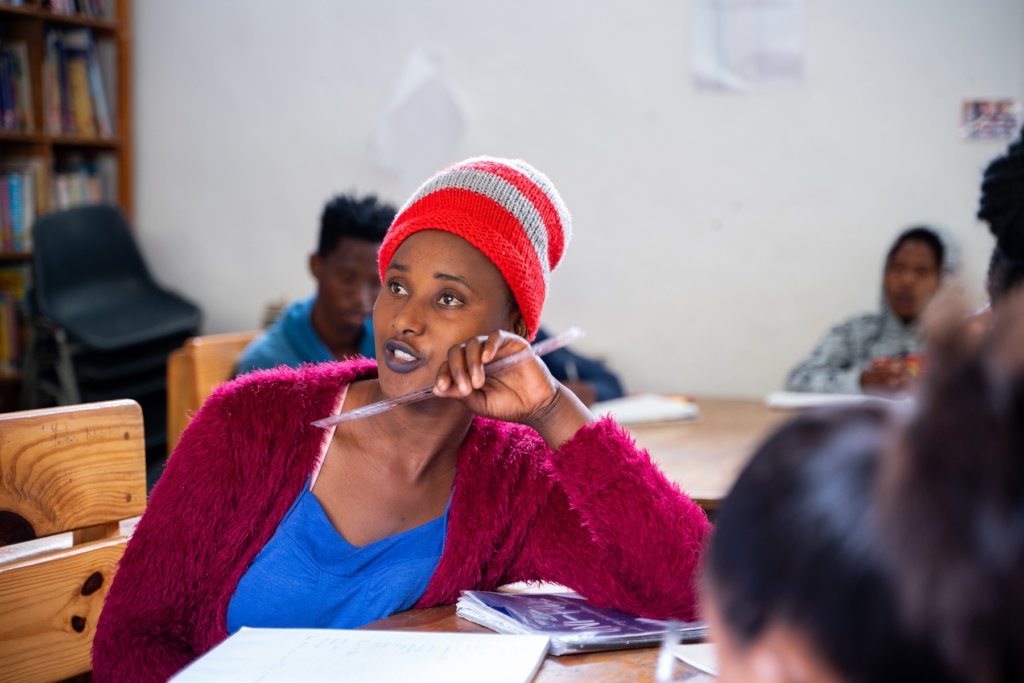
Since January 2020 we partnered with the Department of High Education to host Adult Education Training, AET. We have a great group of 17 young adults studying NQF level 4 at our center. This level will equip them with a Umalusi Certificate which can open doors to TVET colleges and tertiary education.
After Covid 19 lockdown eased, we opened our training center in August again. TransCape made sure that we had all the protrective equipment to prevent COVID-19 from spreading. We supplied all our students with masks aswell and practised social distancing.
Our students wrote their trial exams in September 2020 to prepare for their finals. They did very well in their trials. On the 10th of November, they started their final exams. 17 students needed to be transported to the examination center which is 15 km away. TransCape organized special transport for 8 days. All students completed writing on the 27th of November 2020. We reveived their results on the 8th of March. Only 3 of our students passed. That shows us that much more adult training needs to happen. The students want to repeat the year and want to try again this year.
Khanyisa advertided the program and we have 15 new students who signed up for 2021.
Driver Licence program
Daniel Mvumbi is our manager for the Driver licence school and Microfinance program. We are happy to report that he passed his practical driver licence test in September 2020. He is the proud owner of a licence now. We observed that all community members with a driver licence have a job. We identified this skill to be of paramount importance to become employable. Next year we will start courses to enable applicants to become capable drivers of cars and even trucks. We need to fundraise more money to be able to buy are car for this purpose.
Agroecology
The Mankosi Agroecology Program started in 2018 after a survey in 2017 in the veggie-gardens of the Mankosi inhabitants. This program focused on public awareness on agroecology principles to lead the community into cultivating in an intensified but sustainable and healthy way under the scope of tackling food insecurity and underdevelopment.
It was designed to adjust agroecological principles to the local ecological, economical, and sociological context. Individual assistance to farmers and families in their veggie-gardens was implemented. They would experiment with those principles for example integrated pest-management, crop rotation, green cover, mulch, and other moisture saving processes, seeds production and selection.
This program has a long-term vision and forms to be the base for a broader resilience program that would tackle the food system of the community by ensuring a sustainable agroecosystem alined with the socio-economic capacities.
The SDC is facing some challenges in developing the agroecology project. Unfortunately, we needed to let one of our team members go. Daniel took over the agroecology project.
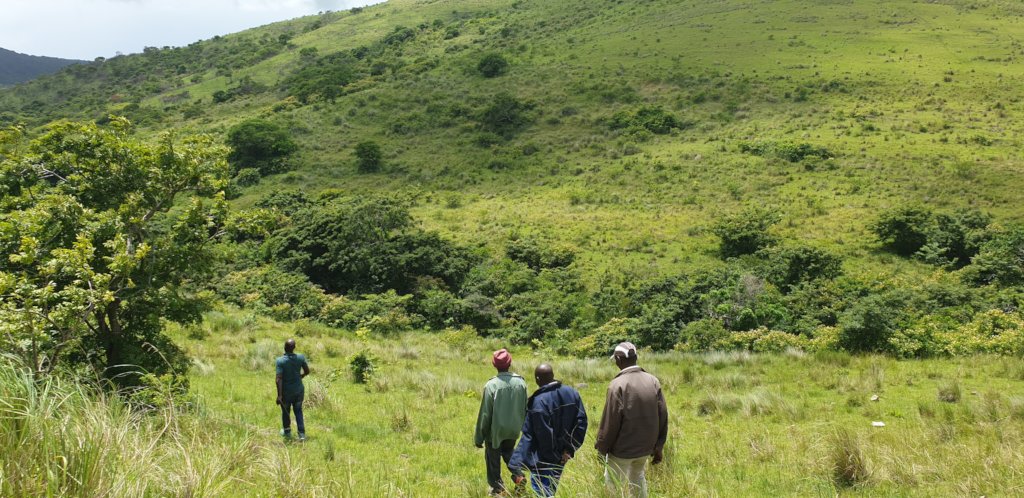
The inland village of Qolweni approached the SDC for help, to establish a commercial vedgetable production site. The area is very hilly and difficult to farm. The community members identified a 1 ha piece of land which is flat and has access to a small fresh water stream as an ideal site. It is communal land and the headman gave green lights to use the land. The Qolweni people are good farmers but the standard of education in the area is very poor. The group of community members who want to farm are mostly over 40 years old.
Qolweni community identified a young lady from their midst,Naledi, to go for training in basic agriculture skills. The training was sponsored by the Department of Agriculture and taught original and fundamental agriculture practises. They also elected a farming committee of 5 people to represent the group of 40 farmers. This committee will be driving the progress of the project and make decisions. At the moment the group is busy looking for someone who can help them with their business plan. Naledi, Daniel and Astrid also went to see another partner organization in our area who runs a successful agriculture project, to get an impression on affordable irrigation systems and nursery management. It was very informative and we received valuable advice and contacts.
As we didn’t manage to obtain funding yet for Agroecology, we decided that we can help the Qolweni people with a Microfinance loan to establish their business. Daniel will facilitate the trainings.
Conclusion
Because the COVID-19 is still present in our country and our building is not finished yet some of our projects are going slowly. Despite everything, I would like to thank our donors for helping us in this hard time with this disease that has caused so much hardship in our country.
Yours faithfully
Khanyisa Hlohla
Project reports on GlobalGiving are posted directly to globalgiving.org by Project Leaders as they are completed, generally every 3-4 months. To protect the integrity of these documents, GlobalGiving does not alter them; therefore you may find some language or formatting issues.
If you donate to this project or have donated to this project, you can receive an email when this project posts a report. You can also subscribe for reports without donating.