By YSK Prerana | Fundraising & Communications Manager
“I like learning from the outreach didi in the centre. I am able to grasp much better and faster when I come to learn at the centre.”
– Umeed Beneficiary when asked about visiting the AAWC centre for our adult literacy program.
Sitting in an ordinary synthetic saree and a bright smile, Sushila* talks about how “interesting and fun” adult literacy classes have been for her. Constantly in awe of our field director- the point of connection between AAWC and our beneficiaries, Sushila* makes it a point to clarify how she enjoys visiting the center over the outreach team visiting her at her home. She points to the change in scenario and the satisfaction of “going to another center to study” as the reasons behind her stance. Sushila* is just one of the many women in prostitution who are benefitting from our adult literacy classes!
Know how your funds have been utilized this quarter:
EDUCATION:
We at AAWC recognize the importance of formal education, and the consequences of being unable to access it. Education is a system that is often affected by- and in return perpetuates, many forms of marginalization. Due to their socio-economic backgrounds and (often) early entry into the flesh trade, most of our Umeed beneficiaries have never had any experience of education.
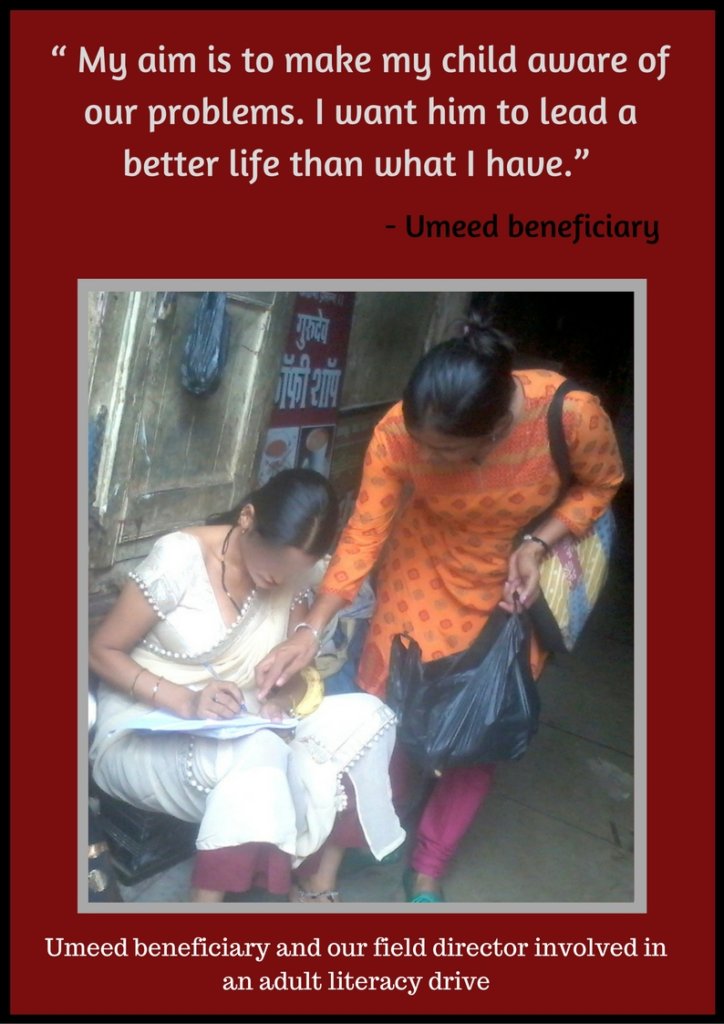
AAWC realizes that providing formal education to women involved in prostitution is not an easy process, and hence have designed a program that works along with the routine of our beneficiaries. Our outreach team conducts regular adult literacy drives- an important parameter of the Human Development Index, and even provides our beneficiaries with notes and assessment sheets at their homes if required.
Adult literacy program
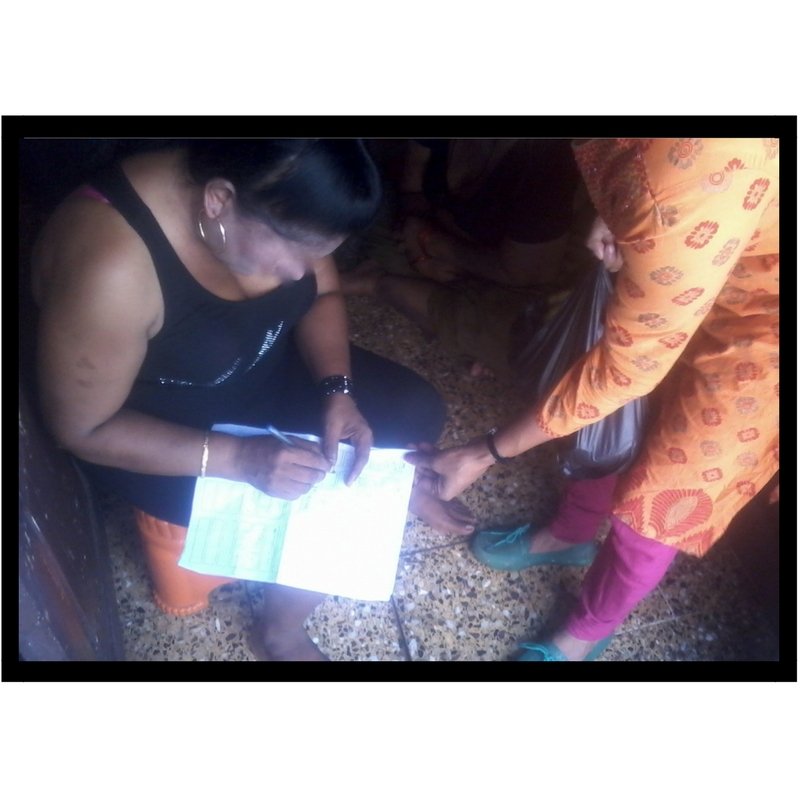
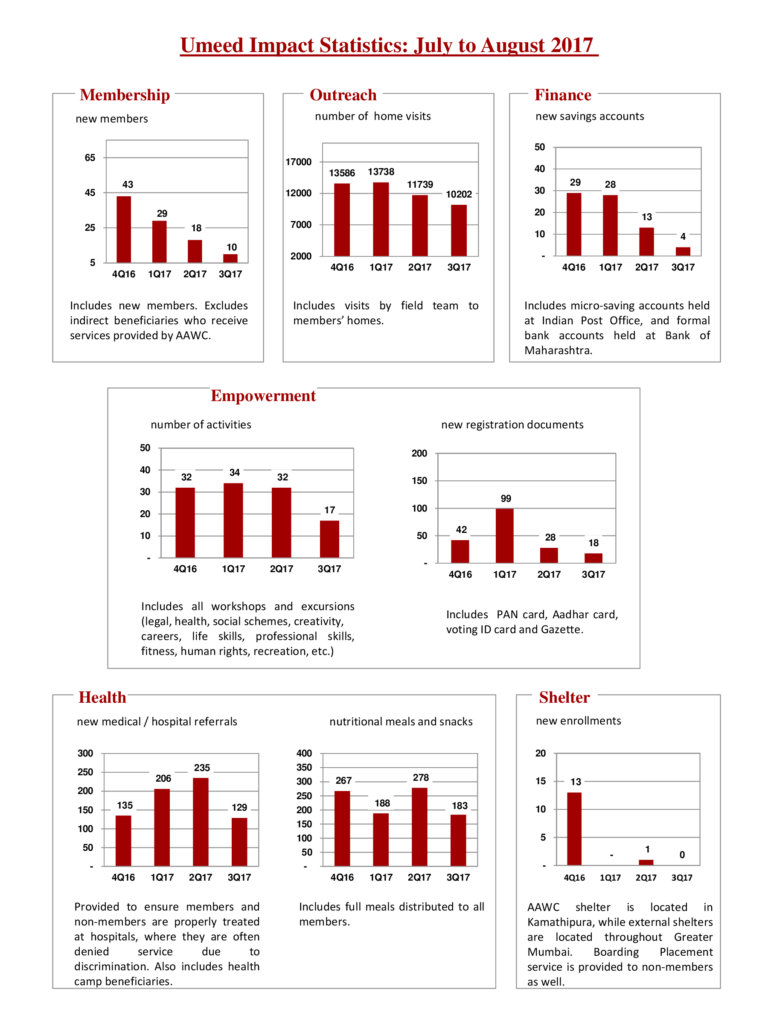
This quarter, adult literacy monitoring was done for 26 of our beneficiaries while a written assessment was undertaken by 15 of them. The assessment received a positive response, with most of our beneficiaries being able to solve English and Math related activities. A lot of our beneficiaries are also developing a sense of reading the clock, and identifying and differentiating between many government documents- skills they didn’t possess before participating in this program.
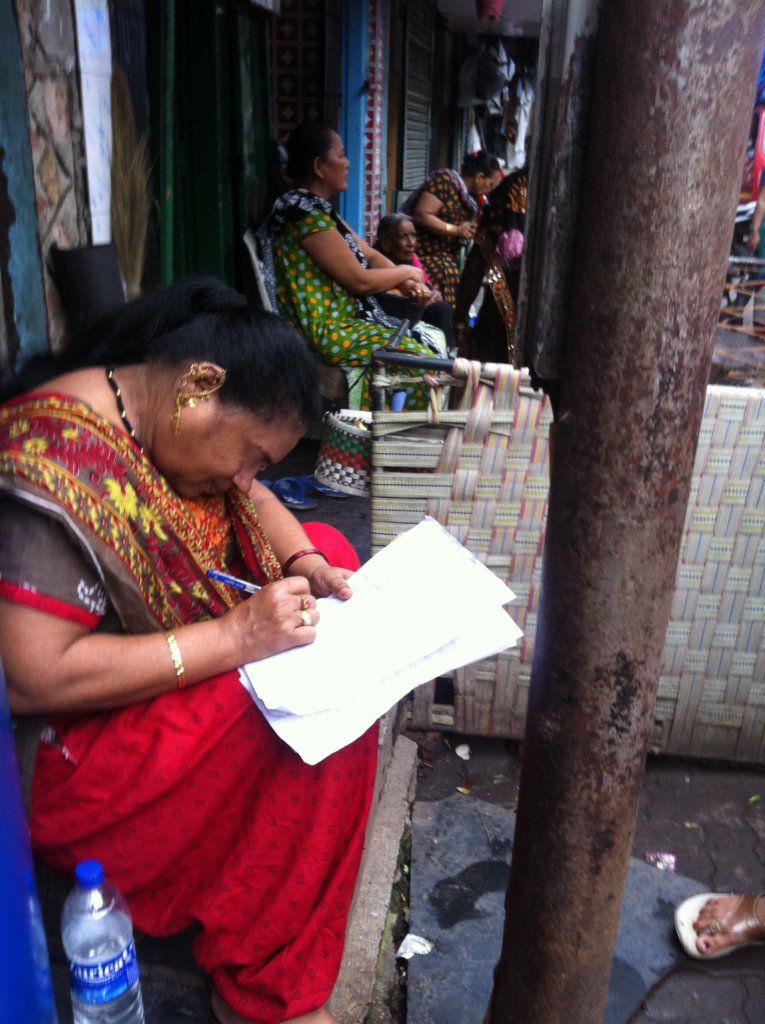
One of the most endearing moments during this process, is when our beneficiaries learn to sign their names in English or Hindi. It is often a milestone for them as signing suggests that they have outgrown the concept of a thumb-print; it also instills a sense of individuality and empowerment in them.
One of the challenges that our outreach workers face is the mood swings of our beneficiaries. Due to the nature of their work, and their lifestyle- a lot of our beneficiaries are often emotionally unstable. This sometimes results in their denial to be involved with our outreach workers during sessions of teaching and assessment. While this is not a regular phenomenon, some beneficiaries are harder to convince and engage with. Our outreach team recognizes that working through such beneficiaries is a long and patient process, making sure that no beneficiary drops out.
In this quarter, the maximum strength of our adult literacy program has been 65 with 5 new members joining in. We have recently distributed more new notebooks to our beneficiaries, which they maintain and work out of regularly. This is an affirmative demonstration of our beneficiaries’ interest in education, which we are very proud of.
EMPOWERMENT:
Apart from formal education, empowerment in terms of understanding bureaucratic activities is important for getting through the daily grind of life. Especially in India, wherein legal and policy-based awareness is not high - we make it a point to promote such education to our beneficiaries.
This quarter, 7 PAN cards were registered and one bank account was opened. Our beneficiaries were proactive throughout this exercise, and even led their own process of opening the bank account. 2 Aadhar cards and 2 voting cards were also registered this quarter, while 2 birth affidavits were applied for. The creation of Aadhar and voting cards is imperative to inculcate a sense of belonging and identity within individuals. Especially since our beneficiaries are often stigmatized and treated as outsiders, this documentation procedure enables them a life of recognition and dignity.
HEALTH:
Health, like education, is a basic necessity and a fundamental right of any Indian citizen- as has also been provided in article 21 of the Indian Constitution. AAWC understands the importance of access to quality health care, and has always been proactive about our beneficiaries accessing only the best and certified healthcare professionals.
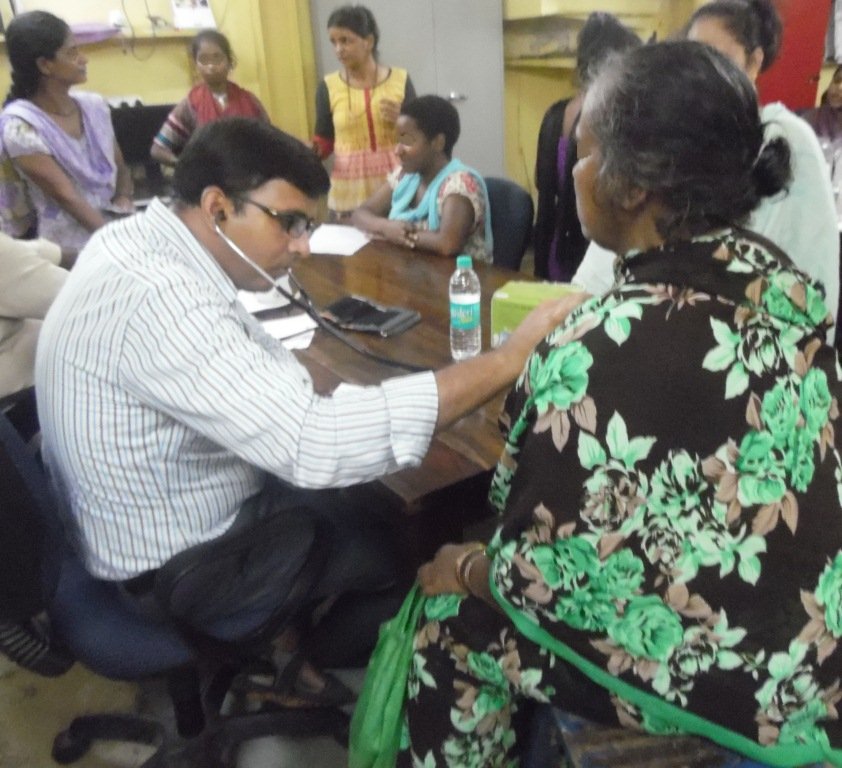
From aiding our Umeed beneficiaries with HIV testing to providing regular health-checkups, we listen to the needs of our beneficiaries and act upon them accordingly. This quarter, about 100 of our beneficiaries received nutritional supplements and approximately 175 medical referrals were made. As in the past, we have continued providing counseling services to all our beneficiaries detected as HIV+.
One of the biggest challenges we face with this part of the Umeed program is the reluctance of brothel owners to house the beneficiaries who are diagnosed with chronic illnesses, worsened by the unavailability of required medicines at Governmental stores.
Nutritional supplements
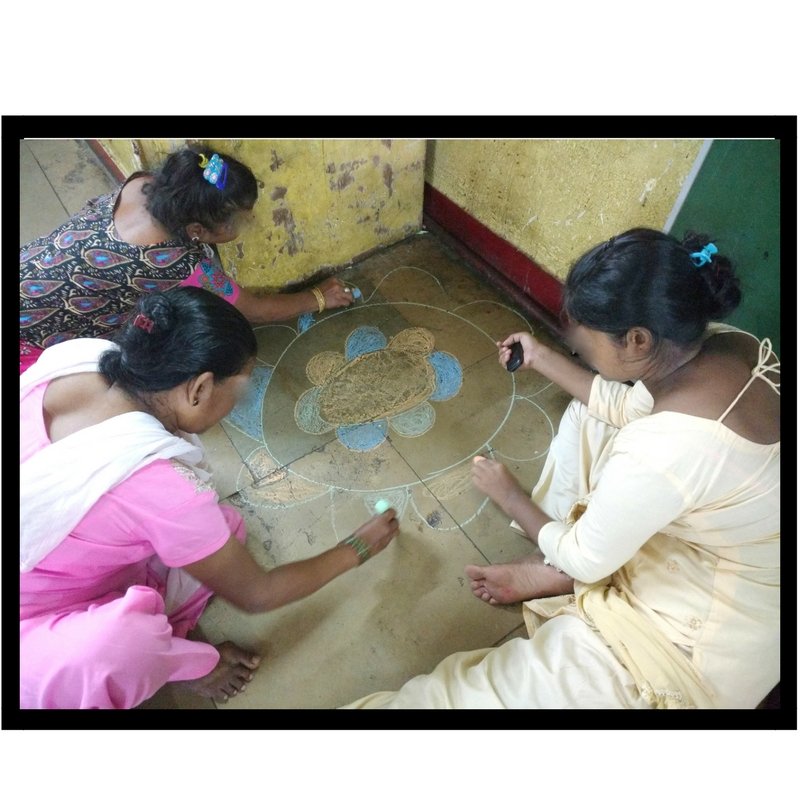
A total of 26 new PLWHA (people living with HIV/AIDS) have been enrolled under our ‘Nutrition Supplement Program’, while around 70 existing ones were supplied with the same. We provide them with moringa (drumsticks)seeds, Soya milk and bananas on a regular basis. Apart from the supplements, our outreach team has also conducted a group program ‘Easy Yoga Steps’ this quarter to introduce alternative health practices to our beneficiaries.
General height/weight check-ups
Weight measurement was done for about 75 PLWHA (people living with HIV/AIDS). At this check-up, it was diagnosed that our beneficiaries’s health condition has been better this quarter- with an increased CD4 count, and a decreased prevalence of skin infections.
As a preventive measure, our program team ensures that the beneficiaries announce their travel plans to the outreach workers well in advance so that their height/weight could be measured before leaving. Though these are very basic checkups- it is important they they are held frequently, especially for HIV+ beneficiaries. One of our MDR positive (Multi-drug resistant Tuberculosis) beneficiaries who was sick in June has gained a few kilos in the previous months, and expressed that she has been feeling well this quarter.
Eye check-up
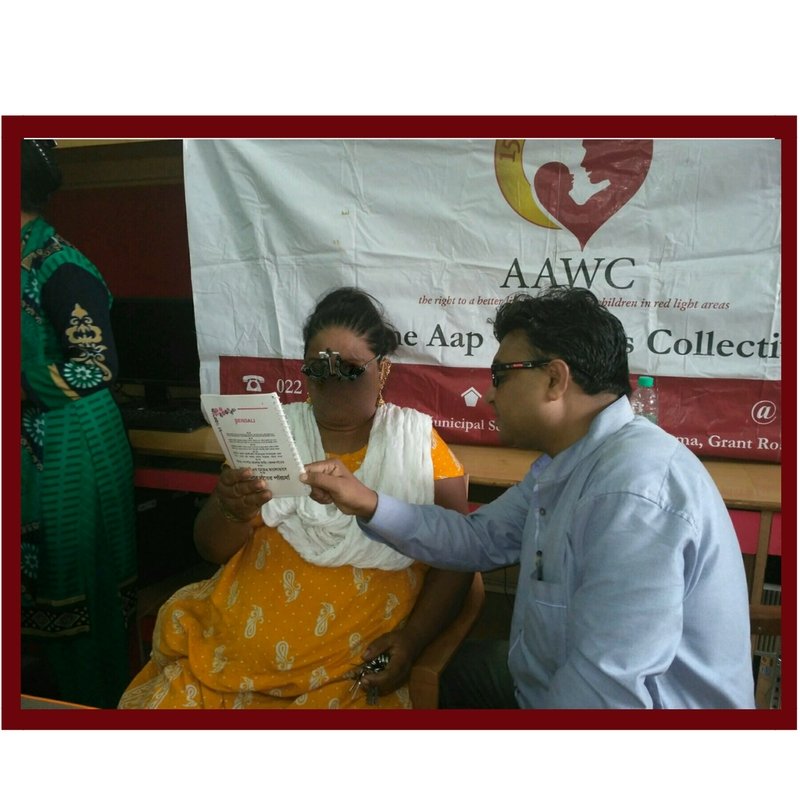
The eye camp planned for the year took place in the months of July and September, wherein a total of about 100 beneficiaries attended the camps; doctors recommended follow-ups for 25 of the beneficiaries while 13 of them bought spectacles upon diagnosis. A team of doctors from Vijay Eye Clinic led by Dr. Pervez Akhter came for the check-up. Upon diagnosis of cataract amongst most of the older beneficiaries, required aid was also provided.
AWARENESS MEETINGS:
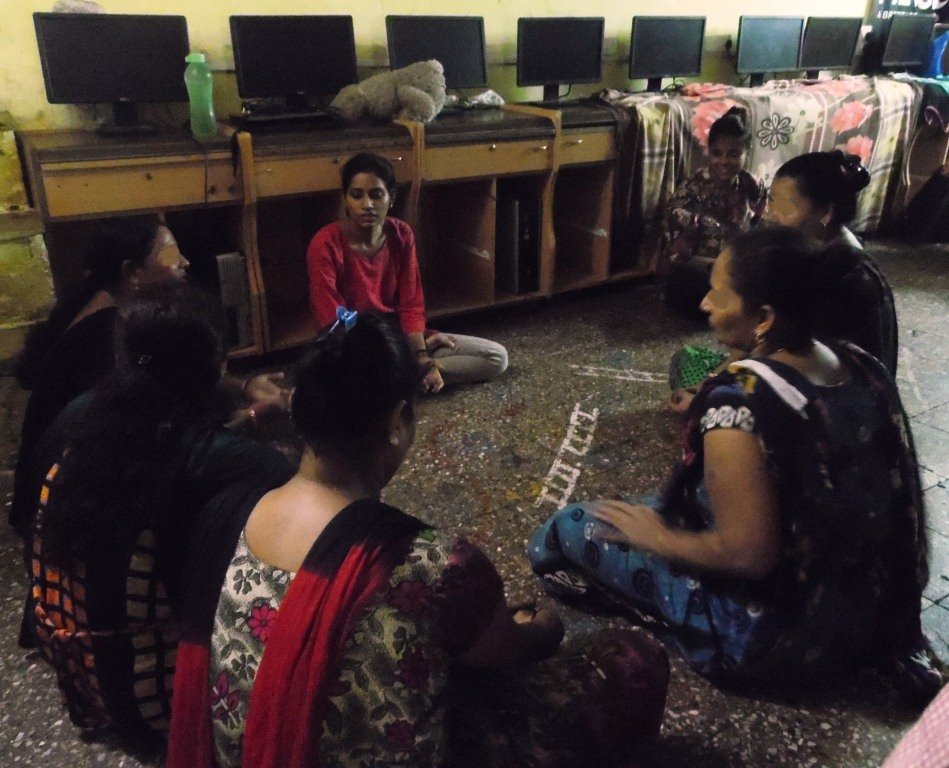
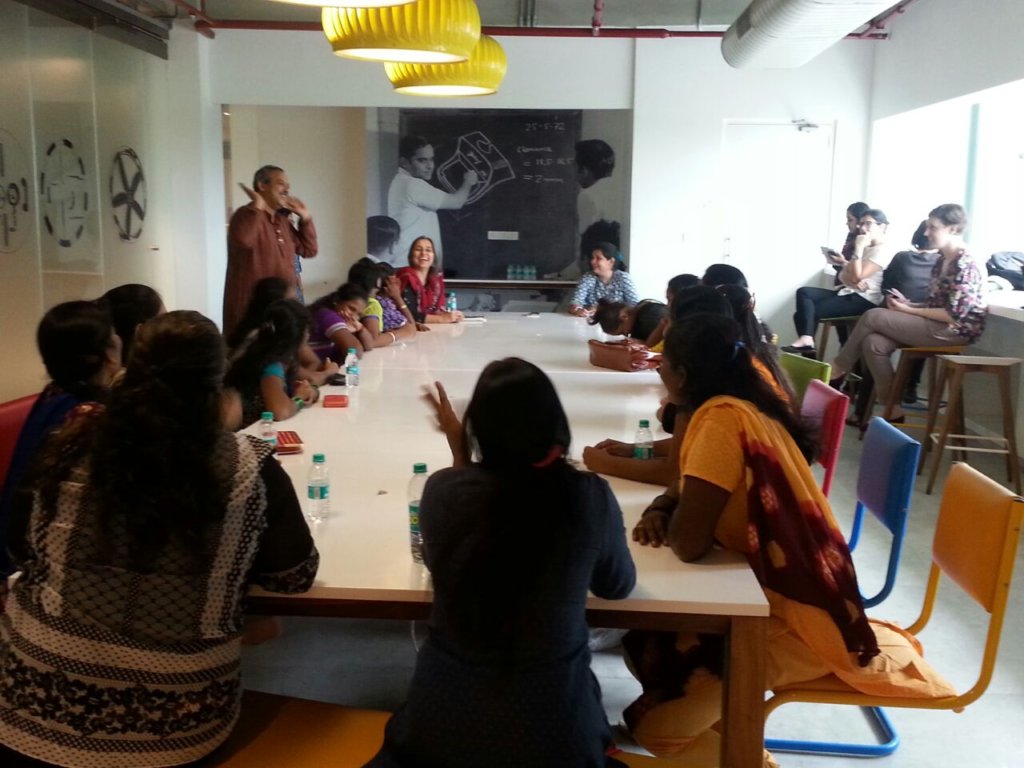
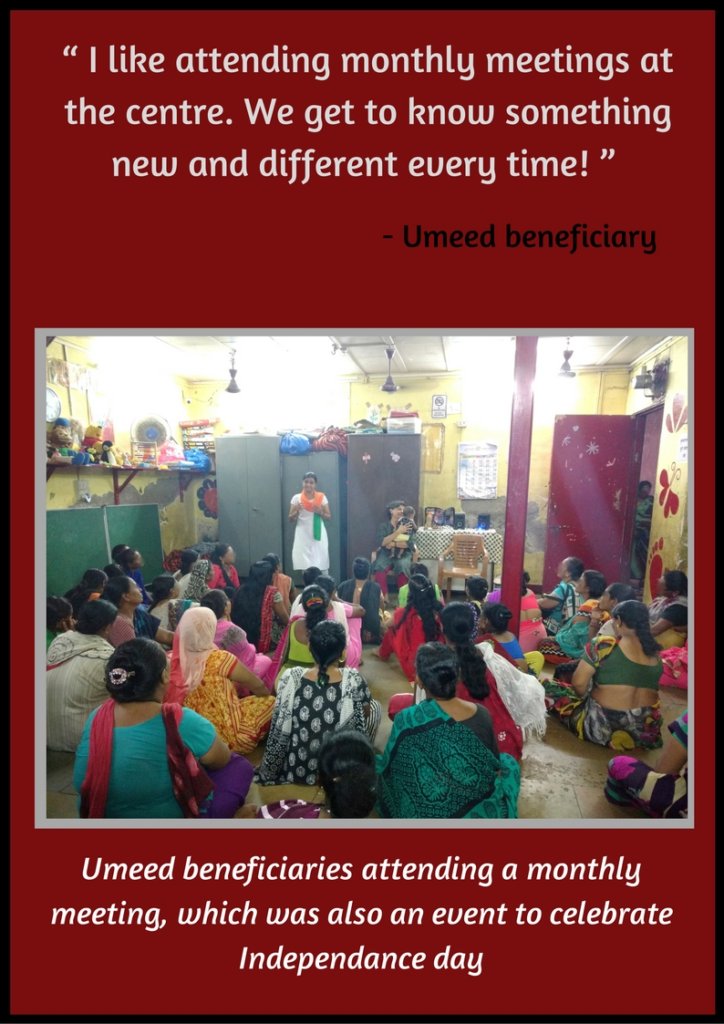
2 Umeed awareness meetings have been conducted this quarter. While the agenda for the first meeting was to spread awareness on immunisation, the other was to discuss their children’s education and school admissions. In the first session, the Program Manager along with their team undertook an interactive session on the different types of vaccines that are required for infants and childen upto 6 years of age. The discussion was simply moderated by the Program Manager, while staying highly conversational and intimate. One of the most important discussion was held on the different boosters available for toddlers, which prevent them from contracting life-threatening diseases. Such awareness meetings have also grown into safe spaces for our beneficiaries, wherein they freely discuss the many themes related to personal and family wellbeing.
The second awareness meeting was held to discuss school admissions and information about public and private schooling. The agenda here was to spread awareness about the prevalent Indian educational systems, and let the mothers make the best decision for their children.
HOME VISITS:
Home visits are an important and fundamental element of our Umeed program. Considering the trade our beneficiaries are employed in, our home visits require utmost sensitivity and planning. Home visits also ensure that we are constantly in touch with our beneficiaries, and available to aid them even in situations where they can’t visit us at our centers. This is absolutely vital taking into account the dangers of working in prostitution.
Some of the home visits this quarter comprised of talking our beneficiaries into sending their children to school, following up on one’s ART procedure and medication, checking in about a possible Tuberculosis diagnosis, and a welcome visit for a mother of a newly enrolled Balwadi (kindergarten) beneficiary.
AREA ACTIVITIES:
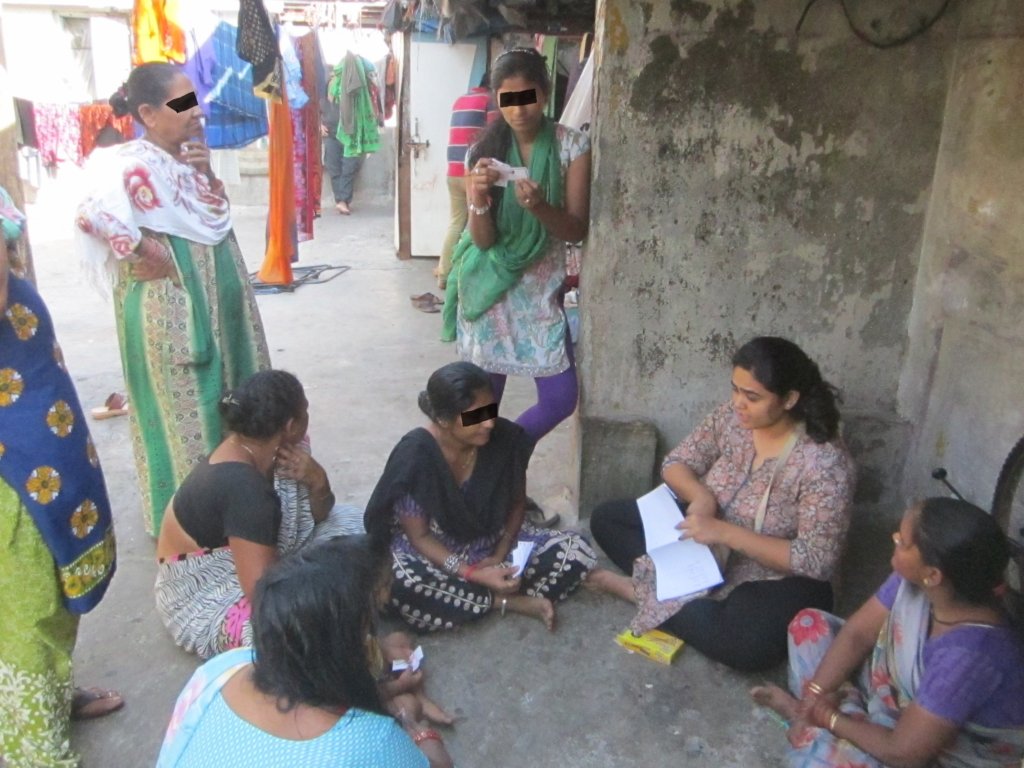
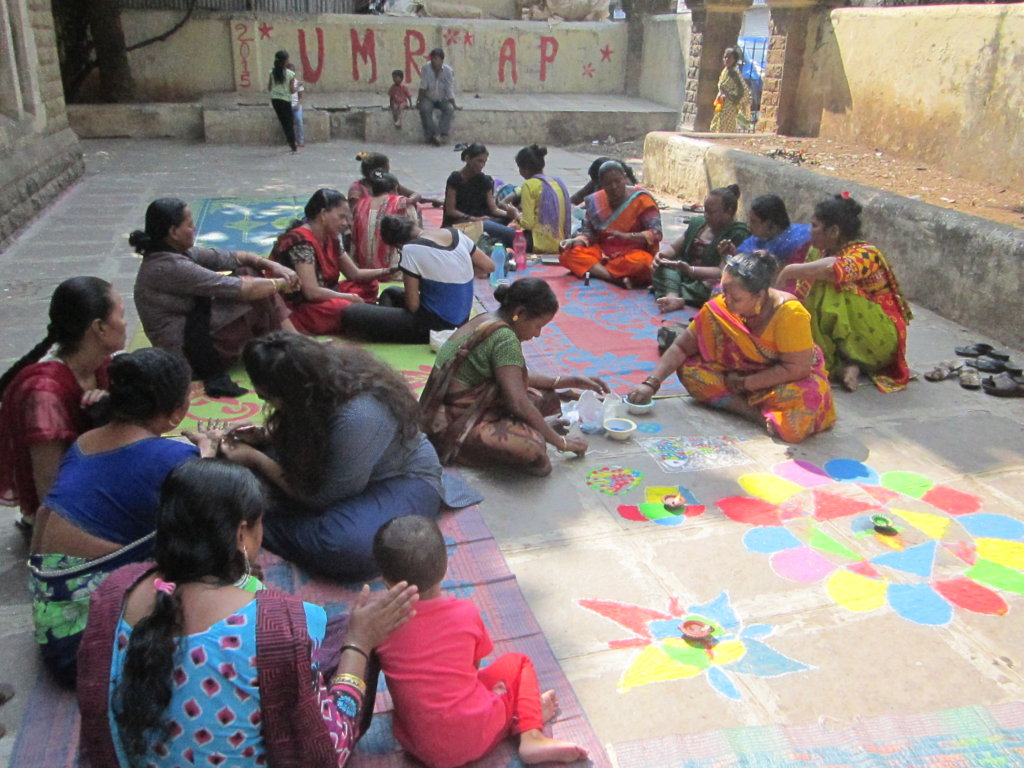
Area activities are the public version of Home visits, wherein our outreach team visits the areas of trade to hold workshops and awareness programs on relevant themes. This quarter, 3 such events were held.
While the first one was an awareness building session on ‘Quacks and Fake doctors’ , the second was to discuss hygiene care for upcoming Mumbai monsoons, and then the last session on understanding the many symptoms and consequences of Tuberculosis.
Such regular sessions undertaken in groups are critical to keep the beneficiaries abreast with their healthcare and personal hygiene. Considering the community’s often lack of interest in hygiene and sanitation, AAWC has taken it upon itself to promote this theme with all of its beneficiaries. Also, upon interacting with the community- we realized the desperate need to educate our beneficiaries against visiting quacks and other non-certified doctors for the sake of cheaper treatments. We also advised our beneficiaries on the special care one must undertake during monsoons: use of small doses of potassium permanganate in drinking water, keeping an eye out for damage to the water pipeline, regular cleaning of the water drums, etc.
As for the awareness of tuberculosis (TB), the beneficiaries were informed about the signs and symptoms and its causes. They were also informed about TB being contagious. The beneficiaries were asked to keep a track of the duration for which cough persists and in case of doubt- get tested at the nearby government hospital without delay.
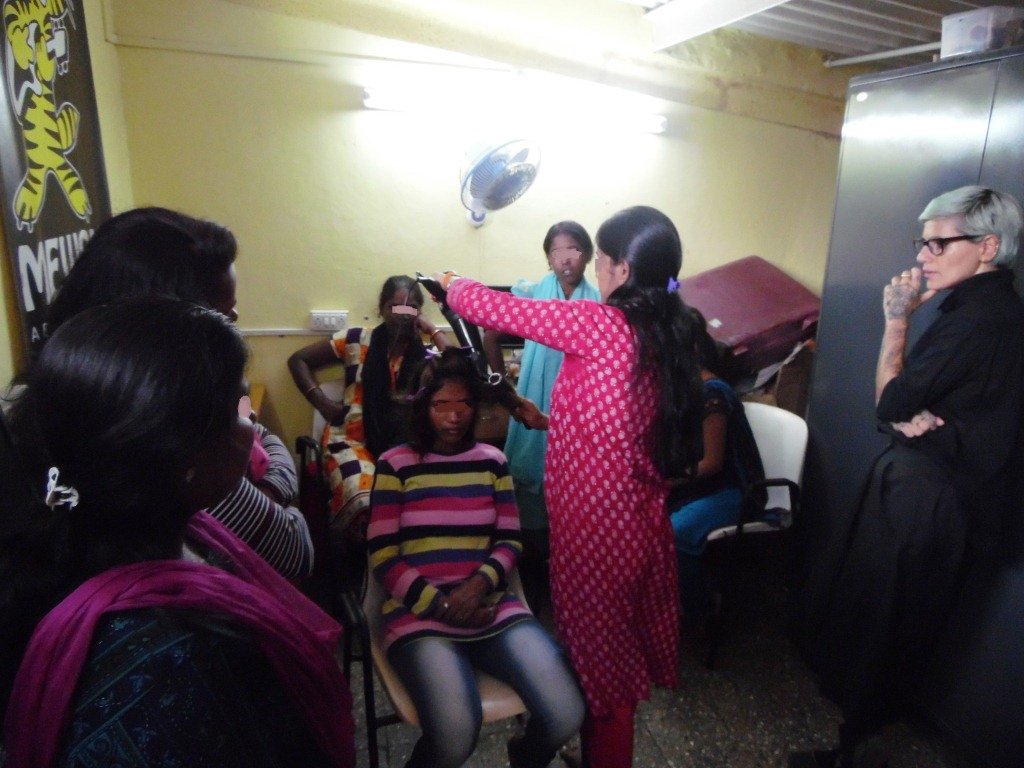
*Following photos have been blurred to protect the identities of our beneficiaries under the constitution of India
Project reports on GlobalGiving are posted directly to globalgiving.org by Project Leaders as they are completed, generally every 3-4 months. To protect the integrity of these documents, GlobalGiving does not alter them; therefore you may find some language or formatting issues.
If you donate to this project or have donated to this project, you can receive an email when this project posts a report. You can also subscribe for reports without donating.