By Andrea Herrera | Executive Director
The Path of the Tapir Biological Corridor connects several protected wilderness areas, one of which is the Parque Nacional Marino Ballena – or, as it is called in English, the Marino Ballena (“Marine-Whale”) National Park. The Park encompassing 270 acres of land and 13,300 acres of ocean and was established in 1990. It contains the largest coral reef on the Pacific side of Central America and its waters are the best place to view humpback whales as they migrate (Dec. to April) from as far away as Alaska and Hawaii down to Cano Island, just off of the Osa Peninsula, to calve. This park is thus a major Costa Rican tourist attraction and represents a significant source of employment for local residents. Many community members dedicate themselves to the whale watching ecotourism industry.
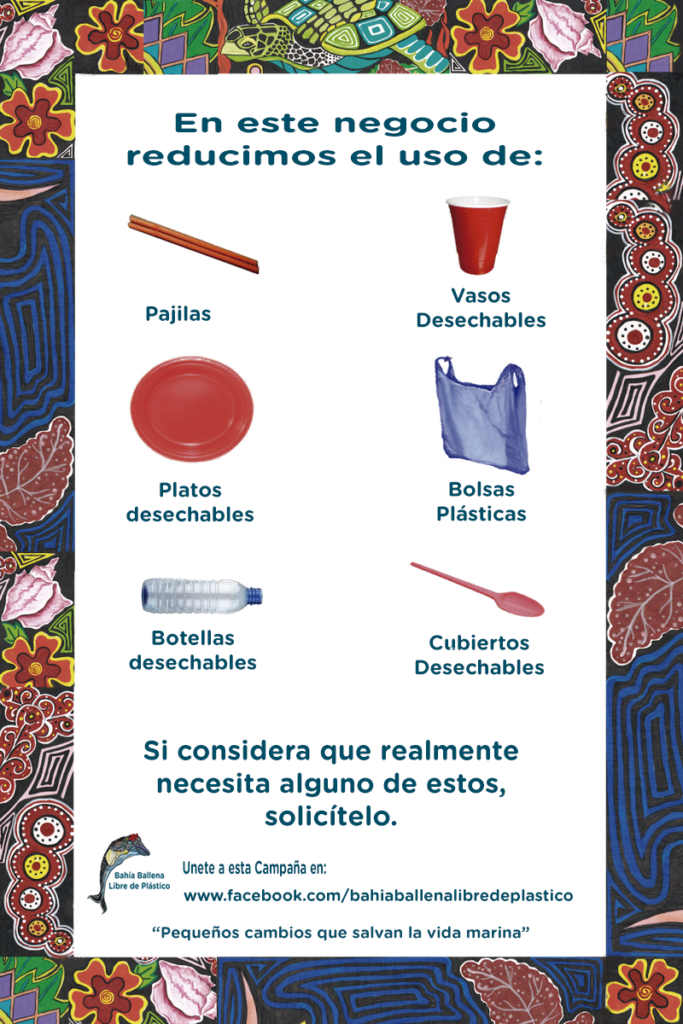
Human activity causes significant environmental impacts on the various ecosystems inside and outside the park. One of these is the ever growing global problem of plastics pollution. Local communities around the national park concerned about the negative impacts of plastics organized themselves and proposed cutting down on plastic pollution by limiting the use of disposable plastic water bottles by ecotourism operators in the region. This effort expanded to include all single-use plastics – including straws, cups, plates and, utensils.
ASANA, in collaboration with another non-profit, Geoporter Costa Rica, and a local business, Bodhi Surf and Yoga, supported this grassroots movement by creating the Plastic-Free Whale Bay campaign. This campaign focuses on businesses and consumers, promoting the curtailment of plastic use associated with food consumption.
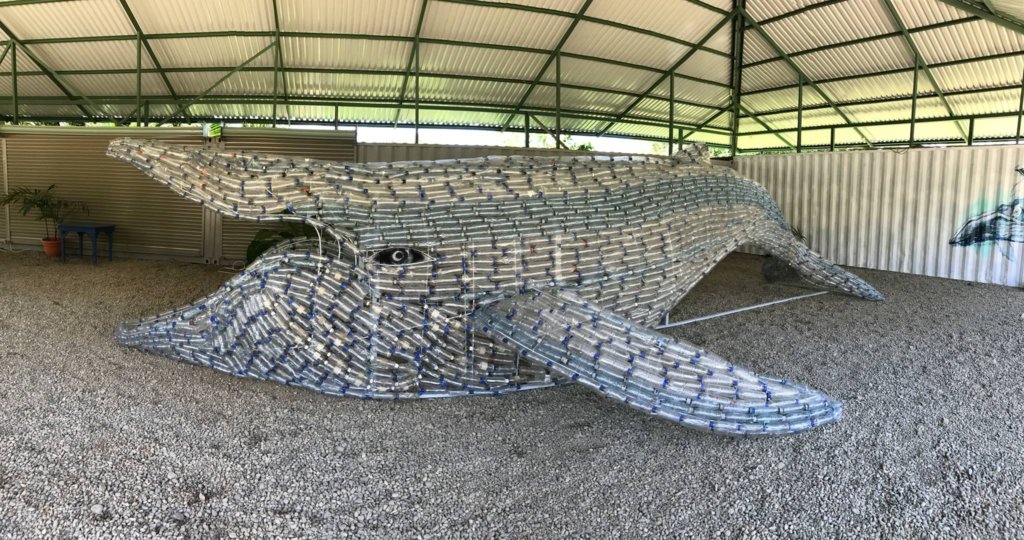
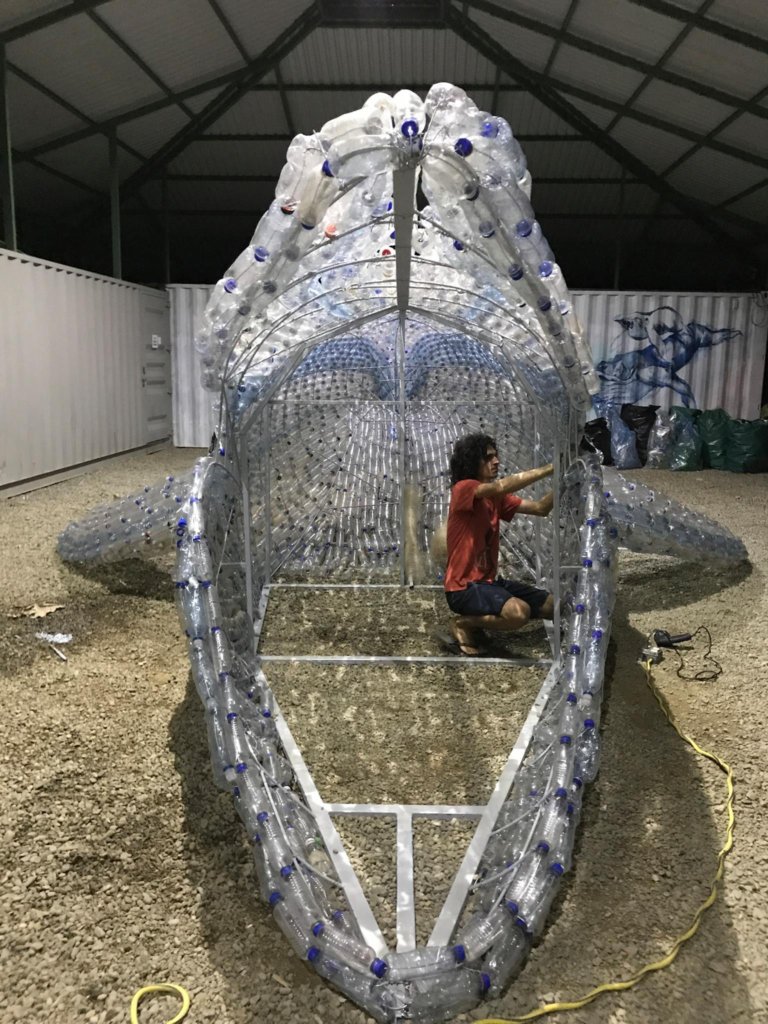
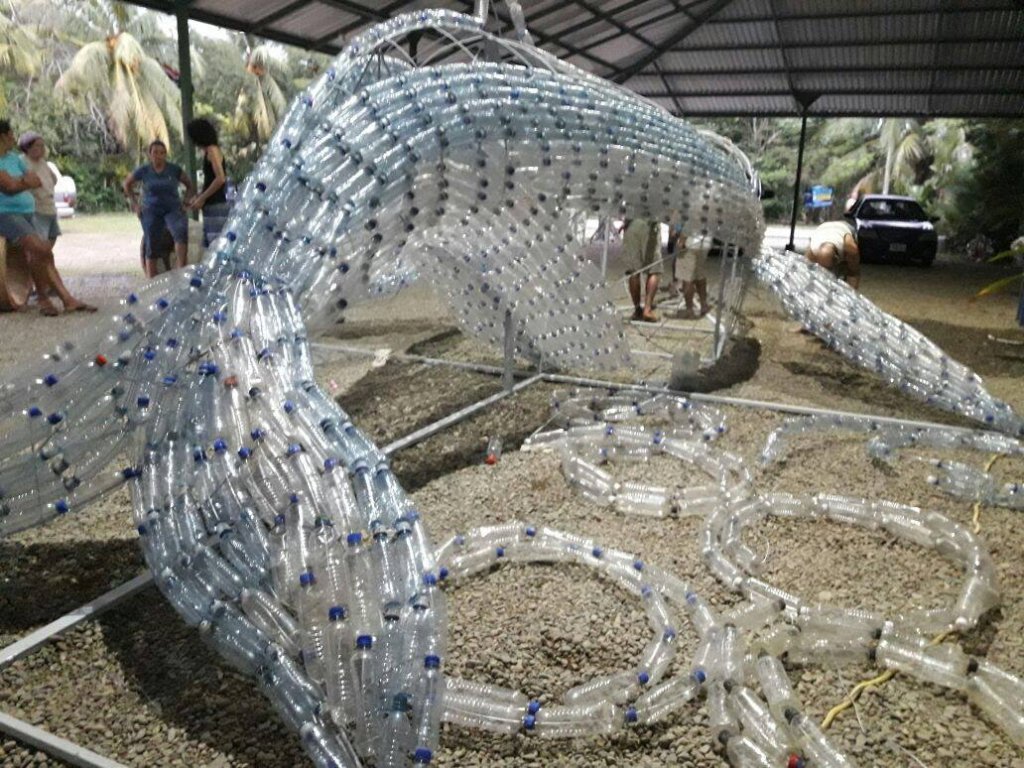
One of the impactful (and fun!) activities the group has done recently is the construction of an almost life-size humpback whale solely from discarded water bottles collected from in and around the National Park! (See accompanying photos.) Artist Alban Corrales, from the artistic group Trincheras de San Isidro Pérez Zeledón, was hired to design and build the whale. Construction took about 10 days with the support of more than 100 local community members and tourists. In the end, the whale is 30’ long and 16’ wide – and took almost 3500 discarded plastic water bottles to build!
Some Interesting Facts…
Please let me take this opportunity to thank you sincerely for all your support of ASANA. We hope you continue to help us conserve the beautiful “Whale Coast” – including the Marino Ballena National Park – that runs the full length of the Path of the Tapir Biological Corridor.
Project reports on GlobalGiving are posted directly to globalgiving.org by Project Leaders as they are completed, generally every 3-4 months. To protect the integrity of these documents, GlobalGiving does not alter them; therefore you may find some language or formatting issues.
If you donate to this project or have donated to this project, you can receive an email when this project posts a report. You can also subscribe for reports without donating.