Project Report
| Aug 21, 2014
Interns help prairie and gain valuable skills
By Holly M Syreen | Development Director
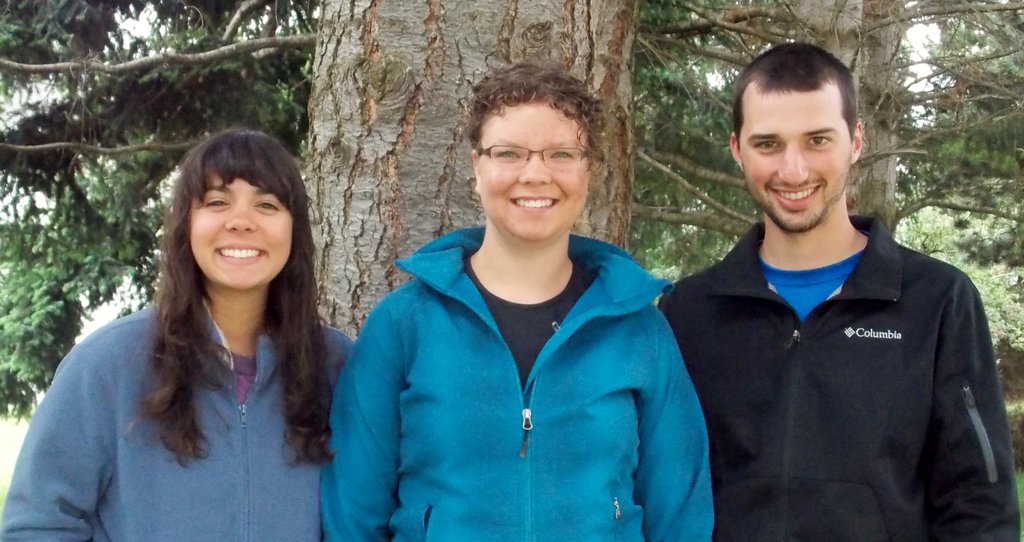
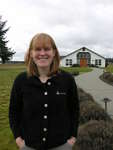
![Rocio, Catherine, Mark]()
Rocio, Catherine, Mark
This summer began like most summers here at the Pacific Rim Institute with clouds in the sky and anticipation for the arrival of a new group of interns. Each year, we hold a competitive application process for young adults to come and spend the summer on Whidbey Island learning the ins and outs of restoring native prairie habitat. Despite this being an unpaid internship, we receive many applicants each year that are eager to gain valuable field skills. This year, we had a top-notch team join us.
Catherine Welke joined us for the month of May to assist with a specific research study on prairie restoration. Catherine recently graduated with a B.S. in Biology from The Kings University College in Edmonton, AB, Canada. She spent every day going out into the field with representatives from the University of Washington to collect valuable data from a collection of research plots. This data will add to out understanding of what methods (mowing, fire, herbicide, etc) are most effective for restoring native prairie to abandoned agriculture land. Catherine says, "This internship will allow me to gain field research experience that will help me get into a school for graduate studies".
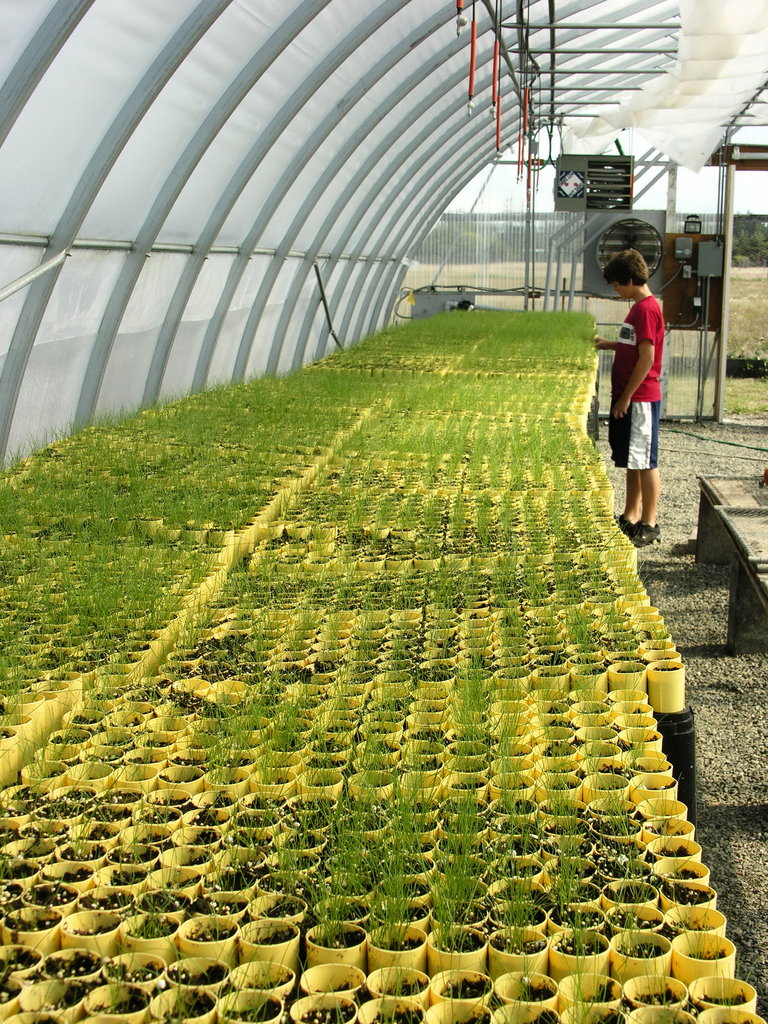
Mark Tyson is currently working on an Environmental Studies degree at Eastern University in Pennsylvania. Rocio Jacobo just finished a B.S. in Biology from Azusa Pacific University in California. Mark and Rocio spent almost three months here on the prairie gaining experience in every aspect of the restoration process, including: managing native plants in our greenhouse, collecting and cleaning rare native seed, managing volunteers, controlling non-natives with mowing, herbicide and weeding, collecting research data, and developing an implantation plan for a new native berry patch. Mark says, "I chose to come here so I could work outside and help to restore the native prairie". Rocio says, "I wanted to intern at PRI to explore restoration and habitat management, as well as develop invaluable research experience and skills".
Between the three interns, over 1,000 hours were invested into the prairie. The educational value of our internships is key to the success of our prairie restoration endeavors. Your investments are not only saving northwest prairie, they are preparing new generations to save native habitats all around the world.
Thank you for your gifts! If you every have any questions, please don't hesitate to contact us.
(360) 678-5586 Pacific Rim Institute Office
![Share on Twitter]()
![Share on Facebook]()
Apr 21, 2014
New Sustainble Farming Partnership Helps Prairie
By Holly M. Syreen | Development Director
![]()
Hello Everyone,
I am excited to share with you news about our new partnership. A local gentleman will be leasing about five acres on our property in order to plant heirloom grains using his horses. Not only does having sustainable agriculture on site meld with our mission (to equip people and communities to live sustainably and care for Creation), it will also benefit our prairie restoration efforts.
This is how: Out of the 100 acres that we plan to eventually restore to prairie, the majority of it is still abandoned agriculture land. This means that it was once worked for agricultural purposes and what remains are non-native and invasive plants that have taken over.
When a farmer starts working a piece of land, they have to get rid of these invasive species in order to protect their plots. Since we do not plan to start planting native prairie in some of these spots for many years (restoration is a long process that takes lots of time and money), the big benefit of having a sustainable farmer on the land is that when he leaves, the land will already be void of all the invasives, thus cutting out a step for us that can take anywhere from 2-5 years.
We continue to seek our partnerships that embody our mission and values and further our work in a sustainable way. Thank you for all your financial support, it has allowed us to make these powerful partnership and continue the critical work of saving one of the endangered ecosystems of the Northwest.
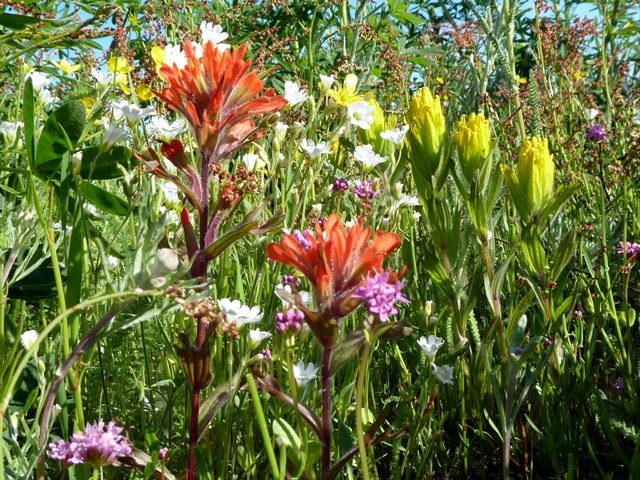
If you find yourself near Whidbey Island over the next two months, please come and visit us! The prairie flowers are beginning to bloom.
Our 5th Annual Prairie Open House will be held from May 8-10, 2014. There will be daily FREE naturalist tours at 10am, 4pm and 7pm. On Friday (May 9th) we will have native storytelling with Lou Labombard at 8:00pm. On Saturday (which is also the day of Coupeville's Penn Cove Water Festival with Native American Canoe Races), we will have a special tour at 2:15p with guests from the Sammish nation who will share why the prairie was so critical to the Native Americans for thousands of years.
Any other time that you come, you can walk the trails or request a tour for your group. We now have tours of the prairie with our CEO on the first and third Thursdays of each month at 5:30pm.
If you live closer to the Olympia area, there is another opportunity to see prairie work with several of our South Sound partners. Their Prairie Days celebration is also on May 10th and you can find more information here http://prairieappreciationday.org/
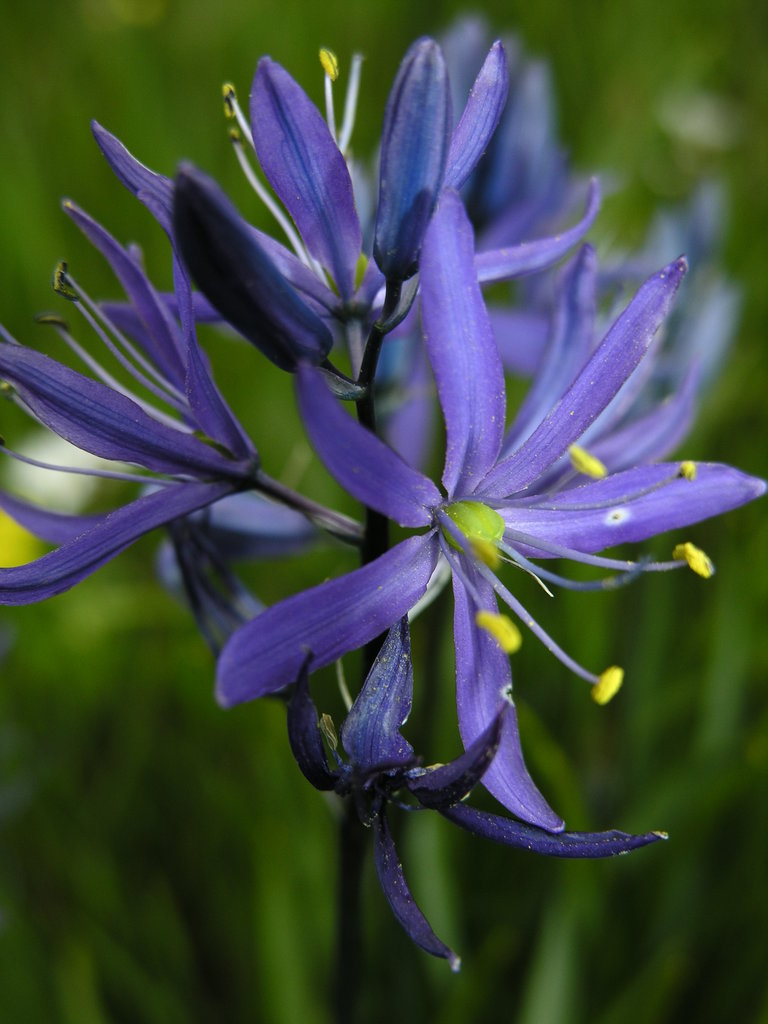
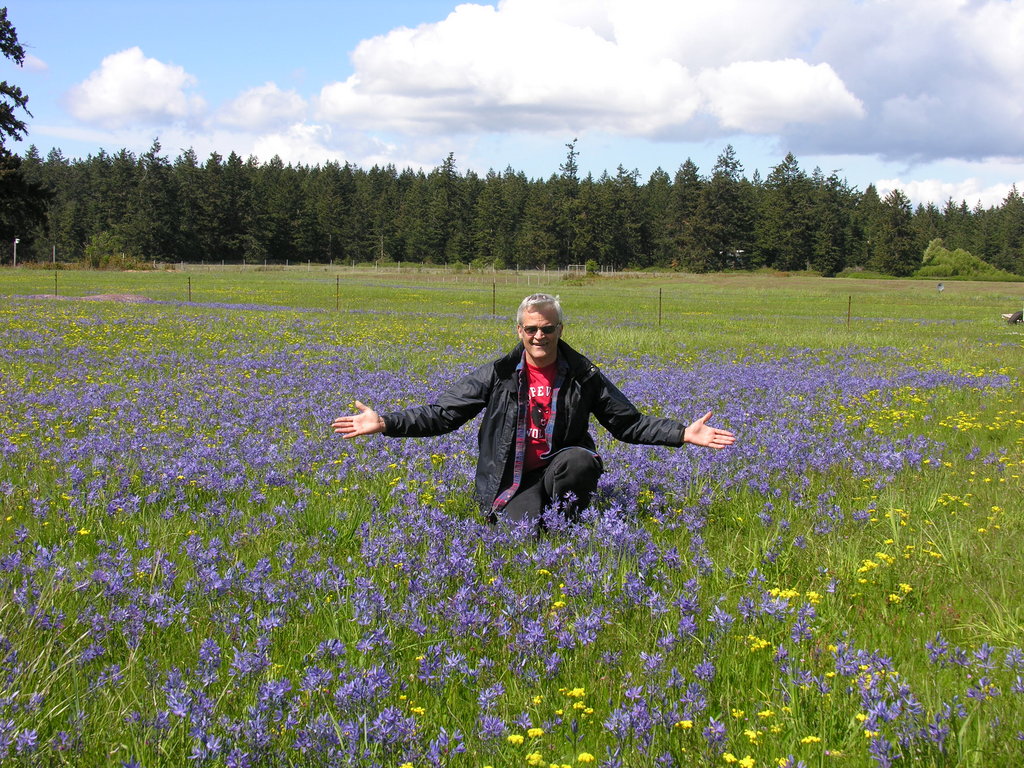
The prairie in bloom is a beautiful site to see.
Thank you again for all your support!
![]()
Links:
![Share on Twitter]()
![Share on Facebook]()
Dec 19, 2013
8 Acres on way to restored prairie
By Holly M. Kress | Development Director
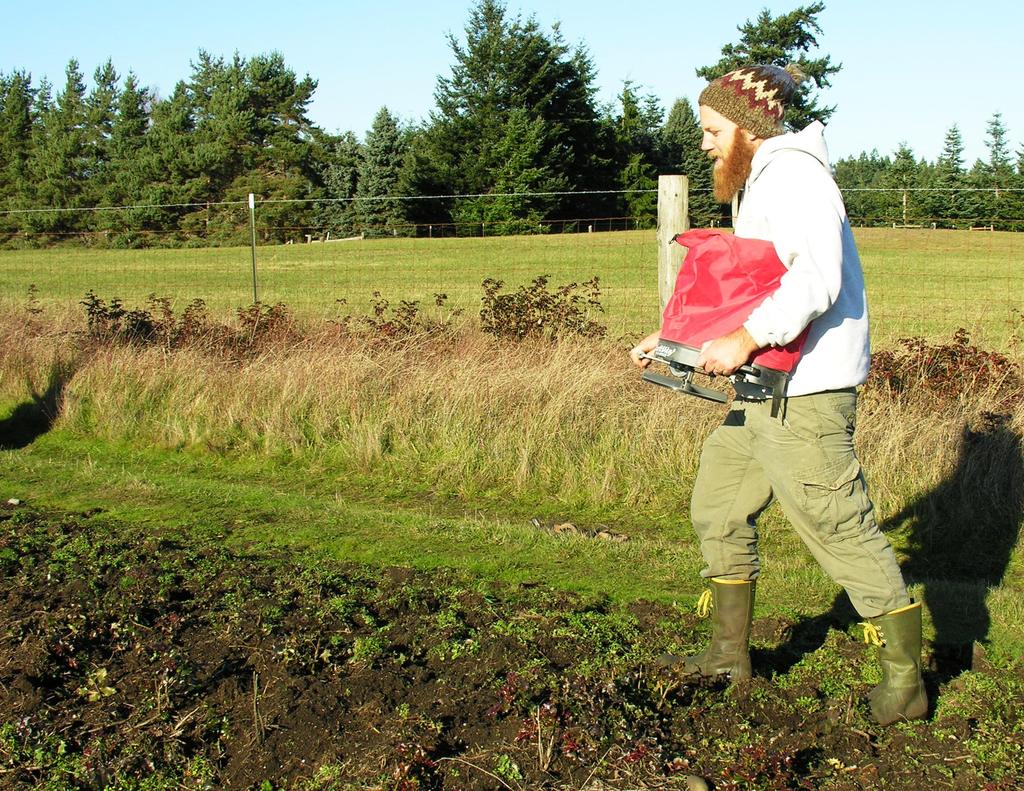
![Seth spreading native grass seed by hand]()
Seth spreading native grass seed by hand
Seth Luginbill, our Land Steward, completed the sowing of native Roemer's fescue seed across eight acres adjacent to our 5 acre prairie remnant last week! For four years we have prepared this land for this moment by clearing tons of debris (with amazing volunteers!) mowing, burning, and weed control. Most of this work has been funded by the USDA – Natural Resources Conservation Service and individual donors (LIKE YOU). Seth has done a wonderful job in overseeing this entire process.
Our work is far from finished, but it is a wonderful thing to celebrate these landmarks. If restoration continues to go well on this new plot, our total restored prairie will have been tripled!
We continue to raise funds and apply for grants to cover the costs of managing weeds on this new prairie plot and then planting native flowers next year. If enough funds come in, the colors that will emerge in 2015 will be incredible!
If you are near Northwest Washington, consider joining us in May for our Prairie Open House to get a first-hand look at all the progress being made.
![Share on Twitter]()
![Share on Facebook]()