By Shannon O'Donnell | Online Marketing Manager
AMINA'S STORY
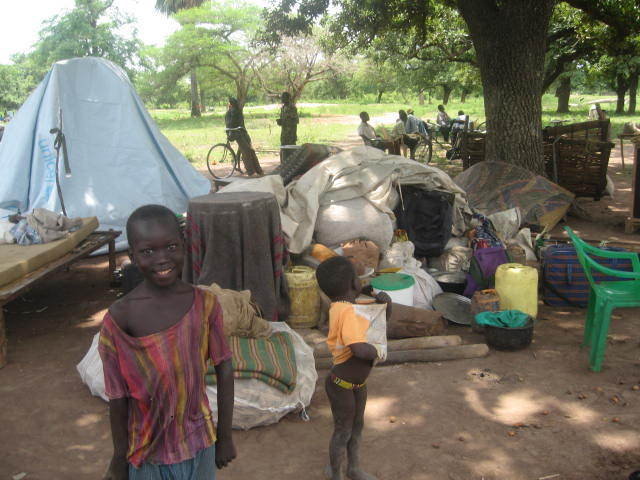
All around her at the refugee camp the tents were sunken into the mud. There were beds for a lucky few, but most people laid mattresses on the ground at night. Some slept standing up. As Amina explained, “some of us sleep on these beds as others stand and we go back and forth. Some of us just find a dry piece of land regardless of where in the camp, [others] sit on the ground and try to sleep sitting.”
“People don’t want to see us,” said Amina, a teenaged mother of two. “Do you see these barbed wires surrounding us? We feel like we are in a cage. We tried to write people. We tried to tell them about our circumstances. We wrote government officials, UN officials, we wrote NGOs, we wrote whoever we knew hoping that someone… anyone can come, can see what we are going through and can save us from this Hell.”
ANANAYA'S STORY
Fearful of living a life in war and conflict in Sudan, Ananaya tried to flee to neighboring Ethiopia. It was a dangerous trek. One day, Ananaya found herself in the midst of an ambush by rebel groups. She hid in the bush, but she saw one woman from her group lying dead on the ground. The trauma still haunts her with many other new traumas. On the trek back to her home in Sudan, Ananaya and her young daughter were separated for three days. She thought she had lost her little girl. It was too much to bear, especially after she had delivered a stillborn baby only weeks before. She wishes for change. “ We want things to improve to enjoy peace.”
ELIZABETH'S STORY
Elizabeth had been recently married when the war broke out. She and her husband had only lived together for a month when he was sent to fight on the front line. Elizabeth was left alone, already pregnant. One day, she heard that her husband was wounded. “I was pregnant at the time, and my baby died,” said Elizabeth, a frail woman who was overtaken with grief. “Our health can talk” about the condition of our lives, she said. MARY'S STORY
Living amidst a war between the Dinka and Nuer tribes, Mary witnessed carnage and horrors. “They came at night, surrounded the cattle camp and shot everyone—even women and children. If women were still alive, they raped them; they even violated dead female bodies,” she recounted. “We have never had a good time since we were born, now we are mothers and life is not easy for women.”
Unlike the other members of her group, Mary did not flee to Ethiopia when the war broke out. She stayed in Akut the entire time. Like most girls in the South, Mary grew up in a cattle camp where soldiers would periodically stop to rest before returning to the battlefront. Girls in her community were tasked with carrying the soldiers’ luggage and ammunition to their next station. It was a harsh experience, Mary recalled. The girls were permitted to rest only when the soldiers allowed them to do so; otherwise they risked being beaten.
The soldiers would also “ask” the girls to sleep with them. There was no way to refuse, she remembered.
Links:
Project reports on GlobalGiving are posted directly to globalgiving.org by Project Leaders as they are completed, generally every 3-4 months. To protect the integrity of these documents, GlobalGiving does not alter them; therefore you may find some language or formatting issues.
If you donate to this project or have donated to this project, you can receive an email when this project posts a report. You can also subscribe for reports without donating.