By Shadrack Mutembei | Project Leader
Executive Summary
During the first quarter of 2026, Communities EverGreening Africa (CEGA) strengthened its integrated approach to riparian restoration and sustainable livelihoods. By expanding community-based tree nurseries alongside scaling climate-smart beekeeping, the project continues to demonstrate that ecological restoration and economic resilience can advance together.
Our approach centers on practical, community-driven solutions that restore degraded riverbanks while improving household incomes. Each seedling raised and each hive established contributes to healthier ecosystems, strengthened food systems, and increased financial stability for participating families.
1. Scaling Green Infrastructure: Community Tree Nurseries
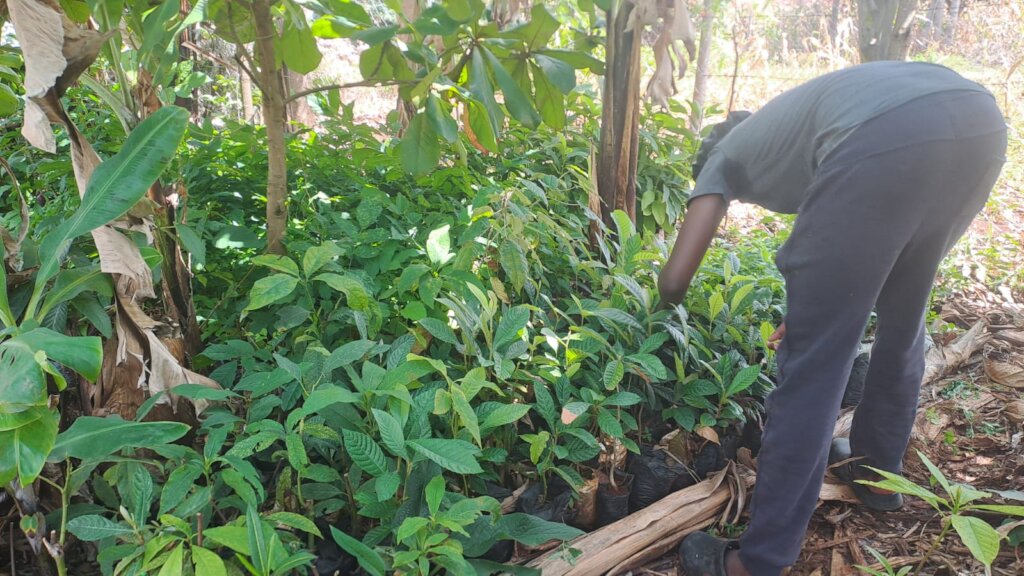
To prepare for the upcoming rainy seasons, CEGA supported the expansion of two community-based tree nurseries with a tree capacity of 6,000 seedlings. These nurseries form the backbone of our restoration strategy, supplying indigenous tree species for riparian rehabilitation alongside grafted fruit trees for household agroforestry systems.
Strengthening Technical Capacity
This quarter, nursery operators received hands-on mentorship in:
Special emphasis was placed on producing resilient seedlings capable of thriving in riparian zones where soil erosion and variable moisture conditions present challenges. Improved nursery management practices are expected to significantly increase post-transplant survival rates.
Advancing Fruit Tree Grafting Skills
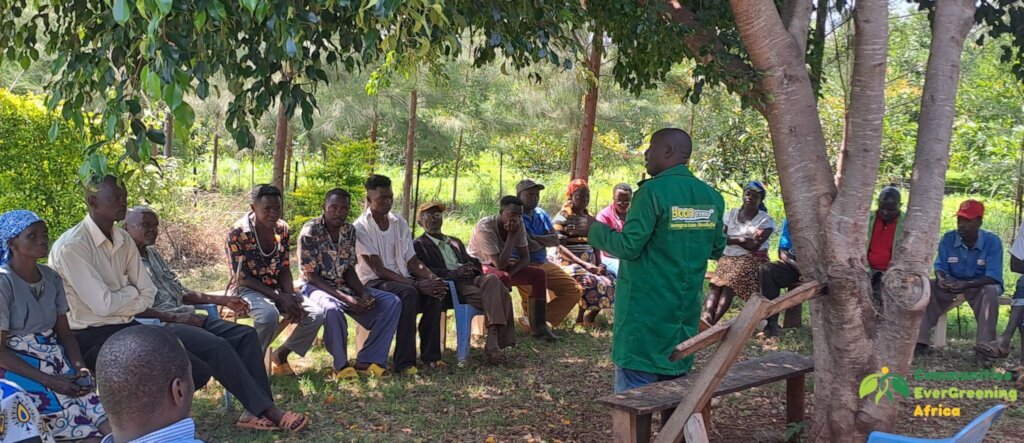
A key highlight of the quarter was training and mentorship on fruit tree grafting. Farmers and nursery managers strengthened their skills in rootstock selection, scion compatibility, grafting methods, and aftercare management.
By building this technical capacity, the nurseries are now producing higher-value fruit trees that:
This directly links environmental restoration with livelihood improvement, ensuring that conservation efforts provide tangible economic returns.
2. Beekeeping for Conservation and Income Generation
Beekeeping continues to serve as a vital bridge between ecosystem restoration and income diversification.
Growth and Participation
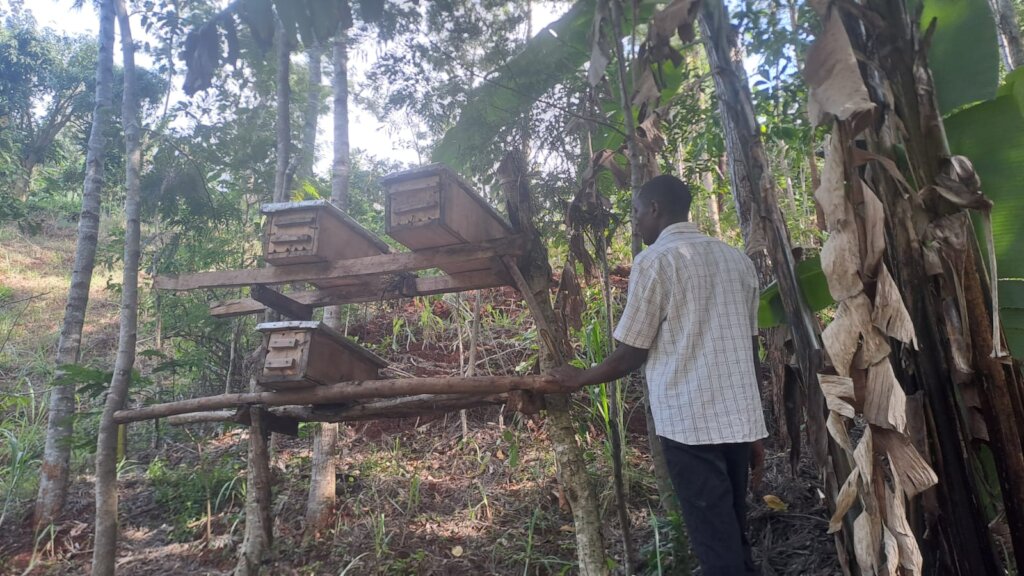
The project now supports 18 active beekeepers managing over 200 hives, reflecting steady expansion. Participation continues to grow, with increasing interest from women due to the enterprise’s manageable labour requirements and strong market demand for honey.
Addressing Production Challenges
Field-based mentoring sessions were conducted to address key constraints affecting productivity, particularly ant infestations and low hive colonization rates. Through practical demonstrations and one-on-one coaching, farmers were trained on proper hive colonization techniques, including strategic hive placement, timing of hive installation, use of attractants, and maintaining conducive apiary conditions.
In addition, participants adopted low-cost, locally adaptable solutions to manage ants, such as improved hive stand designs, protective barriers, and enhanced apiary hygiene practices.
Together, these interventions have led to improved hive colonization rates, reduced colony disturbances, and strengthened overall colony stability, laying the foundation for increased honey production in the coming seasons.
Strengthening the Ecological-Economic Link
The integration of beekeeping within restored riparian landscapes is creating a mutually reinforcing system:
This synergy strengthens both environmental regeneration and household resilience.
The integration of expanded nursery production and strengthened beekeeping demonstrates CEGA’s holistic restoration model in action. The project moves beyond tree planting to build a community-led system where environmental stewardship and economic opportunity reinforce one another.
Community ownership continues to deepen. As one participant shared, “When the riverbank stays firm and the bees are busy, our future is secure.”
This reflects a growing recognition that restoring nature and strengthening livelihoods must go hand in hand to ensure long-term resilience.
Project reports on GlobalGiving are posted directly to globalgiving.org by Project Leaders as they are completed, generally every 3-4 months. To protect the integrity of these documents, GlobalGiving does not alter them; therefore you may find some language or formatting issues.
If you donate to this project or have donated to this project, you can receive an email when this project posts a report. You can also subscribe for reports without donating.



Support this important cause by creating a personalized fundraising page.
Start a Fundraiser